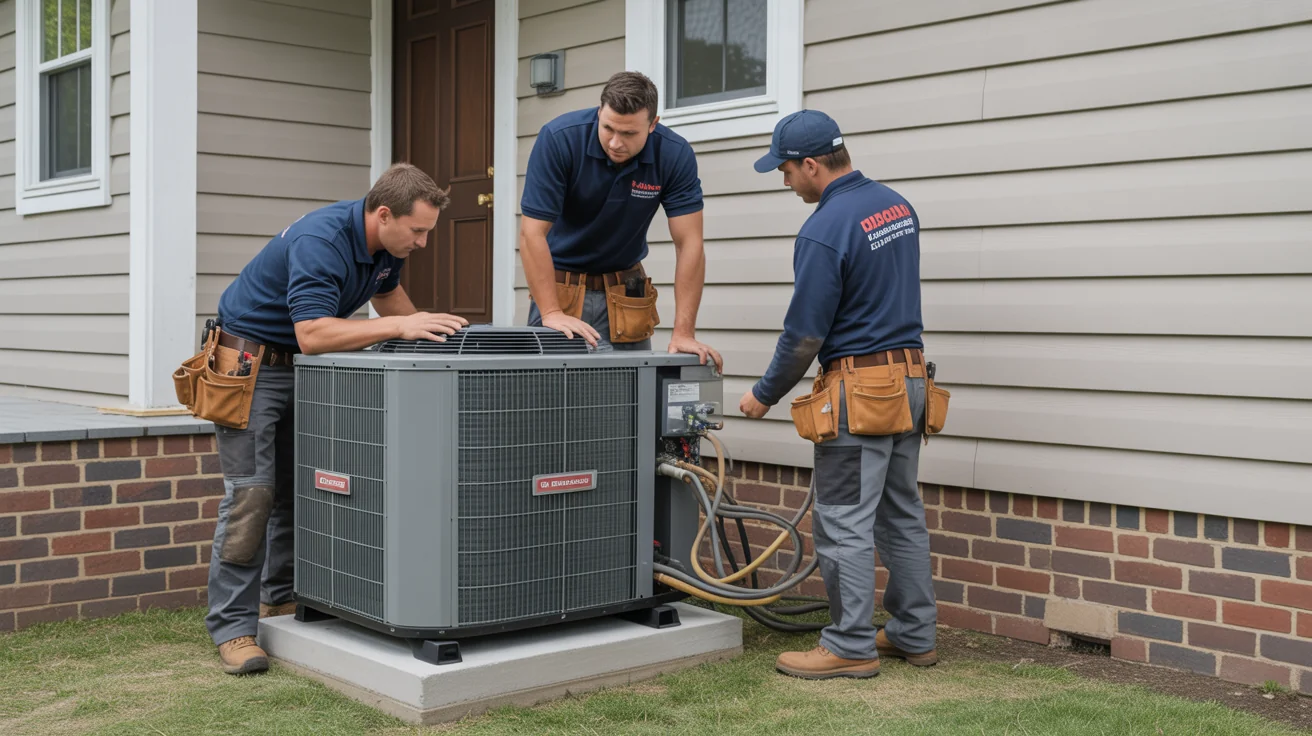
Energy Efficient HVAC Systems North Texas: High-Performance Solutions & Savings
Complete guide to energy efficient HVAC systems for North Texas. High-performance equipment, rebates, savings analysis, and professional installation.

Moving from a 14 SEER unit (13.4 SEER2) to an 18 SEER one (17.2 SEER2) cuts your cooling energy by about 22%, which is worth roughly $150-$300 a year on a typical North Texas home. That’s the honest number, and it’s smaller than most ads promise — SEER is a ratio, so going from 14 to 18 cuts cooling energy by 22%, not 40%, and it does nothing at all to the rest of your bill. Where high-efficiency equipment really earns its money is against genuinely old equipment: replacing a 10 SEER system from the 2000s saves closer to $450 a year. Variable-speed systems handle our 100°F+ days better than anything else on the market, keeping temperatures steady and pulling moisture out of the air without blasting on and off all day. Complete system costs run $8,000-$35,000 depending on size and features. Federal tax credits up to $2,000 expired at the end of 2025; utility rebates from Oncor and CoServ are still available through 2026.
Why Energy Efficiency Matters More in North Texas Than Anywhere Else
I was at a house in Plano last week. Mrs. Rodriguez, nice family, 3,400 square foot home with a twelve-year-old system barely holding on at 14 SEER. Her electric bills? $420 a month. She looked at me and said, “I feel like I’m just burning money.” Honestly, she was.
We pulled that old system and put in a variable-speed 22 SEER heat pump with smart controls. Her next bill came back at $165.
Now, I have to be straight with you about that number, because it would be easy to put it on a billboard and let you assume it’s typical. It isn’t, and the equipment didn’t do all of it. A jump like that is a whole-bill drop of about 60%, and the equipment change alone can’t account for more than roughly a third of the cooling portion. The rest came from the other things we did that day and the things that changed after: her old system was badly undercharged and losing capacity, we sealed a return that had been dumping conditioned air into the attic, the smart controls stopped her from cooling an empty house all afternoon, and her first bill landed in a milder stretch than the one before it. Take an identical house with a healthy 14 SEER system and swap the equipment only, and you’re looking at savings of $200 to $400 a year, not $3,000.
I tell that story because the comfort part was real and repeatable. The number was not.
But here’s the part that got me. She called three months later, and it wasn’t about the money. It was the quiet. No more system kicking on every fifteen minutes, no more hot bedroom and freezing living room. Just… comfortable. Everywhere.
I drive through Frisco and McKinney and see gorgeous homes with 12-14 SEER systems still grinding away. Thousands of dollars walking out the front door every year because nobody sat down and showed these folks what modern equipment can actually do.
Want to stop overpaying? Call me at (940) 390-5676 and let’s figure out what a real high-efficiency system would do for your home.
Why Energy Efficiency Matters More in North Texas
I’ve been doing HVAC work in North Texas for over fifteen years, and our weather just destroys equipment. In Frisco and Plano, your AC runs 2,800+ hours a year for cooling alone. Think about that. Your car engine running non-stop for four solid months.
Last July we had twelve straight days over 106°F. My phone didn’t stop. Homeowners calling with $500 electric bills, and these weren’t huge houses. Normal 2,500 square foot places with older systems that just couldn’t keep up anymore.
What makes it different here:
Our summers are brutal. When it’s 102°F and 80% humidity, a 13 SEER system is barely hanging on. A variable-speed unit? It adjusts, stays efficient, keeps running without breaking a sweat (so to speak).
And then there’s Oncor’s peak pricing. Right when your system works hardest, 3 to 7 PM on those awful afternoons, that’s when electricity costs the most. I’ve seen customers cut their peak usage by 40% with a high-efficiency system that pre-cools the house before rates spike.
Your HVAC eats about 70% of your summer electric bill. So when somebody tells me they “can’t afford” to upgrade, I always think… can you afford not to?
Understanding HVAC Efficiency Ratings and Standards
SEER Ratings - What They Really Mean in North Texas
I get this question constantly. “What’s SEER?” Simple version: it’s miles-per-gallon for your air conditioner. Higher number, less energy to cool your house.
Here’s what you need to know:
The legal minimum in Texas is 14.3 SEER2 for a split-system air conditioner under 45,000 BTU, or 13.8 SEER2 for the bigger ones. That’s the old 15 SEER, roughly. You can’t install lower here. But buying the bare minimum? That’s like putting the cheapest tires on your truck. They’ll technically work. You’ll regret it.
Now the math, and this is where the industry oversells. SEER is a ratio, so the savings from a bigger number are smaller than they sound. Going from a 14 SEER dinosaur (13.4 SEER2) to a 20 SEER system (19.0 SEER2) cuts your cooling energy by about 30% — not your whole bill by 30%. Cooling is the biggest slice of a North Texas summer bill but it isn’t the only slice; your water heater, fridge, and pool pump don’t care what condenser you bought. On a $300 summer bill, expect something in the neighborhood of $60 back, not $120.
One more thing worth clearing up, because you will hear it from somebody trying to sell you a system: variable-speed units do not beat their SEER rating. SEER2 is a seasonal rating measured across part-load conditions, so that advantage is already inside the number. Field performance runs below the rating, not above it. Buy variable-speed for the comfort and the humidity control, which are real and which you’ll notice every day.
HSPF (Heating Season Performance Factor)
Heat Pump Heating Efficiency: The federal minimum is 7.5 HSPF2 for new heat pump installations, paired with 14.3 SEER2. That’s your floor, and unlike the air conditioner rules it’s the same floor in all fifty states. Watch the “2” on the end — heating ratings dropped about 15% when the test changed in 2023, so an old 8.8 HSPF unit is roughly a 7.5 HSPF2 unit today. Same equipment, honest number. High-efficiency heat pumps land in the 8.5 to 9.5 HSPF2 range, and that’s where the real winter savings are. Cold-climate models keep performing well below 32°F, which matters during those random February cold snaps we get. And if you go dual-fuel, the system automatically switches to gas when it makes more sense financially.
Why heat pumps work so well here: North Texas has mild winters that are perfect for heat pump efficiency. You barely need auxiliary heat most years. One system handles both heating and cooling, so you’re not buying and maintaining two separate pieces of equipment. With proper sizing, a heat pump handles 90%+ of our heating days without any backup help at all.
EER (Energy Efficiency Ratio) for Peak Performance
Peak Cooling Efficiency: EER measures how well your system performs at peak load, when it’s 95°F outside and the system is running flat out. Standard systems fall in the 11-13 EER range. High-efficiency units hit 14-17 EER. Variable-speed systems score even higher at partial loads because they’re running at their most efficient speed most of the time. The EER number matters most on the hottest days, which is when you care the most about whether your system can keep up.
High-Efficiency HVAC System Technologies
Variable-Speed Technology - Why This Changes Everything
About five years ago I put in my first variable-speed unit for a homeowner in Prosper. He was fed up with hot spots in his upstairs bedrooms and a freezing cold kitchen. Classic single-stage problem.
The difference was night and day. Instead of blasting on at full power every time, the new unit ramps up gradually. Maybe 20% capacity, then 40%, then 60%. Whatever it takes to hold the temperature right where you want it.
Your old system is a light switch. Full blast or off. Variable-speed is a dimmer. It finds the right level and holds there. No wild temperature swings. No humidity problems. And it’s so quiet.
I had a customer in McKinney call me convinced her new system was broken. She couldn’t hear it running. I laughed. “It’s working perfectly, just so quietly you forgot it was there.”
The energy savings are real, too. I track my customers’ bills. Variable-speed systems typically use 25-35% less energy than even high-efficiency single-stage units. The reason? They don’t keep starting and stopping. That startup surge is where all the waste happens.
Multi-Stage System Advantages
Two-Stage Cooling: Two-stage systems run on low speed about 80% of the time during normal weather. Low stage uses way less energy and actually removes more humidity because it runs longer cycles. High stage kicks in when you need it, those 105°F July afternoons where you need every bit of cooling capacity. The result is steadier temperatures, fewer on-off cycles, and lower bills than single-stage without the full price tag of variable-speed.
Wondering about different system types? Our central AC vs. ductless mini-split comparison covers all the high-efficiency options.
Why two-stage makes financial sense: You get most of the comfort benefits of variable-speed at a lower price point. The controls are simpler, which means fewer things to break. And the payback period is shorter because the upfront cost is more manageable. For a lot of my North Texas customers, two-stage hits the sweet spot between “good enough” and “top of the line.”
Heat Pump Technology Advances
Cold-Climate Heat Pumps: Modern cold-climate heat pumps use enhanced refrigerants that keep working down to -5°F. That would’ve killed an older model. The real game-changer is variable-speed operation that adjusts capacity in real time based on what the house actually needs. And the defrost systems are smart now. Instead of running on a dumb timer every 30 minutes (wasting energy whether frost is there or not), intelligent sensors check for frost and only defrost when necessary.
Dual-Fuel Systems: This is one of my favorite setups for North Texas. The heat pump does the heavy lifting during moderate temperatures because electric heating is cheaper than gas at that point. When it drops below 35-40°F and the heat pump starts losing efficiency, the system switches to gas automatically. You never touch a thing. It monitors the outdoor temperature and current energy costs and picks whichever is cheaper at that moment. Best of both worlds.
Check out our heat pump vs. furnace analysis for the full breakdown.
Energy Star and High-Efficiency Equipment Selection
Energy Star Certified Systems
What the certification actually gets you: Energy Star means the EPA has verified that the system meets strict efficiency standards. Not the manufacturer saying “trust us.” Independent testing. That certification also unlocks rebates from utilities and manufacturers (often $1,000 or more combined). And for heat pumps, the 30% federal tax credit ended after 31 December 2025. The numbers are verified and achievable in real-world conditions, not just lab fairy tales.
Why it matters in North Texas specifically: Energy Star systems save 25-30% over minimum-efficiency equipment. In our climate, where AC runs 7-8 months a year, that adds up fast. The humidity control is better too, which you’ll notice during those September weeks when it’s 85°F but feels like a sauna. Manufacturer warranties on Energy Star products tend to be longer and more complete because the equipment is built to higher standards.
Premium Efficiency Equipment Brands
Carrier Infinity Series: Up to 26 SEER with variable-speed operation that continuously adjusts to your home’s cooling load. Their Greenspeed intelligence system manages compressor speed, fan speed, and refrigerant flow all at once. Smart home integration works well. I’ve installed a lot of Carrier Infinity systems and the homeowners consistently love how responsive they are.
Trane XV Series: Trane syncs the outdoor unit, indoor air handler, and controls together as one coordinated system. Their ComfortLink II controls monitor temperature, humidity, and system performance constantly, making tiny adjustments you’d never notice but your electric bill will. The CleanEffects air filtration catches particles down to 0.1 microns while keeping airflow where it should be.
Lennox Signature Collection: Up to 26 SEER with variable-capacity operation that matches cooling output to exactly what your house needs at any given moment. The SunSource solar compatibility is unique if you’re going that route. Their iComfort controls factor in weather forecasts, who’s home, and even electricity rates to optimize performance automatically.
Budget-Friendly High-Efficiency Options
Getting good efficiency without breaking the bank: Not everyone needs (or wants to pay for) a 24 SEER variable-speed system. A 16-18 SEER single-stage unit still saves a ton over whatever ancient equipment you’re replacing. The controls are simpler. There’s less to go wrong. And you’re still cutting your energy bills by 30-40% compared to an old 10-12 SEER system. For plenty of homeowners, this is the smartest move dollar for dollar.
Making the numbers work: Utility rebates knock $500-$1,200 off the top. Manufacturer promotions come and go, but there’s almost always something running, whether it’s cash back or extended warranty offers. And financing makes the whole thing more manageable. Zero-percent promotional financing is common, and when your monthly payment is less than what you were wasting on electricity… the system basically pays for itself from day one.
North Texas Utility Rebates and Incentives
The Real Deal on Rebates - What Actually Works
Let me save you some phone calls and headaches. I deal with these rebate programs constantly, so here’s what’s actually worth your time:
Oncor has solid programs. I’ve gotten customers $800 to $1,200 back on variable-speed systems. The paperwork isn’t bad, and they usually cut checks in 6-8 weeks. Pro tip: they tier rebates by efficiency rating. Sometimes spending a little more upfront gets you a much bigger rebate.
TXU offers decent rebates for existing customers. I’ve seen $400-600 on heat pump installs, but they’re picky about qualifying models. Read the fine print before you fall in love with a specific unit.
Direct Energy stepped up recently with rebates up to $750. The nice thing about theirs is they’ll stack with manufacturer incentives, so you’re not choosing one or the other.
My real advice though? Don’t pick your system based on which rebate is biggest. I’ve watched people buy mediocre equipment because it qualified for a $200 rebate, then lose thousands in efficiency over the next decade. Pick the right system first. Grab the rebates second.
I handle all the rebate paperwork for my customers. These programs can be a headache, and you shouldn’t have to deal with that on top of a major purchase.
Federal and State Tax Credits
Federal Tax Credits (2026): Heat pump systems qualified for a 30% federal tax credit until 25C ended after 31 December 2025. That’s real money. High-efficiency AC that meets Energy Star standards qualifies too. Smart thermostats and controls can be included as part of a whole-home efficiency upgrade. If you’re doing multiple improvements at once, the enhanced credits add up.
Texas State Incentives: Property tax exemptions for renewable energy systems (solar HVAC, geothermal). Sales tax exemptions on Energy Star certified appliances, which saves you right at purchase. Local utility programs vary by area, so it takes some digging to find everything you qualify for. That’s part of what we do.
Maximizing Rebate Benefits
Timing matters: The best deals happen when seasonal manufacturer promotions line up with utility rebate cycles. I’ve seen customers save $2,000+ by hitting that window. You can stack manufacturer cash-back with utility rebates and federal tax credits all on the same installation. And professional installation is required for basically every rebate program, so that box gets checked automatically when you hire us.
What Jupitair does for you: We find every rebate program that applies to your situation. Utility, manufacturer, federal, local municipal programs you’ve probably never heard of. We handle the applications and make sure the documentation is right (rejected applications are the number one reason people miss out on rebates). And we follow up until the check shows up.
Variable-Speed HVAC Systems: Ultimate Efficiency
Variable-Speed Compressor Technology
Why variable-speed is worth every penny in Texas: A variable-speed compressor can run anywhere from 10% to 100% capacity. It finds exactly the right level and stays there. Compare that to your old system slamming on at full blast, running for ten minutes, shutting off, then doing it again twenty minutes later. All that starting and stopping? That’s where the energy goes.
Because the system runs continuously at low power instead of cycling, it actually removes more humidity. Critical in Texas. And the temperature stays within about half a degree of your thermostat setting instead of swinging 3-4 degrees above and below.
The efficiency numbers — and one myth worth killing: You’ll hear salespeople claim variable-speed systems “beat their SEER rating” in the real world. They don’t, and they can’t. SEER2 is already a seasonal, part-load-weighted rating — the test deliberately measures the equipment across a range of loads, so the part-load advantage is baked into the number on the sticker, not on top of it. Real installations land below their rating, typically 15% to 30% below, once you account for duct leakage, imperfect charge, and sizing. Variable-speed equipment is genuinely excellent; the honest case for it is that it holds temperature within about half a degree, pulls far more humidity out of the air, and doesn’t hammer itself to death with start-stop cycling. It doesn’t need an invented efficiency bonus to be worth buying.
Variable-Speed Air Handler Integration
Matched system performance: The air handler has to match the compressor. A variable-speed blower adjusts airflow automatically to keep the refrigerant at the right temperature no matter what’s happening outside. This prevents the efficiency loss you get when you pair a fancy compressor with a cheap air handler. The constant airflow also means your filter is working all the time instead of just when the system cycles on.
What it feels like in the house: Temperature changes are gradual. No cold blast when the system kicks on, no warm drift when it shuts off. The air just moves continuously through the house, keeping every room within a degree or two of every other room. And it’s quiet. I’m talking whisper-quiet. Some of my customers genuinely forget the system is running.
Smart Control Integration
What modern controls actually do: Load anticipation looks at the weather forecast and starts pre-cooling your house before a heat wave hits, not after. Occupancy sensors figure out which rooms are being used and adjust accordingly. And the system balances comfort against efficiency in real time, factoring in electricity rates and outdoor conditions.
Day-to-day benefits: You control everything from your phone. Adjust the temperature from work, check energy usage, get alerts when something needs attention. The system tracks how much energy you’re using and what it costs, so you can see the savings in black and white. It’ll remind you to change filters and flag issues before they become expensive problems.
For a full walkthrough on smart controls, check out our smart thermostat installation guide.
Heat Pump Efficiency in North Texas Climate
Climate Suitability Analysis
We have the perfect climate for heat pumps: North Texas winters are mild enough that heat pumps operate at peak efficiency for most of the heating season. Our long shoulder seasons (those months where it’s not quite hot and not quite cold) are where heat pumps really shine. And since we need way more cooling than heating, the same equipment that crushes it in summer handles winter without breaking a sweat. We get maybe ten genuinely cold days a year. That’s it.
Getting the most out of a heat pump: Sizing is everything. Too big and it short-cycles, wasting energy and leaving you with humidity problems. Too small and it can’t keep up on the coldest days. Backup heat handles the handful of extreme cold events we get, but with proper sizing, the heat pump does 90% of the work year-round. Smart controls tie it all together, adjusting automatically as conditions change.
Dual-Fuel System Benefits
The economics: Above 35-40°F (which is most of our winter), the heat pump runs cheaper than gas. Below that threshold, gas takes over. The system monitors outdoor temperature and current utility rates and switches automatically. You never think about it. On a mild January day in Frisco, your heat pump is coasting along at maybe 30% capacity, barely sipping electricity. When that random ice storm hits, gas kicks in and keeps you warm. Smart setup.
Installation details: If you already have a gas furnace with ductwork, adding a heat pump is straightforward. The system integrates with your existing infrastructure. Controls handle the switching between electric and gas without any comfort disruption. We program the crossover point based on your local climate data and utility rates to squeeze every dollar of savings out of it.
Cold-Climate Heat Pump Technology
How far the technology has come: Modern cold-climate heat pumps maintain real heating capacity down to -5°F. Five years ago that was unthinkable. Improved scroll compressors and variable-speed operation keep the system efficient well below freezing. And smart defrost cycles only run when the system detects actual ice buildup, not on some arbitrary timer.
What this means for North Texas: If you want to go all-electric, you can now. No gas line needed. The carbon footprint drops significantly, especially if you pair it with solar panels. And as our grid gets cleaner over time, electric heating just keeps getting greener. It’s future-proof in a way that gas systems aren’t.
Curious about geothermal? See our geothermal HVAC feasibility guide for North Texas.
Smart HVAC Controls and Automation
Smart Thermostat Integration
Saving energy without thinking about it: Learning thermostats figure out your family’s schedule within a week or two and start adjusting automatically. Nobody home during the day? It dials back. Weather changing tomorrow? It pre-conditions the house during off-peak hours. In Texas specifically, time-of-use rate optimization is huge. The system shifts energy use away from 3-7 PM when electricity costs the most. Typical savings: 10-15% on top of whatever your high-efficiency system already saves.
Comfort stuff you’ll actually notice: Geofencing uses your phone’s location to start cooling the house when you’re fifteen minutes from home. Room sensors mean the system responds to conditions where you actually are, not just where the thermostat happens to be mounted. And humidity optimization lets you set the thermostat a degree or two higher without feeling any warmer because the moisture is under control. That’s free savings.
Home Automation Integration
Making everything work together: If you have a smart home setup, your HVAC can coordinate with it. Security system says nobody’s home? HVAC dials back. Automated blinds close when the afternoon sun hits the west windows, cutting the cooling load before it happens. Occupancy sensors in individual rooms let the system focus conditioning where people actually are. None of this is science fiction. It’s stuff we install now, in regular houses in Frisco and Plano.
Explore the full picture in our smart building integration guide.
Solar and battery integration: If you have solar panels, coordinating your HVAC to run harder during peak solar production means you’re cooling your house with free electricity. Battery storage takes it further, stockpiling cheap solar energy for peak-rate hours. Some utility programs even pay you credits for reducing consumption during grid emergencies.
Advanced Building Controls
Zoned systems make a big difference: Individual zone control means the master bedroom can be 70°F while the guest room that nobody’s using runs at 78°F. The system distributes cooling where it’s actually needed instead of treating your whole house as one giant room. For two-story homes especially (and we have a lot of those in North Texas), zoning solves the “upstairs is an oven” problem that drives people crazy.
Read our complete zoned HVAC systems guide for the full breakdown.
Scheduling and monitoring: You can set different temperatures for weekdays, weekends, holidays. The system tracks energy usage in detail, so you can see exactly what’s costing you money. And predictive maintenance monitors system performance continuously, catching small problems before they turn into big repair bills.
Indoor Air Quality Integration
High-Efficiency Filtration Systems
Filter technology worth knowing about: MERV 13-16 filters catch the fine particles that standard filters let through. Dust, pollen, pet dander, the stuff that makes you sneeze and keeps your allergist busy. Electronic air cleaners go further, using electrostatic charging to grab particles as small as 0.01 microns. UV light systems kill bacteria and viruses by destroying their DNA. Not every home needs all three, but if you’ve got allergies or respiratory issues, these make a real difference.
How it works with high-efficiency systems: The key is matching your filtration to your system so you get clean air without restricting airflow. A filter that’s too restrictive makes the system work harder and wastes energy. Properly sized filtration components clean the air without creating resistance problems. Smart monitoring tracks filter life so you know when to change them, not based on a calendar but on actual use.
Humidity Control Systems
Whole-house dehumidification: Your AC removes some humidity, but during those muggy spring and fall weeks when it’s not quite hot enough for the AC to run much? You need a dedicated dehumidifier. It works alongside your cooling system, coordinating so they’re not fighting each other. Energy recovery dehumidifiers capture the latent cooling from the moisture they remove and put it back into the system.
Why this matters in North Texas: Mold. That’s the big one. When outdoor humidity overwhelms your AC’s ability to keep up, moisture accumulates in walls, closets, anywhere air doesn’t circulate well. Proper humidity control prevents mold problems that can cost thousands to fix. And when humidity is under control, you feel comfortable at higher thermostat settings. Each degree higher saves about 3-4% on cooling costs. That adds up.
Ventilation Integration
Energy Recovery Ventilation: Fresh air is important, but you don’t want to bring in hot, humid outdoor air and make your AC work overtime to condition it. Energy recovery ventilators transfer heat and moisture between the incoming and outgoing air streams, so you get fresh air without throwing away the energy you already spent cooling and dehumidifying. In a tight, well-insulated home, this is basically required for good air quality.
More details in our energy recovery ventilation guide.
Demand-controlled ventilation: Instead of running ventilation fans at a fixed rate all day, smart systems use CO2 sensors to figure out when rooms actually need fresh air. Big dinner party? Ventilation ramps up. Nobody home? It drops to minimum. You get healthy indoor air without wasting energy conditioning outdoor air that nobody needs.
Maintenance Requirements for High-Efficiency Systems
Preventive Maintenance Importance
Keeping your system efficient: Dirty filters restrict airflow. The system works harder, uses more energy, and wears out faster. Dirty coils act like insulation, blocking heat transfer and making the system run longer to cool the same space. Low refrigerant tanks your efficiency. These are basic maintenance items, but I can’t tell you how many “broken” systems I’ve seen that just needed a filter change and a coil cleaning.
Protecting your warranty: Most manufacturer warranties require professional maintenance on a set schedule. Skip it, and you might find your warranty claim denied on a $3,000 compressor. Keep your service records. Get your tune-ups done. It’s cheap insurance on an expensive piece of equipment.
Advanced System Maintenance
Variable-speed systems need a little extra attention: The electronic controls need occasional calibration to make sure they’re reading conditions accurately and responding correctly. Advanced diagnostics can catch issues that wouldn’t show up on a basic system. And refrigerant charge is more critical on variable-speed equipment. These systems are precisely tuned, so even a small deviation affects performance.
Smart control maintenance: Software updates keep your system current with the latest efficiency algorithms. Wireless connections need to be verified periodically because if the thermostat loses connection to the outdoor unit, you lose a lot of the smart optimization. Sensor calibration makes sure the temperature and humidity readings are accurate, because the system can only be as smart as its sensors.
Professional Maintenance Programs
What our service plans include: Bi-annual tune-ups with full inspection, cleaning, and adjustment. Priority emergency service so you’re not waiting behind everyone else when your system goes down in July. And ongoing performance monitoring so we can spot efficiency losses before they cost you money.
What you get out of it: Your system stays at rated efficiency instead of gradually degrading (which happens to every system without maintenance). The equipment lasts longer. Your warranty stays valid. And you don’t get surprised by big repair bills because we catch problems early.
ROI Analysis: What This Actually Costs (And What You’ll Save)
The Real Numbers - No BS
I hear this every day: “What’s this actually going to cost me?” So here it is, straight up.
For a typical 2,500 sq ft home: Good system (16-18 SEER): $12,000-18,000 installed. Better system (19-22 SEER): $16,000-24,000 installed. Best system (variable-speed): $20,000-32,000 installed.
Before you close this page, ask yourself what you spent on electricity last year. Most of my Plano and Frisco customers are paying $2,500-4,000 a year just on HVAC costs.
Things people don’t budget for:
Your ductwork might be trashed. I can install a $25,000 system, but if your ducts are leaking 30% of the air, we’re throwing money away. Sometimes I tell customers to spend $2,500 on duct sealing first. It saves more than jumping from 20 SEER to 22 SEER would.
Electrical upgrades. Modern systems need proper wiring. If your home is over 15 years old, budget $800-1,500 for that.
Permits run $300-500 in most North Texas cities. Not optional. They protect your investment and your home’s resale value.
Annual Energy Savings Analysis
What North Texas homeowners actually save: A 2,000 square foot home: $400-800 per year. 2,500 square feet: $550-1,100. Over 3,000 square feet: $750-1,500, with variable-speed adding another 15-25% on top of that.
What affects your savings: How old your current system is makes the biggest difference. Going from a 10 SEER to an 18 SEER saves way more than going from a 14 to an 18. Your home’s insulation matters a lot too. A high-efficiency system in a poorly insulated house is like putting racing tires on a car with the windows down. And your habits play a role. If you keep the house at 72°F year-round, you’ll save more than someone who runs the system sparingly.
Payback Period Calculation
How quickly you get your money back: Be careful here, because this is the number contractors fudge hardest. Payback depends almost entirely on what you’re replacing, not on what you’re buying.
If you’re replacing a dead or dying system anyway, you’re only paying for the upgrade, and the efficiency step is what has to pay back. Stepping from the 14.3 SEER2 minimum to 17.2 SEER2 costs $1,500-$2,500 more and saves around $132 a year, so figure 11 to 19 years. Going past 19 SEER2 doesn’t pay back on energy at all inside the life of the equipment — see my full breakdown of the SEER payback math.
If you’re replacing something genuinely old, the picture flips. Coming off a 10 SEER system, the savings run around $450 a year, and against a $7,000-$9,000 replacement that’s a 16 to 20 year payback on energy alone — which still isn’t fast, but you were replacing that system regardless.
The reason to buy up isn’t usually the payback. It’s the humidity control, the quiet, and not sweating through August.
It adds value to your home too: High-efficiency HVAC increases home resale value by $3,000-8,000. Buyers care about utility costs more now than ever. And you can show them actual bills proving what the system costs to run. That’s a selling point no amount of granite countertops can match.
Seasonal Performance Optimization
Summer Cooling Optimization
Getting through Texas summers efficiently: Pre-cooling is the biggest trick. Cool the house down during off-peak hours when electricity is cheap, then coast through the 3-7 PM peak rate window. Variable-speed systems excel at this because they can run at low speed during mild mornings and ramp up gradually instead of waiting until the house is hot and then blasting. Smart scheduling handles all of this automatically.
Pair this with our summer cooling strategies for even more savings.
Protecting system performance: Regular maintenance during cooling season is critical. Dirty coils can cut your efficiency by 20% or more. Refrigerant levels need to be right because a system that’s even 10% low is working 20% harder than it should. These are problems that cost you money every day they go unaddressed.
Winter Heating Performance
Heat pump optimization for our winters: Proper sizing gives you enough capacity for the coldest nights without being oversized for the other 350 days. Smart defrost runs only when ice actually builds up. And auxiliary heat management keeps the backup strips from kicking in unless they’re truly needed, because those things are expensive to run.
Dual-fuel in winter: The switching point between heat pump and gas furnace can be fine-tuned based on local climate and current utility rates. When gas is cheap and it’s 25°F outside, gas wins. When it’s 45°F and electricity rates are normal, the heat pump is more economical. The system figures this out on its own, every hour of every day. Backup gas gives you peace of mind during ice storms when the power grid gets stressed.
Year-Round Efficiency Maintenance
Keeping performance up all year: Performance monitoring catches efficiency drops before they hit your wallet. Seasonal adjustments keep the system tuned for current conditions instead of running on last season’s settings. And filter changes, boring as they are, make more difference than almost anything else you can do. A clogged filter can cut your efficiency by 15%.
Staying ahead of problems: I’d rather find a worn contactor during a tune-up than get a call at midnight because the system died. Component replacement before failure is cheaper, less stressful, and keeps the system running at peak efficiency. As new technology becomes available, we can upgrade controls and components to keep your system current without replacing the whole thing.
Professional Installation Requirements
Certified Installation Importance
Why installation quality matters more than equipment quality: I’ve seen $30,000 systems that perform like $15,000 systems because they were installed wrong. Factory-certified technicians follow manufacturer specs exactly. That protects your warranty and makes sure the system actually delivers the efficiency rating you paid for. Cut corners on installation and you’re leaving money on the table for the entire life of the equipment.
Getting it right from day one: Sizing verification confirms the equipment matches your home’s actual load. Not a rule-of-thumb guess. A real Manual J calculation. Refrigerant charge has to be precise because even a 5% deviation kills efficiency. And airflow balancing makes sure every room gets the right amount of conditioned air. Skip any of these and you’ve got an expensive system performing below its potential.
Installation Quality Assurance
What Jupitair does differently: Every installation gets a quality control inspection after the install crew finishes. We test everything. Airflow at every register, refrigerant pressures, electrical connections, drainage. Then we run a performance verification to confirm the system is hitting its rated efficiency. We don’t leave until the numbers check out.
Our guarantee: Workmanship warranty covers any installation-related issues. Performance guarantee means the system will do what we said it would do. And if something comes up after we leave, we’re back quickly. Not in three days. Quickly.
System Commissioning Process
Testing before we hand you the keys: Airflow measurement at every supply and return register. Temperature checks throughout the house to confirm consistent comfort. Efficiency testing compared against manufacturer specs to verify you’re getting what you paid for.
What you get when we’re done: Complete installation records for warranty purposes. Baseline performance data so we can track efficiency over time during maintenance visits. And a maintenance schedule customized to your specific system so you know exactly what to do and when.
Frequently Asked Questions
How much can I save with a high-efficiency HVAC system in North Texas?
What you’re replacing matters most. Going from 10 SEER to 19 SEER2 cuts cooling costs about in half — roughly $450 a year on a typical 3-ton home. Going from a 14 SEER system that’s only a few years old, you’re looking at $150-$300, because the gap you’re closing is much narrower. Anyone quoting you four figures a year off an equipment swap alone is selling, not calculating.
A professional energy analysis gives you exact numbers for your home.
What efficiency rating should I choose for North Texas climate?
My standard recommendation: 16-18 SEER (15.2-17.2 SEER2) for solid value — that’s where the energy math still works. Above 19 SEER2 you’re buying comfort, not payback, and that’s a fine reason to buy as long as you know that’s what you’re doing. Variable-speed at any rating gives you steadier temperatures and much better humidity control than single-stage at the same number, though it won’t exceed the rating itself.
Your specific home, usage, and budget all factor in. Call our NATE-certified technicians and we’ll walk through the options with you.
Are utility rebates available for high-efficiency HVAC systems?
Yes. Utility company rebates run $200-1,200 depending on efficiency rating. Manufacturers run seasonal promotions and cash-back offers. And there are local city and county incentive programs that most people don’t know about. The federal 25C tax credit is no longer one of them — it ended for equipment placed in service after December 31, 2025.
We find and apply for all available rebates on your behalf.
How long do high-efficiency HVAC systems last?
With proper maintenance, 15-20 years for most high-efficiency equipment. Variable-speed systems often go past 20 because they aren’t hammering themselves with constant cycling. Professional service makes a huge difference. And proper sizing at installation is probably the single biggest factor in longevity.
What maintenance do high-efficiency systems require?
Filter changes (monthly to quarterly depending on your filter type). Bi-annual professional tune-ups. Annual coil cleaning and full system inspection. And periodic software updates if you have smart controls. None of this is complicated, but skipping it costs you money and years of equipment life.
Can I finance a high-efficiency HVAC system?
Absolutely. Manufacturer financing often includes 0% interest promotional periods. Utility companies have energy efficiency loan programs. Traditional financing and HVAC-specific lending are available. And we offer flexible payment plans for various budgets.
Here’s the thing: energy savings often offset the monthly payment. So the upgrade can be close to budget-neutral from month one. Check out financing options for HVAC installation to see what works for you.
Ready to Stop Throwing Money Away?
I’ve been straight with you through this whole article. No sales pitch. Just real numbers from jobs I do every week in North Texas.
Every month you keep that old system running, you’re paying more for less comfort. I see it constantly. Beautiful homes in Frisco, Plano, and McKinney where people spend $400+ a month on electricity and still deal with hot spots and humidity and noise.
Why work with us?
Fifteen years in North Texas. Every type of home, every brand of equipment, every installation challenge you can think of. I’ve watched this technology evolve from basic single-stage to variable-speed systems that are genuinely incredible.
We handle everything. Rebate paperwork, proper sizing calculations, making sure the install is done right the first time. We don’t do cookie-cutter installs because no two homes are the same. Your neighbor’s perfect system might be wrong for your house.
And I stand behind my work. The job isn’t done until you’re happy with the comfort and the efficiency.
Call me at (940) 390-5676 and let’s talk about what makes sense for your home. No pressure, just straight answers about what a high-efficiency system can do for you.
Fifteen years of doing this has taught me one thing: the right HVAC system, properly installed, is the best investment you can make in your home’s comfort. Stop settling for “good enough” when the right solution is one phone call away.
Related Reading: Complete Energy Efficiency Resource Library
High-Efficiency Installation Services
AC Installation Services - professional high-efficiency ac system installation. Heat Pump Installation - variable-speed heat pump systems for year-round efficiency. Complete AC Installation - full system design and installation for maximum efficiency. Smart Thermostat Installation - advanced controls for energy optimization. Ductless Mini-Split Installation - zone control for targeted efficiency.
Premium Installation Markets
Frisco High-Efficiency AC Installation - variable-speed systems for frisco homes. Plano Heat Pump Installation - energy-efficient heating and cooling solutions. McKinney AC Installation - complete system upgrades for maximum savings. Allen Smart Thermostat Installation - advanced control systems.
Energy Efficiency & System Selection Guides
Variable-Speed HVAC Systems Benefits - complete guide to variable-speed technology advantages. HVAC System Sizing Calculator - proper sizing for maximum efficiency. Heat Pump vs Furnace Comparison - north texas climate considerations. Contact Our HVAC Experts - personalized equipment selection consultation. Central AC vs Ductless Comparison - system type efficiency analysis.
Cost Analysis & ROI Resources
AC Repair Cost Analysis - repair vs replacement decision guide. AC System Lifespan Guide - equipment longevity and replacement timing. Energy Saving AC Settings - optimization strategies for existing systems. Home Energy Efficiency Audit - complete efficiency assessment.
Incentives & Financing
North Texas Utility Rebates Guide - complete rebate and incentive directory. Seasonal Energy Saving Strategies - year-round efficiency optimization.
Advanced Efficiency Technologies
Geothermal HVAC Feasibility - ultra-high efficiency ground-source systems. Zoned HVAC Systems Guide - individual room control for efficiency. Energy Recovery Ventilation - fresh air with energy conservation. Smart Building Integration - advanced automation for efficiency.
Need Professional HVAC Service?
Our certified technicians are ready to help with any HVAC needs in North Texas