Commercial HVAC Maintenance Programs
Commercial HVAC maintenance programs for North Texas businesses. Preventive care strategies, service contracts, and planning guide.
- The Critical Importance of Commercial HVAC Maintenance
- North Texas Commercial Maintenance Challenges
- Complete Maintenance Program Structure
- Maintenance Task Categories and Frequencies
- Predictive Maintenance Technologies
- Service Contract Types and Options
- Cost-Benefit Analysis of Maintenance Programs
- Regional Maintenance Considerations
+ 5 more sections below...
- The Critical Importance of Commercial HVAC Maintenance
- North Texas Commercial Maintenance Challenges
- Complete Maintenance Program Structure
- Maintenance Task Categories and Frequencies
- Predictive Maintenance Technologies
- Service Contract Types and Options
- Cost-Benefit Analysis of Maintenance Programs
- Regional Maintenance Considerations
+ 5 more sections below...
A good commercial HVAC maintenance program runs $2,000-$25,000 a year depending on your building. Sounds like a lot until you see the other side of it. I’ve watched businesses spend $15,000 on a single compressor that a $200 maintenance visit would have caught. Clean coils alone can knock 30% off your power bill. And when your system goes down in July? That’s not just uncomfortable. A restaurant I service in Frisco lost $8,000 in one weekend from spoiled food and lost customers. One weekend. The maintenance contract they’d been putting off was $3,600 for the whole year.
The Critical Importance of Commercial HVAC Maintenance
Commercial HVAC maintenance isn’t glamorous. Nobody gets excited about filter changes and coil cleaning. But after fifteen years working on commercial systems across North Texas, I can tell you this: the businesses that invest in maintenance sleep at night. The ones that don’t? They call me at 2 AM in August.
Last month I replaced three rooftop units that had no business dying yet. All three should have lasted another decade, easy. But nobody had touched them in years. Clogged filters, corroded electrical connections, refrigerant slowly leaking out. Meanwhile, I’ve got clients on preventive maintenance programs whose equipment is pushing 22, 23 years old and still running strong. Same equipment, totally different outcomes.
That’s really what this guide is about. How to set up a maintenance program that actually works for your business, what it should cost, and why it pays for itself faster than almost anything else you’ll spend money on.
North Texas Commercial Maintenance Challenges
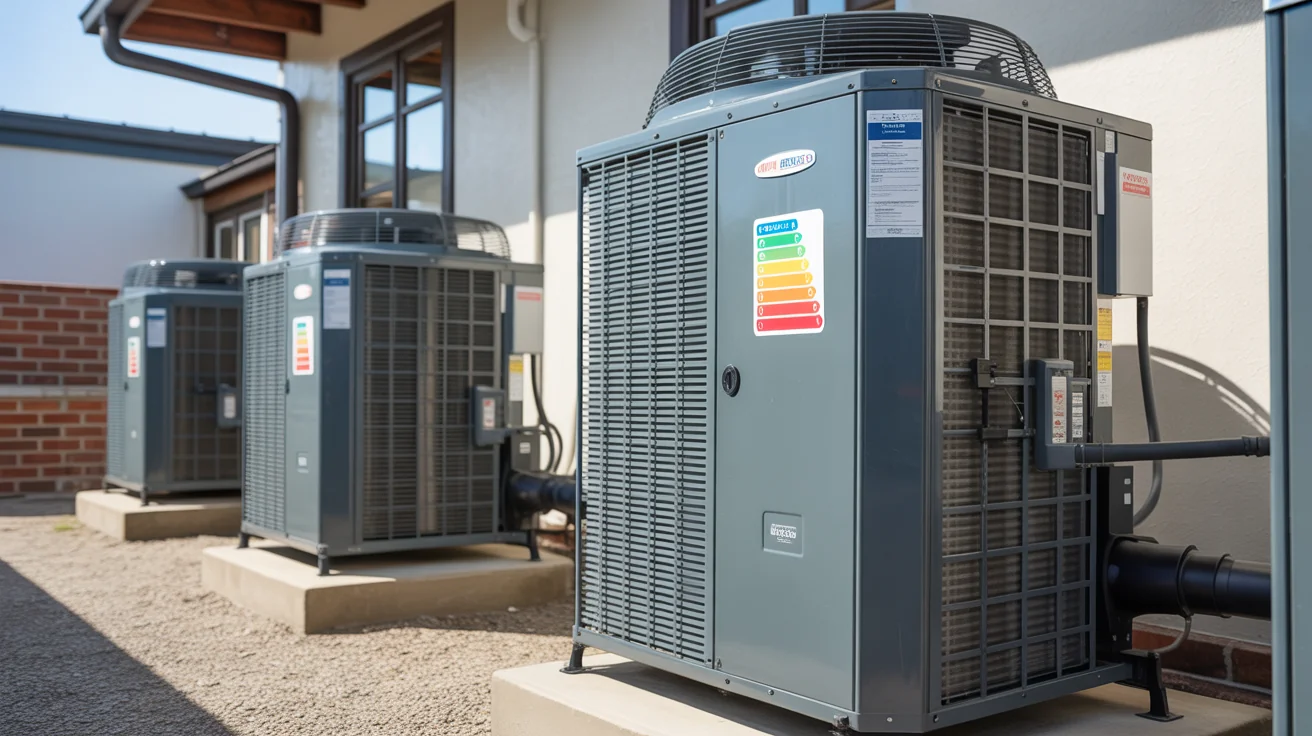
North Texas is rough on commercial HVAC systems. People who move here from up north don’t realize how hard our equipment works. The cooling season stretches from April clear through October, sometimes into November. That’s six, seven months where your rooftop unit barely gets a break. When it’s 108 outside and your condenser coils are packed with cottonwood fluff, something’s going to give.
Then there’s the humidity. Bone dry in winter, muggy as the Gulf Coast in summer. That swing beats up components. And our storms? I’ve seen hail take out condenser fins on a 20-ton unit in under a minute. Just shredded them.
But here’s what most people don’t think about: the cost when it breaks. A restaurant loses food inventory. A medical office cancels a full day of patients. Retail stores send customers to the competition. I had one manufacturing client run the numbers and figured out they lose $2,400 every single hour their production line is down because the climate control failed. At that point, a $10,000 maintenance contract is pocket change.
Energy costs creep up slowly when systems aren’t maintained, which is why a lot of owners don’t notice. Dirty coils, low refrigerant, clogged filters. Each one adds 10-15% to your power bill by itself. Stack them up and you’re paying 30% more than you should be. Every month. All year.
Complete Maintenance Program Structure
Preventive Maintenance Program Levels
Basic Maintenance Programs: These cover the stuff that prevents catastrophic failures. Not fancy, but effective.
Basic Program Components: Monthly filter changes sound boring. I get it. But I’ve personally traced a $15,000 compressor failure back to a $12 filter that nobody changed for eight months. Restricted airflow, compressor overheating, dead unit. Our AC maintenance programs catch this kind of thing before it gets expensive.
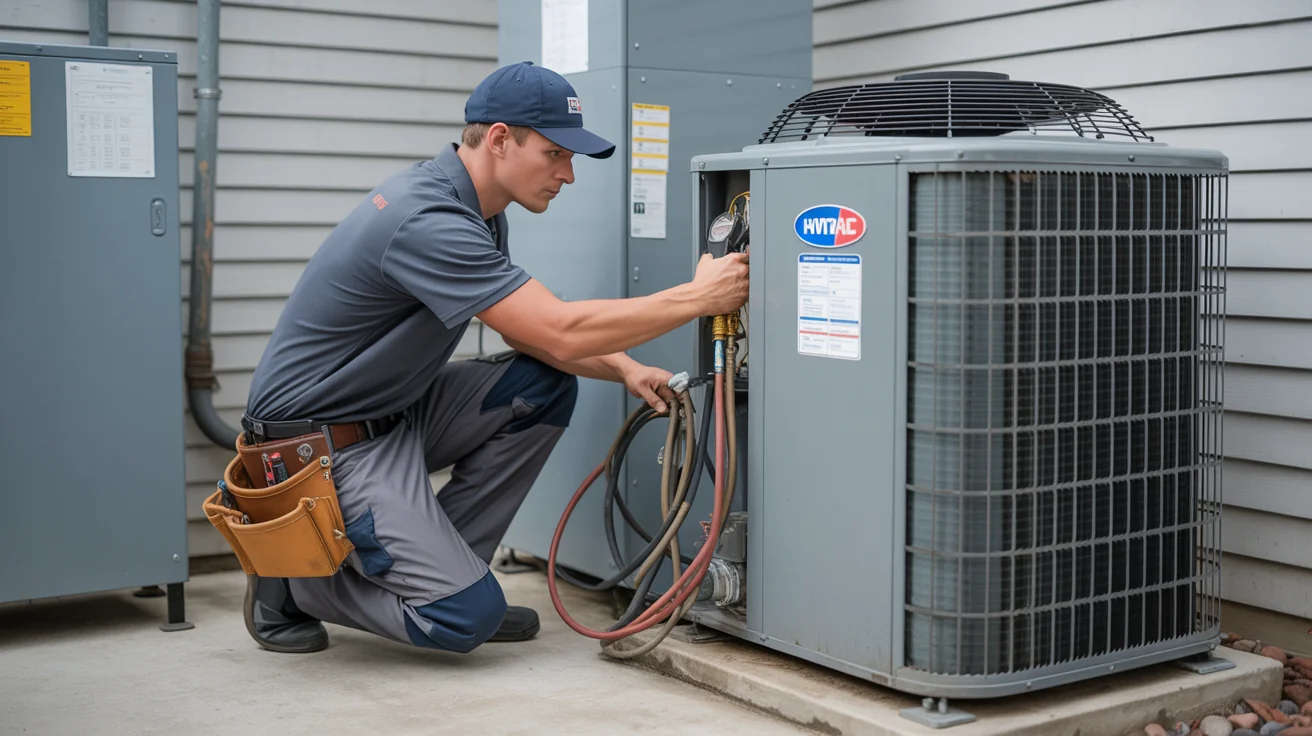
Quarterly inspections are where we check refrigerant levels, tighten electrical connections, and adjust belt tension. Small stuff. Takes a couple hours. But these are the visits where I’ll find a contactor that’s pitting, or a capacitor that’s bulging, or a slow refrigerant leak. Fix it for a few hundred bucks now or pay five figures later. Your call.
The annual deep service is basically a physical for your equipment. We tear things down, clean everything, recalibrate controls, and replace worn parts. It resets your system for another year. And basic programs include emergency service priority, so when something does go wrong, you’re not waiting behind everybody else.
Complete Maintenance Programs: For businesses where HVAC failure isn’t just inconvenient, it’s a crisis. Data centers. Medical facilities. Manufacturing.
Complete Program Features: Monthly inspections here are detailed. We’re not just swapping filters. We’re doing full system assessments, catching minor issues, and handling small repairs on the spot. Quarterly visits include thorough performance testing and efficiency tuning. Twice a year we do major service where we basically rebuild the wear items.
The real difference with a complete program is monitoring. We’re tracking your system’s performance between visits, catching efficiency drops and unusual patterns before they turn into problems. One of my clients avoided a $25,000 chiller replacement because the monitoring caught a refrigerant issue weeks before it would have caused damage. We fixed it for $1,800.
Customized Program Development
Business-Specific Program Design: No two buildings need the same maintenance program. A 24/7 data center and a Monday-through-Friday office have completely different needs even if they have the same tonnage.
Program Customization Factors: The building type matters a lot. An office, a restaurant, a medical clinic, an industrial facility - each one has different equipment, different usage patterns, different consequences when something fails. Operating hours are huge. A system running 24/7 wears out roughly twice as fast as one running business hours only. Some equipment is mission-critical (if that server room hits 85 degrees, you’ve got problems) and some is comfort-only. And obviously, budget plays a role. We work within what makes sense for your situation while covering the essentials.
Industry-Specific Requirements: Medical facilities need enhanced air quality and infection control that goes way beyond standard maintenance. I can’t just clean filters and walk away. Restaurants have kitchen exhaust systems, grease buildup, and health code requirements that need specialized attention. Retail spaces are all about keeping customers comfortable while watching energy costs. Office buildings need consistent temperatures because nothing kills productivity faster than employees complaining about being too hot or too cold. And manufacturing? Chiller systems that support production lines need a completely different maintenance approach.
Maintenance Task Categories and Frequencies
Monthly Maintenance Tasks
Essential Monthly Service: These are the basics that keep your system running between the bigger service visits.
Monthly Maintenance Checklist: Air filter inspection tells me more than just whether the filter’s dirty. I can see unusual debris patterns that point to problems elsewhere in the system. Thermostat checks confirm your building is actually hitting the temperatures you think it is (you’d be surprised how often it isn’t). I look at electrical connections because a loose wire in a commercial unit can start a fire. Condensate drains get cleaned out because I’ve seen a plugged drain line flood an entire ceiling in an Allen office building. Took out six ceiling tiles and ruined a computer. Outdoor unit cleaning removes all the stuff that blows into condenser coils around here. Performance data goes into your file so we can spot trends over time.
Monthly Maintenance Benefits: Catching problems early is the whole point. A weird noise this month becomes a bearing replacement next quarter instead of a motor failure next summer. Keeping filters and coils clean means your system runs at peak efficiency, which keeps your electric bill where it should be. And building up a maintenance history is valuable. When it’s time to make a decision about repairing versus replacing equipment, we have the data to make a smart call.
Quarterly Maintenance Service
Complete Quarterly Service: This is where we get into the guts of the system. Every three months, we go deeper than monthly visits allow.
Quarterly Service Components: We’re running performance tests, checking capacity and efficiency against baseline numbers. Belt tension, shaft alignment, bearing lubrication. Electrical testing, not just looking at connections, but actually measuring voltage, amperage, and resistance. Refrigerant pressures get checked and we look for leaks. Controls get calibrated. And I’ll put together efficiency notes so you know where your system stands and whether anything needs attention before the next visit.
Annual Complete Service
Major Annual Maintenance: Think of this as your HVAC system’s annual physical. We take things apart that we don’t normally get into.
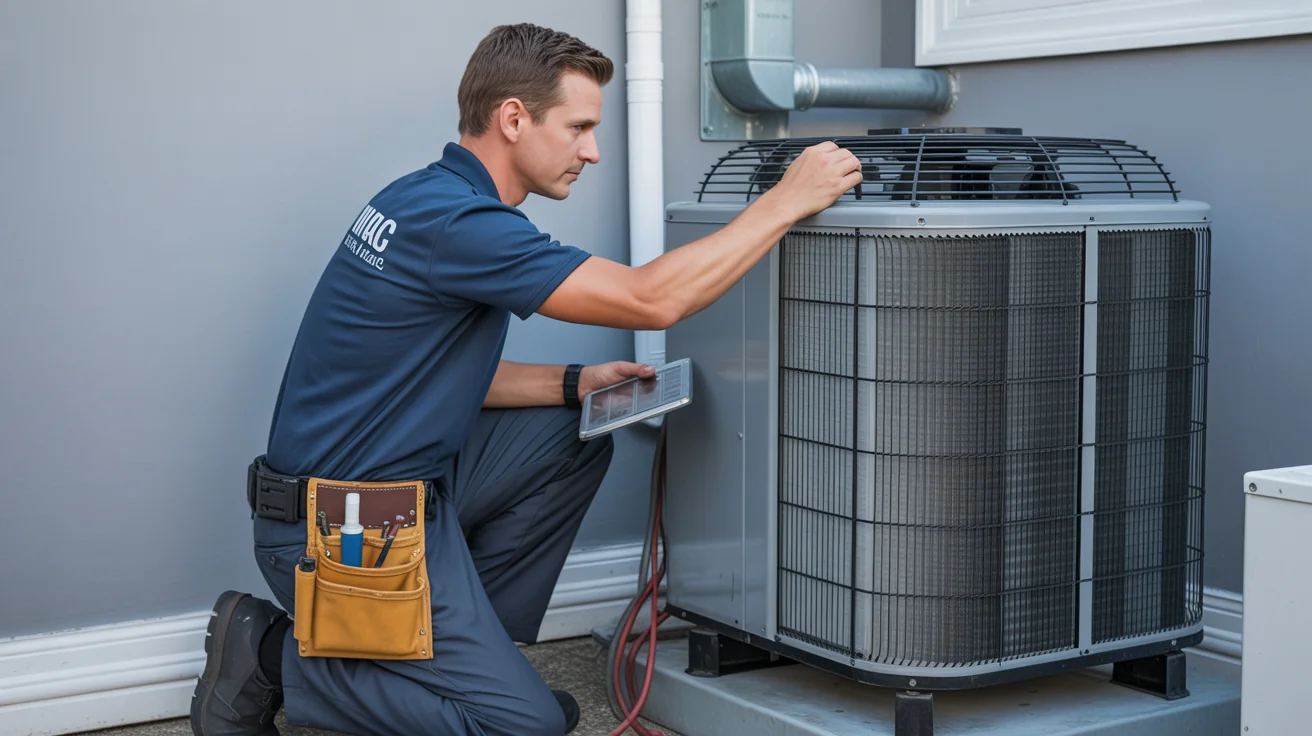
Annual Service Procedures: Heat exchanger inspection is serious business. Cracks mean carbon monoxide, and that’s not something you gamble on. Our furnace repair team has found hairline cracks that nobody would have caught without pulling the unit apart. Coil cleaning restores efficiency that’s been slowly dropping all year. I’ve seen 15-20% efficiency gains just from a proper deep cleaning. Motor bearings get tested. Controls get recalibrated from scratch. Refrigerant gets checked and optimized. Ductwork gets inspected for leaks (and trust me, most commercial ductwork leaks more than you think). Then we run everything through a full performance test and document where your system stands.
Annual Service Value: This service pays for itself in efficiency gains alone, usually. But the real value is catching the things that fail catastrophically when they go. Heat exchangers. Compressors. Motors. These are the expensive components, and the annual service is designed to find problems in them while they’re still fixable. It also keeps your manufacturer warranty valid. I’ve seen warranty claims denied because the owner couldn’t prove they’d done annual maintenance.
Predictive Maintenance Technologies
Advanced Monitoring Systems
Condition-Based Monitoring: The monitoring technology available now is genuinely useful, not just bells and whistles.
Monitoring Technologies: Vibration analysis on motors and compressors is probably the most valuable predictive tool we use. A bearing that’s starting to go changes its vibration pattern weeks before it actually seizes. Thermal imaging shows hot spots on electrical connections that look fine visually but are about to fail. Oil analysis on compressors (we send samples to a lab) reveals internal wear long before the compressor starts making noise. We track performance data over time and look for trends, because a system that’s slowly losing capacity has a developing problem even if it’s still running today.
Predictive Maintenance Benefits: This stuff actually works. I’m not just saying that. One client’s chiller system was showing a slow efficiency drop that nobody would have noticed without monitoring data. Turned out to be a refrigerant leak. We found it and fixed it for under $2,000. If that leak had continued another few months, we’d have been looking at a $25,000 replacement. That’s one example, but I have dozens. Catching problems before they cause damage is always cheaper than reacting after they do.
IoT and Smart Building Integration
Connected Maintenance Systems: Smart building technology has changed how we manage commercial maintenance for the better.
Smart Maintenance Features: Real-time monitoring means I can see how your system is performing right now, from my office or my truck. If something goes sideways at 3 AM, I know about it before you do. Remote diagnostics let me figure out what’s wrong (and often what parts I’ll need) before I even show up. That means faster fixes. Automated scheduling looks at actual equipment data and tells us when maintenance is needed, rather than just following a calendar. And you get access to everything through your phone, so you can check on your system anytime.
Integration Benefits: Fewer unnecessary service visits, because we can verify things remotely. Better planning because we’re working from real data instead of guessing. Detailed reports you can hand to your insurance company or your accountant. And when something does need attention, we handle it faster because we already know what’s going on when we walk in the door.
Service Contract Types and Options
Full-Service Maintenance Contracts
Complete Service Agreements: These are the “don’t worry about it” contracts. Everything is covered. System maintenance and most repairs, all in one predictable payment.
Full-Service Contract Features: All scheduled maintenance is included. Routine repairs and component replacements are covered. You get priority emergency response with guaranteed response times. Parts and labor for covered components are included, so no surprise bills. And we guarantee performance levels. If your system isn’t running right, we fix it. Period.
Contract Benefits: The biggest benefit is knowing what your HVAC is going to cost you this year. No surprises. No emergency invoices for $8,000 because a compressor died on a Friday afternoon. Priority service means when something does happen, you’re at the front of the line, not calling around to five companies hoping someone can come tomorrow. And honestly, the risk shifts to us. If your equipment has problems, that’s our problem to solve within the contract. Most businesses I work with eventually land on full-service because the predictability alone is worth it.
Labor-Only Service Contracts
Labor-Focused Agreements: You buy the parts, we provide the expertise and labor. Good option for businesses that want to control parts sourcing.
Labor Contract Structure: All preventive maintenance labor is covered. Emergency calls get discounted rates. We negotiate parts pricing so you’re not paying retail, but you have visibility into what things cost. You still get priority scheduling. And we track everything the same way we do with full-service clients.
Time and Materials Contracts
Flexible Service Arrangements: Pay for what you use, when you use it. Simple.
T&M Contract Benefits: You only pay for work that’s actually done. Good for buildings with newer equipment that probably won’t need much beyond basic maintenance. You can increase service during peak season and scale back in winter. Budget flexibility, because some months you might spend $200 and other months $2,000. And we still customize the work to your specific equipment and conditions. The trade-off is that you don’t get the cost predictability of a full-service contract, and emergency repair costs can be higher without a contract rate.
Cost-Benefit Analysis of Maintenance Programs
Maintenance Investment Analysis
Commercial Maintenance Cost Structure:
Here’s roughly what maintenance costs by building size. Small office buildings run $2,000-$5,000 a year for a solid program. Medium commercial buildings, $5,000-$15,000. Large facilities with multiple systems, $10,000-$50,000 or more. Predictive monitoring technology adds $2,000-$10,000 but usually pays for itself the first time it catches a major problem.
Those numbers might cause sticker shock. But keep reading.
Cost Factors: Bigger and more complex systems cost more to maintain. That’s obvious. But operating hours matter just as much. A system running around the clock needs service roughly twice as often as one running 8-to-5. Environmental conditions play a role too. A building next to a construction site with constant dust exposure needs more frequent coil cleaning than an office park with landscaping. Older equipment needs more attention. And if you need tight temperature control (server rooms, labs, manufacturing), that raises the maintenance bar.
Return on Investment Analysis
Maintenance Program ROI: Here’s where the math gets interesting, and it’s not even close.
ROI Components:
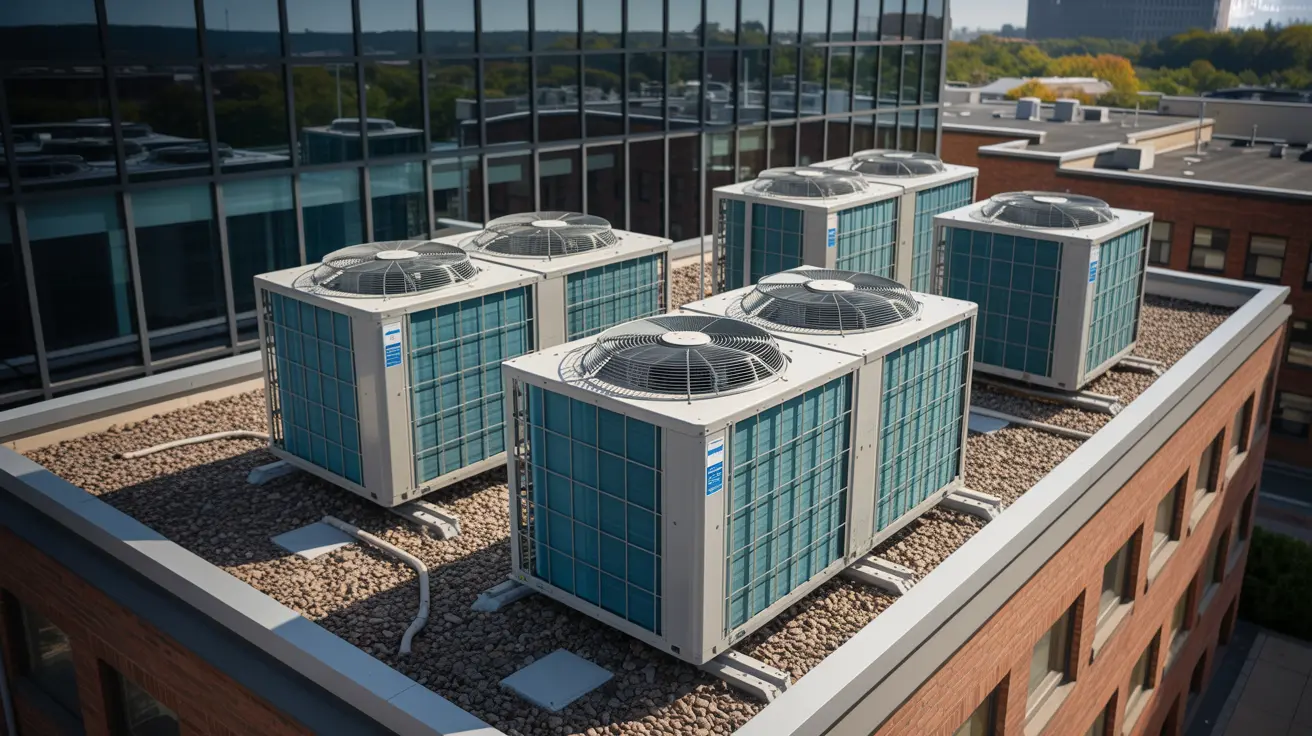
Energy savings from proper maintenance run 15-25% of your cooling and heating costs. For most commercial buildings in North Texas, that’s $5,000-$25,000 a year just in utility savings. Avoided emergency repairs account for another $10,000-$50,000 annually because maintained systems fail about 75% less often. Equipment that lasts 5-8 years longer than neglected equipment? That’s $20,000-$100,000 you don’t have to spend on replacement. And avoiding business downtime? Depending on your operation, that could be worth anywhere from $5,000 to $500,000 or more per year.
Typical ROI Results: Basic programs return 200-400% annually. Complete programs deliver 300-600%. Full-service contracts often hit 400-800% when you account for everything. Most programs pay for themselves in 3-12 months. After that, it’s pure savings.
I know those numbers sound too good to be true. But run them for your own building. Take last year’s emergency repair bills, add your utility costs, and compare to what a maintenance program would have cost. The gap is almost always shocking.
Cost Comparison Analysis
Maintenance vs. Reactive Repair Costs:
Let me put this in plain terms. A business spending $5,000-$15,000 a year on preventive maintenance will typically spend $15,000-$75,000 or more on reactive repairs if they skip maintenance. Emergency labor rates are higher. Parts have to be overnighted. One failure often damages other components. Add in $5,000-$25,000 in wasted energy from poorly maintained systems and $10,000-$500,000+ in business disruption costs, and the “savings” from skipping maintenance evaporate fast.
I had a property manager tell me they couldn’t afford a $6,000 annual maintenance contract. Three months later they called me for an emergency compressor replacement. Parts, labor, overtime, refrigerant: $14,500. One incident cost more than two years of maintenance would have.
Regional Maintenance Considerations
North Texas Climate-Specific Maintenance
Summer Maintenance Intensification: Summer in North Texas is war for commercial HVAC. Your equipment is running flat out for months.
Heat Season Maintenance Requirements: When we hit those 105+ stretches in July and August, I bump my commercial clients to weekly check-ins. Systems are running at absolute max capacity and there’s zero margin for error. Coils need cleaning more often because cottonwood season and summer dust clog everything up. Electrical components are under peak stress when systems run continuously, and that’s when loose connections cause problems. Refrigerant systems operate at their highest pressures in extreme heat, which amplifies any existing leaks. And I make sure I have emergency availability locked in during heat waves because that’s when failure is most dangerous. Employees, customers, and inventory are all at risk.
Storm Season Maintenance: Before storm season, we verify that all outdoor equipment is secured, surge protection is working, and emergency shutdown procedures are in place. After a big storm, I check outdoor units for hail damage, debris, and water intrusion before restarting them. We test backup generators to make sure they’ll actually work when the power goes out. Because the worst time to discover your generator doesn’t start is during a thunderstorm with 50,000 other people calling the electric company.
Municipal Code and Compliance Requirements
Commercial Building Code Compliance: This stuff isn’t optional, and the requirements keep growing.
Compliance Requirements: Fire safety integration means smoke evacuation systems and fire dampers need regular testing. Air quality standards require documented ventilation and filtration levels. Energy codes may require efficiency reporting. EPA refrigerant regulations demand proper handling and documentation (the fines for violations are steep). Safety systems like emergency shutoffs need testing. I keep detailed records for every commercial client because when an inspector shows up, you want a binder full of documentation, not excuses.
Documentation and Reporting:
Every visit gets documented. What we did, what we found, what parts went in, what condition things were in. You get regular performance reports showing how your system is trending. Compliance records prove you’re meeting building codes and environmental regulations. Insurance documentation shows your equipment is properly maintained (this matters when you file a claim). And warranty records prove to the manufacturer that their service requirements were met, so they can’t deny coverage on a technicality.
Service Provider Selection and Management
Commercial Service Provider Qualifications
Essential Provider Qualifications:
Not every HVAC company should be working on commercial equipment. Residential and commercial are different animals. You want someone with specific commercial experience on systems like yours. Proper licensing and certifications (not just a general contractor’s license). Enough staff that your account actually gets attention. 24/7 emergency capability for critical systems. And modern diagnostic equipment, because troubleshooting a 30-ton rooftop unit with a multimeter and a prayer doesn’t cut it.
Service Quality Evaluation: Here’s my honest advice on picking a commercial HVAC provider. Technical expertise is non-negotiable. Commercial systems are complex and the cost of mistakes is high. I’ve spent more time fixing other technicians’ work on commercial units than I’d like to admit. Response time matters because when your system is down, every hour costs money. Your provider should communicate clearly and proactively, not just show up and disappear. Price should be fair, not rock-bottom (cheap maintenance usually means shortcuts, and shortcuts cost you later). And ask for references from businesses similar to yours. A company that’s great with restaurants might not be the right fit for a medical office.
Maintenance Program Management
Program Performance Monitoring:
Once you’ve got a program running, you’ve got to manage it. Track service quality against what was promised. Watch costs and ROI to make sure the program is delivering value. Look for ways to improve based on what the data shows. Stay on top of contract terms and renewals. And build a real working relationship with your provider, because commercial HVAC maintenance works best as a long-term partnership, not a transactional vendor arrangement.
Continuous Improvement:
A good maintenance program gets better over time. We review programs annually and adjust based on what we’ve learned from the past year’s data. New technologies come along that can improve efficiency or reduce costs, and we incorporate them when they make sense. We compare your system’s performance against industry benchmarks. We look for cost optimization opportunities that don’t sacrifice quality. And as your building’s needs change (new tenants, expanded hours, additional equipment), the maintenance program should evolve with you.
Frequently Asked Questions
Q: How much should I budget for commercial HVAC maintenance? A: Budget 2-4% of equipment replacement cost annually for basic maintenance, or $1,000-3,000 per 10 tons of capacity for complete maintenance programs.
Q: What’s the difference between preventive and predictive maintenance? A: Preventive maintenance follows scheduled intervals, while predictive maintenance uses monitoring data to schedule maintenance based on actual equipment condition.
Q: Should I choose a full-service contract or time-and-materials arrangement? A: Full-service contracts provide cost predictability and performance guarantees, while T&M offers flexibility but variable costs. Choose based on your risk tolerance and budget preferences.
Q: How often should commercial HVAC systems receive maintenance? A: Monthly inspections, quarterly service, and annual complete maintenance are standard, with more frequent service for critical applications or harsh conditions.
Q: What maintenance tasks can building staff perform vs. Professional service? A: Building staff can handle filter changes, basic cleaning, and visual inspections, while professional service is required for refrigerant work, electrical service, and complex diagnostics.
Q: How do I evaluate maintenance program ROI? A: Compare total maintenance costs to avoided repair costs, energy savings, equipment life extension, and business disruption avoidance to calculate return on investment.
Q: What’s included in a commercial HVAC preventative maintenance program? A: A complete commercial HVAC preventative maintenance program includes:
Monthly tasks:
- Filter inspection/replacement
- Belt inspection and tension check
- Condensate drain cleaning
- Basic operational verification
- Thermostat/BMS calibration check
Quarterly tasks:
- Coil cleaning (evaporator and condenser)
- Electrical connection inspection and tightening
- Refrigerant pressure/charge verification
- Motor amp draw testing
- Damper operation verification
- Economizer function testing
Annual tasks:
- Complete refrigerant system analysis
- Heat exchanger inspection (gas units)
- Compressor oil analysis
- Control system calibration
- Ductwork inspection
- Full electrical system testing
- Complete performance documentation
Program benefits typically include:
- Priority emergency response (2-4 hour response vs. Next-day)
- Discounted repair rates (10-20% off parts and labor)
- No overtime charges for emergency calls
- Annual equipment reports with replacement planning
- Energy efficiency monitoring
Cost ranges from $150-$400/month for small commercial (5-15 tons) to $500-$1,500/month for larger facilities (50+ tons), depending on equipment complexity and service frequency.
Take Action: Implement Professional Commercial Maintenance
Look, I’ve been doing this for fifteen years. The businesses that maintain their HVAC equipment spend less, deal with fewer headaches, and keep their buildings comfortable. The ones that don’t end up calling me on the worst possible day, paying the worst possible price. It’s your choice, but I know which one I’d pick.
Ready to talk about a maintenance program for your building? Call (940) 390-5676 and we’ll set up a system assessment. You can also schedule online at jupitairhvac.com/contact. We’ll walk through your equipment, your building, your budget, and put together a program that makes sense. If you’re looking at new commercial installation, we can build maintenance into the plan from day one.
Professional Commercial Maintenance Services
Jupitair HVAC handles commercial maintenance across North Texas including Plano, Frisco, Allen, McKinney, and The Colony. Every program is built around your building and your business. 24/7 emergency service with priority response for maintenance customers. Predictive monitoring technology when it makes sense for your operation. And we stand behind our work with performance guarantees and solid service contracts.
Your HVAC equipment is one of the biggest investments in your building. A maintenance program protects that investment and pays for itself many times over. Give us a call and let’s figure out the right program for your situation.
Jupitair HVAC - Your North Texas commercial maintenance experts since 2008. Licensed & Insured.
Sources & References
The commercial maintenance standards, cost data, and ROI analysis in this article are based on the following authoritative sources:
- ASHRAE Commercial Maintenance Guidelines - Industry standards for commercial system maintenance
- U.S. Department of Energy - Commercial HVAC - Commercial building energy management
- EPA Indoor Air Quality - Commercial building air quality standards
- ACCA Maintenance Standards - Professional maintenance procedures and verification
- BOMA Operating Costs - Commercial building operating cost benchmarks
- ERCOT Demand Response Programs - Texas commercial demand management incentives
Last Updated: January 2026
Need Professional HVAC Service?
Our certified technicians are ready to help with any HVAC needs in North Texas