Commercial HVAC Energy Management: North Texas Cost Optimization Guide
Commercial HVAC energy management for North Texas businesses. Strategies to reduce energy costs, cut peak demand charges, and boost efficiency.
- Reduce Hidden HVAC Energy Waste
- Control North Texas HVAC Energy Costs
- Identify and Fix HVAC Cost Drivers
- The Hidden Cost That’s Killing Your Budget (And How to Fight It)
- Automate HVAC Controls to Cut Costs
- Equipment Efficiency Optimization
- Utility Rate Optimization
- Energy Recovery and Heat Pump Technologies
+ 6 more sections below...
- Reduce Hidden HVAC Energy Waste
- Control North Texas HVAC Energy Costs
- Identify and Fix HVAC Cost Drivers
- The Hidden Cost That’s Killing Your Budget (And How to Fight It)
- Automate HVAC Controls to Cut Costs
- Equipment Efficiency Optimization
- Utility Rate Optimization
- Energy Recovery and Heat Pump Technologies
+ 6 more sections below...
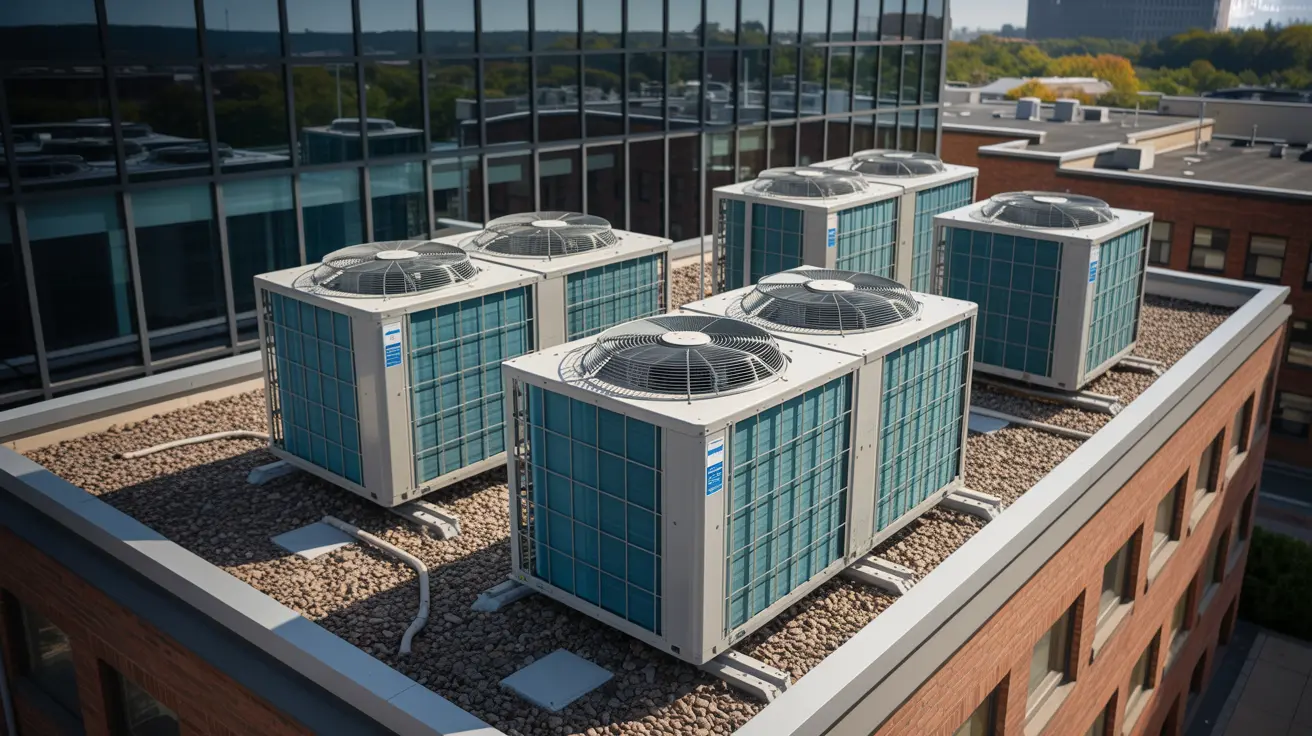
Most commercial building owners in North Texas are paying 25-50% more on HVAC than they need to. The ugly part? Peak demand charges alone can make up 40% or more of your electricity bill. One bad 15-minute spike where everything runs at once, and you’re stuck paying $2,400-$3,200 extra that month. A building automation system ($15,000-$75,000) usually pays for itself in 2-5 years. And some of the simplest fixes don’t cost much at all. Staged equipment startup can knock demand charges down 60-75%. Pre-cooling before 2 PM lets your building coast through the expensive afternoon hours without anyone breaking a sweat.
Reduce Hidden HVAC Energy Waste
I pulled up to a 40,000 square foot office building in Addison last August. Facilities manager met me in the parking lot, already frustrated. Their electric bill had cracked $18,000 that month just for HVAC. He’d tried everything he could think of. New thermostats, better filters, he even chewed out the cleaning crew for propping doors open.
The real problem? Their twenty-year-old rooftop units were running flat out all day, every day. No modulation, no staging, just full blast from sunrise to sundown. After I put monitoring equipment on the building for three weeks, the numbers told the story. They were burning nearly double the electricity they should’ve been. Their peak demand charges alone were $3,200 a month.
This is what bugs me. I drive past commercial buildings every single day where owners are getting crushed by energy costs that could be cut in half. We’re not talking about small numbers. Depending on building size, that’s $5,000 to $50,000 a year going straight to the utility company instead of staying in your pocket.
Too many business owners just accept it. “That’s what it costs in Texas.” No, it isn’t. With the right approach you can cut HVAC costs by 25-50% and your building will actually be more comfortable. Not less.
Control North Texas HVAC Energy Costs
Fifteen years of commercial HVAC work in this region has shown me something that would surprise most business owners: North Texas is one of the toughest energy environments in the country. Everything stacks against you if you’re not actively managing it.
Start with the deregulated electricity market. Sounds great on paper. Competition, choices, lower prices. In practice, you’ve got dozens of retail providers running pricing games. I’ve watched businesses get blindsided by rate spikes that doubled their bill overnight because nobody read the contract fine print.
Then there’s demand charges. During summer peak hours, roughly 2-8 PM, the utility bills you based on your single highest 15-minute usage spike for the entire month. I saw a restaurant get hit with $2,800 in demand charges because their system got stuck running at full capacity during peak hours. One malfunction. One afternoon. Almost three grand.
Our climate piles on top of all that. We run cooling systems six to seven months a year. Not three months like they do up north. When it’s 105 outside with 85% humidity, your equipment isn’t just moving heat. It’s wringing moisture out of the air, and that takes a ton of energy.
And those daily temperature swings. Forty degrees of difference is normal around here. Your system deals with 110 at 4 PM, then 70 by midnight. All that thermal cycling stresses every component, which leads to creeping inefficiencies and parts failing before their time.
Identify and Fix HVAC Cost Drivers
I tell my commercial clients all the time that trying to manage energy costs without monitoring is like dieting without ever getting on a scale. You’re just guessing.
Did an energy audit for a 25,000 square foot retail complex in Frisco last month. Owner was sure the problem was old equipment. And yeah, the units weren’t new. But after two weeks of monitoring, I found the actual culprit: their building automation system was bringing every rooftop unit online at exactly the same time each morning. That 7 AM power surge was creating massive demand charges. The equipment itself was running fine. The schedule was the problem.
A real energy audit isn’t a guy with a clipboard walking around for an hour. I’m bringing $15,000 worth of monitoring gear to track every amp, every BTU, every degree of temperature variation across your building. We log when systems run, how hard they work, and what that costs you hour by hour.
The load profile results almost always surprise people. Most owners assume their peak usage hits during the hottest part of the afternoon. Often it’s actually during morning startup when every piece of equipment kicks on at once. I’ve found businesses throwing away $8,000 a year in demand charges just because nobody staggered their startup sequence.
Once we’ve got a baseline showing exactly how your building uses energy throughout the day, we can spot the real opportunities. I’ve seen $2,500 control upgrades save $18,000 a year. Just by changing when equipment runs. Not replacing anything.
The Technology That Actually Makes a Difference
I used to think energy monitoring was strictly big-corporation stuff. After installing these systems in buildings from 5,000 to 150,000 square feet, I can tell you they pay for themselves fast. Sometimes shockingly fast.
Real-time monitoring lets me sit in my truck and see what every piece of equipment in your building is doing right now. Got an alert on my phone last Tuesday that a rooftop unit at a client’s office was pulling 40% more power than normal. Drove over, found the economizer damper jammed open, forcing the unit to overcool incoming air. Two hundred bucks to fix. Without that alert, it would’ve added $1,200 to their monthly bill and nobody would’ve known why.
The analytics side is where it gets really interesting. These systems learn your building’s patterns. They can flag problems before the money starts bleeding. I put a system in at a manufacturing facility in Allen that caught a failing compressor three weeks before it would’ve quit completely. Instead of an emergency swap during peak summer at $14,000, we scheduled a $3,800 repair on our terms.
Load factor optimization sounds fancy, but it’s pretty simple. You smooth out your energy usage so you’re not getting hammered by those demand spikes. When the system automatically stages equipment to avoid peaks, I’ve watched demand charges drop by 60% or more. That’s real money showing up on the very next bill.
The Hidden Cost That’s Killing Your Budget (And How to Fight It)
This one genuinely frustrates me. Most business owners have no idea what demand charges are, but they’re frequently paying more for demand than for the actual electricity they consume.
Here’s how it works. The utility measures your highest 15-minute power usage during the month. If your building pulls 200 kW for just 15 minutes during peak hours, you pay for 200 kW all month long. Doesn’t matter if your average is only 80 kW. In North Texas, demand charges run $8 to $25 per kilowatt every single month.
Worked with a dental practice in McKinney where demand charges were costing them $2,400 a month. Their peak usage happened at 7:30 AM when everyone showed up and flipped everything on at once. Computers, lights, sterilizers, air compressors, HVAC. All of it, boom, at the same time. An $800 timer system that staged their equipment startup over 30 minutes cut their demand charges by 75%. Eight hundred bucks. That was it.
Gets worse. That peak summer demand number follows you around all year on some rate structures. So if you have one terrible day in July where your system goes haywire, you’re paying for it month after month until the following July rolls around. I’ve seen businesses eat $8,000 in extra costs because of a single equipment malfunction that lasted two hours.
Smart Ways to Outsmart the Utility Company
The trick is getting your equipment to stop being selfish. Instead of every system grabbing power at the same time, they need to take turns.
Load shedding sounds complicated but really isn’t. You set up a system that automatically dials back power usage during peak periods. I put a demand response system in at a retail complex in Plano that bumps the temperature setpoint up 3 degrees during peak hours. Shoppers don’t notice. But it drops the cooling load 20-30% right when demand charges are at their worst.
Equipment staging is probably the single best return you’ll find. Instead of all your rooftop units firing at 7 AM, you spread startup over 20-30 minutes. Same cooling result. Way lower peak demand. I’ve cut demand charges by $3,000 a month with nothing more than a controls change.
Pre-cooling is energy arbitrage, pure and simple. You use cheaper off-peak electricity to cool your building extra cold in the morning, then let it coast during expensive afternoon hours. Your building’s thermal mass works like a battery. One restaurant I work with in Addison pre-cools their dining room to 68 degrees at 11 AM, then lets it drift up to 74 during the lunch rush. Customers stay comfortable and their peak demand drops 40%.
Battery storage used to be out of reach for most businesses, but prices have come down enough that I’m seeing paybacks in 4-6 years for buildings with serious demand charge issues. Charge at night with cheap power, use that stored energy during peak periods. The math is starting to work.
Automate HVAC Controls to Cut Costs
The smartest buildings I work on basically run themselves. The automation system learns how long it takes to cool your space, checks the weather forecast, tracks when people actually show up. Then it handles everything.
Optimal start control is brilliant because it’s so simple. Instead of firing up your HVAC system at 6 AM every day regardless of conditions, the system calculates exactly when to start based on outdoor temp, building thermal mass, and when you need the space comfortable. Mild 75-degree morning? Maybe it doesn’t kick on until 7:30. Scorching 95-degree day? It starts at 5:45.
Optimal stop is the flip side. The system figures out it can shut down at 4:30 PM and coast on thermal mass until everyone leaves at 5. Half an hour of runtime saved every day. Doesn’t sound like much until you add it up over twelve months.
Night setback should be a no-brainer, but you wouldn’t believe how many buildings run their HVAC full tilt all night for empty spaces. I set up a law office in Frisco to let the temperature drift to 80 after hours, then pull it back to 72 an hour before staff arrives. Cut their after-hours energy use by 70%.
Seasonal programming means your system adapts to outdoor conditions. In October when it’s 85 outside, your building doesn’t need the same aggressive cooling strategy it needed in July at 105.
Zone control is where automation really earns its money. Why cool the entire third floor when only accounting is working late? Smart systems track occupancy and only condition the spaces people are actually using. I installed a system at a professional building where conference rooms go into setback mode 30 minutes after meetings end automatically. Building went from cooling 40,000 square feet around the clock to conditioning only occupied spaces. Energy costs dropped 35%.
Daylight sensors work great in buildings with lots of windows. When natural light floods in, the system knows the sun is adding heat to those zones and adjusts accordingly. Occupancy sensors take it further. Empty office? No conditioned air until someone walks in.
Economizer and Free Cooling Strategies
Airside Economizers: When outdoor conditions are right, you can use outside air for cooling instead of running your compressors. That’s free cooling, and in North Texas we get more opportunities for it than most people realize, especially in spring and fall. The energy savings can be significant.
There are a few approaches. Dry bulb economizers bring in outdoor air whenever it’s cooler than return air. Enthalpy economizers are smarter. They compare the total energy content of outdoor air versus return air, accounting for humidity. Differential enthalpy controls take it a step further by measuring both streams in real time. Integrated economizers blend mechanical cooling with free cooling for the best of both worlds. And fault detection keeps tabs on the whole system so you know immediately if something goes wrong.
Free Cooling Benefits:
When conditions allow it, free cooling cuts energy use 20-40%. That’s not a small number. Beyond savings, you’re also extending equipment life because your compressors aren’t grinding away every hour. More outdoor air cycling through the building improves indoor air quality too, which tenants actually notice. And since you’re reducing electrical draw during these periods, your demand charges benefit as well.
Equipment Efficiency Optimization
High-Efficiency Equipment Selection
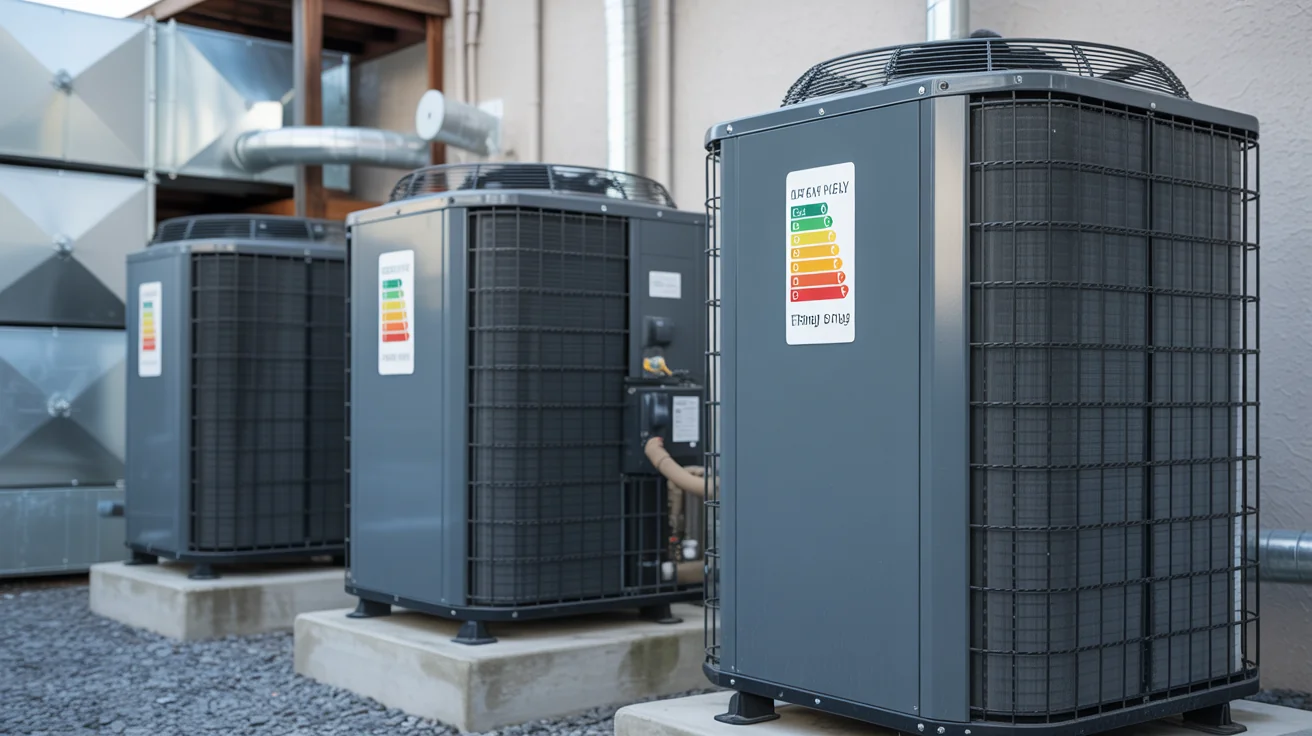
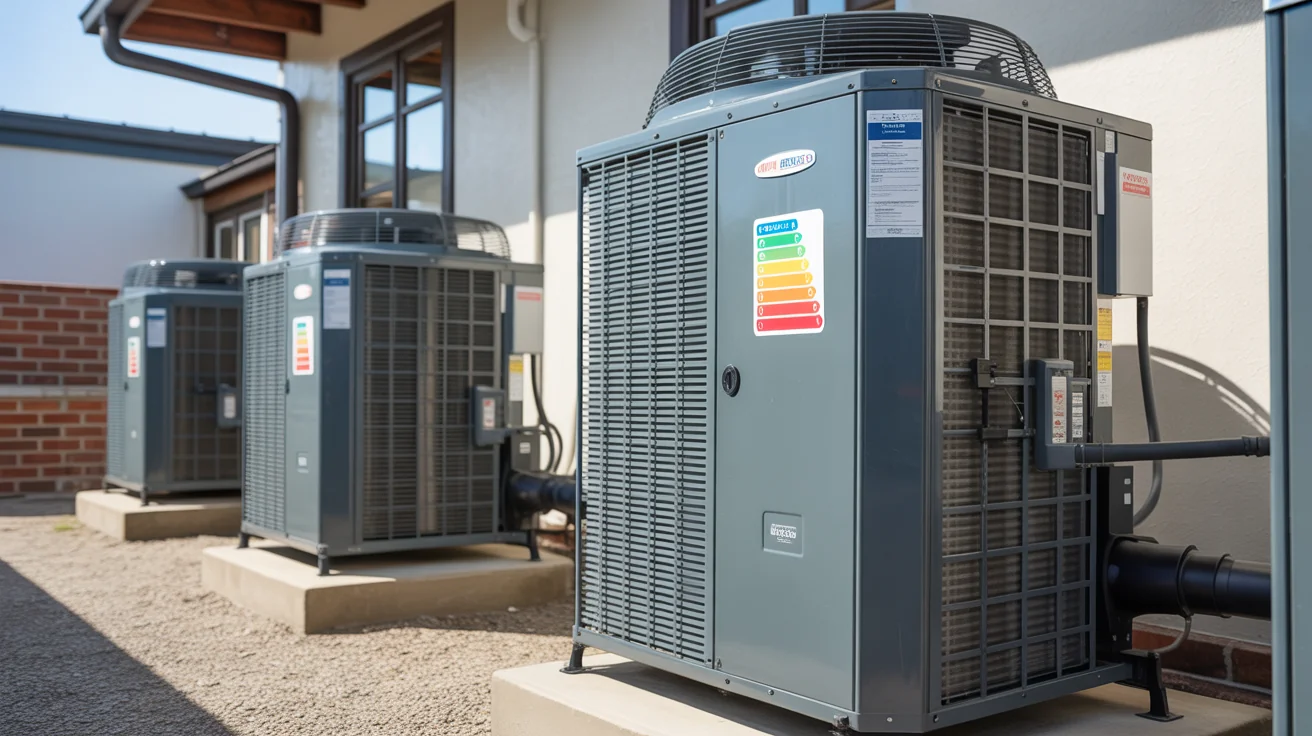
Energy-Efficient Equipment Technologies: Modern commercial HVAC gear is dramatically more efficient than what was available even ten years ago. If you’re running old equipment, the upgrade math might surprise you.
Variable refrigerant flow (VRF) systems deliver 15-30% better efficiency than traditional setups. I’m a big fan of these for multi-zone buildings because they only send refrigerant where it’s actually needed. Magnetic bearing chillers hit 35-50% better efficiency than standard chillers, though they’re really for larger buildings. Variable speed drives on fans and pumps save 20-50% on motor energy. Even just upgrading to premium efficiency motors gives you 2-8% improvement. And better heat exchangers mean less energy wasted in the transfer process.
Equipment Right-Sizing:
This is where I see a lot of waste. Somebody installs a monster unit based on a rough estimate or a rule of thumb, and the building ends up with way more capacity than it needs. Oversized equipment cycles on and off constantly, which is terrible for efficiency and hard on components.
Proper sizing starts with an actual load calculation based on your specific building. Using multiple smaller units instead of one big one often gives you better part-load efficiency because you can match capacity to real conditions. Variable capacity equipment ramps up and down to match actual loads instead of just running full blast or shutting off. Staged systems add capacity gradually as needed. And you can plan for redundancy without oversizing your primary equipment.
System Integration and Optimization
System-Level Efficiency: The biggest savings come from optimizing how everything works together, not just tuning individual pieces.
Integration Strategies:
Heat recovery systems capture waste heat from your cooling equipment and put it to work somewhere useful, like domestic hot water or space heating. It sounds almost too good but it works. Demand-controlled ventilation adjusts how much outside air you bring in based on actual occupancy instead of running at design maximum all day. That alone saves a surprising amount. Coordinating your lighting controls with HVAC makes a difference too. When you dim the lights or switch to natural lighting, the cooling load drops. Automated window shades cut solar heat gain during peak cooling hours and let warmth in during winter. And thermal mass management lets you use the building itself as energy storage, pre-cooling overnight and coasting through expensive afternoon hours.
Utility Rate Optimization
North Texas Utility Rate Analysis
Commercial Rate Structure Understanding: Your rate structure matters more than most people realize. Picking the wrong one can cost you thousands, even if your building is running efficiently.
Rate Structure Options:
North Texas Commercial Rate Options:
Standard rates give you fixed energy and demand charges. Predictable, simple, but not always cheapest. Time-of-use rates charge different prices depending on when you use electricity, which rewards businesses that can shift usage to off-peak hours. Real-time pricing fluctuates hourly based on market conditions and offers the biggest potential savings if you can flex your operations. Demand response programs pay you bill credits for reducing load during peak periods, essentially paying you to turn things down when the grid is stressed. Custom rates are negotiated for large customers with big loads and unique usage patterns.
Rate Selection Strategy:
Start by analyzing your actual usage patterns and matching them to available rate structures. Some businesses save thousands just by switching plans. Run cost comparison models using your historical usage data under different rate options. Work on improving your load factor, which is the ratio of average to peak demand. The closer those numbers are, the less you pay in demand charges. Look at what operations you can shift to avoid high-cost periods. And if your utility offers demand response programs, participate. Getting paid to reduce load during peak times is about as close to free money as you’ll find.
Energy Procurement Strategies
Retail Electric Provider Selection: In Texas’s deregulated market, your choice of electricity provider can make or break your energy budget.
Provider Evaluation Criteria:
Don’t just look at the advertised rate. Compare the complete picture: energy charges, demand charges, transmission fees, all the line items that add up. Read the contract terms carefully. How long are you locked in? What happens at renewal? What’s the early termination penalty? If sustainability matters to your business, check what green energy options each provider offers. Evaluate their customer service too, because when something goes wrong with your account, you want someone who picks up the phone. Some providers also offer energy management services and efficiency programs bundled with their plans. Those can add real value.
Energy Recovery and Heat Pump Technologies
Energy Recovery Systems
Heat Recovery Applications: Waste heat is just money going out the exhaust. Capturing and reusing it makes a real dent in your energy bills.
Options include heat recovery ventilators that pull heat from exhaust air, and energy recovery ventilators that recover both heat and moisture. Waste heat recovery systems grab heat from equipment processes for space heating. Heat pump water heaters use waste heat for domestic hot water. And if you’ve got refrigeration equipment, you can capture condenser heat for space heating instead of dumping it outside.
The benefits add up quickly. Energy savings of 20-60% on heating and cooling. Better air quality because you can ventilate more without the energy penalty. Smaller equipment requirements since you’re supplementing with recovered energy. Lower operating costs and better cash flow. And if reducing your carbon footprint matters to your business, that’s a nice bonus.
Heat Pump Optimization for North Texas
Commercial Heat Pump Applications: Heat pumps make a lot of sense in our climate. North Texas winters are mild enough that heat pumps operate efficiently most of the time, and they handle cooling season with no problem.
You get year-round heating and cooling from one system, which simplifies maintenance. Heating costs run 30-50% less than electric resistance heating. Fewer mechanical components means less that can break down compared to running separate heating and cooling systems. Lower carbon emissions than gas heating, if that’s a consideration. And utility companies offer solid rebates for commercial heat pump installations right now.
Financial Analysis and ROI
Energy Management Investment Analysis
Cost-Benefit Analysis: Before you spend money on energy management, you need to know what you’re getting back. Here’s what I typically see across different investment levels.
Monitoring and controls run $5,000-25,000 with a 1-3 year payback. This is usually where I tell people to start because it’s low risk and you learn exactly where your money is going. Equipment upgrades are a bigger commitment at $20,000-200,000 with 3-7 year paybacks, but they’re worth it when your existing gear is past its prime. Building automation systems cost $15,000-75,000 and pay back in 2-5 years. Energy recovery systems require $25,000-150,000 and take 4-8 years to pay back, but they keep saving you money for decades.
Return on Investment Calculation:
When you’re running the numbers, don’t just count the energy savings on your utility bill, though that’s the biggest piece. Factor in demand charge reduction, which can be substantial. Account for lower maintenance costs when equipment runs more efficiently. There’s a real productivity benefit from better comfort. Nobody works well when they’re sweating at their desk. And energy efficiency improvements increase your property value, which matters whether you’re planning to sell or just want leverage with your bank.
Financing Options and Incentives
Energy Efficiency Financing: You don’t have to write a check for the whole project upfront. There are several ways to spread the cost.
Financing Alternatives:
Utility rebates often cover 20-40% of project costs right off the top for qualifying equipment. Traditional equipment financing through loans or leases lets you start saving immediately while paying over time. Energy service agreements involve a third-party financing the project and guaranteeing savings, so they take on the performance risk. PACE (Property Assessed Clean Energy) financing lets you pay through your property tax bill over a long term. Power purchase agreements have a third party own the equipment and guarantee you’ll save money through a contract.
Available Incentives:
North Texas Commercial Incentives:
- Oncor rebates: $200-2,000 per ton for high-efficiency equipment
- Federal tax credits: 25C ended after 31 December 2025. 179D is separate and still applies to qualifying commercial improvements
- Accelerated depreciation: MACRS depreciation for energy efficiency equipment
- State incentives: Texas Enterprise Fund and other state programs
- Municipal programs: Local rebates and incentives for energy efficiency
Implementation and Performance Management
Energy Management Program Implementation
Systematic Implementation Process:
Energy Management Implementation Steps:
1. Baseline establishment: Current energy consumption and cost analysis
2. Opportunity identification: Energy audit and improvement opportunity assessment
3. Project prioritization: Cost-benefit analysis and implementation planning
4. System installation: Professional installation of energy management systems
5. Commissioning and optimization: System startup and performance verification
6. Ongoing monitoring: Continuous performance tracking and optimization
Performance Verification: After installation, the work isn’t done. You need measurement and verification to document what you’re actually saving. Continuous commissioning keeps everything tuned up as conditions change. Regular performance reports show whether the system is delivering what was promised. The equipment needs maintenance to keep performing. And once you see the results from phase one, you’ll almost certainly spot more opportunities worth pursuing.
Staff Training and Engagement
Building Operator Training: The best energy management system in the world won’t help much if nobody knows how to use it. Your building operators need to understand what they’re working with.
Training Components: System operation covers day-to-day use of the energy management platform. Troubleshooting helps your team identify and resolve common issues before calling us. Optimization techniques teach advanced strategies for squeezing out more savings over time. Reporting and analysis shows how to use the energy data for better decision making. And maintenance procedures keep the systems running at peak performance between our service visits.
Frequently Asked Questions
Q: How much can energy management reduce commercial HVAC costs? A: In my experience, professional energy management cuts HVAC operating costs by 25-50%. Payback periods run 1-5 years depending on what improvements you install. The monitoring and controls upgrades tend to pay back fastest.
Q: What is the most effective strategy for reducing peak demand charges? A: Automated demand response systems that adjust temperature setpoints and cycle equipment during peak periods are the single most effective approach I’ve found. Simple equipment staging is a close second and costs a fraction of the price.
Q: Should I invest in building automation for energy management? A: For most commercial buildings over 10,000 square feet, absolutely. Building automation typically pays for itself within 2-5 years through energy savings. Below that size, simpler controls and smart thermostats can get you most of the way there.
Q: How do North Texas utility programs help with energy management? A: North Texas utilities offer good rebates for high-efficiency equipment, demand response programs that give you bill credits for reducing load during peak times, and custom incentives for larger projects. Oncor’s programs are particularly worth looking into.
Q: What maintenance is required for energy management systems? A: Regular calibration, software updates, and performance monitoring. Budget roughly 5-10% of your annual energy savings for maintenance costs. It’s worth it to keep the system performing.
Q: Can energy management improve indoor air quality and comfort? A: Yes, and this surprises people. Better energy management usually means better temperature control, tighter humidity management, and improved air quality. You’re not sacrificing comfort to save money. You’re getting both.
Take Action: Implement Commercial Energy Management
High energy costs aren’t something you have to live with. Professional energy management can cut your bills significantly while making your building more comfortable and your equipment more reliable.
Ready for professional commercial energy management? Call (940) 390-5676 for a complete energy analysis. Schedule online at jupitairhvac.com/contact. We’ll walk through your utility bills, audit your equipment, and give you a clear picture of what you can save and what it’ll cost to get there.
Professional Energy Management Services
Jupitair HVAC provides commercial energy management throughout North Texas. We handle the full process: energy audits to find where you’re wasting money, professional installation and commissioning of management systems, ongoing monitoring to keep things optimized, and performance verification so you can see exactly what you’re saving.
Commercial HVAC energy management isn’t a one-time project. It’s an ongoing process of monitoring, adjusting, and improving. That’s what we do at Jupitair HVAC, and we’ve been doing it across North Texas since 2008. Licensed and insured.
Sources & References
The energy management strategies, cost savings data, and demand response information in this article are based on the following authoritative sources:
- U.S. Department of Energy - Commercial Building Energy Management - Building automation and energy efficiency standards
- ASHRAE Energy Guidelines - Commercial building energy optimization standards
- ERCOT Demand Response Programs - Texas grid demand management incentives
- EPA ENERGY STAR Portfolio Manager - Commercial building energy benchmarking
- PUC of Texas Rate Structures - Texas electricity pricing and demand charges
- EIA Commercial Building Energy Consumption - National commercial energy usage benchmarks
Last Updated: January 2026
Need Professional HVAC Service?
Our certified technicians are ready to help with any HVAC needs in North Texas