
Commercial HVAC System Selection Guide
Commercial HVAC system selection for North Texas businesses. Expert advice on system types, sizing, efficiency, and costs for ROI.
- The Strategic Importance of Commercial HVAC System Selection
- North Texas Commercial HVAC Challenges
- Commercial HVAC System Categories
- Split System Commercial Applications
- Variable Refrigerant Flow (VRF) Systems
- Chiller and Boiler Systems
- System Sizing and Load Analysis
- System Capacity Selection
+ 19 more sections below...
- The Strategic Importance of Commercial HVAC System Selection
- North Texas Commercial HVAC Challenges
- Commercial HVAC System Categories
- Split System Commercial Applications
- Variable Refrigerant Flow (VRF) Systems
- Chiller and Boiler Systems
- System Sizing and Load Analysis
- System Capacity Selection
+ 19 more sections below...
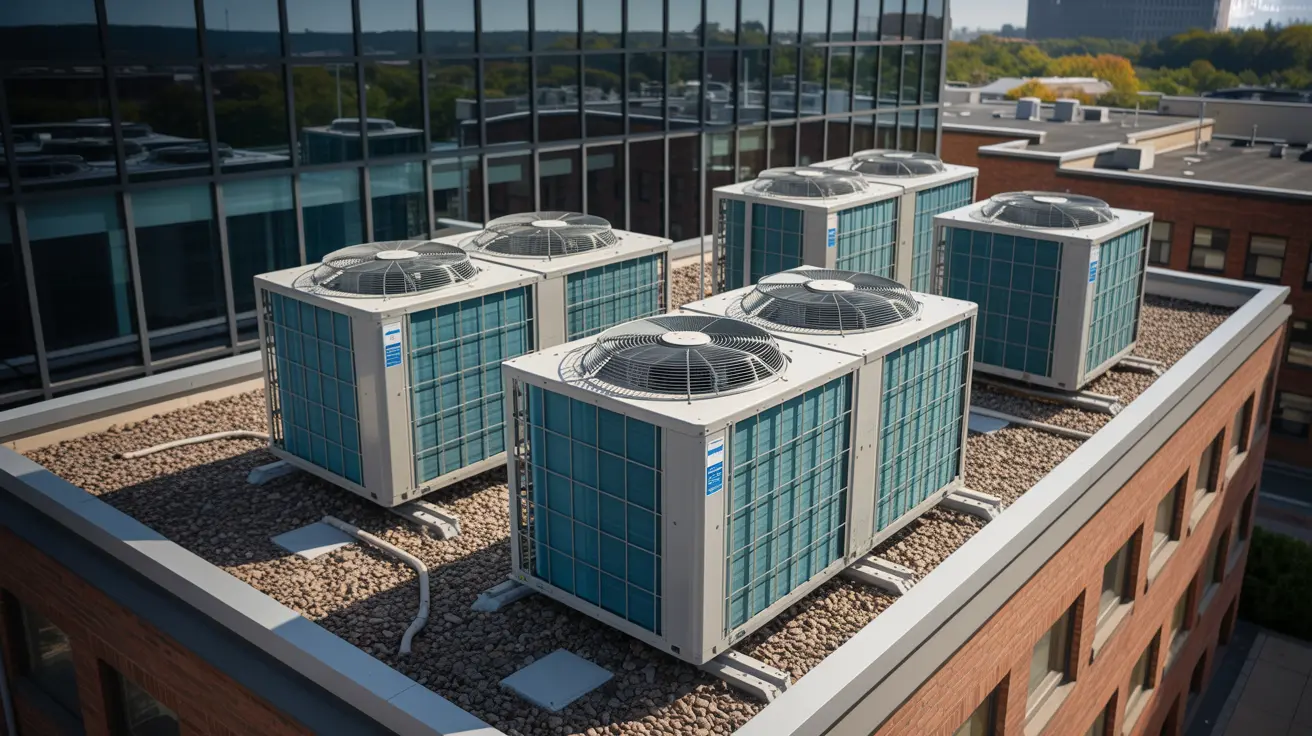
Commercial HVAC system selection in North Texas costs $15,000-$500,000+ depending on building size (1 ton per 300-600 sq ft) and system type—packaged rooftop units (RTUs) at $8,000-$50,000 are most cost-effective for typical commercial buildings, while VRF systems ($20,000-$80,000) provide 15-30% better efficiency for multi-zone applications. Pick the wrong system and you’re stuck bleeding $5,000-$50,000 a year in wasted energy and extra repairs. For 15 to 20 years. North Texas summers above 100°F with thick humidity mean your system needs real dehumidification muscle and smart peak demand management, especially with what our deregulated electricity market throws at you.
The Strategic Importance of Commercial HVAC System Selection
Learn more about Commercial HVAC.
Here’s something I wish more business owners understood before they signed a purchase order: the HVAC system you pick today will either make you money or drain it for the next two decades. There is no middle ground.
I’ve watched this play out over and over. A business owner shops by price tag alone, grabs whatever’s cheapest, and then spends years regretting it. I had a restaurant owner call me last month. His “deal” on a rooftop unit was costing him $800 a month in repairs. Eight hundred dollars. Every single month. And his electric bill looked like a mortgage payment. Meanwhile, his competitor across the street? They’d invested in the right system from the start. Their utility bills ran 40% lower, and I think I’d serviced them maybe twice in three years for routine stuff.
That’s the thing about commercial HVAC. It affects your operating costs, your employees’ productivity (ever tried working in a 78-degree office with no airflow?), your customers’ willingness to stick around, and your bottom line for years. This guide walks you through how to actually pick the right one.
North Texas Commercial HVAC Challenges
Our part of Texas is brutal on equipment. I don’t say that lightly.
Summer means your outdoor units are baking in 110°F heat for weeks straight. Spring and fall can’t make up their mind, swinging 40 degrees in a single day, which beats the daylights out of your controls and expansion valves. Then there’s the humidity. Most of the comfort complaints I get on commercial jobs aren’t about temperature at all. They’re about moisture. The air feels clammy, papers are curling on desks, and someone’s worried about mold behind the drywall. Standard systems just can’t pull enough moisture out of the air during those soupy July weeks.
And don’t get me started on storm season. I’ve seen hail destroy a $40,000 condenser in about ninety seconds.
The business side adds its own wrinkles. Our deregulated energy market means your electricity rate can jump significantly year to year. What looks like a tiny efficiency difference on paper turns into thousands of real dollars. Buildings around here range from hundred-year-old downtown spaces with zero insulation to brand new glass-and-steel offices, and each one needs a completely different approach. A dentist’s office, a barbecue restaurant, and a warehouse all have wildly different cooling loads even if they’re the same square footage. Codes keep tightening. And the math between spending more upfront versus paying more every month is genuinely hard to work through without experience.
Commercial HVAC System Categories
Packaged Rooftop Units (RTUs)
System Overview: RTUs are the workhorses of commercial HVAC in North Texas. Self-contained, sitting on your roof, heating and cooling all in one box. I install more of these than anything else.
RTU Advantages for North Texas: Cost is the obvious one. Lower upfront price than most alternatives, which matters when you’re trying to open a business or keep one running. They don’t eat up any of your interior square footage since everything lives on the roof. That alone sells a lot of people. When I need to service them, I’m up on the roof instead of disrupting your staff or customers inside. If you’ve got a bigger building, you can run multiple units and get real zone control plus built-in redundancy (if one goes down, the others keep working). Modern RTUs are also built tougher for weather than they were ten years ago, with hail guards and corrosion-resistant coatings that actually hold up.
RTU System Sizing and Configuration: Small commercial spaces like a single-tenant office or a retail shop typically need 3-10 ton units. Step up to a larger office building or a multi-tenant strip center and you’re looking at 10-25 ton units. Big box retail and manufacturing? 25-50+ tons. One decision I always talk through with owners is whether to run several smaller units or one big one. Smaller units give you better zone control and that redundancy I mentioned. They cost more initially, but when your single 25-ton unit dies on a Friday afternoon in July, you’ll wish you’d gone with three 10-tonners. For any space where downtime isn’t an option - think server rooms or medical - you absolutely need backup capacity.
RTU Technology Options: Baseline equipment sits right at the federal minimum with 80% AFUE gas heat. If you’re cash-strapped, it works. Stepping up a couple of efficiency points costs more upfront but the energy savings are real. I had a strip mall owner in Frisco replace four tired 12 SEER units that were twenty years past their prime, and his summer electric bill dropped by about $1,100 a month. Variable capacity systems modulate their output instead of just slamming on and off, which means better humidity control and quieter operation. Smart controls let you tie everything into a building automation system and monitor from your phone. And heat pump RTUs are worth a serious look in North Texas - our winters are mild enough that they perform well for heating without the gas line.
Split System Commercial Applications
Commercial Split System Benefits: Split systems give you flexibility that RTUs can’t always match. You can put the indoor unit wherever makes sense for your layout and tuck the outdoor unit somewhere inconspicuous. For a nice office building or a restaurant where customers can hear the HVAC, the noise difference matters. Split systems tend to run quieter than packaged units because the compressor is outside and away from occupied space. In my experience, they also hit slightly higher efficiency numbers at comparable price points because the components are sized independently. And the zone control options are excellent.
Split System Applications: I recommend splits for professional offices where people are on phone calls all day and don’t want a loud system cycling on and off. Retail spaces where the building owner cares about curb appeal. Medical facilities where you need tight temperature and humidity control (and HIPAA-related privacy means you can’t have the HVAC tech wandering through exam areas to reach equipment). Schools and training centers where quiet operation actually affects whether people can learn. Hotels and restaurants where guest experience is the whole business. Each of these has its own reasons, but they all come back to energy efficiency and thoughtful placement.
Variable Refrigerant Flow (VRF) Systems
VRF Technology Advantages: VRF is the premium option. No way around it. But for the right building, nothing else comes close.
VRF Benefits for North Texas: The efficiency gains are the headline. We’re talking 20-30% less energy than traditional systems because VRF adjusts output in tiny increments instead of running full blast or shutting off. But what really gets me excited is the heat recovery. If your server room needs cooling while your reception area needs heating on a March morning, VRF takes the heat from one zone and moves it to the other. You’re literally recycling energy inside your own building. That’s not marketing talk - I’ve seen the utility bills to prove it. Every zone gets its own temperature, which ends the thermostat wars. The system is whisper-quiet. And because VRF uses small refrigerant lines instead of big ductwork, it’s a lifesaver for retrofits and renovations where you can’t run full-size ducts. More about seasonal energy strategies here.
VRF Application Suitability: Multi-zone office buildings where every tenant wants their own temperature. High-end law firms and medical practices where “good enough” isn’t. Mixed-use developments (which we’re seeing a lot of in Frisco and McKinney) where you’ve got offices above retail above a restaurant, all on different schedules. Historic buildings in downtown areas where tearing open walls for ductwork would be destructive and expensive. And any business that’s genuinely committed to cutting energy costs long-term. VRF isn’t for everybody, but when it fits, it fits perfectly.
Chiller and Boiler Systems
Central Plant Applications: Once you get big enough, central chillers and boilers become the most efficient option by a wide margin.
Chiller System Benefits: For large cooling loads, nothing beats a well-designed chiller plant on efficiency. The reliability factor is huge too. You can set up redundant chillers so that if one goes down for maintenance, the building doesn’t even notice. All your major equipment sits in one mechanical room, which makes service calls faster and cheaper compared to chasing twenty rooftop units across a huge building. The staging and load-matching capabilities are sophisticated. And during our spring and fall shoulder seasons, water-side economizers can provide free cooling by using outdoor air to reject heat without even running the compressors. That’s real money back in your pocket.
Chiller System Applications: Large office buildings over 50,000 square feet. Hospitals and medical complexes that can’t afford downtime. University campuses and large school districts where you can serve multiple buildings from a central plant. Government buildings where the system needs to last 30+ years and meet tight performance specs. Manufacturing and process cooling where temperature precision isn’t optional. If your building (or campus) is big enough, the upfront investment pays back faster than most people expect.
System Sizing and Load Analysis
Commercial Load Calculation Procedures
Related: Load Calculation
Load Analysis Done Right: I can’t tell you how many times I’ve walked into a commercial building where the previous installer just eyeballed the tonnage. “Eh, it’s about 3,000 square feet, throw a 10-ton on it.” That’s not how this works.
Load Calculation Components: A proper load calculation looks at everything. Your building envelope - walls, windows, roof, insulation (or lack of it). The heat coming off people, lights, computers, kitchen equipment, and anything else plugged in. Those internal heat gains are often bigger than the heat coming through the walls, especially in an office packed with people and monitors. Ventilation requirements based on how many people occupy the space and what code says. Solar heat gain through your windows, which changes dramatically based on which direction they face and whether you’ve got any shading. And your operating schedule, because a restaurant that’s open 16 hours a day has totally different needs from a CPA office that closes at five.
North Texas Climate Considerations: We design for 100°F on the cooling side and 20°F for heating. Those are the extremes your system has to handle without breaking a sweat (well, figuratively). Humidity loads are a separate calculation entirely, and skipping them is one of the most common mistakes I see. Solar heat gain in Texas is intense, and west-facing glass walls are an HVAC nightmare. The thermal mass of your building’s concrete and masonry stores heat during the day and releases it at night, which can actually help if your engineer accounts for it. And infiltration - how much outside air leaks in through doors, loading docks, and gaps in the envelope - can make or break your load numbers. I’ve seen buildings where fixing air leaks dropped the cooling load by 15%.
System Capacity Selection
Capacity Sizing Best Practices: Oversizing is the number one mistake in commercial HVAC. I know it sounds backward. Bigger should be better, right? Wrong. An oversized system short-cycles. It cools the space too fast, shuts off before it can pull moisture out of the air, then kicks back on, then shuts off again. The result is high humidity, uneven temperatures, and a compressor that wears out way before its time. Load diversity matters too - in a multi-zone building, not every area peaks at the same moment, so you don’t need to add up all the individual zone peaks and size for that total. Think about where your business is headed (will you be adding people or equipment?), but don’t go crazy oversizing for a future that might never happen. If your application is truly critical - a data center, a surgical suite - then yes, build in backup capacity. For everybody else, right-sizing beats oversizing every single time.
Efficiency vs. Capacity Balance: Match your base capacity to the calculated load. Add a 10-15% safety factor and leave it at that. If you want backup capacity, do it through multiple units or variable-capacity equipment rather than one giant oversized system. Think about peak demand management too, because those demand charges on your electric bill can be savage in the summer. And make sure you’ve got the electrical capacity and structural support on your roof for whatever you install now, plus room to add more if you need it later.
Energy Efficiency and Performance Considerations
Efficiency Standards and Ratings
Commercial Equipment Efficiency Ratings: SEER measures your average cooling efficiency across the whole season. EER measures efficiency at peak conditions (the hottest day of the year, basically). IEER looks at part-load performance, which matters because your system spends most of its life running at partial capacity, not full blast. AFUE tells you what percentage of the gas your furnace burns actually becomes useful heat. HSPF rates heat pump heating performance across the whole winter season.
North Texas Efficiency Requirements: Here is the part most commercial buyers get sold wrong: once a rooftop unit hits 65,000 BTU/h, it is not rated in SEER at all. Federal standards for that equipment use IEER, and anyone quoting you a “13 SEER” rooftop is reading off a spec sheet that stopped being current a decade ago. Since January 1, 2023 the minimums are IEER 14.8 for a 5-to-11-ton air conditioner and 14.1 for the heat pump version, IEER 14.2 / 13.5 in the 11-to-20-ton range, and IEER 13.2 / 12.5 from 20 tons up.
Below 65,000 BTU/h your light commercial equipment falls under the same rule as a house. In Texas that means 14.3 SEER2 for a split-system air conditioner, 13.4 SEER2 packaged, and 14.3 SEER2 / 7.5 HSPF2 for a split heat pump. The gas heat section of a rooftop is 80% AFUE, same as residential.
Those are floors, not targets. In North Texas we run cooling so many hours a year that buying a couple of IEER points above minimum usually pays back inside the first few years — and unlike a house, you are paying commercial demand charges on top of consumption. Chillers follow ASHRAE 90.1 and get more technical, but the principle holds: efficiency costs more at purchase and less every month after.
Advanced Efficiency Technologies
High-Performance Equipment Features: Variable speed compressors are probably the single biggest efficiency improvement in commercial HVAC over the last decade. Instead of full on or full off, they ramp up and down to match what the building actually needs. The difference in energy bills is noticeable immediately. Electronic expansion valves fine-tune refrigerant flow in real time. Better heat exchangers pull more cooling (or heating) from less energy. Smart controls learn your building’s patterns and adjust before you even notice a problem. Heat recovery systems grab waste heat from cooling and repurpose it for hot water or heating other zones.
Energy Management Integration: Building automation ties all your HVAC equipment together so it works as a team instead of a bunch of independent units fighting each other. Demand response programs with your utility company can shave serious money off your bill during peak periods. Energy monitoring shows you exactly where every dollar is going. Predictive maintenance catches problems based on actual equipment data rather than just changing filters on a calendar. And continuous commissioning keeps everything tuned up over the long haul, not just the first week after install.
Indoor Air Quality and Ventilation
Discover our Indoor Air Quality services.
Commercial Ventilation Requirements
Code-Required Ventilation: ASHRAE 62.1 sets the rules here, and they’re not optional. Your commercial building has to meet these ventilation standards. Period.
Ventilation Design Considerations: How much fresh outdoor air you need depends on what happens inside. An office with one person per 200 square feet needs way less fresh air than a gym or a restaurant kitchen. Filtration matters - MERV 8 is the bare minimum, but I push for MERV 11-13 on most commercial jobs because the air quality difference is noticeable and the added pressure drop is manageable with modern equipment. Air distribution design is where a lot of installers cut corners. If your fresh air short-circuits straight from the supply to the return without actually reaching the people in the room, you’re meeting code on paper but not in practice. Energy recovery ventilators capture heating and cooling from the air you’re exhausting and transfer it to the incoming fresh air, which saves a surprising amount of energy. And demand-controlled ventilation uses CO2 sensors to adjust fresh air based on how many people are actually in the building. If half the office is out on a Friday, why condition full fresh air volume for an empty building?
North Texas Air Quality Considerations: Spring pollen around here gets absolutely ridiculous. I’ve seen outdoor units coated in yellow-green film so thick you can barely see the coils. Enhanced filtration during pollen season isn’t a luxury. Urban areas along the 75 and 121 corridors deal with vehicle emissions that make higher-grade filtration worth the investment. Humidity control is an ongoing battle from May through September. Wildfire smoke events have become a thing in recent years, and they can affect indoor air quality for weeks if your filtration isn’t up to it. And if you’re near any industrial areas, you may need activated carbon or specialty filters.
Advanced Air Quality Systems
Related: Air Quality Systems
Premium Air Quality Solutions: UV light systems kill biological contaminants on the cooling coil and in the ductwork. That coil sits wet for hours at a time during cooling season. It’s the perfect breeding ground for mold and bacteria. UV knocks that out. Electronic air cleaners use electrostatic charge to grab particles so small that standard filters miss them entirely. Activated carbon filtration handles odors and chemical vapors, which matters for medical offices, salons, and buildings near restaurants or industrial operations. Bipolar ionization is the newest technology and it works throughout the occupied space, not just inside the duct. And dedicated outdoor air systems (DOAS) handle ventilation separately from comfort cooling, which lets you optimize each one independently.
Control Systems and Building Automation
Commercial Control System Options
Basic Control Systems: Programmable thermostats give you scheduling and zone control for individual units. Building automation panels let you monitor and control everything from one screen. Variable air volume (VAV) controls adjust airflow to match what each zone actually needs rather than blowing the same volume everywhere regardless. Economizer controls open dampers to pull in cool outdoor air when conditions are right, giving you free cooling. And safety systems protect equipment from damage and alert you before small problems become expensive ones.
Advanced Building Automation: This is where individual HVAC units stop being standalone boxes and start working together as an intelligent system. One interface to see everything. Algorithms that adjust operation based on occupancy, weather forecasts, and time-of-use electricity rates. Maintenance alerts that tell you a bearing is wearing before it seizes. Integration with your lighting and security systems so the building operates as one coordinated whole. And remote access from your phone, which I’ll be honest, is the feature most building managers tell me they can’t live without.
Energy Management and Optimization
Demand Management Strategies: Peak demand charges can be 40% or more of a commercial electric bill during summer. That’s not a typo. Automatic load shedding during peak periods reduces those charges. Scheduling equipment to run during off-peak hours takes advantage of lower rates. Pre-cooling your building in the early morning when electricity is cheap reduces how hard your system works during expensive afternoon hours. Smart staging prevents multiple units from firing up simultaneously (that startup spike hits your demand charge hard). And utility demand response programs will actually pay you to reduce load during grid stress events.
Cost Analysis and Return on Investment
Initial Investment Analysis
Commercial HVAC System Costs: Let me give you the real numbers I see on jobs around North Texas. Small packaged RTUs for a basic commercial space run $8,000-20,000 installed. Larger units for bigger buildings, $15,000-50,000. Split systems fall in the $10,000-30,000 range depending on tonnage and installation complexity. VRF systems for multi-zone buildings land between $20,000-80,000, sometimes more. And chiller systems for large commercial buildings are $100,000-500,000+. Those are big ranges because every building is different.
Cost Factors Analysis: The equipment itself is just part of it. Variable speed drives, smart controls, and high-efficiency ratings all add to the equipment cost. Installation complexity varies wildly. A straightforward RTU swap on a flat roof with existing curbs? Pretty simple. Running new refrigerant lines through three floors of an occupied office building for a VRF install? That’s a different project entirely. Controls can range from a $200 thermostat to a $50,000 building automation system. Air quality add-ons (UV, electronic filtration, energy recovery) are worth the money but they add cost. And yes, the higher-efficiency equipment costs more upfront. The question is always whether the energy savings justify it, and in North Texas, they usually do.
Operating Cost Analysis
Annual Operating Cost Components: Energy is the biggest line item by far. After that, maintenance costs vary depending on what kind of system you have and whether you actually maintain it. (You’d be surprised how many building owners skip maintenance to save money and end up spending triple on emergency repairs.) Repair frequency depends on equipment quality and maintenance history. Parts availability matters too - I’ve waited three weeks for a proprietary control board on an off-brand unit while the building owner sweated it out with portable AC units. And system lifespan determines when you’ll face the replacement conversation. Well-maintained commercial equipment lasts 15-25 years. Neglected equipment? Maybe 10.
Energy Cost Projections: Energy is the biggest long-term expense of owning any commercial HVAC system. Cooling costs in North Texas typically run $2,000-8,000 per year per 10 tons of capacity, depending on efficiency and building characteristics. Heating adds $500-2,500. Fan energy for air handling runs another $1,000-3,000. Controls and monitoring cost $200-1,000 annually to maintain but usually pay for themselves in savings. All in, you’re looking at $3,700-14,500 per year per 10 tons. When you compare that across system types with different efficiency ratings, the math starts screaming at you. Efficiency matters.
ROI and Payback Analysis
Investment Payback Calculation: Energy savings compound over time. A system that saves you $3,000 a year saves you $45,000 over its 15-year life. That’s not abstract - that’s real money. Reliable equipment also saves on maintenance because you’re not paying emergency rates for weekend service calls. Employee productivity improvements from better comfort are harder to quantify, but they’re real. Nobody does their best work when they’re sweating through their shirt. Better HVAC increases your property value and makes your space more attractive to tenants. And don’t forget utility rebates - they won’t cover the whole cost, but they chip away at the premium for high-efficiency equipment.
Typical ROI Scenarios: High-efficiency equipment upgrades typically deliver 20-25% annual ROI with payback in 4-7 years. VRF installations do even better, often 25-30% annual ROI with 3-5 year payback because the efficiency jump is so dramatic. Building automation systems are the fastest payback I see: 30-40% annual ROI with 2-4 year payback, mostly because they eliminate the waste that happens when nobody’s paying attention to how the system runs. Energy recovery systems offer 15-20% annual ROI with longer payback of 5-10 years, but they’re worth it for buildings with high ventilation requirements like restaurants and gyms.
Regional Considerations for North Texas
Climate-Specific System Selection
Heat Pump Advantages: I’ve become a bigger and bigger fan of heat pumps for commercial work in North Texas over the last few years.
North Texas Heat Pump Benefits: Our climate is nearly perfect for heat pumps. Winters are mild enough that they maintain strong heating efficiency through almost every cold snap we get. Operating costs run 30-50% lower than electric resistance heating. The environmental angle appeals to more businesses now than it did five years ago, which is a real shift I’ve noticed with younger building owners especially. Utility rebates for commercial heat pump installations are substantial right now. And as the industry moves toward electrification, you’re future-proofing your building rather than installing gas equipment that might need to be replaced before its time.
Storm Season Considerations: Hail guards on outdoor equipment are not optional here. I’ve replaced too many condensers and compressors after spring storms to let any customer skip hail protection. If your business can’t go without cooling (think medical, data centers, food service), generator backup integration needs to be part of the conversation from day one. Surge protection on all outdoor equipment prevents the kind of power spike damage we see after storms roll through and the grid bounces back. Emergency service response from a commercial-experienced contractor matters when your system goes down during a storm. And insurance companies sometimes offer better rates when your equipment has weather-resistant specs, so it can actually pay for itself.
Municipal Code and Utility Considerations
Building Code Compliance: Energy codes keep getting tighter. What was acceptable five years ago doesn’t pass inspection today. ASHRAE 62.1 ventilation compliance is non-negotiable for commercial spaces. Permits require professional design documentation, and inspectors around here are thorough. They will check. Accessibility for maintenance and controls has to meet ADA requirements, which catches some people off guard during the planning phase.
Utility Program Integration: North Texas utilities offer demand response programs where you reduce load during grid stress and get credited for it. Equipment rebates for high-efficiency commercial gear can be significant, sometimes $5,000-15,000 depending on the program and equipment. Larger installations may qualify for custom incentive programs with even better numbers. Peak demand management strategies directly reduce the demand charges that make up such a large portion of commercial bills. And some utilities offer financing programs specifically for efficiency upgrades, which makes the upfront cost easier to swallow.
Professional Design and Installation
Design Process Requirements
Professional System Design: Commercial HVAC isn’t a DIY project. Not even close.
Design Process Components: It starts with a proper load calculation. Not a guess, not a rule of thumb, but a detailed analysis of every heat source and building characteristic. Then system selection, weighing load requirements against efficiency goals, budget reality, and how the building actually operates. Ductwork design matters more than most people realize. Undersized ducts create noise, reduce airflow, and kill efficiency. Control system design specifies what gets automated and how. And code compliance verification makes sure the whole package meets local requirements before anyone starts cutting metal.
Design Professional Requirements: Most commercial projects need a professional engineer’s stamp. That’s not bureaucracy; it’s protection. You want someone with specific commercial HVAC experience, not a residential guy taking his first shot at a 20-ton VRF install. Local code knowledge matters because North Texas jurisdictions sometimes have requirements above state minimums. Energy modeling gives you real projections of what the system will cost to run, not just manufacturer claims. And commissioning planning establishes exactly how the system will be tested and verified once it’s installed.
Installation Quality Assurance
Professional Installation Standards: Texas requires TACLA licensing for all commercial HVAC work. Beyond that, manufacturer training and certification on the specific equipment being installed makes a huge difference in whether the system performs as designed or causes headaches for years. Quality control during installation catches problems when they’re cheap to fix, not after drywall’s up and the ceiling’s closed. Testing and commissioning at the end verifies everything works. Documentation including as-built drawings, equipment manuals, and warranty info goes into a binder that lives with the building. You’ll need it. I promise you’ll need it. More on troubleshooting here.
Installation Timeline Management: Commercial installs have to be coordinated with electricians, plumbers, roofers, and whoever else is working on the building. On renovation projects, phased installation keeps the building comfortable while we swap equipment section by section. Nobody wants to shut down for two weeks. Testing and startup follow a systematic procedure to make sure every zone, every sensor, every safety control works before we hand it over. We train the building maintenance staff on how to operate the system and handle basic upkeep. And warranty registration happens before we leave, because I’ve seen too many owners lose warranty coverage because nobody filed the paperwork.
Maintenance and Service Planning
Commercial Maintenance Requirements
[Preventive Maintenance Programs](/commercial/preventive-maintenance/): Monthly filter changes and basic checks keep most problems from turning into emergencies. I can’t stress this enough. A $15 filter swap prevents a $3,000 coil cleaning. Quarterly service digs deeper - checking refrigerant levels, testing controls, inspecting electrical connections. Annual maintenance is the full workup: performance verification, efficiency testing, component inspection, everything. Seasonal prep before summer and winter gets the system ready for the extremes it’s about to face. And 24/7 emergency service availability matters because commercial equipment doesn’t wait until Monday to break down.
Maintenance Cost Planning: Factor maintenance into your system selection decision because costs vary a lot between system types. Basic maintenance runs $500-1,500 per year per 10 tons. A full maintenance program costs $1,000-3,000 per year per 10 tons but pays for itself in reliability and efficiency. Emergency calls typically run $200-500 each, which adds up fast if you’re skipping preventive maintenance. Parts and repairs generally cost 5-10% of equipment value annually, more for older or neglected equipment. Energy monitoring systems cost $200-1,000 per year but consistently save more than they cost through efficiency improvements and early problem detection.
Service Provider Selection
Commercial Service Requirements: Not every HVAC company does commercial work well. Some residential outfits take commercial jobs they’re not equipped for, and the results show. Look for specific commercial experience, not just a license. Emergency response capability with real 24/7 availability (not an answering service that calls someone in the morning). Preventive maintenance programs designed for commercial equipment. Energy management expertise to help you squeeze every dollar of savings from your system. And training and ongoing support so your building staff can handle day-to-day operations confidently.
Frequently Asked Questions
Q: What size commercial HVAC system do I need for my business? A: System sizing requires professional load calculations considering building size, occupancy, equipment, and operating schedules. Typical ranges are 1 ton per 300-600 square feet depending on application.
Q: Should I choose a packaged unit or split system for my commercial building? A: Packaged rooftop units are typically more cost-effective for most commercial applications, while split systems offer advantages for aesthetic, noise, or space considerations.
Q: What are the benefits of VRF systems for commercial applications? A: VRF systems provide 15-30% better efficiency, individual zone control, simultaneous heating and cooling, and quiet operation, ideal for multi-zone commercial buildings.
Q: How much should I budget for a commercial HVAC system? A: Budget $1,000-3,000 per ton of capacity including installation, with higher costs for advanced features, controls, and air quality enhancements.
Q: What maintenance is required for commercial HVAC systems? A: Commercial systems require monthly filter changes, quarterly professional service, annual complete maintenance, and seasonal preparations for peak performance.
Q: How can I maximize energy efficiency in my commercial HVAC system? A: Select high-efficiency equipment, install building automation, participate in utility programs, maintain systems properly, and consider energy recovery systems.
Take Action: Select Your Best Commercial HVAC System
The wrong HVAC system will cost you money every single month for the next 15-20 years. The right one pays for itself and then some. Don’t guess on this.
Ready to figure out what your building actually needs? Call (940) 390-5676 for a straight-talk commercial HVAC consultation, or schedule online at jupitairhvac.com/contact. We’ll do a proper building assessment, run the load calculations, and give you real options with real numbers.
Professional Commercial Services
Jupitair HVAC handles commercial HVAC across North Texas. We do professional system design with PE stamped drawings when the project calls for it. Installation by licensed technicians who’ve done this on hundreds of commercial buildings, not just a handful. Maintenance programs that actually keep your system running right. And when something breaks at 2 AM, we pick up the phone. Commercial customers get priority response because I know what a dead system costs your business every hour it’s down.
Picking the right commercial HVAC system takes experience, honest analysis, and someone who’ll tell you what you need to hear, not just what’s easiest to sell. That’s how we work at Jupitair HVAC.
Jupitair HVAC - Your North Texas commercial HVAC specialists since 2008. Licensed & Insured.
Sources & References
The commercial HVAC specifications, efficiency data, and cost estimates in this article are based on the following authoritative sources:
- ASHRAE Commercial HVAC Standards - Industry standards for commercial system design
- U.S. Department of Energy - Commercial Buildings - Commercial building energy efficiency guidelines
- ENERGY STAR Commercial HVAC - High-efficiency commercial equipment certification
- ACCA Commercial Design Standards - Commercial load calculation and system selection
- AHRI Equipment Directory - Verified efficiency ratings for commercial equipment
Last Updated: January 2026
Need Professional HVAC Service?
Our certified technicians are ready to help with any HVAC needs in North Texas