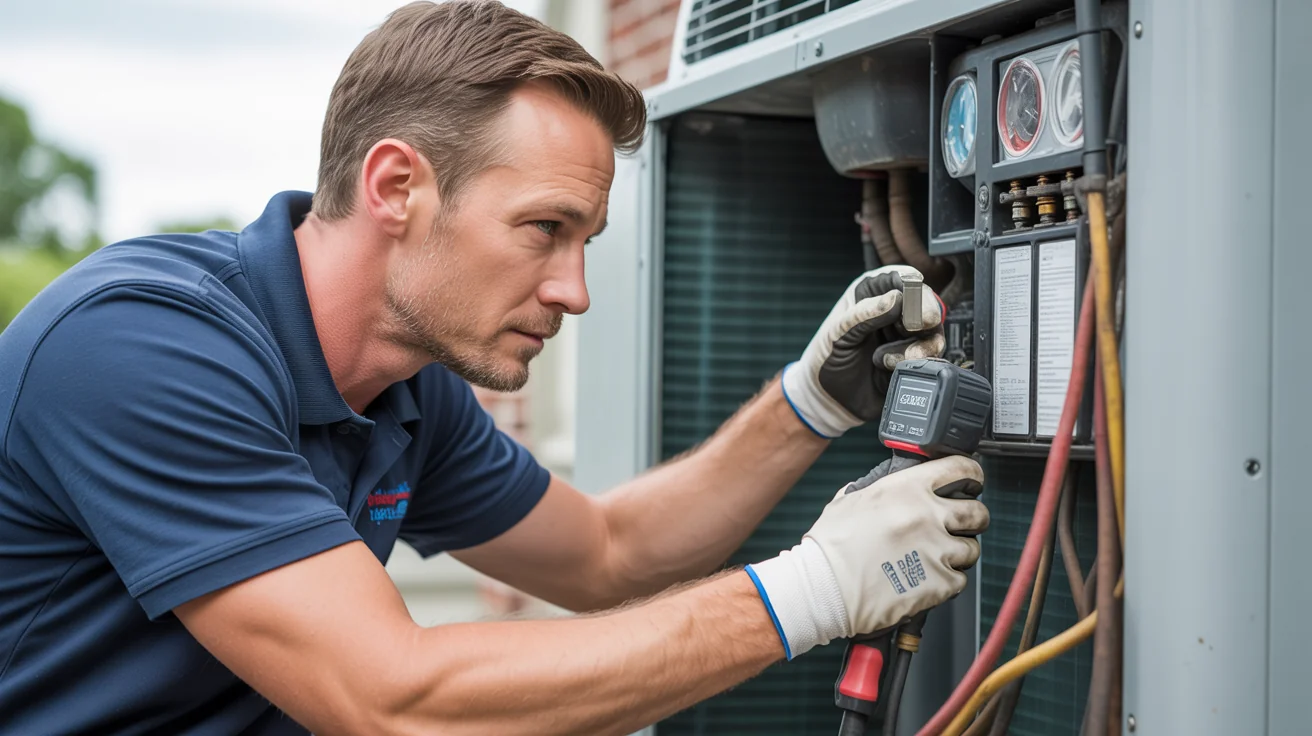
HVAC Performance Optimization Guide
Maximize HVAC performance and efficiency in North Texas. Professional optimization techniques for peak operation and energy savings.
- The Science of HVAC Performance Optimization
- North Texas Performance Challenges
- Complete Performance Assessment
- Airflow System Optimization
- Indoor Air Quality Optimization
- Electrical System Performance Enhancement
- Power Quality and Electrical Protection
- Advanced Optimization Technologies
+ 11 more sections below...
- The Science of HVAC Performance Optimization
- North Texas Performance Challenges
- Complete Performance Assessment
- Airflow System Optimization
- Indoor Air Quality Optimization
- Electrical System Performance Enhancement
- Power Quality and Electrical Protection
- Advanced Optimization Technologies
+ 11 more sections below...
Professional HVAC performance optimization in North Texas runs $300-$3,000 and usually gets you 25-45% better efficiency, 60% fewer breakdowns, and adds 5-8 years to your equipment’s life. The big wins come from nailing refrigerant charge (8-12°F superheat on TXV systems, 10-15°F subcooling), fixing airflow to 350-450 CFM per ton, and getting static pressure down to 0.3”-0.7” WC on residential systems. Most people see payback within 6 months to 2 years through $800-$2,400 in annual energy savings, plus another $300-$800 in repairs you never needed. Here’s the thing that kills me: most “high-efficiency” systems underperform because of installation mistakes. Not because the equipment is bad.
The Science of HVAC Performance Optimization
I got a call from the Martinez family in Frisco a while back. They’d bought a brand new high-efficiency system two years earlier and couldn’t figure out why their house was never comfortable. The thing ran constantly. Their summer electric bills were hitting $485 a month. On a two-year-old unit. That shouldn’t happen.
When I got out there with my testing equipment, what I found was honestly a little infuriating.
The return ducts were undersized, choking airflow by about 35%. Refrigerant charge was 18% low from day one - whoever installed it just didn’t finish the job right. Static pressure was running triple what the manufacturer calls for. And the controls? Completely misconfigured. The system was fighting itself.
We fixed all of it. Their next peak-season bill dropped $208 a month. Every room in the house held temperature. The system got quiet. And instead of burning itself out in 8 years, that equipment should now last 15+.
That’s what optimization actually does. It’s not a tune-up. It’s finding and fixing the problems that most contractors either miss or don’t bother looking for. I’m talking 25-45% efficiency gains, way fewer breakdowns, and years added to your equipment’s lifespan.
North Texas Performance Challenges
Here’s why performance optimization matters more in our part of Texas than almost anywhere else.
We get 120+ days a year above 95°F. Your AC runs 12 to 16 hours a day during that stretch. That’s like driving your car at redline for four months straight. Any weakness in the system, anything that’s a little off, gets exposed and amplified.
But it’s not just the heat. Our operating range swings from the single digits in winter to 110°F in summer. Humidity bounces between 15% and 95% sometimes in the same week. The electrical grid gets shaky during peak demand. And the dust, pollen, and pollution out here? It clogs systems faster than people realize.
All that thermal cycling creates expansion and contraction that slowly shifts component alignment. Extended runtimes reveal problems that would stay hidden in milder climates. And seasonal transitions force your system to flip from heating to cooling mode rapidly, which stresses everything.
If your system isn’t dialed in right, North Texas will punish it.
Complete Performance Assessment
Phase 1: Baseline Performance Documentation (90-120 minutes)
Before I change anything, I need to know exactly where the system stands. You can’t improve what you haven’t measured. I spend the first 90 to 120 minutes documenting everything.
1. Thermal Performance Assessment
I measure actual BTU output and compare it to what the unit is rated for. You’d be surprised how often those numbers don’t match. I check heating output, temperature differentials across heat exchangers, and run thermal imaging to see where heat is going where it shouldn’t. Then I go room by room mapping comfort zones, because a system might test fine at the unit but deliver unevenly throughout the house.
Cooling Performance Calculation:
Sensible Cooling (BTU/hr) = 1.08 × CFM × ΔT
Latent Cooling (BTU/hr) = 0.68 × CFM × ΔW (humidity removal)
Total Cooling = Sensible + Latent
System Efficiency = Actual Output ÷ Electrical Input
2. Airflow Performance Analysis
This is where I find problems on probably 70% of the systems I look at. I measure total CFM and check distribution to every room. I map static pressure throughout the ductwork. I quantify duct leakage, verify individual room supply and return volumes, and assess air quality including particulates, humidity control, and ventilation.
Most of the time, something’s wrong with the airflow. Undersized ducts, leaky connections, crushed flex runs in the attic. It adds up fast.
3. Electrical Performance Evaluation
I check actual power consumption against rated specs, measure power factor, test voltage stability, and evaluate individual motor performance. Control system response times and accuracy get tested too. A lot of times I’ll find voltage fluctuations that are slowly killing components, or motors drawing more amps than they should because they’re working harder than necessary.
Phase 2: Refrigeration System Optimization (120-180 minutes)
This is the heart of it. The refrigerant system is where I spend the most time, because getting this right makes the biggest difference.
1. Refrigerant Cycle Optimization
I run a full superheat and subcooling analysis to determine the exact right charge for your specific system in your specific conditions. Not the textbook number - the actual optimized number. I check pressures across all operating conditions, evaluate heat exchanger performance, verify the expansion device is metering correctly, and make sure the system capacity actually matches the load it’s trying to handle.
Superheat Optimization:
Target range is 8-12°F for TXV systems. That's the sweet spot for
proper refrigerant flow and efficiency. But it shifts with outdoor
temperature, so I check it across conditions, not just at one snapshot.
The system needs to hold consistent superheat across varying loads
to protect the compressor and run efficiently.

Subcooling Optimization:
I'm targeting 10-15°F depending on system design. That ensures solid
liquid refrigerant delivery to the expansion device. Condenser airflow
and coil cleanliness directly affect this - dirty condenser, bad
subcooling, wasted energy. I also check liquid line routing to make
sure heat gain isn't killing the subcooling before refrigerant
reaches the metering device.
2. Heat Exchanger Performance Enhancement
Dirty coils are the silent killer of efficiency. I do chemical cleaning when needed to restore heat transfer to like-new levels. I verify air velocity across the coils is in the right range, check that refrigerant distributes evenly across all coil circuits (uneven distribution tanks performance), and analyze approach temperatures on both the condenser and evaporator. If your system’s been running a few years without this kind of attention, there’s almost always improvement to find here.
Phase 3: Combustion System Optimization (90-150 minutes)
For furnaces and gas systems, combustion tuning is just as important as the refrigerant side.
1. Combustion Efficiency Maximization
I optimize the air-to-fuel ratio, analyze flame pattern and stability, and measure heat exchanger performance to make sure you’re extracting maximum heat from the combustion gases. Venting and draft get checked too. On condensing furnaces, I verify the condensate system is working properly since that’s directly tied to efficiency.
Combustion Efficiency Calculation:
Stack Temperature - Combustion Air Temperature = Temperature Rise
Efficiency % = (Gross Input - Stack Losses) ÷ Gross Input × 100
Target Efficiency: 80-85% atmospheric, 90-96% condensing
CO levels: <50 PPM in flue, <9 PPM in ambient air
That CO check isn’t optional, by the way. Safety first, always.
2. Heat Exchanger Optimization
I work to get maximum heat extraction from flue gases, optimize the temperature differential across the exchanger, and on condensing units, push for maximum condensation since that’s literally where the extra efficiency comes from. Draft and combustion air supply get fine-tuned. And I always verify CO levels are well within safe limits. A cracked or degraded heat exchanger is a safety issue, not just a performance one.
Airflow System Optimization
Ductwork Performance Enhancement
If the refrigerant system is the heart, ductwork is the circulatory system. Doesn’t matter how perfectly your unit runs if the air can’t get where it needs to go.
1. System Static Pressure Optimization
I measure total external static pressure and work to bring it within spec. I identify which components are creating the biggest pressure drops and address them. Sometimes that means ductwork modifications like adding returns or upsizing transitions. Sometimes it’s as simple as changing to a lower-restriction filter. Damper positions get adjusted for proper zone balancing.
Optimal Static Pressure Ranges:
Residential: 0.3" - 0.7" WC total external static pressure.
Anything above that and your blower is working too hard,
using more electricity, and moving less air than it should.

Commercial: 1.0" - 3.0" WC depending on system design.

Main duct velocity: 600-900 FPM
Branch velocity: 400-600 FPM
Too fast = noisy. Too slow = poor delivery.
2. Air Distribution Enhancement
I balance airflow room by room to make sure every space gets the right CFM. This is tedious work but it makes a huge difference in comfort. I check return air pathways (closed-door rooms with no return path are a common problem), evaluate vent placement, and tune any zoning systems that are installed. I also look at how the building envelope interacts with the HVAC since a tight house and a leaky house need very different airflow strategies.
Indoor Air Quality Optimization
Discover our Indoor Air Quality services.
Good performance optimization doesn’t just lower your bills. It should make the air in your house better too.
1. Filtration System Optimization
There’s always a trade-off between filter efficiency and airflow. A MERV 16 filter sounds great until it chokes your system to death. I help you find the right balance, seal the filter housing so air can’t bypass around the edges (more common than you’d think), set up a replacement schedule that fits your specific environment, and monitor pressure drop. Sometimes I’ll recommend a multi-stage filtration setup if air quality is a priority.
2. Humidity Control Optimization
North Texas humidity is all over the place. In summer, you need strong dehumidification during cooling. In winter, the heated air gets so dry it cracks your skin and your wood floors. I’ll optimize your system’s moisture removal, recommend humidification for winter if needed, and make sure any ventilation brings in fresh air without wrecking your humidity levels. Getting temperature and humidity balanced together is what real comfort feels like.
Electrical System Performance Enhancement
Motor and Control Optimization
The electrical side doesn’t get enough attention from most techs, but there’s real performance sitting on the table here.
1. Motor Efficiency Optimization
First thing: is the motor right-sized for the actual load? Oversized motors waste electricity. Then there’s the variable speed conversation. Converting from a single-speed PSC motor to a variable-speed ECM can cut blower electricity consumption in half. I look at power factor, starting methods (soft starts protect motors and reduce electrical strain), and set up proper maintenance schedules for lubrication and alignment.
2. Control System Enhancement
Your thermostat placement matters more than most people know. I’ve seen thermostats installed in direct sunlight, next to supply vents, above ovens. That wrecks their ability to read the actual temperature in your living space. Beyond placement, I optimize staging on multi-stage systems so they ramp up efficiently instead of slamming to full blast. Safety controls get calibrated. Communication networks on communicating systems get checked for reliability.
Power Quality and Electrical Protection
The North Texas power grid takes hits during peak summer demand. Voltage sags, surges, brownouts. All of it shortens the life of your HVAC equipment.
I recommend whole-system surge protection as a minimum. It costs a fraction of what a new control board runs. Beyond that, I check grounding, verify load balance across circuits, and make sure voltage is stable under load. If you’re in an area with frequent outages, we can talk about backup power integration. But for most people, surge protection alone saves them from the expensive surprise of a fried circuit board after a summer storm.
Advanced Optimization Technologies
Variable Speed System Integration
This is where things get exciting if you’re ready to invest. Variable speed technology is the single biggest advancement in residential HVAC in the last 20 years.
1. Motor Technology Upgrades
Converting from PSC motors to ECM variable-speed motors changes how your system operates. Instead of slamming on at full blast and shutting off, the system runs low and steady, adjusting output to match the actual load. I program the speed curves for your specific house and conditions. The result is better comfort, better humidity control, and lower electric bills.
2. System Integration Benefits
Done right, variable speed integration delivers 20-40% energy savings. Temperatures stay more consistent because the system runs continuously at low speed instead of cycling on and off. Filtration improves because air is always moving through the filter. Noise drops way down. And equipment lasts longer because it’s not hammering itself with start-stop cycles all day.
Smart System Technologies
I’ll be honest, I was skeptical about smart thermostats for a while. Seemed like a gimmick. But the good ones actually deliver.
1. Smart Thermostat Optimization
A properly configured smart thermostat learns your patterns and adjusts automatically. The key word there is “properly configured.” Most people install one and never touch the settings. I set up the learning algorithms, make sure the remote monitoring works so you (and I) can check performance, enable weather integration so the system adjusts before conditions change instead of after, and connect to any utility demand-response programs that can save you money.
2. Building Automation Integration
For bigger homes or people who really want to dial things in, we can coordinate the HVAC with other building systems. Occupancy-based control so empty rooms don’t get conditioned. Energy monitoring that shows you exactly where every dollar goes. Remote diagnostics that let me spot problems before they become emergencies. Performance analytics that track efficiency over time so we know if something starts slipping.
Regional Optimization Strategies
Dallas-Fort Worth Metro Optimization
Homes in the DFW metro deal with the urban heat island effect, which means your cooling load is higher than a comparable home in a rural area. I factor that into capacity calculations. Urban air quality is also worse, so filtration needs are different. And if you’re on TXP or Oncor, there are peak demand programs worth looking into for cost savings.
Suburban and Rural Optimization
Out in the newer developments around Prosper and Little Elm, or further into the rural areas, the challenges shift. Power reliability becomes more of a concern, so backup power matters more. If you’re on well water, that affects humidification options. Propane heating systems have their own optimization path. And remote monitoring becomes more valuable when service response times are longer.
Performance Monitoring and Maintenance
Continuous Performance Monitoring
Optimization isn’t a one-time thing. Systems drift. Components wear. Conditions change.
1. Performance Tracking Systems
I set up energy monitoring so you can track consumption over time. We establish performance baselines and watch for trends that signal degradation. Preventive maintenance gets scheduled based on actual system condition, not just a calendar. Alert systems catch problems early. And we make adjustments as we go, because optimization is a process, not an event.
2. Seasonal Optimization Adjustments
Spring gets a cooling prep visit. Summer gets a peak performance check during the worst of the heat. Fall, I’m prepping and testing the heating system. Winter gets a heating efficiency review. Each season puts different demands on the equipment, and small adjustments at the right time prevent big problems later.
Professional Optimization Services
Here’s what a full optimization engagement looks like.
1. Initial Optimization Service
I start with a complete performance assessment using professional-grade test equipment. Then I make all the improvements and adjustments the data calls for. After that, I verify everything with follow-up measurements to document the gains. I walk you through what changed and how to get the most out of your improved system. And I set up monitoring so we can track performance going forward.
2. Annual Optimization Maintenance
Each year, I do a full performance review and address any drift. Seasonal adjustments happen quarterly. When it makes sense, I’ll recommend technology upgrades that deliver a real return. The goal is keeping your system at peak performance year after year, not just right after the initial visit.
Cost-Benefit Analysis and ROI
Optimization Investment Analysis
Let me be straight about what this costs.
An initial assessment runs $300-600 for the complete performance evaluation. Basic optimization, where I’m fixing the obvious stuff, is $500-1,500. A complete deep-dive optimization runs $1,500-3,000. And if you’re doing major upgrades like variable speed conversion or smart system integration, that’s $2,000-8,000 depending on scope.
The return though? That’s where it gets good.
You’re looking at 20-40% in energy savings off your operating costs. About 50% fewer repair calls. Three to five extra years of equipment life. And comfort improvements that are hard to put a dollar figure on but absolutely real.
Typical ROI Calculation:
Annual Energy Savings: $800-2,400
Annual Maintenance Savings: $300-800
Total Annual Savings: $1,100-3,200
Payback Period: 6 months - 2 years
10-Year Net Benefit: $8,000-25,000
Those numbers aren’t theoretical. That’s what I see with my customers across North Texas.
Value Proposition Analysis
Some of this pays off immediately. Your very next electric bill will be lower. Other benefits take time but compound. Equipment that lasts 5 extra years means you’re not writing a $12,000 check for a replacement. Fewer breakdowns means fewer emergency service calls, which nobody enjoys. And honestly, a well-optimized HVAC system increases your property value. Buyers notice when a house is comfortable.
Frequently Asked Questions
Q: How much can HVAC optimization improve system performance? A: I typically see 20-40% efficiency gains. Operating costs drop by about the same percentage. Equipment life extends 3-5 years. And the comfort improvement is noticeable right away.
Q: What’s the difference between maintenance and optimization? A: Maintenance keeps things running the way they were designed to run. Optimization takes performance beyond the original design through advanced tuning, targeted upgrades, and system-level improvements. Think of maintenance as oil changes, optimization as engine tuning.
Q: How often should HVAC systems be improved? A: Start with a full optimization, then do annual performance reviews with seasonal adjustments. Every 3-5 years, look at whether new technology or equipment upgrades make sense. Systems drift over time, so ongoing attention keeps them performing.
Q: Can older HVAC systems benefit from optimization? A: Absolutely. Older systems often benefit the most, actually. Better controls, improved airflow, efficiency upgrades. I’ve taken 12-year-old systems and gotten them performing close to new. At some point replacement makes more sense, but optimization can buy you good years.
Q: What optimization improvements provide the best return on investment? A: Airflow optimization and duct sealing, proper refrigerant charging, combustion tuning, and smart thermostat installation. Those four things give you the biggest bang for your buck without a massive investment.
Q: Is professional optimization worth the investment? A: It pays for itself in 6 months to 2 years through energy savings alone. Everything after that is profit in your pocket. Plus you get better comfort, fewer breakdowns, and longer equipment life on top of the savings.
Take Action: Improve Your HVAC System Performance
Your system is probably running at 60-80% of what it’s capable of. That’s not a guess. That’s what I find on the majority of the systems I test. And every percentage point you’re leaving on the table costs you money, comfort, and equipment life.
Ready to find out what your system can actually do? Call (940) 390-5676 and I’ll set up a full performance assessment. You can also schedule online at jupitairhvac.com/contact. Ask me about our optimization packages and ongoing monitoring programs. Let’s see what we’re working with and build a plan from there.
Professional Optimization Services
Jupitair HVAC provides full performance optimization across North Texas. I show up with professional testing equipment, measure everything, fix what needs fixing, and verify the results before I leave. We offer ongoing monitoring so your system stays optimized year after year. And when technology upgrades make financial sense, I’ll tell you. When they don’t, I’ll tell you that too.
HVAC performance optimization isn’t something you can DIY with a YouTube video. It takes professional equipment, technical knowledge, and systematic problem-solving. If you want your system running at its best, give us a call.
Jupitair HVAC - Your North Texas performance optimization experts since 2008. Licensed & Insured.
Sources & References
The performance optimization techniques and efficiency standards in this article are based on the following authoritative sources:
- U.S. Department of Energy - HVAC Performance - Energy efficiency optimization guidance
- ASHRAE Standards - Performance testing and optimization standards
- ENERGY STAR - HVAC Efficiency - High-efficiency equipment standards
- ACCA - Performance Standards - Quality installation and service standards
- AHRI - Equipment Performance - Equipment certification and ratings
- NATE Certification - Technician performance standards
- Texas Department of Licensing - HVAC - State contractor licensing
Last Updated: January 2026
Need Professional HVAC Service?
Our certified technicians are ready to help with any HVAC needs in North Texas