Refrigerant Recovery Standards Texas: EPA Compliance Guide
Texas refrigerant recovery and recycling guide. EPA regulations, proper procedures, certification requirements, and environmental compliance.

EPA Section 608 requires a certified technician to pull the system down to a specified evacuation level before opening it - not a recovery percentage. For the high-pressure split systems in most North Texas homes, that level is 0 inches of mercury vacuum. Venting refrigerant on purpose is illegal, and the maximum civil penalty under the Clean Air Act runs into six figures per violation because EPA re-adjusts it for inflation every year. Professional recovery takes 2-4 hours for residential systems; verify any contractor’s EPA Universal certification and TACL license before refrigerant work. R-32 is the lower-GWP option showing up in new equipment (GWP 675 versus 2,088 for R-410A), but it requires different handling because it’s mildly flammable.
EPA-Compliant Refrigerant Recovery Standards for Texas
I’ll be honest with you. When I got into this trade 15+ years ago, refrigerant recovery felt like busywork. Hook up the machine, wait around, fill out paperwork nobody reads. I didn’t fully get why it mattered so much.
Then I watched a contractor on a neighboring job site crack open a system and just let the R-22 hiss out into the air. Didn’t even flinch. That was maybe 8 pounds of refrigerant, gone in a couple minutes. Deliberate venting like that is exactly what Section 608 exists to stop, and the penalty math is not in your favor.
These days I think about refrigerant recovery differently. It’s not paperwork for paperwork’s sake. R-410A has a global warming potential of 2,088, meaning a pound of it loose in the atmosphere traps as much heat as 2,088 pounds of CO2. That’s the whole reason the rule exists.
Texas sits at the center of all this because we run the biggest HVAC market in the country. Millions of residential units and who knows how many commercial systems, all pumping refrigerant through copper lines in heat that pushes 108 degrees. When a system dies in July and the homeowner has a baby screaming in a 95-degree house, there’s real temptation to skip the recovery step and just get the new charge in fast. I’ve felt that pressure. But cutting corners isn’t worth it - not for your license, and not for the environment.
CRITICAL REALITY: Venting refrigerant is a federal violation, and the Clean Air Act maximum is adjusted for inflation every year. People still quote “$25,000” because that’s the number Congress wrote in 1990. The current adjusted maximum is several times that. Professional recovery isn’t just legally required - it’s the right thing to do.
EPA Refrigerant Recovery Regulations Overview
Clean Air Act Section 608 Requirements
Universal Application: Every HVAC technician who touches a system with refrigerant in it has to comply with EPA Section 608. Doesn’t matter if it’s a window unit or a 200-ton chiller. The rules apply.
Here’s what that looks like in practice. You recover the refrigerant before you open the system. Only EPA-certified techs can do the work, and the recovery machine has to be certified equipment. You keep records of what you handled - when, how much, where it went.
The leak repair rules are the part homeowners get told wrong, so here are the actual numbers. For ozone-depleting refrigerant like R-22, the repair requirement kicks in at a full charge of 50 pounds or more. Under EPA’s Emissions Reduction and Reclamation rule, leak repair extends to HFCs and their substitutes at a full charge of 15 pounds or more, with compliance starting January 1, 2026, and a 10% annual leak rate trigger for comfort cooling.
Why that matters at your house: a 5-ton system holds roughly 12 to 20 pounds, so a big residential system can land right on that 15-pound line while a 2- or 3-ton system sits well under it. Either way, a leak is a leak. If your system is losing charge, the leak is the repair - topping it off every summer is money set on fire whether or not a federal threshold applies to your particular unit.
Current Regulatory Updates
Enhanced Enforcement Measures:
The AIM Act gave EPA a second lever alongside the old ozone rules, and the recent activity has been on the HFC side: the phasedown of HFC production, sector-by-sector limits on what refrigerant new equipment can use, and the Emissions Reduction and Reclamation rule extending leak repair and recordkeeping to HFCs. Reporting is increasingly electronic rather than paper in a filing cabinet.
One myth worth killing: EPA Section 608 technician certification does not expire. There is no three-year renewal. EPA reserved the right to require recertification in the future by Federal Register notice, and it hasn’t done it. If somebody tells you their “608 renewal” lapsed, that’s not a thing.
New Technology Standards:
R-32 and other low-GWP refrigerants are changing the game. They need different handling procedures because R-32 is mildly flammable, which R-410A isn’t. Recovery equipment has to be certified to EPA specs and tested by an approved third party. And a good shop keeps chain-of-custody documentation from the moment you pull refrigerant out of a system until it reaches its final destination.
Texas-Specific Regulatory Framework
Texas Commission on Environmental Quality (TCEQ)
Be clear about what Texas actually does and doesn’t do here. Texas does not set a recovery or evacuation standard stricter than the federal one. The numbers in the table below are the same in Frisco as they are in Vermont.
What Texas adds is licensing. To work on a sealed refrigerant system for hire in this state, you need a TDLR air conditioning and refrigeration contractor license - a TACL - on top of your EPA Section 608 certification. That’s a state requirement enforced by the Texas Department of Licensing and Regulation, and it’s the credential most homeowners should actually be checking. Contaminated refrigerant and used oil are handled under the applicable waste rules rather than tossed in a dumpster.
Municipal Requirements
Cities in North Texas regulate HVAC work through the permitting and mechanical code side, not through refrigerant recovery rules. A change-out in Frisco, Plano, McKinney or Allen generally needs a mechanical permit and an inspection, and the requirements vary city to city, especially on commercial jobs. That’s a real thing to ask your contractor about. What no city here does is impose its own refrigerant capture percentage - if someone tells you their city requires a higher recovery rate, they’re making it up.
Refrigerant Classification and Handling
Refrigerant Types and Environmental Impact
The classes get mixed up constantly, including by people who should know better, so get them straight first. Class I is the CFCs - R-12 and its relatives. Class II is the HCFCs, which means R-22 is Class II, not Class I. Both classes are ozone-depleting; that’s what put them on the list. R-410A and R-32 are HFCs. They’re in neither class because they don’t touch the ozone layer at all - they’re regulated for their climate impact under the AIM Act instead.
Class I Substances (CFCs):
R-12 (CFC-12):
R-12 is the bad one. Ozone Depletion Potential of 1.0, which is the reference point everything else is measured against. GWP of 10,900. Production ended in 1996. If you run into an R-12 system today, it’s ancient, and the recovery procedures are strict. We don’t see these often anymore, but they’re out there in some older commercial buildings.
Class II Substances (HCFCs):
R-22 (HCFC-22):
This is the one most homeowners have heard of. R-22 has an Ozone Depletion Potential of 0.055, which doesn’t sound like much until you realize the scale we’re talking about. Its Global Warming Potential is 1,810, meaning every pound released equals 1,810 pounds of CO2.
Two dates, and people run them together constantly. January 1, 2010 was the cutoff for charging R-22 into newly manufactured equipment. January 1, 2020 is when production and import of the refrigerant itself dropped to zero. Everything on the market now is reclaimed - pulled out of systems like yours, cleaned up, and sold back into service. That is perfectly legal and has no expiration date.
There’s still a large installed base of R-22 across North Texas, and every one of those systems will eventually need service or replacement. The price went through the roof after production stopped. That alone should tell you why proper recovery matters - you’re literally throwing money into the air if you vent it.
HFCs (No Ozone Class - Regulated Under the AIM Act):
R-410A:
R-410A is what most homes built after 2010 are running. Zero ozone depletion, which is good. But its GWP is 2,088, so it still packs a climate punch if released.
R-410A the refrigerant is not banned and is still produced and sold for servicing existing systems. What changed on January 1, 2025 is that manufacturers can no longer build or import new residential AC and heat pump equipment charged with a refrigerant at 700 GWP or above. Your system is fine. The AIM Act steps HFC production down to 15% of baseline - an 85% reduction - in 2036.
R-32:
This is where things are heading. R-32 has zero ozone depletion and a GWP of just 675, which is about a third of R-410A’s impact. The catch? It’s mildly flammable. Not dangerously so - we’re not talking about propane here - but it does require different handling procedures and safety precautions. I’m seeing more R-32 systems in new installations around North Texas, and the manufacturers are clearly moving in this direction.
Required Evacuation Levels
Here’s where most of the bad information online lives. EPA does not set a “recovery percentage” for split systems. It sets an evacuation level you have to pull the appliance down to and verify before you open it. The level depends on the appliance type and charge size, not on which refrigerant is in it - the same number applies whether the system holds R-22, R-410A or R-32.
| Appliance Type | Recovery Equipment Made Before Nov 15, 1993 | Made On or After Nov 15, 1993 |
|---|---|---|
| High-pressure, charge under 200 lbs (your house) | 0 in. Hg vacuum | 0 in. Hg vacuum |
| High-pressure, charge 200 lbs or more | 4 in. Hg vacuum | 10 in. Hg vacuum |
| Very high-pressure | 0 in. Hg vacuum | 0 in. Hg vacuum |
| Low-pressure (centrifugal chillers) | 25 mm Hg absolute | 25 mm Hg absolute |
Note that last row: 25 millimeters of mercury absolute, which is a deep vacuum. It is not 25 inches of mercury, and mixing those up is how people end up quoting a number that’s off by an order of magnitude.
Percentages only enter the picture for small appliances - window units, dehumidifiers, mini fridges, anything under 5 pounds factory-sealed. There you recover 90% if the compressor still runs, 80% if it doesn’t. Recovery equipment built before November 15, 1993 is held to 80% either way. You can also satisfy it by evacuating to 4 inches of mercury vacuum.
For a normal residential split system in a Frisco or Plano house, the requirement is 0 inches of mercury vacuum. That’s it. Anyone quoting you a “99% capture standard” for R-410A is repeating something that doesn’t exist in the regulation.
What Texas actually adds: not a stricter recovery number. Texas layers a licensing requirement on top of the federal rules. To work on a sealed refrigerant system for hire in this state you need a TDLR air conditioning and refrigeration contractor license (TACL) in addition to your EPA 608 card. The recovery standard itself is federal and identical in every state.
Professional Recovery Procedures
Pre-Recovery System Assessment
Safety Evaluation Protocol:
- Electrical safety: De-energize the system and follow lockout/tagout. I’ve seen guys skip this step. Don’t.
- Pressure testing: Verify system integrity before you start pulling refrigerant
- Leak detection: Find every point where refrigerant could be escaping
- Contamination assessment: Check for oil breakdown, moisture, and debris in the refrigerant
- Recovery planning: Pick the right equipment and plan your approach based on what you found
System Documentation: Before I touch anything, I check the nameplate for refrigerant type and charge amount. Then I compare that to what’s actually in the system, because those numbers often don’t match after years of service and top-offs. I look at the system’s age, maintenance history, any modifications. Previous service records tell me a lot about what I’m walking into. Even ambient temperature and humidity matter because they affect how the recovery equipment performs.
Professional Recovery Equipment
EPA-Certified Recovery Units:
Self-Contained Recovery Units: These are the workhorses. Flow rates from 1-10 cfm, good for residential and light commercial. They’ve got automatic shutoff, oil separation, and built-in filter/dryers. UL-listed and EPA Section 608 compliant. A decent professional unit runs $2,500-8,000. You get what you pay for here - the cheap ones from Amazon aren’t worth the headache.
System-Dependent Recovery: These are cheaper ($800-2,500) but they rely on the system’s own compressor to push the refrigerant out. That means the compressor has to actually work, which limits where you can use them. Recovery rates are slower too, maybe 2-6 cfm. Fine for simple jobs where the system is still functional.
Advanced Recovery Systems: For the big commercial stuff - 15+ cfm capacity, multi-refrigerant capability, integrated on-site recycling, digital controls that automate the process and generate documentation. These are serious machines for serious jobs.
Step-by-Step Recovery Procedure
Phase 1: Equipment Setup (15-30 minutes)
- Recovery unit inspection: Check calibration, make sure everything’s working right
- Cylinder preparation: Verify certification dates are current and you’ve got enough capacity
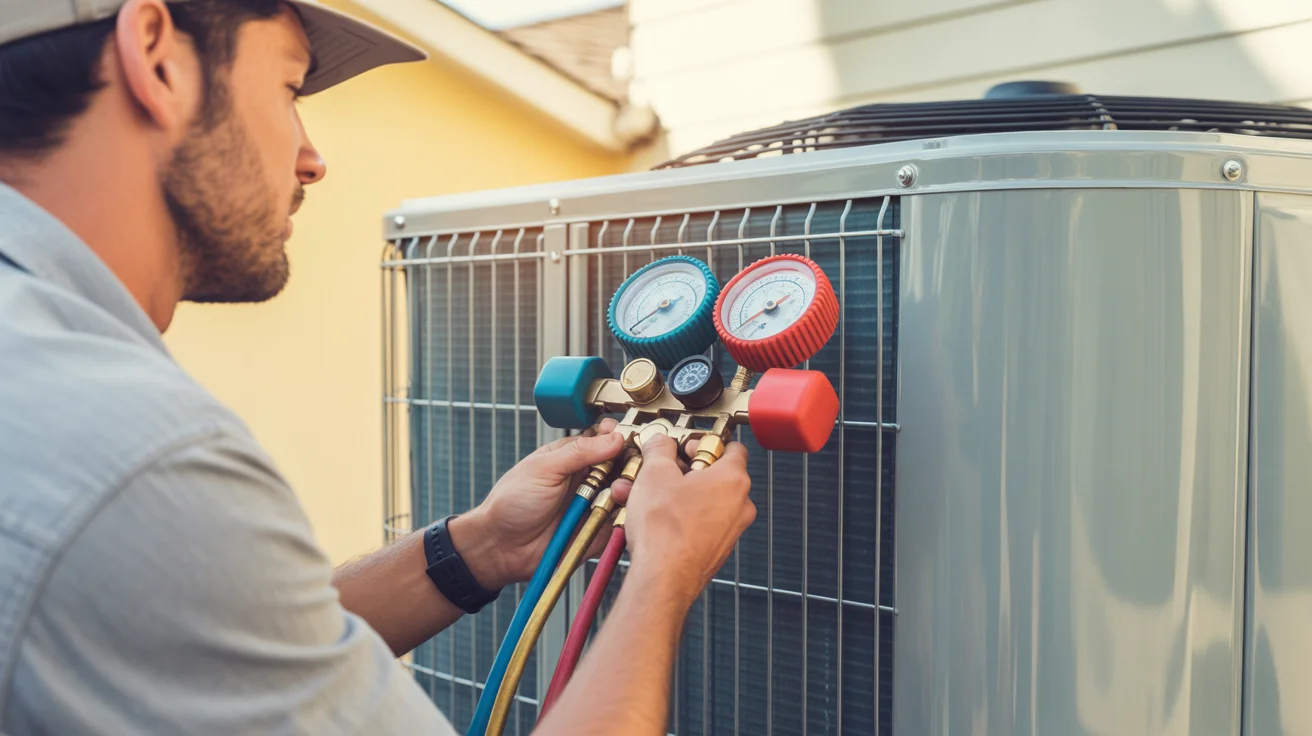
- Manifold connection: Get your gauge set and hoses configured properly
- Leak testing: Check every connection before you start - one loose fitting and you’re venting to atmosphere
- Safety equipment: Gloves, safety glasses, and proper PPE. Refrigerant burns are no joke.
Phase 2: Initial Recovery (30-90 minutes)
- Liquid recovery: Always pull liquid first. It’s faster and more efficient.
- High-side recovery: Get what’s sitting in the condenser
- Low-side recovery: Clear the evaporator
- System monitoring: Watch your pressures and temperatures - they tell you what’s happening inside
- Weight documentation: Record exactly how much you pulled out. To the ounce.
Phase 3: Deep Recovery (30-60 minutes)
- Vapor recovery: Now you’re chasing the remaining gas, which takes patience
- Vacuum pulling: Get down to EPA-required vacuum levels
- Hold testing: Let it sit. If the vacuum holds, your system’s tight. If it creeps up, you’ve got a leak.
- Final evacuation: Make absolutely sure everything’s out
- System isolation: Button it up for whatever comes next - repair, replacement, or disposal
Phase 4: Documentation (15-30 minutes)
- Recovery records: Fill out the EPA paperwork. All of it.
- Cylinder labeling: Mark exactly what’s in each cylinder and how much
- Chain of custody: Document where the refrigerant is going
- System tagging: Tag the system with what was done
- Customer notification: Walk the homeowner through what you did and what happens next
Recycling and Reclamation Standards
On-Site Recycling Requirements
EPA Recycling Standards: Recycling means cleaning the refrigerant right there on site so it can be reused. The equipment has to get moisture below 15 ppm, filter out particulates and acids, keep oil content under 500 ppm, and test to ARI 700 standards. And you document the purity results. Every time.
I do a fair amount of on-site recycling. It saves time and money when the refrigerant isn’t too contaminated. But there’s a judgment call involved. If the compressor burned out and there’s acid in the system, that refrigerant is too far gone for field recycling. It needs to go to a proper reclamation facility.
Recycling Equipment Specifications: Your filter/dryer capacity has to match the contamination level you’re dealing with. Moisture removal uses molecular sieve or thermal drying. Oil gets separated out by centrifugal or thermal methods. Purity testing can be done with integrated instruments or by sending samples to a lab. All equipment needs to be UL-listed.
Off-Site Reclamation Process
Professional Reclamation Services: When the refrigerant’s too contaminated for on-site cleaning, it goes to an EPA-licensed reclamation facility.
- Contaminated refrigerant removal: Complete recovery from the system
- Proper packaging: Everything goes in DOT-approved cylinders for transport
- Chain of custody: Paperwork follows the refrigerant every step of the way
- Professional processing: The facility does a deep chemical analysis and purification
- Purity restoration: They bring it back to virgin specs - basically as good as new
Reclamation Facility Requirements: These places need EPA certification as licensed hazardous waste handlers. Third-party testing verifies their processes work. They have to meet air and water quality standards, keep complete records, and produce refrigerant that meets AHRI 700 specs. There aren’t that many of them, which is why the chain of custody matters.
EPA Certification Requirements
Technician Certification Categories
Type I Certification: Small Appliances Covers systems with less than 5 pounds of charge. Think window units, dehumidifiers, mini fridges. You can actually take this test online. It’s a lifetime certification. Not much use in commercial HVAC, but it’s where a lot of guys start.
Type II Certification: High-Pressure Systems This is where most residential and commercial AC falls. Systems operating above 200 psig. Proctored exam - you can’t take this one from your couch. Covers recovery, recycling, and leak detection. If you’re doing standard HVAC work in Texas, this is the minimum.
Type III Certification: Low-Pressure Systems For centrifugal chillers and absorption systems operating below 200 psig. More advanced knowledge required. These are the big machines in commercial and industrial buildings with specialized recovery procedures.
Universal Certification: All System Types Types I, II, and III combined. This is what most employers want to see, and it’s what I hold. It means I can work on anything from a window unit to a centrifugal chiller. Pretty much every serious HVAC company in Texas requires Universal certification.
At Jupitair HVAC, I hold EPA Section 608 Universal Certification, which means I can handle any refrigerant type safely and legally. That, combined with our Texas TACL license, means every recovery we do meets or exceeds both federal and state requirements.
Certification Maintenance and Updates
Continuing Education: EPA Section 608 certification doesn’t expire, and there’s no three-year renewal no matter what you’ve read. But the card being permanent doesn’t mean the knowledge is. R-32 and R-454B weren’t on the test when I first certified, and A2L handling is genuinely different work. Your TACL license is the one with a real renewal cycle and continuing education attached to it. Keep both sets of records on file, because inspectors will ask.
Jupitair’s Certification Program: Every tech on our team holds Universal EPA certification. We do manufacturer-specific training when new equipment comes out. Safety and emergency response protocols get updated annually. And we keep our documentation systems tight because sloppy records are how contractors get in trouble.
Documentation and Record Keeping
Required Documentation Systems
EPA Section 608 Records: Every single refrigerant handling activity needs documentation. No exceptions.
- Service records: Date, which technician did the work, what procedures were performed
- Recovery documentation: How much was pulled, what method was used
- Recycling records: Purity test results and equipment certification info
- Disposal tracking: Full chain of custody for anything that leaves your hands
- Leak repair documentation: Required once an appliance crosses the charge threshold - 50 pounds for ozone-depleting refrigerant, 15 pounds for HFCs and substitutes as of January 1, 2026 - and leaks above its annual trigger rate (10% for comfort cooling)
Texas State Requirements: Your TACL number goes on everything. Customers get copies of all service records. Large system work may need environmental reporting. Records have to be available for regulatory review at any time, and you keep everything for at least 5 years. I know techs who’ve been asked to produce records from 4 years ago during an audit. If you don’t have them, that’s a violation in itself.
Digital Documentation Systems
Modern Record Keeping: Gone are the days of carbon copy forms and filing cabinets. Most professional shops use mobile apps for field data entry, cloud storage for document retention, and automated compliance reporting. Some even have customer portals where homeowners can pull up their own service history.
Jupitair’s Documentation Standards: We run electronic work orders with photo documentation - before and after shots of system conditions. Every recovery gets a certificate. Customers get their copies electronically right away. Our reporting is automated where possible because the less manual entry involved, the fewer mistakes creep in.
Common Violations and Penalties
Frequent EPA Violations
Most Common Section 608 Violations:
- Venting refrigerant: Either on purpose or through carelessness. This is the big one.
- Uncertified technicians: Having someone without proper certification do refrigerant work
- Improper recovery: Not getting enough refrigerant out before opening the system
- Documentation failures: Missing records, incomplete forms, gaps in the paperwork
- Equipment violations: Using recovery equipment that isn’t certified or isn’t calibrated
Violation Consequences: Get the direction of this right, because almost every HVAC page online gets it backwards. The dollar figure you see quoted is a maximum, not a starting point. Fines don’t “start at” it. EPA assesses based on the severity of what you did, how long it went on, and what you gained by doing it.
That maximum is real money, though. Congress set $25,000 per violation in the 1990 Clean Air Act, and EPA has been adjusting it for inflation every year since - it now sits well over $100,000 per violation. And it is per violation, not per visit. Repeat and willful conduct can move into criminal territory. Add cleanup costs if you caused environmental damage, and an insurance carrier that may not want to renew you.
Texas Enforcement Actions
Common Enforcement Triggers: Customer complaints start a surprising number of investigations. So does competitor reporting - the industry polices itself more than you’d think. Regulatory inspections hit randomly and can be targeted if someone tips them off. Refrigerant spills or releases that get noticed. And documentation audits where they just pull your records and see if the math adds up.
Environmental Benefits of Proper Recovery
Climate Impact Reduction
Quantified Environmental Benefits: When we do this right, the impact is real. Proper recovery protects the ozone layer, reduces greenhouse gas emissions, extends the lifecycle of refrigerant through recycling, cuts hazardous waste, and reduces the energy needed to manufacture virgin refrigerant.
Texas Environmental Impact: I’m not going to throw invented statewide tonnage numbers at you - nobody publishes a clean Texas-only figure, and the ones floating around HVAC blogs are made up. What I can tell you is the arithmetic on a single job. A 5-ton R-410A system holds 12 to 20 pounds. At a GWP of 2,088, venting a 16-pound charge instead of recovering it puts roughly 33,000 pounds of CO2-equivalent into the air, from one system, in about ten minutes. Multiply that by how many systems get replaced in DFW every summer and you understand why the rule exists.
Sustainability Leadership
Industry Sustainability Trends: The industry is moving toward lower-GWP refrigerants across the board. Recovery equipment keeps getting faster and pulls deeper vacuums than the machines I started on. There’s more cradle-to-grave tracking of refrigerant now, better leak detection technology, and higher training standards for techs. The direction is clear, even if the transition is slower than some would like.
Emergency Refrigerant Recovery Services
Urgent Recovery Situations
Emergency Recovery Triggers: Sometimes you can’t schedule this stuff. A major leak dumps refrigerant and you need immediate recovery. A compressor failure contaminates the charge. Storm damage cracks a lineset. An indoor leak creates a safety hazard for the people in the building. Or a ground-level release risks soil or water contamination.
I got called out at 2 AM once because a commercial system had a catastrophic compressor failure and was dumping R-410A into a mechanical room. The building manager could smell it. That’s the kind of thing where you drop everything and go.
Rapid Response Protocol
Jupitair’s Emergency Recovery Services: We’re available 24/7 for environmental emergencies. Every tech carries EPA Universal certification and has certified recovery equipment on the truck. We handle all the EPA-compliant paperwork and coordinate with regulatory agencies when required.
Emergency Response Timeline: We aim for 30-minute initial response on environmental emergencies. Once on site, it’s a safety assessment first - is anyone at risk? Then containment planning, then professional recovery. Documentation gets completed on site, not back at the office. And we handle follow-up reporting and customer communication so nothing falls through the cracks.
Professional Recovery Equipment Selection
Equipment Specifications for North Texas
Climate Considerations: Our heat and humidity are brutal on recovery equipment. Everything we run is rated for 115°F+ operation because attics and rooftops in July are basically ovens. Humidity resistance matters for moisture handling. Dust protection is critical because Texas construction dust gets into everything. We need lightweight, portable units because so much of our work happens in tight attic spaces or on rooftops with no elevator. And we carry equipment that runs on both 115V and 230V because you never know what power’s available.
Investment Analysis for Contractors
Professional Equipment Costs:
| Equipment Type | Initial Cost | Annual Maintenance | ROI Timeline |
|---|---|---|---|
| Basic recovery unit | $2,500-4,000 | $300-500 | 18-24 months |
| Advanced unit | $5,000-8,000 | $500-800 | 24-36 months |
| Commercial system | $10,000-15,000 | $1,000-1,500 | 36-48 months |
| Mobile laboratory | $25,000+ | $2,500+ | 48-60 months |
Jupitair’s Equipment Investment: We run multiple recovery units so we can handle simultaneous calls without making anyone wait. Backup equipment sits ready in case something goes down. Calibration gets done on schedule, not when we remember. And we upgrade as better technology becomes available because running outdated equipment is a false economy.
Future Regulatory Trends
Emerging Environmental Standards
Global Refrigerant Trends: The Montreal Protocol keeps evolving. The Kigali Amendment sets HFC reduction targets through 2047. Natural and synthetic low-GWP refrigerants are gaining ground. Leak detection technology is getting smarter. And international coordination on environmental protection is tighter than it’s ever been.
This matters to a local HVAC contractor in Texas because global policy eventually becomes the rules we live by. The phase-down schedule for R-410A is a direct result of these international agreements.
Texas Leadership Initiatives: Texas has actually been ahead of the curve on some of this. Early adoption of stricter standards, industry partnerships with manufacturers, enhanced technician training programs, incentives for advanced recovery equipment, and efforts to simplify compliance documentation so smaller shops aren’t drowning in paperwork.
Preparing for Future Requirements
Professional Preparation Strategies: If you’re a contractor reading this, stay current on emerging refrigerant technologies. Invest in recovery systems that can handle multiple refrigerant types. Keep your certifications updated. Embrace digital documentation because paper systems won’t cut it much longer. And don’t just meet the minimum requirements - exceed them. The standards only move in one direction, and it’s easier to stay ahead than to catch up.
Frequently Asked Questions
Q: What happens if refrigerant is accidentally vented during service? A: The rule is not zero-tolerance in the way people assume. EPA’s own language exempts “de minimis releases associated with good faith attempts to recycle or recover refrigerants” - the small amount that comes off when you break a hose connection, for example. That exemption only holds if you’re actually following the required practices: certified recovery equipment, certified technician, proper evacuation. What is never covered is knowingly opening a system and letting the charge go. Document what happened either way. Professional contractors use equipment with automatic shutoff for exactly this reason.
Q: Can homeowners legally service their own HVAC systems with refrigerant? A: No. I get asked this a lot, usually by handy homeowners who’ve watched a YouTube video. EPA Section 608 requires certified technicians to handle all refrigerant work, regardless of who owns the system. DIY refrigerant work is flat-out illegal and the penalties are steep.
Q: How long does professional refrigerant recovery take? A: For a typical residential system, figure 2-4 hours from setup to documentation. Large commercial systems can take 6-12 hours. I know that sounds like a lot, but rushing recovery is how mistakes happen and refrigerant gets released.
Q: What happens to recovered refrigerant? A: Either we recycle it on-site to meet purity standards or we send it to an EPA-licensed reclamation facility where it gets processed back to virgin specs. Nothing gets wasted and nothing gets released to atmosphere.
Q: Are there different needs for different refrigerant types? A: Handling and safety, yes. Evacuation level, no - that’s set by appliance type and charge size, not by which refrigerant is in it. A residential R-22 split system and a residential R-410A split system get pulled to the same 0 inches of mercury. What differs is the practical side: R-32 and R-454B are mildly flammable and need different procedures, and mixing refrigerants ruins a recovery cylinder, so labeling and identification are critical.
Q: How can I check my contractor is EPA certified? A: Ask to see their EPA Section 608 certification card. Check their TACL license with the Texas Department of Licensing and Regulation. Any contractor who gets defensive about showing credentials is a red flag. We keep ours visible in our truck and provide documentation on request without anyone needing to ask twice.
Q: What are the EPA regulations for freon disposal from HVAC units? A: EPA regulations under Section 608 of the Clean Air Act require all refrigerants (including Freon/R-22) to be recovered before disposing of HVAC equipment. Key requirements include:
- Recovery requirement: An EPA-certified technician must evacuate the appliance to the required level before disposal — 0 inches of mercury vacuum for a residential split system
- Certification: Only technicians with EPA Section 608 certification can handle refrigerants
- Documentation: All recovery must be documented with dates, quantities, and technician certification numbers
- Recycling: Recovered refrigerant must be recycled, reclaimed, or properly destroyed—never vented
- Equipment disposal: HVAC units cannot be scrapped or disposed of until the refrigerant is recovered
- Penalties: The Clean Air Act maximum is over $100,000 per violation and EPA re-adjusts it for inflation annually. That is a ceiling, not a starting point.
For homeowners replacing old AC units, your HVAC contractor handles all EPA-compliant refrigerant recovery as part of the installation. Always verify your contractor is EPA Section 608 certified and provides recovery documentation.
Q: Under EPA regulations, what standard must reclaimed refrigerant meet? A: Reclaimed refrigerant must meet the ARI 700 standard (now AHRI 700) for purity before it can be resold or reused in HVAC equipment. This EPA requirement ensures reclaimed refrigerant performs identically to virgin (new) refrigerant.
ARI/AHRI 700 purity requirements include:
- Moisture content: Less than 10 ppm (parts per million)
- Acidity: Less than 1 ppm
- High-boiling residue: Less than 0.01% by weight
- Particulates: Visually clean, free of particulates
- Non-condensable gases (air): Less than 1.5% by weight
- Refrigerant purity: Minimum 99.5% pure
Why this matters:
- Contaminated refrigerant damages compressors and reduces system efficiency
- Moisture in refrigerant causes acid formation that corrodes copper tubing
- Air in the system reduces cooling capacity and increases operating pressures
Reclamation vs recycling:
- Recycling (on-site): Removes oil and moisture but doesn’t meet ARI 700 - can only be reused in same owner’s equipment
- Reclamation (facility): Full purification to ARI 700 standard - can be resold as equivalent to virgin refrigerant
Only EPA-certified reclaimers can process refrigerant to ARI 700 standards. Your contractor should use either virgin refrigerant or certified reclaimed refrigerant - never “recycled” refrigerant in a new installation.
Your EPA Compliance Action Plan
Before Any Refrigerant Work
- Verify certification: Ask to see the technician’s EPA Section 608 card. If they hesitate, that tells you something.
- Check contractor licensing: Make sure their TACL license is current
- Request documentation: A good contractor will walk you through their recovery and disposal process
- Understand costs: Proper EPA-compliant service costs more than the guy who “knows a shortcut.” There’s a reason for that.
During Service Work
- Observe procedures: You should see professional recovery equipment hooked up before anyone opens the system
- Documentation review: Complete paperwork with certification numbers and quantities
- Environmental awareness: You should never see or smell refrigerant being released. If you do, something is wrong.
- Quality confirmation: Don’t be afraid to ask questions about what’s happening
Get EPA-Compliant Refrigerant Services
Don’t gamble with EPA violations or environmental damage by hiring someone who cuts corners. We’ve invested in the equipment, training, and certifications to do this work right every time.
Ready for professional service? Call (940) 390-5676 to speak with EPA-certified refrigerant specialists. Schedule Compliant Service online. Emergency Recovery Services available 24/7 for environmental incidents. Complete documentation provided for all refrigerant handling.
Protect the environment and avoid EPA penalties. We make sure every refrigerant job meets full compliance with federal and Texas regulations while getting your HVAC system back up and running.
EPA Section 608 Universal Certified Technicians | Complete Regulatory Compliance | Serving North Texas since 2008
Jupitair HVAC: Licensed & Insured, EPA certified, and providing environmentally responsible refrigerant services across Plano, Frisco, McKinney, Allen, The Colony, Little Elm, and surrounding North Texas communities.
Sources & References
The EPA regulations, refrigerant standards, and environmental data in this article are based on the following authoritative sources:
- EPA Section 608 - Refrigerant Regulations - Federal refrigerant handling requirements
- 40 CFR 82.156 - Required Practices - The evacuation levels table quoted above
- 40 CFR 82.154 - Prohibitions - Venting ban and the de minimis release language
- EPA - HFC Restrictions by Sector - What the January 1, 2025 equipment rule actually covers
- 40 CFR 84.7 - HFC Phasedown Schedule - AIM Act step-downs through 2036
- 40 CFR 19.4 - Civil Penalty Inflation Adjustments - Current Clean Air Act penalty maximums
- AHRI - ARI 700 Standard - Refrigerant purity standards
- Texas Commission on Environmental Quality - State environmental regulations
- Montreal Protocol - Ozone Secretariat - International refrigerant agreements
- DOE - Refrigerant Transition - Low-GWP refrigerant guidance
- Texas Department of Licensing - HVAC - State contractor licensing
Last Updated: January 2026
Need Professional HVAC Service?
Our certified technicians are ready to help with any HVAC needs in North Texas