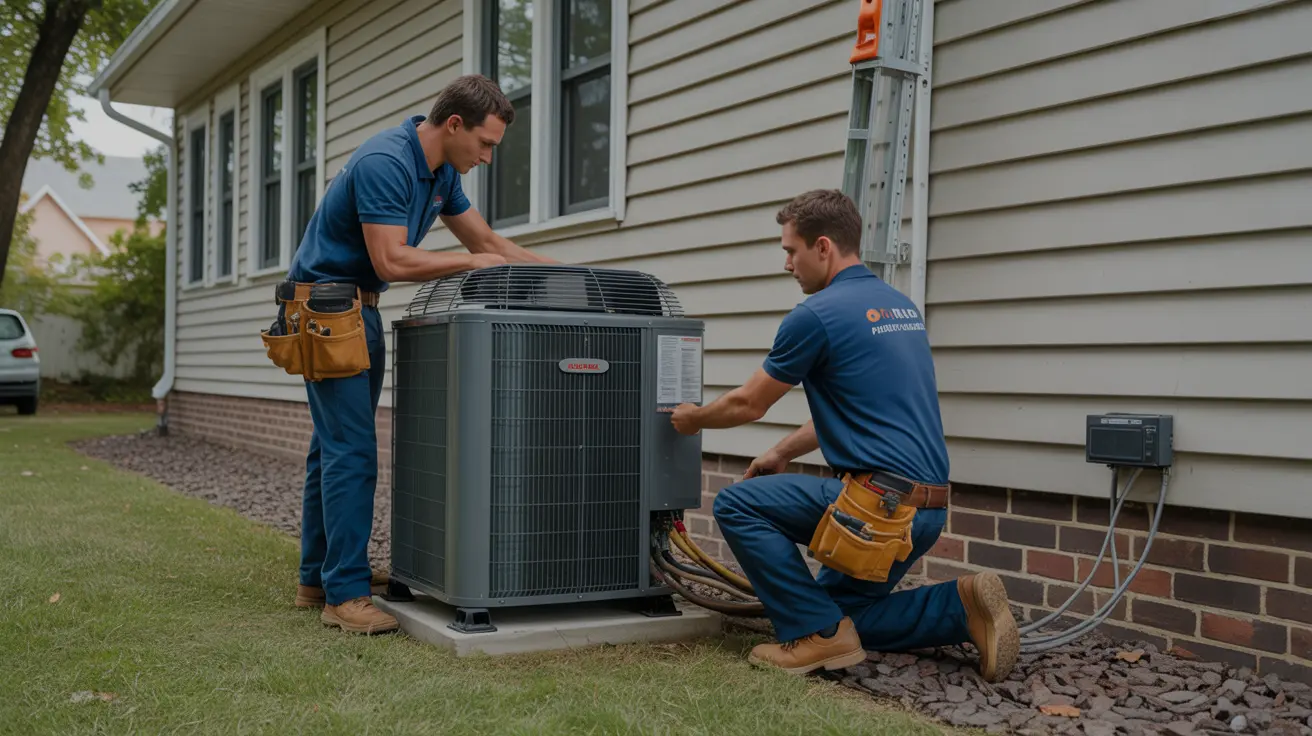
North Texas HVAC: Regional Service Coverage Guide
Complete North Texas HVAC regional coverage guide spanning DFW metroplex communities with specialized climate solutions and emergency response.
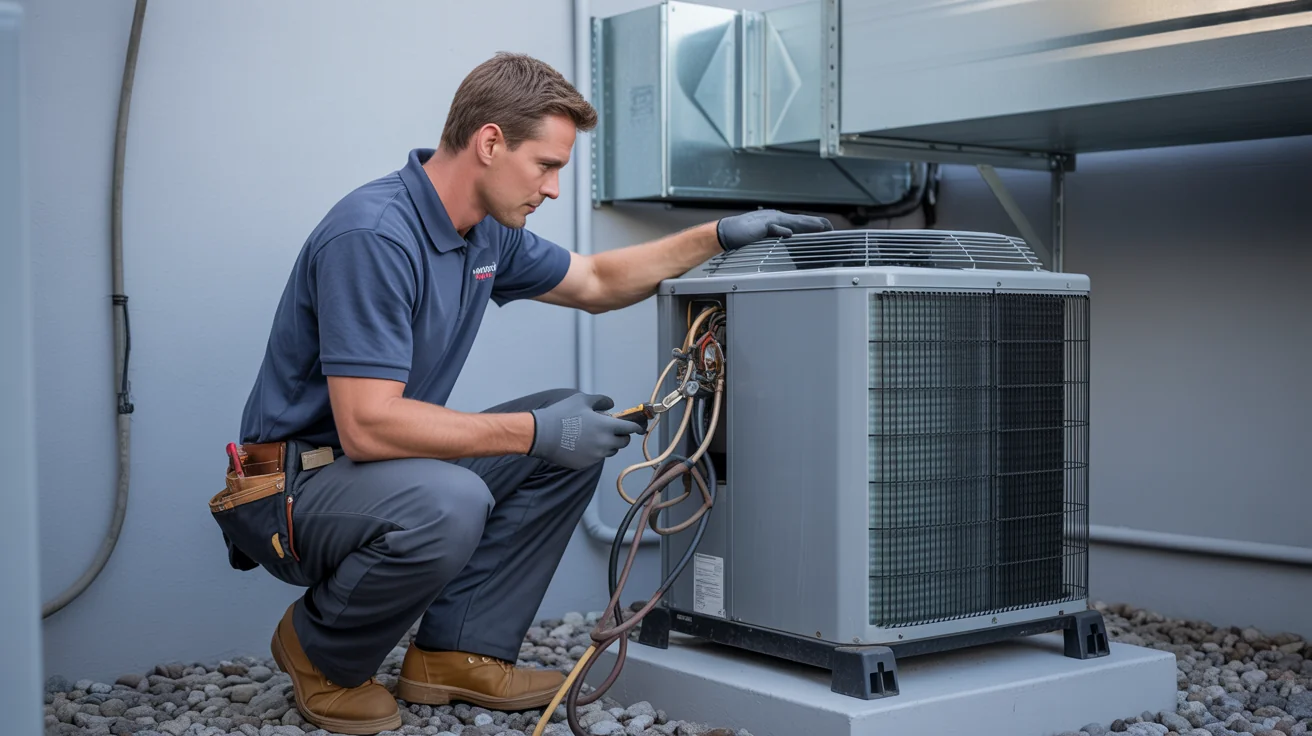
If you own property in more than one North Texas city, you already know the headache. Different HVAC guys in different towns. Nobody talks to each other. And when something breaks on a Saturday night, you’re making three phone calls hoping somebody picks up. I built my service area around solving that exact problem. Every city I cover - Frisco, Plano, McKinney, Allen, The Colony, Prosper, Little Elm, Addison - has its own soil, its own building codes, its own utility company quirks. You need someone who actually knows all of it. Property owners who consolidate under one contractor save 15-25% a year, and honestly? The peace of mind is worth more than the savings.
Why Regional HVAC Coverage Matters
The $38,300 Winter Storm Disaster:
I still think about the Garcia family. February 2021, that winter storm nobody was ready for. They had properties in Frisco, Plano, and McKinney, each one with a different HVAC contractor. When everything froze up at once, those contractors couldn’t coordinate. Wouldn’t, really.
The bill was brutal.
$8,200 in frozen pipe damage at their McKinney rental because their contractor “doesn’t service that area on weekends.” $4,800 in spoiled inventory at their Plano home office because their guy was “backed up for a week.” $3,400 in emergency hotel costs for displaced tenants. $6,900 in rush charges because suddenly every contractor in town was running “emergency pricing.” And over $15,000 in lost rental income while three different companies fumbled around trying to get their act together.
Total damage: $38,300 in preventable losses.
What kills me about that story is how avoidable it was. One contractor covering all three properties could have triaged everything the first night. The McKinney rental gets priority because pipes are at risk. The Plano office gets a temporary heat source to protect inventory. The tenants get relocated the same day, not three days later. Instead, the Garcias spent a week on the phone playing project manager between contractors who didn’t care about each other’s schedules.
That’s why I cover the whole region. When things go sideways, you don’t want to be scrolling through your contacts trying to remember which guy handles which property. You want one number.
Multi-location HVAC emergency? Call (940) 390-5676. I’ll handle all your North Texas properties from that one phone call.
Choose a Contractor with North Texas Coverage
Folks assume North Texas is basically one big suburb. Same weather, same houses, same codes. I thought that too when I first started out. Fifteen years later, I can tell you each city has its own personality, and if you don’t respect that, you’ll mess things up.
Let me give you some examples.
Frisco sits on heavy clay soil. When we get a dry summer followed by fall rains, that ground moves. I’ve seen foundation shifts crack ductwork that was perfectly installed. Plano’s soil is sandier in a lot of neighborhoods, so the same ductwork design holds up fine there. A contractor who doesn’t know the difference might install the same way in both cities and wonder why they’re getting callbacks in Frisco.
McKinney’s got a lot of historic homes downtown. Tight crawl spaces, plaster walls, old electrical panels that can barely handle a modern system. You can’t just drop in a 5-ton unit and call it a day. Allen, on the other hand, is mostly newer construction - 2000s and up. Totally different game. The houses are bigger but the infrastructure is ready for modern equipment.
The Colony sits right on Lewisville Lake. The humidity there during summer is noticeably worse than Prosper, which is wide-open prairie about 15 miles north. I’ve replaced condenser coils in The Colony that were corroding twice as fast as the same model in Prosper or Little Elm. You have to account for that moisture when you’re speccing equipment.
What regional expertise actually looks like day to day:
I know the neighborhoods. Phillips Creek Ranch in Frisco has those big custom homes with zoned systems and media rooms that need separate returns. Plano’s West side has a mix of 80s and 90s construction where the original ductwork is usually undersized for what people expect now. McKinney’s historic downtown? I’ve done enough work there to know which inspectors want what.
I understand the utility differences. Most of the area runs on Oncor, but some communities have CoServ or their own municipal power. That matters for rebates. It matters for peak demand pricing. And it matters when I’m helping you pick equipment, because a $1,200 rebate on a heat pump might be available in one city but not the next one over.
I know the permit process in every city I serve. Different inspectors, different turnaround times, different interpretations of the same code. I’m not learning on your dime.
And I keep parts on hand for the region. When your system goes down in July, I’m not driving back to a warehouse in Dallas. I’ve got the most common parts staged so I can get to you fast no matter which city you’re in.
Complete North Texas Service Area
Primary Service Coverage Zone
Dallas County Communities:
Addison is where a lot of my commercial HVAC work lives. That business district keeps me busy. Carrollton is a good mix of residential and commercial, with older homes that are starting to need full system replacements. Farmers Branch has some of the most established neighborhoods in the area - lots of systems from the early 2000s hitting the end of their lifespan. Richardson’s tech corridor means I do a fair amount of commercial work there too, along with residential in the older neighborhoods south of Campbell.
Collin County Communities:
Allen’s growing fast with a mix of housing ages, which keeps things interesting. Frisco is still building like crazy - new construction HVAC is a big part of what I do there. McKinney is a split personality: historic homes that need careful retrofits downtown, brand-new developments on the edges that need fresh installs. Plano is the most mature market I serve, and those homeowners expect premium service (rightfully so - they’re maintaining serious investments). Prosper is almost all new construction right now. The Colony blends lakefront residential with some solid commercial development. Little Elm’s lake community has grown so much in the last few years that I’ve doubled my work there.
Extended Service Coverage
Denton County Support:
Lewisville sits right between the lake and some busy commercial corridors, so I’m dealing with waterfront humidity issues one call and a strip mall rooftop unit the next. Flower Mound is upscale residential - big homes, high-end systems, homeowners who’ve done their research and ask good questions. I like that. Highland Village is similar. Premium homes, people who take care of their properties. Coppell is interesting because you’ve got these well-established neighborhoods right next to DFW Airport corridor businesses, so I’m bouncing between a 20-year-old residential system and a commercial unit for a logistics company in the same afternoon.
Why regional coordination actually matters:
When you work with somebody who covers the whole area, you get the same quality whether you’re in Prosper or Richardson. I’m not subcontracting out to a buddy in another city. Same truck, same tools, same standards. My parts inventory is centralized, which means I buy at volume and you benefit from that pricing. And honestly, working across all these cities for 15 years gives me perspective that a single-city contractor just doesn’t have. I’ve seen how different climates, different construction styles, and different soil conditions affect the same equipment. That knowledge makes me better at every individual job.
North Texas Climate Challenges and Regional Solutions
Metroplex Weather Pattern Management
What the weather actually does to your system:
North Texas weather is just violent to HVAC equipment. We hit 100+ degrees for weeks straight in summer, then get these freak winter storms that drop us below freezing. That kind of swing is hard on compressors, hard on capacitors, hard on everything. I replaced more capacitors after the 2021 freeze than I did the entire previous summer, and summer is normally when those fail.
The spring storms are their own problem. Hail damages condenser fins. Lightning surges fry control boards. I had a customer in Allen whose outdoor unit took a direct lightning strike. Melted the contactor right to the housing. Looked like something out of a science fiction movie. We got him running again the next day, but only because I had the parts.
And then there’s the humidity swings. January can be bone dry. June can feel like Houston. Your system has to handle both, and a lot of cheaper equipment just can’t do it well.
How I handle weather-related calls:
During heat waves, I prioritize by risk. Elderly customers, homes with infants, medical equipment situations - those go to the front of the line. No exceptions. During winter storms, I’m focused on freeze prevention first, comfort second. A frozen pipe does way more damage than a chilly living room.
After bad storms, I’ll work through an area systematically. Assess the damage, triage the urgent stuff, and give everyone realistic timelines. I don’t tell you “tomorrow” when I mean Thursday. And seasonal tuneups in spring and fall catch the problems before they become emergencies. That’s the whole point.
Urban Heat Island Mitigation
The heat island is real, and it affects your AC bill.
Downtown Dallas can run 5-10 degrees hotter than the suburbs just because of all that concrete and asphalt soaking up heat. That affects the southern parts of my service area more than the northern ones, but even in Plano’s commercial districts, I notice a difference between a unit sitting on a parking garage rooftop versus one behind a house with mature trees.
When I’m sizing a system for a commercial building in a dense area, I factor that in. Generic load calculations based on square footage alone will leave you short. I’ve seen it happen. Office hits 78 degrees at 3 PM even though the AC is running nonstop. That’s not a broken system - it’s an undersized one that didn’t account for the actual conditions.
Smart thermostats help here too. If your utility does time-of-use pricing, we can program the system to pre-cool during cheaper hours and coast through the expensive afternoon peaks. Saves real money over a summer. And maintenance matters more in these high-demand situations. A dirty condenser coil that might cost you 5% efficiency in a mild climate could cost you 15-20% when you’re running flat out for twelve hours a day.
Lake Effect Climate Management
Living near the lake? Your HVAC needs are different.
Lewisville Lake affects Frisco, The Colony, and Little Elm in ways most people don’t think about. Grapevine Lake does the same thing to Flower Mound and Coppell. That water body pumps moisture into the air, especially in summer. Higher humidity means your AC has to work harder on dehumidification, not just cooling.
I’ve pulled condenser coils from lakefront homes in The Colony that looked ten years older than they actually were. Corrosion from the moisture. Salt from road treatments gets in there too during winter, and the combination eats aluminum fins for breakfast. For homes within about a mile of the water, I recommend marine-grade coating on the condenser coils. It’s maybe $200-300 extra on an install, but it can add 3-5 years to the life of your outdoor unit.
Flood-zone installations matter too. I’ve raised outdoor units in Little Elm neighborhoods that sit in low areas near the lake. Costs a little more upfront, but it’s a lot cheaper than replacing a compressor that sat in six inches of water during a heavy rain.
Regional HVAC Service Specializations
New Construction Regional Support
Keeping up with the building boom:
The Frisco-Prosper corridor is still going strong. New neighborhoods popping up every few months. I work with several builders in the area, and the thing about new construction HVAC is it has to be right the first time. You can’t easily fix ductwork once the drywall is up. I’ve walked out of builder meetings where they wanted to cheap out on the duct design and I told them flat out - that house is going to have hot spots and the homeowner is going to be calling you in six months. Some listen. Some don’t. The ones who don’t end up calling me later anyway.
The Legacy area along Dallas North Tollway is all commercial. Office buildings, mixed-use, restaurants. Different equipment, different codes, different timeline pressures. I can juggle multiple projects across the corridor because I know the area and I’ve got relationships with the supply houses that keep me from waiting on equipment.
What I bring to new construction:
Consistency matters when you’re a builder. You don’t want one HVAC company doing your Prosper project and a different one in McKinney. Different quality, different warranty terms, different headaches. I handle both, and I know the codes in both cities. That means your inspections pass the first time, which keeps your project on schedule.
Established Community Retrofit Services
Older homes need a different approach.
Plano and Richardson have a ton of homes from the 80s and 90s. Those original systems are long gone, but the infrastructure is still the same. Electrical panels that are maxed out. Return air plenums that were designed for a 3-ton system when the house really needs a 4-ton now with the addition they built in 2005. Attics with R-19 insulation that should be R-38.
I do a lot of retrofits in these neighborhoods, and the challenge is always working within what’s already there. You can’t just drop in the biggest, best unit if the ductwork can’t handle it. Sometimes the right answer is a two-stage system instead of a bigger single-stage, because the existing ducts can handle the lower airflow and the system runs more efficiently overall.
McKinney’s downtown historic homes are a special category. Low ceilings, plaster walls, no easy path for new ductwork. Mini-splits have been a game-changer for those houses. I’ve done several where we kept the original forced-air for the main living areas and added a mini-split for the upstairs bedroom that was always too hot. Works great.
Commercial Corridor Support
Business HVAC is a different animal.
Legacy Drive, Preston Road, Belt Line - these commercial corridors have restaurants, offices, retail, all with different needs. A restaurant kitchen needs serious ventilation and makeup air. The office next door needs quiet, consistent comfort. The retail store across the parking lot needs a system that can handle the front door opening fifty times an hour in July.
I’ve been doing commercial work across these corridors long enough to know the landlords, the property managers, and what they expect. Fast response, clean work, and a straight answer on pricing. That’s what I give them.
Emergency Response Regional Coordination
Multi-Location Emergency Management
When you’ve got properties in multiple cities, emergencies get complicated fast.
I keep my truck stocked with the most common repair parts, and I know the fastest routes between cities at different times of day. That sounds basic, but it matters. During a summer heat wave, the difference between a 30-minute drive and a 90-minute drive through traffic can be the difference between your tenant toughing it out and your tenant checking into a hotel and sending you the bill.
For customers with multiple properties, I prioritize based on risk. Medical needs, elderly residents, inventory protection, and structural risk from extreme temperatures. We work through the list together, and I’m honest about timing. If I’m mid-repair in Frisco and your Allen property goes down, I’ll tell you exactly when I can get there and what to do in the meantime.
Who benefits most from regional coverage:
Investment property owners, hands down. I’ve got customers with 10+ rentals scattered from McKinney to Addison. One phone call handles everything. Business owners with multiple locations are the same story. And families who’ve helped parents or siblings buy homes in nearby cities - I service the whole family’s houses. Makes holidays easier when you can just ask “hey Gary, Mom’s furnace is making a noise again” and I already know her system.
Storm Response Regional Network
North Texas storms don’t respect city limits.
When a big storm rolls through, it might hit The Colony and Little Elm but miss McKinney entirely. Or it levels everything from Plano to Allen. I track severe weather across my whole service area because I need to be ready to deploy the moment it passes.
Before storm season, I talk to my regular customers about preparation. Secure the outdoor unit. Check the surge protectors. Know where the gas shutoff is. Basic stuff that prevents the worst outcomes.
After a storm, I work the affected area systematically. Health and safety first. Then habitability - getting heating or cooling back to livable levels. Then comfort optimization. Insurance documentation happens throughout because I’ve learned the hard way that if you don’t take photos before you start repairs, the adjuster will question everything.
Peak Demand Management
Summer heat waves are war.
When it hits 108 and stays there for a week, emergency calls triple. Everybody’s system is running full bore, and the weakest links start snapping. Capacitors, contactors, compressors that were on their last legs - they all go at once.
I manage this by extending my hours and being ruthless about triage. If your system is blowing warm but still running, you’re uncomfortable but safe. If your system is completely dead and you’ve got an elderly person in the house, you’re at the front of the line. I don’t love having those conversations, but they matter.
Winter storms are less frequent but more dangerous. Heating failures in sub-freezing temperatures lead to frozen pipes, which lead to water damage, which leads to mold if it’s not addressed quickly. During the 2021 freeze, I worked 18-hour days for almost a week straight. I don’t want to do that again, but I will if I have to.
Regional Energy Efficiency Programs
Related: Energy Efficiency
Multi-Market Rebate Coordination
Leaving rebate money on the table is one of my pet peeves.
Different utility companies serve different parts of North Texas. Oncor covers most of the territory, but CoServ handles a lot of Denton County, and some cities run their own municipal utilities. Each one has different rebate programs, different qualifying equipment lists, and different application deadlines.
I keep up with all of them because it’s real money. I’ve seen $1,200 rebates on heat pumps in one utility territory that didn’t exist five miles away in a different one. When I’m quoting a job, I’ll tell you exactly what rebates are available for your specific address and handle the paperwork. It’s part of the service. No reason you should be doing that yourself.
For multi-property owners, this gets even more valuable. If you’ve got a rental in a CoServ area and another in Oncor territory, the best equipment choice might actually be different for each one based on available incentives. I’ll walk you through it.
Regional Energy Management
Smart energy use across the grid:
Time-of-use pricing is becoming more common in North Texas. If your utility charges more between 2 PM and 7 PM during summer, a programmable thermostat that pre-cools your house by noon can save you serious money. I set these up for customers all the time.
Some utilities also run demand response programs where you get credits for letting them bump your thermostat up a couple degrees during peak grid stress. Not for everyone, but if you’re usually out of the house during those hours anyway, it’s free money. I can enroll you and set it up so you barely notice the difference.
Regional Service Program Benefits
Complete Coverage Advantages
One contractor. Every property. No excuses.
This is what I hear from customers who switched to me after juggling multiple contractors: “I just want one person who handles everything.” That’s what I do. Same quality standards whether I’m in Prosper or Addison. Your service records are all in one place. Scheduling is coordinated so I’m not making you take three different days off for three different properties. And volume pricing actually works in your favor when you’re maintaining 4 or 5 systems under one agreement.
The regional knowledge piece is harder to quantify but it might be the most valuable part. I understand why your Frisco house runs differently than your Allen house even though they’re the same size and the same age. Different sun exposure, different soil, different microclimate. That understanding translates into better recommendations and fewer surprises.
Why Property Owners Choose Regional Service
Real estate investors, I know you feel this.
You’ve got a duplex in Frisco, a single-family rental in McKinney, and a small office building in Plano. Three different HVAC contractors means three different pricing structures, three different quality levels, and three different guys blaming each other’s work when something goes wrong at the property you just bought from someone else’s tenant.
I have customers with 10+ rental properties across North Texas. One call gets all their properties maintained. One invoice. One warranty. They tell me it’s one of the best business decisions they made. Not because I’m cheaper on any individual job, but because the coordination savings and the headache reduction add up fast.
Business owners get it too.
Your restaurant in Allen can’t be down when the AC fails on a Friday night. Your office in Frisco needs someone there before your employees start leaving. Your warehouse in The Colony needs weekend service because that’s when you can shut down operations for repairs. I don’t care what day it is or which city. Same fast response. Same quality.
What coordinated service actually looks like:
One maintenance schedule covering all your properties. Volume pricing that actually saves money instead of just being a sales pitch. Emergency response no matter which property has the problem. Consistent quality because it’s the same person doing all the work. One phone number for everything HVAC.
Stop juggling. Seriously. Life’s too short for managing three contractor relationships when one will do.
Regional Maintenance Programs
Maintenance is where the real savings live.
I schedule maintenance across all your properties in coordinated blocks. Instead of four separate trips to four separate cities over four separate weeks, I’ll knock them out in a planned route. That’s more efficient for me, which means better pricing for you. Spring and fall tuneups hit every property before the season changes, so nothing gets missed. And maintenance customers get priority on emergency calls. Period. When July hits 110 and my phone won’t stop ringing, my maintenance customers go to the top of the list.
Prevention is always cheaper than repair. That’s true for one system, and it’s especially true when you’re maintaining five or six of them across the metroplex.
Technology Integration for Regional Service
Smart System Monitoring
Keeping an eye on things remotely:
Modern thermostats and monitoring systems let me check on your equipment without being there. If you’ve got a rental in Little Elm and the system starts cycling weirdly at 2 AM, I can see that and schedule a visit before your tenant even notices a problem. That’s the kind of thing that prevents the 11 PM “my AC is broken” phone call.
For multi-property owners, this is gold. I can pull up performance data across all your systems and spot the one that’s starting to struggle before it fails. Predictive, not reactive. Some issues I can even troubleshoot remotely - a thermostat setting that got bumped, a system that needs a simple restart. Saves everyone time and money.
Communication Systems
Staying connected with you:
I keep everything in one system. Service history, maintenance schedules, equipment details - all organized by customer, not by property. So when you call me about your McKinney house, I can see what I did at your Plano house last month too, in case there’s a pattern. During emergencies, I send real-time updates so you’re not wondering where I am or what’s happening. And after every visit, you get a clear summary of what I found, what I did, and what you should be thinking about for next time.
Frequently Asked Questions
What areas does Jupitair serve in North Texas?
My primary coverage includes Frisco, Plano, McKinney, Allen, The Colony, Prosper, Little Elm, and Addison. I also do regular work in Lewisville, Flower Mound, Coppell, Richardson, and Carrollton. For emergencies, I’ll go anywhere in Dallas or Collin County. If you’re not sure whether I cover your area, just call. The answer is probably yes.
How do you coordinate service across multiple properties?
Everything goes through one account. I schedule all your properties together when possible, keep unified service records so I can see the big picture, and offer volume pricing that makes financial sense. If one property has an emergency, I know your whole portfolio and can prioritize accordingly.
Can you provide emergency service throughout North Texas?
Yes. I offer 2-hour response time to all my primary coverage cities, 24/7, 365 days a year. Doesn’t matter if it’s Christmas or the Fourth of July. When you’ve got a real emergency, I show up. For multi-property emergencies, I triage based on risk and work through the list as fast as I can.
What makes regional HVAC service better than local-only contractors?
Broader experience, plain and simple. I’ve worked on more types of systems in more types of buildings in more types of conditions than somebody who only works in one zip code. I have a bigger parts inventory because I stock for the whole region. And for multi-property owners, the coordination alone is worth it. You don’t want to be managing three different contractors.
How do you handle different municipal codes across North Texas?
I’ve been pulling permits in all these cities for over a decade. I know the inspectors, I know their expectations, and I know the differences between jurisdictions. When Frisco updated their equipment pad requirements a few years back, I was already doing it that way because McKinney had the same rule. That kind of cross-city knowledge means your inspections pass without surprises.
Do you offer maintenance programs for multiple properties?
Absolutely. Portfolio programs cover all your properties under one agreement. I coordinate the scheduling so it’s efficient for both of us, and volume discounts kick in automatically. Most multi-property customers save 15-25% compared to what they were paying with separate contracts in separate cities. And you get one invoice instead of four.
One Contractor, One Phone Call, All Your North Texas Properties
After fifteen years doing this, here’s what I know for sure: nobody wants to manage multiple HVAC contractors. You just want one person who knows what they’re doing, covers all your properties, and picks up the phone when things break.
That’s me.
I’ve got the regional knowledge. Every city in North Texas has its quirks. The soil, the codes, the utility programs, the microclimates. I’ve spent over a decade learning all of it so you don’t have to explain your situation to three different contractors who each only know their own backyard.
I’ll coordinate everything. Multiple properties, multiple systems, no problem. One account, one schedule, one set of records. Your Plano house and your Frisco rental and your McKinney investment property all get the same attention.
Emergencies don’t scare me. When your Plano office loses AC at 2 PM, your Frisco rental needs heating at 10 PM, and your McKinney warehouse goes down on Saturday, I handle all of it. That’s what I signed up for.
You get peace of mind. One contractor you trust. One phone number that always works. One warranty.
Ready to simplify your HVAC service? Call (940) 390-5676.
Whether you need work done in Frisco, Plano, McKinney, Allen, The Colony, Little Elm, or anywhere else in North Texas, one call covers it all.
Quit managing multiple contractors. Get consistent, professional HVAC service across all your North Texas properties with one person who actually knows the whole region.
Sources & References
The regional service data, climate information, and technical recommendations in this article are based on the following authoritative sources:
- U.S. Department of Energy - Energy Saver - HVAC efficiency standards and homeowner guidelines
- ENERGY STAR HVAC Products - High-efficiency equipment certification
- NOAA Climate Data - Dallas-Fort Worth - Regional climate patterns and extreme weather data
- Texas Department of Licensing - HVAC - State contractor licensing requirements
- Oncor Energy Efficiency Programs - North Texas utility rebate programs
Last Updated: January 2026
Need Professional HVAC Service?
Our certified technicians are ready to help with any HVAC needs in North Texas