Advanced HVAC System Diagnostics and Troubleshooting: Complete Technical Guide for North Texas
Advanced HVAC diagnostics and troubleshooting for North Texas conditions. Expert methods for diagnosing and resolving complex system issues.
- Why HVAC Diagnostics Are Different in North Texas
- What Breaks Down First in Our Climate
- How I Actually Diagnose Problems (The Real Process)
- Advanced Diagnostic Tools and Equipment
- Diagnostic Software and Analysis Tools
- North Texas Specific Diagnostic Considerations
- Regional Equipment Considerations
- My Mental Checklist When Systems Won’t Cool
+ 12 more sections below...
- Why HVAC Diagnostics Are Different in North Texas
- What Breaks Down First in Our Climate
- How I Actually Diagnose Problems (The Real Process)
- Advanced Diagnostic Tools and Equipment
- Diagnostic Software and Analysis Tools
- North Texas Specific Diagnostic Considerations
- Regional Equipment Considerations
- My Mental Checklist When Systems Won’t Cool
+ 12 more sections below...
Here’s what I tell every homeowner who asks about diagnostics: proper testing costs $300-$800 for 4-8 hours of work, but it’ll save you $500-$2,000 in misdiagnosis costs. I’ve watched too many techs throw parts at a problem when 30 minutes with the right meter would’ve told them exactly what was wrong. Real diagnostics means electrical testing (voltage, amperage, power quality), refrigerant analysis (superheat, subcooling, pressures), combustion testing (CO levels under 50 PPM flue, under 9 PPM ambient), and airflow measurement (350-450 CFM per ton target). And here’s the thing nobody tells you: close to half the HVAC problems I see in North Texas trace back to electrical issues. Grid stress during summer heat waves is brutal on equipment. Systems running 18-20 hours a day wear out parts that should last 15 years in 8-10.
Why HVAC Diagnostics Are Different in North Texas
Fifteen years working on systems across Plano, Frisco, and McKinney taught me something pretty quickly. Our summers don’t just test HVAC equipment. They punish it. When your AC runs basically nonstop in 105-degree heat for weeks on end, you get failure modes that a technician from Colorado or Michigan has probably never seen.
And real diagnostics goes way beyond checking whether your thermostat is set right. I’m talking about figuring out why the system is losing ground, predicting what’s about to give out, and catching the small stuff before it turns into a weekend emergency call.
Something I’ve noticed over the years: extreme weather doesn’t just make systems work harder. It pulls hidden problems out into the open. A heat pump that runs beautifully in mild weather might have efficiency problems that only show up when we hit those brutal July and August stretches. You’d never know unless you test under real conditions.
What Breaks Down First in Our Climate
The failure patterns I deal with here would honestly confuse a lot of technicians from other parts of the country. Take thermal cycling. Your outdoor unit heats up to 140 degrees during the day and drops to 75 at night. That’s a 65-degree swing, happening every single day. Metal expands, contracts, expands again. I’ve pulled apart condensers and found stress fractures in the copper tubing just from that daily beating. Nobody warned me about that in trade school.
Then there’s humidity. People think of North Texas as dry, and compared to Houston it is. But the moisture from constant AC operation builds up inside ductwork. I’ve found mold colonies, biological growth, stuff that should not be living inside a plenum. Happens more than you’d think, especially in systems where maintenance got skipped for a few years.
But the real money killer? Continuous operation wear. Most HVAC systems across the country run maybe 30% of the time. Here in North Texas during summer, I routinely see systems running 18-20 hours a day for months straight. Bearings wear out. Contactors pit and stick. Compressor components that manufacturers rate for 15 years start dying at 8 or 10. That’s just math. More hours, more wear.
The electrical grid situation surprises most homeowners. During heat waves, when every house on the block is pulling maximum power, voltage drops from the normal 240V to 225V or worse. I’ve replaced more variable speed drive modules in the last five years than in my first ten years combined. Most of those failures trace back to power quality problems during peak demand.
How I Actually Diagnose Problems (The Real Process)
Phase 1: Detective Work Before I Touch Anything (30-45 minutes)
I start every diagnostic job the same way: by not touching anything. Just talking. Looking. Thinking. You’d be surprised how much I learn before I ever pull out a meter.
Last week in Frisco, a customer told me the house wasn’t getting cool. But when I looked at their electric bills, the system was actually working harder than it should have been. That’s a huge clue. It meant we had an efficiency problem, not a capacity problem. Completely different diagnostic path.
What I’m Really Looking For During History Review
When I go through maintenance records, I’m hunting for patterns. Refrigerant added more than once? That’s a leak. Nobody just “uses up” refrigerant. It’s a sealed system. Repeated electrical component failures? I’m looking at power quality. The customer’s own description matters too. “It used to cool fine but now it struggles” tells me something is wearing out gradually. “It worked yesterday and today nothing” tells me a specific part died.
Utility bills are surprisingly useful. I had a McKinney customer whose summer bills had roughly doubled over three years. System wasn’t broken in any obvious way. It was slowly losing refrigerant and the coils were filthy, so the whole thing was working twice as hard to deliver the same cooling. Slow death. Expensive slow death.
The Walking Inspection That Saves Time Later
Before I connect a single piece of test equipment, I spend about 15 minutes just walking around the system. Looking and listening. Scorch marks around electrical connections. Oil stains under the compressor. Ice on refrigerant lines. These things point me where to look.
I check ductwork for disconnected sections, crushed flex duct, that kind of thing. In newer Plano homes, I find ductwork damaged during construction more often than I’d like. Somebody stepped on it, dragged something across it, and it never got fixed. Air filtration gets its own check because a clogged system masks everything else that might be wrong.
The sound check matters more than people realize. Normal operation has a rhythm to it. Once you’ve heard enough systems, you can pick up grinding bearings, clicking relays, irregular cycling. It’s like how a mechanic can tell something’s off just from how an engine sounds. Same thing.
Phase 2: Why Electrical Problems Are So Common Here (45-60 minutes)
When I started actually tracking my service calls a few years ago, the numbers were startling. Almost half the problems I diagnose have an electrical root cause. That’s way higher than what guys in other parts of the country see. And it makes sense when you think about what happens to our grid during a Texas summer.
What Happens When Everyone Cranks Their AC Simultaneously
Think about it: 3 PM, 107 degrees in Plano. Every single house on the street running full tilt. The grid sags. Voltage drops from 240V down to 225V, sometimes lower. Your compressor tries to start, can’t get enough voltage, so it pulls more amps to compensate. That extra current generates heat in the windings. Do that a hundred times over a summer and the windings start breaking down. It’s a slow-motion failure that most people never see coming.
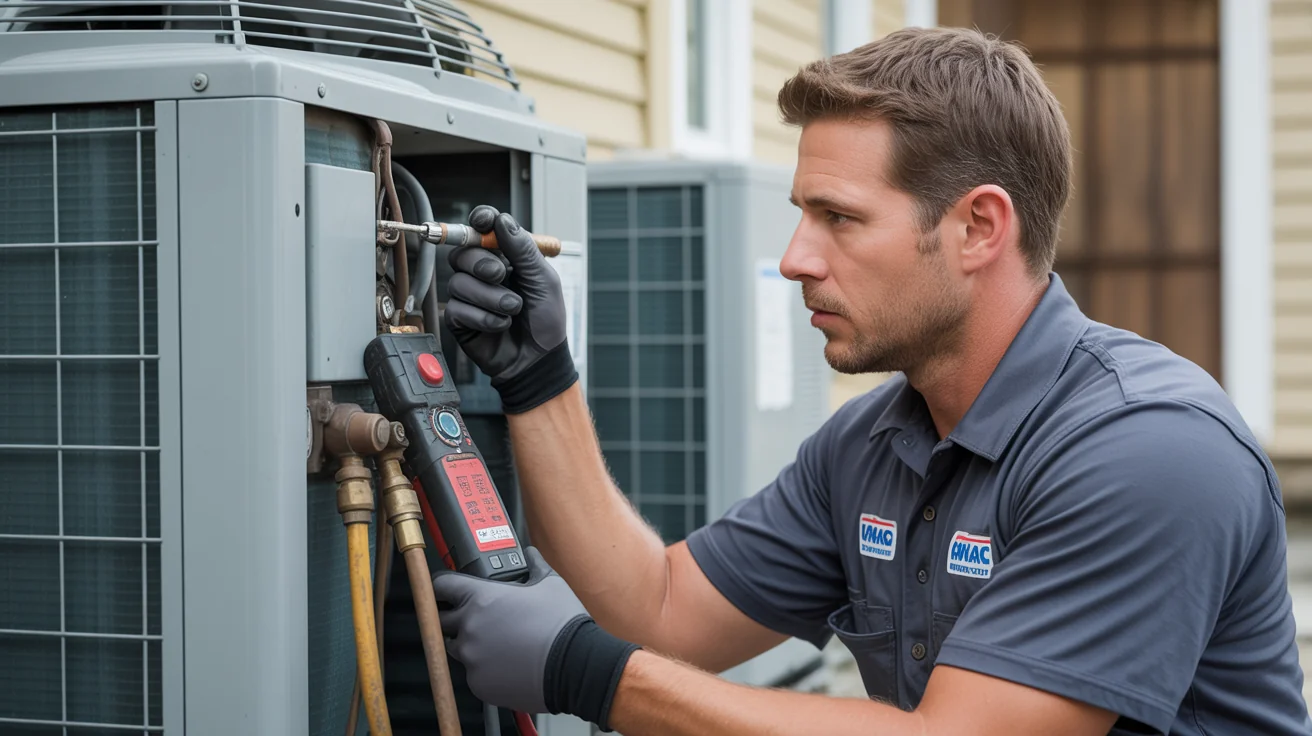
I carry a true RMS meter because the cheap meters you get at the hardware store can’t accurately read the waveforms from variable frequency drives and smart inverters. Those funky waveforms fool standard meters. When I test voltage at the main panel and then again at the equipment, the difference between those two numbers tells me whether we’ve got voltage drop in the wiring. More than 3% difference during startup means we need to look at wire sizing or connection issues.
The Testing That Reveals Hidden Problems
Ground fault testing is one that really opens people’s eyes. They figure if the system turns on, the electrical must be fine. But I’ve found systems with bad grounding that were one lightning strike away from a fried circuit board or worse. With the kind of storms we get in North Texas, proper grounding isn’t optional.
For three-phase commercial systems, I check phase balance. Even a 2% imbalance makes motors run hot. I see this all the time in older Allen commercial buildings where nobody’s touched the electrical panel in years.
Power factor measurement sounds nerdy but it’s actually pretty straightforward. It tells me if the electrical system is working efficiently or wasting energy. Poor power factor usually points to problems with motor windings or failing capacitors. It also costs money on the utility bill for commercial customers.
Component-Specific Electrical Testing That Reveals Hidden Problems
Compressor Testing
There’s a lot more to compressor diagnostics than just checking whether it turns on. I always start with ohm testing on the windings. If the resistance across the three windings is unbalanced, that often predicts a failure months before it actually happens.
I’ll give you an example. Last winter in Plano, I found a compressor where the start winding resistance was about 15% above spec. Everything was still running. Homeowner had no complaints. But that resistance pattern meant the winding insulation was deteriorating. They replaced the compressor during the off-season at a normal price instead of scrambling for an emergency replacement during the first 100-degree week. Saved themselves probably $800 just on the labor difference.
Amp draw analysis tells the real story. I compare actual amperage to nameplate ratings under different load conditions. A compressor might pull normal amps at startup but go over its rating under full load. And the starting characteristics, how the amps spike and settle, can reveal problems with contactors, voltage, or mechanical binding that you’d never catch with a basic “is it running” check.
Megohm testing for winding-to-ground insulation is the one that scares me when it comes back bad. I’ve found compressors where the insulation had broken down enough that the entire outdoor unit shell was energized. That can kill somebody. A kid touches the unit, a homeowner leans against it while watering the garden. You only find that with proper insulation resistance testing.
Motor Testing That Predicts Failures
Blower motors, especially the variable speed ones, need testing at multiple speeds. I’ve seen motors that work perfectly at low speed but fall apart at high speed. Guess when high speed matters? Peak summer. The worst possible time for a failure.
I test amp draw at every speed setting and listen for bearing noise across the whole range. A subtle grinding at high speed might be totally silent at low speed, but it means the motor is going to die during the hottest week of the year.
Condenser fan testing includes checking blade balance. Sounds like a small thing. It’s not. An unbalanced fan creates vibration. That vibration travels through the unit over months, loosening compressor mounts, stressing refrigerant connections. I’ve seen outdoor units where fan vibration eventually caused a refrigerant leak at the compressor mount. That’s a really expensive consequence from what started as a $15 fan blade issue.
Control System Diagnostics
Modern communicating systems are their own animal. The components talk to each other over data networks, and when those communication links get flaky, you get bizarre operational problems. The system runs for 10 minutes, shuts off for 3, runs again, shuts off. Or it locks into low stage and won’t ramp up. Diagnosing that without the right tools and the right training is basically impossible. Most techs just start replacing boards until something works. That gets expensive fast.
Phase 3: Refrigeration System Diagnostics (60-90 minutes)
Complete Refrigerant System Analysis
This is where years of experience either save or cost people money. The numbers on the gauges don’t always tell the full story. I’ve seen systems where everything looked textbook perfect on paper but the house wasn’t getting cold. Subtle problems that only show up under very specific conditions.
Pressure and Temperature Analysis That Actually Means Something
Connecting gauges and reading pressures is the easy part. Knowing what those pressures mean in context is what separates diagnostics from guesswork. Suction pressure tells me about evaporator performance, but I need to know the exact ambient temperature, indoor temperature, and humidity level before I can interpret it. A 70 PSI suction reading might be perfect at 75 degrees indoors but totally wrong at 85.
Discharge pressure analysis gets tricky in North Texas specifically because our extreme ambient temperatures push systems into operating ranges that never come up in milder climates. Last summer I worked on a system in McKinney that cooled fine at 95 degrees outside. Totally fine. At 105, it fell on its face. Turned out the condenser coil had partial blockage that only mattered under extreme load. Below 100 degrees you’d never know there was a problem.
Advanced Diagnostic Calculations
Superheat calculations. Everybody learns about superheat in school. Not everybody learns that the number is meaningless without context. I’ve watched technicians dump refrigerant into a system because it had 20 degrees of superheat. The actual problem was a dirty evaporator coil. They could’ve added refrigerant all day long and it wouldn’t have fixed the real issue. Made it worse, actually.
What counts as “normal” superheat changes dramatically with conditions. A TXV system in mild weather has completely different targets than the same system running at full tilt in July. If you don’t account for that, you’re just chasing numbers.
Subcooling is similar. It tells me about condenser performance and charge level, but “normal” shifts with ambient temperature and system design. During a North Texas summer, I’m expecting different subcooling values than I’d see in April. A dirty condenser might look fine on subcooling at 85 degrees but fall apart above 100.
System Performance Mapping
Capacity Testing That Reveals the Truth
Temperature differential measurement seems simple until you actually try to do it right. I’m measuring temperatures across both the evaporator and condenser coils, tracking indoor and outdoor ambient conditions, watching humidity levels, noting system runtime. All of that affects what the temperature numbers mean.
I had a call in Allen last month where the temperature differential looked perfect. Customer must be crazy, right? Nope. I’d taken those readings during mild weather. Came back on a 102-degree day and the same system showed completely different performance. The real problem was a partially restricted TXV that worked fine at low load but choked the system under peak conditions. If I’d just checked the readings on a nice day and moved on, that customer would’ve been calling back in July with an emergency.
Airflow verification is the piece that gets skipped more than anything else, and it shouldn’t be. Your capacity calculations are garbage if you don’t know the actual CFM going through the system. I’ve seen installations where ductwork restrictions cut airflow by 40%. The system looks like it has a refrigerant problem. It doesn’t. It has an air problem.
Performance Analysis That Actually Means Something
The BTU capacity calculations aren’t academic exercises for me. They tell me exactly what the system is delivering versus what it should deliver. In our conditions, I expect a properly working system to hit close to rated capacity even when it’s hot outside. If a 3-ton system is only putting out 2.5 tons on a 95-degree day, something is wrong and I’m going to find it.
The split between sensible and latent cooling matters a lot here. A system might deliver adequate total cooling but have poor latent capacity, meaning it’s not pulling enough moisture out of the air. The customer’s thermostat says 73 degrees but the house feels clammy and uncomfortable. That usually points to airflow problems or evaporator coil issues that a basic service call would miss completely.
3. Component-Specific Refrigerant Diagnostics
Compressor Performance Testing:
Compression ratio, the ratio of discharge pressure to suction pressure, tells me about mechanical efficiency. Is the compressor actually compressing, or is it just sort of spinning? Volumetric efficiency compares actual capacity to what the compressor should theoretically deliver. Low volumetric efficiency means internal wear, valve damage, or other problems that are going to get worse. I also check compressor shell temperature because overheating kills compressors, and oil quality because contaminated or acidic oil tells me the system has internal problems that need attention before they snowball.
Heat Exchanger Analysis:
I map temperatures across heat exchanger surfaces to spot restrictions and airflow problems. Pressure drop measurements across coils and other components reveal blockages that reduce performance. Approach temperatures tell me whether the heat exchanger is actually transferring heat at design efficiency or if fouling has reduced its capacity. In our dusty, high-pollen environment, coils get dirty fast and performance drops off more than most people realize.
Phase 4: Combustion System Diagnostics (45-75 minutes)
Gas Appliance Diagnostic Protocol: Combustion diagnostics is where things can get dangerous if you don’t know what you’re doing. This isn’t a DIY area.
1. Combustion Analysis Testing
Essential Measurements:
My combustion analyzer reads O2, CO, and CO2 concentrations in the flue gas along with stack temperature. These numbers tell me whether the burner is achieving complete combustion or producing dangerous byproducts. Draft measurement verifies that exhaust gases are actually going up and out instead of spilling back into the house. Gas pressure testing confirms that manifold pressure and supply pressure match what the manufacturer specifies. I also evaluate the flame itself: pattern, color, stability. A proper flame looks different from a lazy one, and the difference matters. Heat exchanger inspection for cracks gets its own dedicated time because a cracked heat exchanger can pump carbon monoxide into your living space.
Combustion Efficiency Calculations:
Combustion Efficiency = (Gross Input - Stack Losses) / Gross Input x 100
Stack Loss = Flue Gas Temperature - Combustion Air Temperature
Target Efficiency: 80-85% for atmospheric furnaces, 90-96% for condensing
2. Gas System Diagnostics
Gas Supply Testing:
I check utility supply pressure first, which should come in around 7 inches water column. Then manifold pressure at the burner itself to make sure it matches the manufacturer’s spec for complete combustion. The pressure regulator gets tested for accuracy and response. Gas valve operation gets verified electrically and mechanically. And I run electronic leak detection through the entire gas piping system. Even a tiny gas leak is a big deal.
3. Venting System Analysis
Vent sizing has to match the appliance input and vent run length. Too small or too long and you get inadequate draft. I check vent integrity for blockages, disconnections, bird nests, corrosion. For condensing furnaces, the condensate drain gets its own inspection because a blocked drain can shut down the furnace or cause water damage. And I verify that the combustion air supply is adequate. Sealed combustion units are less sensitive to this, but atmospheric furnaces need proper air supply to burn safely.
Phase 5: Airflow and Distribution Diagnostics (60-90 minutes)
Advanced Airflow Analysis: Airflow problems hide behind other symptoms. A system with restricted airflow can look like it has refrigerant issues, electrical problems, or even a bad compressor. Getting airflow right makes everything else easier to diagnose.
1. Complete Airflow Measurement
System-Level Airflow Testing:
Total external static pressure is my first measurement. It tells me the overall resistance the blower is fighting against. Then I break it down by component: pressure drop across the filter, across the coil, through the supply ductwork, through the return. Each piece of the puzzle tells me where the restrictions are. Duct leakage testing quantifies how much conditioned air is escaping into the attic or crawlspace instead of reaching the rooms. Room-by-room airflow balancing makes sure each space is getting its fair share. And filter pressure drop assessment tells me whether the customer’s filter choice is actually hurting system performance.
Airflow Testing Equipment:
My truck carries digital manometers for static pressure readings, pitot tubes for measuring velocity in larger ducts, anemometers for reading airflow at registers, a duct blaster for leakage testing, and thermal anemometers for low-velocity measurements where the regular instruments aren’t sensitive enough. It’s a lot of gear. But you can’t diagnose what you can’t measure.
2. Duct System Performance Analysis
Ductwork Diagnostic Protocol:
Static Pressure Measurements:
- Total External Static = Return Static + Supply Static
- Normal Range: 0.5" - 0.8" WC for residential systems
- High Static (>1.0" WC) indicates restrictions or poor design
- Component pressure drops shouldn't exceed manufacturer specs
When static pressure is high, I trace the restriction. Sometimes it’s a filter that’s too restrictive. Sometimes it’s undersized ductwork. Sometimes it’s a damper that’s been closed for years and nobody remembers. Finding the actual cause matters because “just turn the fan speed up” isn’t a real solution. It’s louder, it uses more electricity, and it stresses the motor.
3. Indoor Air Quality Integration
I track relative humidity throughout the system and building because too much moisture causes mold and too little causes discomfort and static electricity. Temperature stratification, the difference between rooms or between floor and ceiling, reveals airflow or design issues. If the upstairs is 5 degrees warmer than the downstairs, that’s not normal and there’s a fixable cause. Air quality assessment covers particulates, biological contaminants, and VOCs when the situation warrants it. And I verify that the building is getting adequate fresh air without losing too much conditioned air in the process.
Advanced Diagnostic Tools and Equipment
Professional Diagnostic Equipment
Essential Advanced Tools:
1. Digital Manifold Systems
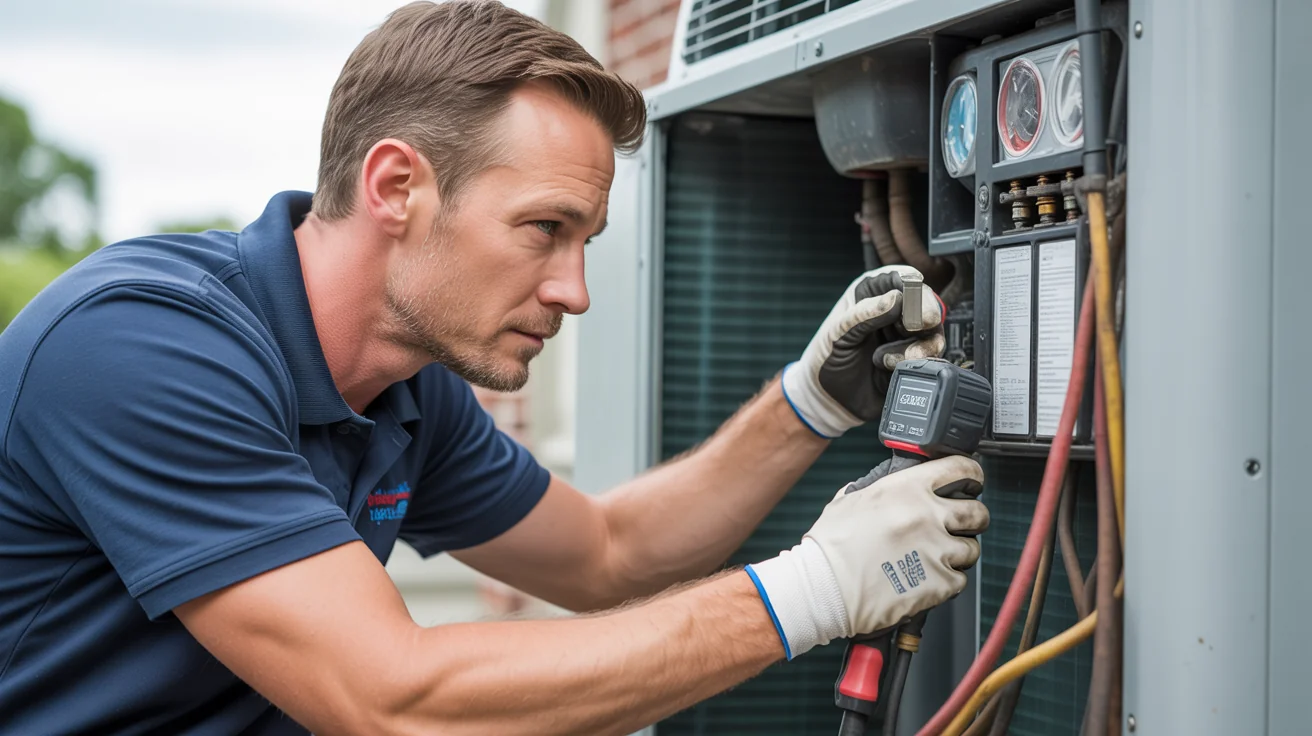
Wireless pressure sensors let me monitor refrigerant pressures in real time without the old-school gauge connections that can introduce leaks. Multiple temperature probes let me track performance across the entire system simultaneously. Automatic superheat and subcooling calculations save time and eliminate the math errors that happen when you’re crouched in a hot attic trying to do arithmetic. Data logging captures performance over time so I can spot trends. And everything syncs to my tablet so I can show the customer exactly what I’m seeing.
2. Electrical Testing Equipment
True RMS multimeters are non-negotiable. Standard meters give you wrong readings on modern equipment with variable frequency drives. Clamp meters let me measure current without breaking into circuits. Insulation testers perform megohm testing to find failing motor insulation before it causes a fire or a shock. Power quality analyzers tell me the whole electrical story: voltage, current, harmonics, power factor. Thermal imaging cameras are probably my favorite tool. Point it at an electrical panel and hot spots light up like Christmas. Loose connections, overloaded circuits, failing breakers, all visible in seconds.
3. Combustion Analysis Equipment
My combustion analyzer reads multiple gases simultaneously and logs the data. Draft gauges give me precise draft measurements for combustion appliance testing. Electronic gas leak detectors can sense concentrations down to parts per million. And digital manometers round out the gas testing toolkit for pressure verification work.
Diagnostic Software and Analysis Tools
Data Analysis and Reporting:
Performance modeling lets me compare what a system should be doing against what it actually is doing. That gap tells the story. Trend analysis software shows me how performance has changed over months or years, which helps predict what’s going to fail next. Energy analysis tools let me run cost-benefit numbers when a customer is deciding between repair and replacement. I can show them actual data instead of just opinions. And I maintain access to manufacturer technical bulletins and service databases for known issues and recalls.
North Texas Specific Diagnostic Considerations
Climate-Related Diagnostic Modifications
Summer Heat Diagnostics:
Systems that seem undersized might actually be properly sized but struggling with extreme conditions. You have to test at the right time of day and the right outdoor temperature to know the difference. Electrical stress testing during peak hours reveals the voltage and amperage problems I talked about earlier. Refrigerant charge accuracy needs a different approach when it’s 107 outside versus 85. And condenser performance evaluation has to account for the fact that when ambient air is 105 degrees, you’re not going to reject as much heat through that condenser coil no matter how clean it is.
Winter Heating Diagnostics:
Heat exchangers take a beating from thermal cycling, expanding and contracting with every heating cycle all winter. I look for cracks and stress patterns that could let CO into the airstream. Combustion efficiency changes when outdoor temps drop and affect combustion air temperature and draft characteristics. Heat pump evaluation during heating season includes checking auxiliary heat staging and defrost cycles, which operate very differently from cooling mode. And ventilation systems need verification because cold weather affects draft and combustion air supply in ways that warm weather doesn’t.
Regional Equipment Considerations
Equipment Specific to North Texas:
Heat pumps are everywhere here. Dual-fuel, variable speed, multi-stage. Each type has its own diagnostic requirements. High-efficiency communicating systems with their digital controls need a completely different skill set than a 20-year-old single-stage unit. Zoning systems add another layer of complexity because you’re balancing airflow and temperature across multiple zones with dampers, sensors, and controllers that all have to talk to each other. And modern smart thermostats bring their own set of diagnostic challenges: WiFi connectivity, sensor accuracy, programming issues that look like equipment problems.
My Mental Checklist When Systems Won’t Cool
When someone calls and says their system “isn’t cooling,” I don’t just start poking around randomly. I’ve got an order that I follow because it saves time and catches the obvious stuff first.
The “Not Cooling” Detective Process
Step one is the embarrassing stuff. Thermostat set wrong. Accidentally switched to heat mode. System turned off at the breaker. You’d be surprised how often this is the answer. I learned this lesson early. Spent two hours troubleshooting a system that was working perfectly. The homeowner had bumped the thermostat setting by accident. Two hours of my life I’m not getting back. Now I check the obvious first, every time.
If the thermostat is fine, electrical is next. In Texas heat, I’ve seen voltage drop so low during peak afternoons that compressors just can’t start. You test voltage under load, not just at rest, because a circuit that reads 240V with nothing running might sag to 220V when the compressor kicks in.
Airflow is third. A clogged filter or blocked return can make a perfectly good system look like it has refrigerant problems. I measure actual CFM whenever I can because just eyeballing whether air is coming out of the registers doesn’t tell you if it’s enough air.
Refrigerant system testing is fourth. Not first, like a lot of techs do. By the time I get here, I’ve already ruled out the easier stuff. Now I know I’m dealing with the actual refrigeration cycle. Pressures, temperatures, superheat, subcooling. The numbers usually point straight to the issue.
And sometimes I get to step five: the system is working exactly as designed but it’s just not big enough for the load. This happens a lot in North Texas as people add rooms, close in patios, or let insulation and windows deteriorate over time. The system hasn’t changed but the load has grown.
Heating System Diagnostic Tree
Primary Complaint: Inadequate Heating
Diagnostic Decision Tree:
1. Verify gas supply and electrical power
 ├─ Problem found → Address supply issues
 └─ No problem → Continue to step 2

2. Test thermostat and control systems
 ├─ Problem found → Address control issues
 └─ No problem → Continue to step 3

3. Check ignition system operation
 ├─ Problem found → Address ignition issues
 └─ No problem → Continue to step 4

4. Analyze combustion and heat exchange
 ├─ Problem found → Address combustion issues
 └─ No problem → Continue to step 5

5. Verify airflow and distribution systems
 ├─ Problem found → Address airflow issues
 └─ No problem → Advanced diagnostics required
I follow the same principle here as with cooling: start with the simple and cheap stuff and work toward the complex and expensive. Gas supply issues are easy to check. Thermostat problems are common and inexpensive. By the time you’re looking at combustion analysis or airflow diagnostics, you’ve already ruled out the stuff that would’ve been embarrassing to miss.
Safety Protocols in Advanced Diagnostics
Electrical Safety Procedures
High-Voltage Safety:
Lock-out/tag-out is not something I skip. Ever. I’ve heard the stories from guys who got lazy with it, and the outcomes range from bad to permanent. Voltage-rated gloves, safety glasses, and arc-flash protection go on every time I’m working in a live panel. Even when a circuit should be off, I verify it’s off with my own meter before I put my hands in there. And all my test equipment runs through GFCI protection because ground faults happen when you least expect them.
Refrigerant Safety Procedures
EPA Compliance:
Proper recovery before opening any refrigerant system. That’s federal law and it’s there for a reason. Electronic leak detection and bubble testing to find leaks before they become environmental problems. High-pressure safety procedures because refrigerant systems operate at pressures that can cause serious injuries if a hose blows or a fitting fails. Safety glasses, gloves, and ventilation are standard. Liquid refrigerant on your skin will give you frostbite instantly. Ask me how I know.
Gas Appliance Safety
Combustion Safety:
This is the one area where I get genuinely nervous if a homeowner tells me they tried to fix something themselves. Gas leaks require electronic detection and immediate isolation. There’s no “I’ll get to it later” with gas. I run continuous CO monitoring during all combustion work because CO is odorless and it’ll put you down before you know anything is wrong. Proper ventilation during service keeps the workspace safe. And I have emergency shutdown and evacuation procedures ready because even experienced techs can encounter unexpected situations with gas appliances.
Diagnostic Reporting and Documentation
Complete Diagnostic Reports
Report Components:
I write reports that homeowners can actually understand. The executive summary hits the key findings and what I recommend, in plain language. Technical test results with all measurements, pressures, and calculations are included for the record and for any second opinions. I take photos of problems because a picture of a cracked heat exchanger or a scorched wire is worth more than a paragraph of explanation. Repair recommendations get prioritized so the customer knows what’s urgent versus what can wait. And I include performance projections so they can see what improvement to expect from each repair.
Customer Communication
Technical Translation:
This might be the most important part of the whole diagnostic process. Finding the problem is half the job. Explaining it so the customer actually understands is the other half. I describe what’s wrong in terms that make sense. Not “your TXV has a restricted superheat response” but “there’s a valve that meters refrigerant into your cooling coil, and it’s sticking.”
I explain how the problem affects their comfort, their electric bill, and the life of their equipment. I present options when there are options. Not everyone needs the most expensive solution. Sometimes a repair makes more sense than a replacement. Sometimes it doesn’t. I lay out the pros, cons, and costs and let them decide. And I’m honest about urgency. If something can wait until next month, I say so. If it needs to be fixed before it causes a bigger problem, I say that too.
Cost-Benefit Analysis of Advanced Diagnostics
Diagnostic Investment vs. Value
Professional Diagnostic Service: $300-800
That buys you 4-8 hours of systematic testing with over $50,000 worth of diagnostic equipment. A licensed technician who’s done this thousands of times is interpreting every reading. You get a written report with findings and recommendations. That’s the investment.
Value Delivered:
Accurate problem identification means you’re not paying for repairs that don’t fix the real issue. I can’t tell you how many customers I’ve seen who paid $400 for a new capacitor from another company when the actual problem was a dirty condenser coil. Prioritized recommendations mean you spend money on the stuff that matters most first. Performance optimization squeezes more life and efficiency out of existing equipment. And proper diagnostics protect your warranty, because manufacturers can deny warranty claims if you can’t demonstrate the equipment was properly maintained and diagnosed.
Return on Investment:
Avoiding unnecessary repairs saves $500-$2,000 in misdiagnosis costs. That alone usually pays for the diagnostic service. Energy savings from optimization can run $300-$1,500 annually depending on what I find and fix. Equipment life extension is worth $1,000-$5,000 in delayed replacement costs. And catching safety hazards like CO leaks or electrical problems? You can’t put a price on that.
Professional Development and Continuing Education
Advanced Diagnostic Training
Professional Certifications:
NATE (North American Technician Excellence) certification proves a technician knows advanced diagnostics, not just basic service. I maintain EPA Universal certification for refrigerant work. Manufacturer training keeps me current on brand-specific diagnostic procedures because every brand has its quirks. And the technology keeps evolving, so continuing education isn’t optional if you want to stay competent. The systems being installed today are nothing like what I learned on 15 years ago.
Advanced Training Topics:
Electronic controls and communicating systems are probably the biggest area where training separates good techs from the ones who just replace boards until something works. Variable speed technology requires understanding inverter drives and motor controls at a level that didn’t exist in the trade 10 years ago. Heat pump diagnostics cover complex refrigeration cycles that run differently in heating versus cooling mode. And combustion analysis training covers the specialized equipment and procedures that keep techs and homeowners safe.
Questions I Get All the Time
Q: How long does complete HVAC diagnostics take? A: Depends on what I walk into. A single-zone residential system with decent access, maybe 4-5 hours. But I spent eight hours on a zoned system in Frisco last month because the original installer had gotten creative with the wiring. By creative I mean wrong. Commercial systems always run longer. More equipment, more complexity. I give a time estimate upfront, but I also tell people it might extend if I pull one thread and find three more problems connected to it.
Q: What’s the difference between basic troubleshooting and advanced diagnostics? A: Basic troubleshooting is “is the filter dirty, is the breaker tripped, does it have refrigerant.” Most techs stop there. Advanced diagnostics is more like detective work. I’m measuring things you can’t see with your eyes: power quality, heat exchanger efficiency, airflow patterns through every branch of your ductwork. I’m not just fixing what’s broken today. I’m figuring out why it broke and what’s going to break next if we don’t address the root cause.
Q: When should I invest in advanced diagnostics vs. simple repairs? A: If the same problem keeps coming back, that’s your sign. The simple repair isn’t fixing the actual cause. Unexplained high energy bills, rooms that never get comfortable, systems that do weird things, these all justify deeper investigation. I also recommend full diagnostics before any major repair decision. Spending $400 on diagnostics can save you thousands if it turns out the system doesn’t need replacement, just a proper repair that the last three technicians missed.
Q: Can advanced diagnostics prevent future HVAC problems? A: That’s honestly where the biggest value is. I regularly find problems that are developing but haven’t failed yet. A compressor showing early electrical stress. Ductwork leaks that are slowly getting worse. Catching that stuff early means fixing it during regular business hours at regular prices. Not at 10 PM on a Sunday when the after-hours rate kicks in and the house is 90 degrees.
Q: What diagnostic equipment do professional technicians use? A: My truck carries around $35,000 in diagnostic gear. Digital manifolds that connect wirelessly to my tablet, thermal imaging cameras that show heat patterns in electrical panels and ductwork, combustion analyzers for gas appliances, and precision electrical meters that pick up power quality problems. Good equipment is expensive. But it’s the difference between diagnosing a problem in one visit versus guessing across three.
Q: How accurate are professional HVAC diagnostics? A: With the right equipment and enough experience, I nail the problem on the first visit over 95% of the time. Compare that to the “swap parts until it works” approach, which might take multiple visits and still not fix the real issue. When I tell a customer what’s wrong with their system, I’ve got numbers and data to back it up. Not a hunch.
Take Action: Schedule Professional HVAC Diagnostics
If your system is acting up and nobody’s been able to give you a straight answer about what’s wrong, you probably need real diagnostics. Not a 30-minute “service call” where somebody checks the filter and adds refrigerant. Actual testing with actual equipment.
Ready for expert HVAC system diagnostics?
Call (940) 390-5676 and we’ll set up a full diagnostic session with the equipment and the time to do it right. You can also schedule online at jupitairhvac.com/contact if that’s easier. Ask about our diagnostic service packages and repair warranties. And if you’re dealing with something urgent, we can usually get same-day diagnostic appointments on the schedule because HVAC problems don’t wait for Monday morning.
Professional Diagnostic Services Coverage
Jupitair HVAC handles advanced diagnostics across the whole North Texas area. Every job gets complete system analysis with professional-grade equipment. Our technicians are EPA-certified and trained in the systematic diagnostic approach I’ve described in this guide. You get a detailed report with findings and recommendations you can actually understand. And our work is warranted, so if the diagnostic leads to a repair, you’re covered.
Real HVAC diagnostics takes professional expertise, the right tools, and a systematic approach. If you’re tired of guessing, call Jupitair HVAC.
Jupitair HVAC - Your North Texas advanced diagnostics specialists since 2008. Licensed & Insured.
Sources & References
The diagnostic procedures, testing standards, and troubleshooting guidelines in this article are based on the following authoritative sources:
- ASHRAE Fundamentals Handbook - HVAC system diagnostics and testing procedures
- EPA Section 608 Certification - Refrigerant diagnostics and leak detection requirements
- ACCA Quality Standards - Professional diagnostic procedures
- AHRI Equipment Testing - Equipment performance verification standards
- NATE Technician Certification - North American Technician Excellence standards
Last Updated: January 2026
Need Professional HVAC Service?
Our certified technicians are ready to help with any HVAC needs in North Texas