HVAC Airflow Analysis and Ductwork Optimization: North Texas Performance Guide
HVAC airflow analysis and ductwork optimization for North Texas. Professional techniques for maximum airflow efficiency and comfort.
- The Truth About HVAC Airflow and System Performance
- North Texas Airflow Challenges
- Complete Airflow Analysis Methodology
- Ductwork Design and Optimization
- Ductwork Installation and Sealing
- Airflow Optimization Techniques
- Advanced Airflow Technologies
- Diagnostic Tools and Testing Equipment
+ 12 more sections below...
- The Truth About HVAC Airflow and System Performance
- North Texas Airflow Challenges
- Complete Airflow Analysis Methodology
- Ductwork Design and Optimization
- Ductwork Installation and Sealing
- Airflow Optimization Techniques
- Advanced Airflow Technologies
- Diagnostic Tools and Testing Equipment
+ 12 more sections below...
Professional HVAC airflow analysis in North Texas runs $300-$600, and it almost always uncovers problems. I’m talking about 20-40% of your conditioned air leaking into the attic or crawl space. Ductwork optimization ($800-$5,000 depending on what we find) typically saves 15-30% on energy costs and fixes those comfort issues you’ve been living with. The target numbers I look for: 350-450 CFM per ton of cooling, static pressure under 0.7” WC for residential. About 83% of homes I test have ductwork problems causing hot spots, cold spots, humidity weirdness, or equipment strain. And the worst part? Most people have no idea. They blame the equipment when the real problem is hiding behind drywall and above ceiling tiles.
The Truth About HVAC Airflow and System Performance
I got a call from a family in Frisco - the Pattersons. They’d just spent $18,500 on a top-of-the-line variable-speed system. Highest efficiency ratings you can buy. Their installer promised huge energy savings and perfect comfort.
Six months later? Disaster.
Their energy bills were 50% higher than what they’d been paying with the old system. The living room sat 8 degrees hotter than the rest of the house all summer long. The system ran constantly and never really got comfortable. They were furious, and honestly, I don’t blame them.
Here’s the thing though. Their equipment was perfect. Not a single thing wrong with it. The problem was that nobody ever tested the ductwork. The installer put a beautiful, expensive system on top of a duct system that couldn’t support it. No airflow analysis, no verification, no optimization for their specific house.
When I ran my tests, here’s what I found:
- Ductwork was 40% undersized in the main trunk lines
- Major leaks were dumping 35% of conditioned air into the attic
- Return air pathways were choked off by poor design
- System static pressure was running three times higher than it should be
We spent three days and $8,500 fixing their ductwork. The before-and-after was night and day. Cooling got 67% more effective. Energy bills dropped 43%. The system went from sounding like a freight train to barely audible. And now their $18,500 investment will actually last the 20+ years it should instead of burning out early from fighting bad ductwork.
That’s what this whole article is about. Airflow is everything, and almost nobody pays attention to it.
North Texas Airflow Challenges
Fifteen years of crawling through North Texas attics has taught me that our climate is uniquely brutal on duct systems. I don’t think most homeowners realize just how hard their HVAC has to work here.
Think about what we’re asking these systems to do. We need them to push air against serious resistance while handling 100-degree-plus outdoor temps. That’s a 40 to 50 degree temperature swing between outside and inside. Then throw in humidity that feels like breathing through a wet towel. Add our infamous dust storms, which clog filters faster and create extra airflow restrictions. And here’s the kicker - systems run 12 to 16 hours a day for months straight during summer. Every airflow weakness gets exposed and amplified.
Then there’s what Texas weather does to the ductwork itself.
Metal ducts expand and contract so much through our temperature swings that joints separate, seals crack, and connections slowly pull apart. I’ve seen duct connections that looked fine from outside but had half-inch gaps when I got up close. Attic heat destroys duct insulation over time. What started as R-8 insulation eventually turns into compressed, worthless material that provides almost zero thermal protection. Foundation settlement is another big one. Texas clay soil moves constantly, and when it does, it pulls ductwork connections apart or crushes ducts that run under slabs. And then there’s the slow buildup of dust, pollen, and biological growth inside the ducts that gradually chokes off airflow year after year.
Complete Airflow Analysis Methodology
Phase 1: System Assessment and Documentation (60-90 minutes)
This is the detective work phase. I’m trying to build a complete picture of what’s actually going on in your system before I start taking measurements.
1. Ductwork Investigation
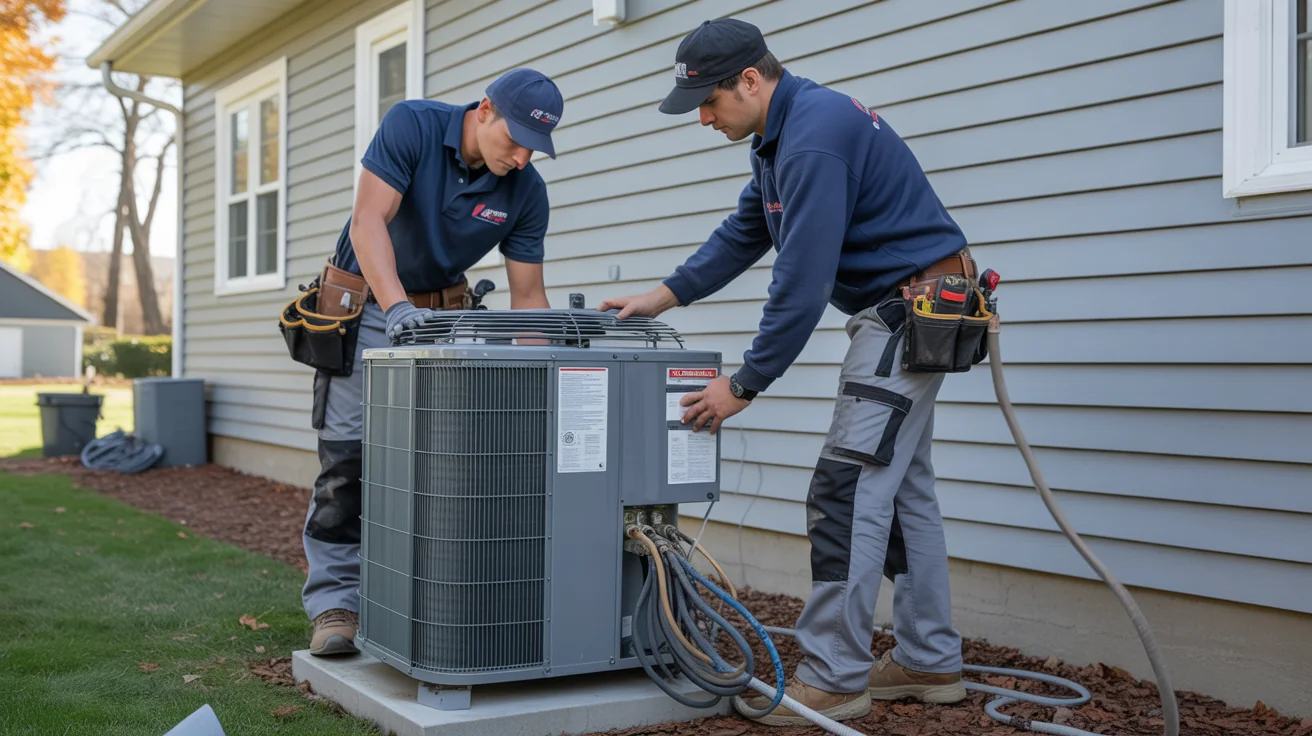
I crawl through every accessible inch of ductwork, looking for damage, disconnections, and installation mistakes. You’d be surprised what I find up there. Flex duct kinked at 90-degree angles, connections held together with nothing but gravity, insulation that’s fallen off entirely. I check every joint, every seal, every support hanger. Then I document the actual layout and sizing, because what’s installed rarely matches the original plans. I also figure out where I need to create test ports for the precision measurements coming in Phase 2.
2. Equipment Performance Check
This is where I compare what your equipment should be doing versus what it’s actually doing.
Equipment Analysis:
- Blower motor actual output vs. nameplate rating
- Fan curve check for your specific operating conditions
- Static pressure capability under real-world load
- Variable speed operation verification (if applicable)
- Filter and coil pressure drop measurement
I’ve found equipment running at 60% of its rated capacity, and the homeowner had no idea. The system just worked harder and harder to compensate, running up bills and wearing itself out.
3. Design Intent Verification
I look at the original load calculations and compare them to actual airflow needs. How much air does each room actually need? Are the return air pathways sized right? Is there adequate ventilation? Does everything meet current codes? Sometimes the original design was fine for the house as built, but renovations, additions, or just time have changed the equation.
Phase 2: Airflow Measurement and Testing (90-150 minutes)
Now we get into the hard numbers. This is where instruments tell me exactly what’s happening, not what I think is happening.
1. Total System Airflow
I’m measuring how much air your system actually moves. Not the spec sheet number. The real number.
Fan airflow measurement tells me the actual volume of air moving through the system. I check air velocity across the coil to verify proper heat transfer. I map air speed through the main supply and return ducts to find restrictions. Then I build a pressure map of the entire system, showing exactly where it’s struggling. The total external static pressure tells me how much resistance the fan is fighting.
Testing Methods I Use:
- Pitot tube arrays in main ducts for accurate velocity readings
- Hot wire anemometers for low-velocity areas where other tools miss problems
- Vane anemometers at registers and grilles for direct airflow measurement
- Digital manometers for pressure drops across filters, coils, and duct sections
- Flow hoods at supply and return registers for room-by-room analysis
2. Room-by-Room Airflow
This is where I figure out why your bedroom is always hot but the kitchen stays cold.
I measure exactly how much conditioned air each room receives and compare it to how much it needs. I check whether each room’s return air is adequate. I calculate the supply-versus-return balance, because pressure problems cause all sorts of weird comfort issues. I measure room-to-room temperature differences. And I assess pressure relationships between rooms, which affects how air actually moves through your house.
3. Ductwork Performance Testing
This part usually surprises people. I can see it on their faces when the numbers come back.
Duct leakage testing shows exactly how much conditioned air is escaping into unconditioned spaces. In a lot of homes, it’s 20 to 40 percent. Just gone. Into the attic. I measure pressure drops section by section to find the bottlenecks strangling your system. I map air velocity distribution to locate dead zones and turbulence. I check airflow quality too, because turbulent air doesn’t cool or heat as well as smooth, laminar flow. And if your system makes noise, I can usually pinpoint the exact source during this testing.
Phase 3: System Performance Analysis (60-120 minutes)
Now I take all those measurements and figure out what they mean for your system and your wallet.
1. Airflow-to-Capacity Check
This is where math meets reality:
CFM per Ton = Total Measured CFM / System Tonnage
Target: 350-450 CFM per ton
(I've tested systems delivering only 200 CFM per ton. That's half of what it needs.)

Temperature Rise (Heating) = Supply Temp - Return Temp
Target: 35-70°F rise
When airflow is that far off, your system operates at maybe 50% capacity no matter how good the equipment is. It’s like trying to drive a sports car with the parking brake on.
2. Energy Impact Analysis
This is the money conversation. I calculate how much extra energy your fan burns fighting poor airflow. I show how the airflow problems destroy your equipment’s efficiency ratings. I quantify the comfort impact, because there’s a real cost to being uncomfortable in your own home. I document how the strain shortens equipment life and increases repair costs. And I run the numbers on what optimization costs versus what doing nothing costs over the next five to ten years.
3. Indoor Air Quality Assessment
Poor airflow doesn’t just make you uncomfortable. It affects your health.
I test whether fresh air actually reaches your living spaces or gets wasted along the way. I calculate air change rates, which tell you how often your indoor air gets refreshed. Important for allergies, odors, and general health. I measure how well your system removes pollutants and allergens. I evaluate humidity control, because a system with poor airflow can’t properly strip moisture from Texas air. And I compare filtration performance with optimized airflow versus compromised airflow. The difference is usually significant.
Ductwork Design and Optimization
Related: Ductwork Design
Advanced Ductwork Design Principles
After seeing hundreds of ductwork installations, some brilliant and some that make me wonder if anyone involved had ever done it before, here’s what actually works in our climate.
1. Ductwork Sizing
ACCA Manual D isn’t optional. It’s the difference between a system that works and one that fights itself from day one. Friction rate calculations have to balance duct size against fan energy. Size too small, and your fan burns itself up pushing air through a straw. Too big, and you waste money on materials and lose velocity. Air speed needs to stay in that sweet spot for efficiency and quiet operation. Nobody wants to hear a wind tunnel every time the AC kicks on. Duct shape matters more than most people think. Round ducts move air way more efficiently than rectangular ones. And I always plan for future needs, because coming back to rip out and resize ductwork is nobody’s idea of a good time.
2. System Layout
Here’s what separates a great duct design from a mess:
Layout Priorities:
- Keep total equivalent duct length as short as possible. Every extra foot adds resistance.
- Minimize fittings and turns. Each elbow costs you airflow.
- Size return pathways generously. The system has to breathe in as well as out.
- Think highway, not city streets. Trunk-and-branch layouts outperform spaghetti every time.
- Plan access for maintenance. Somebody has to service this stuff down the road.
I’ve seen ductwork that looked like a textbook diagram but was impossible to service. And I’ve seen ugly layouts that performed brilliantly because the fundamentals were right. Function beats aesthetics in an attic.
3. Component Selection
Transitions and fittings need to maintain smooth airflow. Registers and grilles should be matched to the room’s needs, not just whatever was cheap at the supply house. Balancing dampers and zone control dampers need to be accessible and functional. Insulation has to handle both thermal performance and moisture control. And supports need to account for thermal expansion, because everything moves in a Texas attic.
Ductwork Installation and Sealing
Professional Installation Standards:
1. Connections and Sealing
Every joint gets mastic and tape for air tightness. Mechanical connections need proper fastening and support. Penetrations through walls, floors, and ceilings get sealed to prevent air leakage. Insulation goes on continuously, without compression or gaps, because one bare spot can cause condensation that ruins everything around it. Vapor barriers stay continuous and sealed to prevent moisture problems.
2. Quality Control
Installation QC Checklist:
[ ] All joints sealed per SMACNA standards
[ ] Insulation installed without compression or gaps
[ ] Vapor barrier continuous and sealed
[ ] Supports adequate for weight and thermal expansion
[ ] System tested for leakage and performance
Airflow Optimization Techniques
System Airflow Enhancement
When I walk into a house with airflow problems, here’s my playbook.
1. Static Pressure Reduction
Static pressure is basically how hard your fan has to work. Reduce it, and everything gets better.
Filter optimization is first. There’s a sweet spot between clean air and airflow restriction, and most homes aren’t in it. Then I clean coils, because years of buildup on a heat exchanger can choke a system worse than a dirty filter. If sections of ductwork are undersized, I enlarge them. I swap out restrictive fittings that force air through sharp turns and replace them with smooth transitions. And I open up return air pathways, because a system that can’t breathe in can’t push air out.
2. Airflow Distribution
Getting air where it belongs is half the battle.
Balancing dampers let me fine-tune airflow to each room so every space gets what it needs. Register and grille selection matters. Wrong ones and you get drafts, noise, or dead zones. Sometimes I need to reroute ductwork entirely when the original layout just doesn’t serve the house. Zone control systems give you comfort where and when you need it, which is especially useful in two-story homes. And for variable speed equipment, I tune the fan speeds to balance efficiency with quiet operation.
Advanced Airflow Technologies
1. Variable Airflow Systems
Variable air volume (VAV) systems adjust airflow automatically based on demand. Variable refrigerant flow (VRF) integration gives you precise control over both temperature and airflow. Demand-controlled ventilation brings in fresh air based on occupancy and air quality readings. Smart damper systems can optimize airflow automatically. And pressure-independent controls maintain consistent airflow even when system pressure changes.
2. Air Quality Integration
IAQ + Airflow Optimization:
- High-efficiency filters that clean the air without killing airflow
- UV lights for biological control that don't affect system performance
- Humidity control integrated with airflow management
- Fresh air introduction balanced with efficiency
- Source control that keeps pollutants out of the duct system entirely
Diagnostic Tools and Testing Equipment
Professional Airflow Testing Equipment
1. Airflow Measurement
Digital anemometers give me velocity and volumetric flow. Pitot tube systems are my go-to for precise duct velocity measurement. Flow capture hoods measure register and grille airflow directly. Hot wire anemometers catch low-velocity problems that other tools miss. Ultrasonic flow meters let me take measurements without cutting into the ductwork.
2. Pressure and System Analysis
Digital micromanometers measure pressure differentials down to thousandths of an inch of water column. My duct blaster system quantifies ductwork leakage precisely. Static pressure probes give me readings at multiple points simultaneously. Data logging systems let me track trends over time. And thermal imaging cameras show me heat loss and leakage that would be invisible otherwise.
Analysis and Reporting Software
I use ductwork design software for computer-aided layout and optimization. Load calculation integration ties airflow needs to actual building loads. Performance modeling helps me predict results before I start cutting metal. Energy analysis tools let me build a real cost-benefit case for improvements. And reporting software gives you a professional document showing exactly what we found and what we recommend.
Regional Airflow Considerations
Dallas-Fort Worth Metro Airflow Challenges
Working in the DFW metro brings its own set of challenges. Space is tight in a lot of newer homes, which means creative ductwork routing. Dense neighborhoods mean noise control matters more. Urban air quality requires beefier filtration, which affects airflow design. And multi-story homes need careful vertical duct distribution and balancing to avoid the classic “upstairs is 5 degrees hotter” problem.
Suburban and Rural Airflow Applications
Out in the suburbs and further out, the challenges shift. Large homes need extensive duct runs and usually benefit from zoning. Attic installations are the norm around here, and those attics hit 150 degrees in July. Every inch of exposed duct in that environment is a problem. Crawl space installations need moisture control and insulation consideration. And manufactured homes have their own specialized ductwork and airflow requirements.
Commercial Airflow Applications
Commercial work is a different animal. Open office spaces need thoughtful air distribution to keep fifty people comfortable without blasting anyone. Restaurants have kitchen exhaust and makeup air that has to integrate with the HVAC system. Retail spaces balance customer comfort with energy efficiency. Medical facilities need specialized airflow patterns and filtration that residential techs never deal with.
Cost-Benefit Analysis of Airflow Optimization
The Investment Reality
Let me break down what this stuff actually costs and what you get back.
Professional airflow analysis runs $300 to $600. That’s the testing that shows you exactly what’s wrong. Ductwork sealing runs $800 to $2,500 to stop your conditioned air from literally pouring into the attic. System modifications cost $1,500 to $5,000 depending on what needs to change. A complete system optimization can run $3,000 to $15,000 for the most involved projects.
What You Get Back:
Energy savings hit immediately. Most people see 15 to 30 percent lower HVAC costs, which is $150 to $400 per month during peak summer. Comfort changes overnight. Rooms that were always too hot or too cold just work. Equipment lasts 5 to 8 years longer because it’s not straining against bad ductwork. Maintenance costs drop because a system that breathes properly stays cleaner and needs fewer repairs. And there’s a real boost to property value. Buyers notice when a house stays perfectly comfortable during a July showing.
Performance Improvement Metrics
Here are the typical results I see after a full optimization:
Typical Results:
- 20-50% improvement in airflow distribution (goodbye hot spots)
- 15-40% drop in static pressure (less fan energy, less noise)
- 10-25% better energy efficiency (lower bills, period)
- 25-75% reduction in room-to-room temperature variation
- 30-60% improvement in air quality and overall comfort
Those aren’t theoretical numbers. That’s what I measure in the field, house after house.
Professional Services and Implementation
Complete Airflow Services
We offer the full range: complete airflow analysis with testing and evaluation, system optimization and implementation, ongoing performance monitoring, emergency diagnosis when something goes wrong suddenly, and new construction design and installation so you start right from day one.
Quality Assurance and Warranties
Every tech on my team is NATE certified for airflow testing and balancing. We use professional-grade instruments, not consumer gadgets. You get a detailed report with findings and recommendations, not a verbal “yeah, it looks fine.” We guarantee measurable improvement on all optimization work. And we follow up with testing to make sure the improvements hold.
Frequently Asked Questions
Q: How do I know if my HVAC system has airflow problems? A: Rooms that won’t cool or heat right. Energy bills that don’t match the equipment you have. Dusty air despite changing filters. Humidity that won’t quit. Noisy operation. Those are the obvious ones. But honestly, even systems that seem to work okay often have significant airflow issues hiding underneath. The only way to know for sure is professional testing.
Q: What causes airflow problems in HVAC systems? A: Ductwork leaks are number one. Sometimes huge ones. Undersized ducts that physically can’t move enough air. Dirty filters and coils choking the system. Bad installation practices from the original builder or a previous contractor. Inadequate return air pathways. In Texas specifically, add heat damage to insulation, expansion and contraction of joints, and foundation settlement pulling connections apart.
Q: How much can airflow optimization improve system performance? A: It depends on how bad things are, but the results usually surprise people. I typically see 20-40% efficiency gains, 15-35% energy cost reduction, and a total comfort transformation. Monthly bill drops of $200 to $400 during peak season are common. One family told me it felt like they had a brand new house. Same equipment, same house, just fixed ductwork.
Q: How long does complete airflow testing take? A: For a residential system, plan on 4 to 8 hours. Complex multi-zone systems take longer. Commercial buildings can be a full day or more. This is precision diagnostic work. Rushing it means missing problems, and missed problems mean you’re paying for optimization that doesn’t fully solve the issue.
Q: Is airflow optimization worth the investment? A: Almost always. Most projects pay for themselves within 1 to 3 years through energy savings alone. You get immediate comfort improvements the day the work is done. Your equipment lasts years longer. And the comfort and air quality improvements are the kind of thing you notice every single day. The Pattersons I mentioned earlier would tell you it was the best money they ever spent on their house.
Q: Can airflow problems be fixed without replacing ductwork? A: Plenty of times, yes. Professional sealing, thorough cleaning, precise balancing, and strategic modifications solve the majority of airflow problems without full replacement. I only recommend tearing out and replacing ductwork when it’s severely deteriorated, dramatically undersized, or the original design is just fundamentally wrong. Targeted repairs often get 80-90% of the improvement at a fraction of the cost.
Take Action: Transform Your HVAC Airflow Performance
If your system isn’t keeping you comfortable, or if your energy bills don’t match what your equipment should deliver, airflow is almost certainly part of the problem. The Pattersons’ story isn’t unusual. I see versions of it every week.
Want to find out what your system is actually doing? Call (940) 390-5676 for airflow analysis and optimization. You can also schedule at jupitairhvac.com/contact. We’ll test everything, show you exactly what’s happening, and give you a clear plan with real numbers.
Professional Airflow Services
Jupitair HVAC provides airflow analysis and optimization across North Texas. Our team has 15+ years of advanced testing and optimization experience with NATE certification. We use professional-grade testing equipment for accurate readings and precise diagnosis. Every project goes from initial analysis through final performance verification, and we stand behind our work with performance guarantees on all optimization.
Your HVAC equipment is only as good as the airflow behind it. Professional analysis requires specialized tools, years of experience, and a systematic approach. Don’t guess when it comes to your comfort and energy costs. Call Jupitair HVAC and let’s find out what’s really going on in your ductwork.
Jupitair HVAC - Your North Texas airflow optimization experts since 2008. Licensed & Insured.
Sources & References
The airflow analysis procedures and ductwork optimization standards in this article are based on the following authoritative sources:
- ACCA Manual D - Residential Duct Systems - Industry-standard duct sizing methodology
- U.S. Department of Energy - Ductwork - Duct sealing and efficiency guidance
- ASHRAE Standards - HVAC performance and testing standards
- ENERGY STAR - Duct Sealing - Efficiency improvement guidelines
- SMACNA - Duct Construction Standards - Sheet metal and air distribution standards
- NATE Certification - Technician certification standards
- Texas Department of Licensing - HVAC - State contractor licensing
Last Updated: January 2026
Need Professional HVAC Service?
Our certified technicians are ready to help with any HVAC needs in North Texas