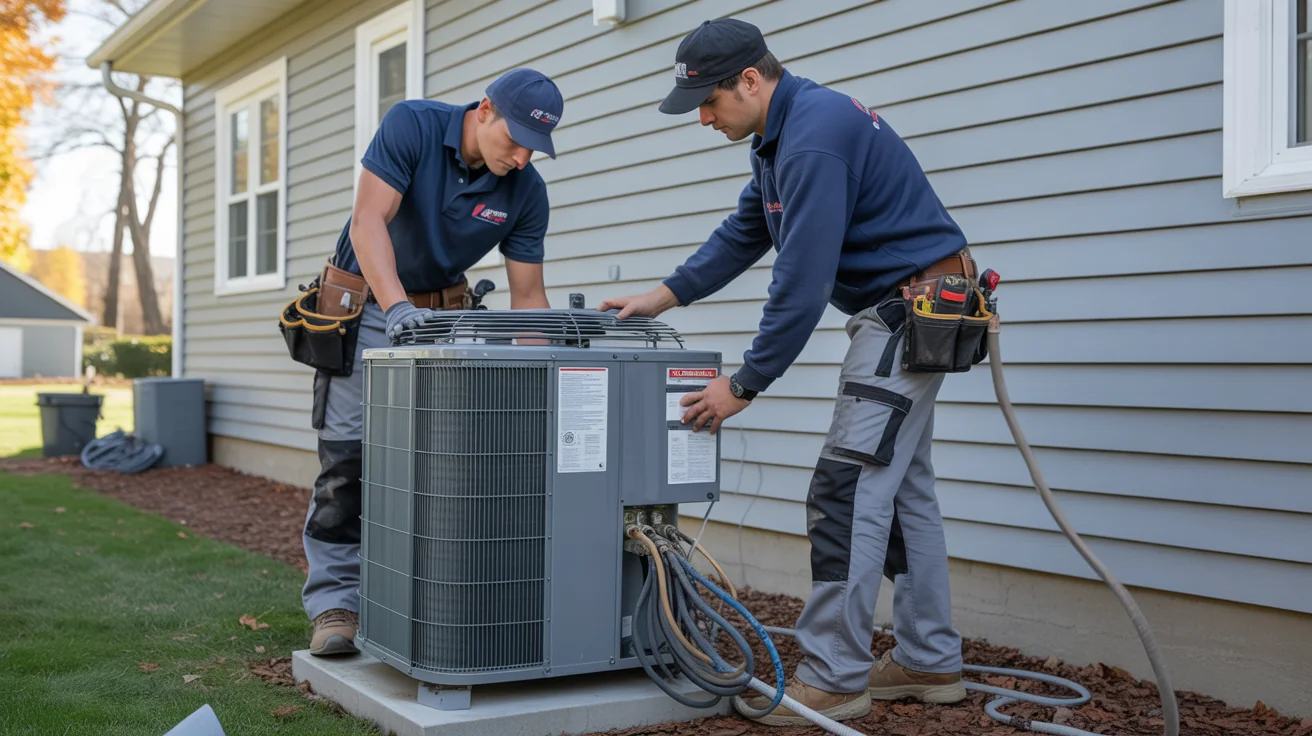
HVAC Air Balancing Procedures for Texas
HVAC air balancing and testing guide for Texas. Professional procedures, measurement techniques, and system optimization for efficiency.
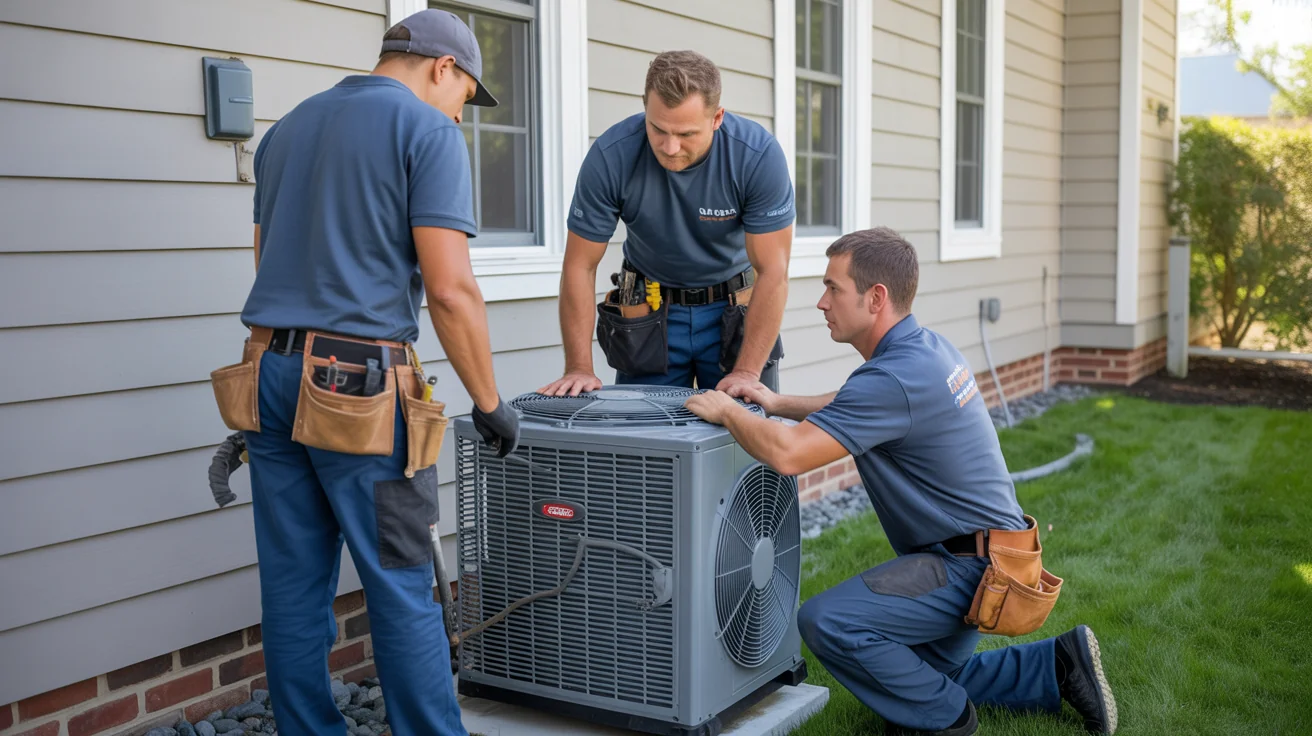
Professional HVAC air balancing in Texas runs $800-$2,500, and honestly, it’s one of the best investments you can make in your system. I’ve seen it improve performance by 25-40%, kill hot spots, quiet down noisy ductwork, and add 5-8 years to equipment life. What we’re doing is measuring and adjusting airflow so each room gets the right CFM (cubic feet per minute). You’re shooting for 350-450 CFM per ton of cooling, and the tolerances are tight: ±10% for individual registers, ±5% for total system airflow. Here’s the thing most people don’t realize. Most comfort problems aren’t about bad equipment. They’re about bad air distribution. Fix the airflow, and $150-$300 in monthly energy savings during a Texas summer is pretty normal.
Professional HVAC Air Balancing for Maximum Texas Performance
I want to tell you about a job that still sticks with me. A family in Allen spent $28,000 on a top-of-the-line variable-speed system. Best efficiency ratings you can buy. Six months later they called us, frustrated out of their minds.
The master bedroom was running 6 degrees warmer than the rest of the house all summer. Their energy bills were actually 40% higher than their old system. The wife was ready to rip the thing out. Everyone in the house had a different complaint about a different room. And the system just ran and ran and never got comfortable.
Know what was wrong? Nothing. Not with the equipment, anyway. The installer never balanced the airflow after putting it in. Some rooms were getting twice the air they needed. Others were starving. A $28,000 system performing like a window unit because nobody spent a few hours with a flow hood.
We balanced it in about 6 hours. Cost them $1,200. Temperatures evened out the same day. Energy bills dropped 35%. The system got quiet. And that expensive equipment will actually last 15+ years now instead of burning itself out fighting bad airflow.
That’s what air balancing is really about. Not minor tweaks. It’s making your system work the way it was designed to work.
Why Texas Climate Demands Precision Air Balancing
I’ve been doing this in North Texas for over 15 years, and I can tell you that Texas is just brutal on HVAC systems. There’s no way around it.
We get 100°F+ temperatures for months. Not days, months. The humidity makes everything harder because your system isn’t just cooling air, it’s wringing water out of it. Attics up here hit 140°F easy, and at those temperatures, your ductwork expands and contracts constantly. Joints shift. Connections loosen. Carefully set damper positions drift.
And the cost of getting it wrong? I’ve seen unbalanced systems waste $200 a month or more during peak season. Equipment that should last 15 years dying in 8 because it’s been fighting bad airflow its whole life.
What still surprises me, even after all these years, is how much difference proper balancing makes. A 25-40% performance improvement is typical. Not best-case. Typical. And monthly bills dropping $150-300 right away? I see it all the time in bigger homes around Frisco and Plano.
Understanding Air Balancing Fundamentals
What Is Air Balancing?
Let me keep this simple. Air balancing is the process of measuring how much air is going where in your system, then adjusting things until every room gets what it actually needs. Think of it like tuning an engine. All the parts might be good, but if the timing is off, you’re not getting the performance you paid for.
When it’s done right, every room gets the right amount of conditioned air based on that room’s specific heating and cooling load. Your equipment runs in its sweet spot instead of working harder than it has to. Temperatures stay consistent throughout the house. No more freezing in the living room while the bedroom feels like a sauna. And you stop wasting money cooling air that’s going to the wrong places.
Air Balancing vs. System Commissioning
Air Balancing (TAB - Testing, Adjusting, Balancing):
This is focused specifically on airflow. We’re measuring what each register is delivering, adjusting dampers, and making sure the ductwork is distributing air the way the design calls for. Residential systems usually take 4-12 hours depending on how big and how messed up things are. The end result is every space getting the right CFM.
Complete System Commissioning:
This is a bigger deal. Commissioning covers everything: mechanical, electrical, controls, refrigerant, the works. It’s a full performance verification of the entire HVAC system from top to bottom. For residential, you’re looking at 1-3 days. It’s more thorough, more expensive, and honestly, most homes don’t need the full commissioning unless it’s a brand new install or a really complex system.
Professional Testing Equipment and Procedures
Essential Air Balancing Instruments
Digital Manometers: These measure static pressure, velocity pressure, and pressure differentials throughout the system. Good ones are accurate to ±1% of reading. I use them for duct pressure measurements, checking filter pressure drops, evaluating coils. One thing about working in North Texas: the heat messes with calibration, so I’m checking my instruments constantly.
Airflow Capture Hoods: These go right over the register and give you a direct CFM reading. Accurate to about ±3% when calibrated properly. There’s no guessing involved. You put the hood on, and it tells you exactly how much air that register is moving. Can’t use them on every diffuser type, but for standard residential registers, they’re the gold standard.
Thermal Anemometers: For precise velocity measurements inside ducts and at openings. ±2% accuracy with proper technique. I use these a lot for duct traverse measurements and tracking down leaks. They work well in tight spaces where a capture hood won’t fit.
Digital Temperature/Humidity Meters: For verifying temperature differentials and humidity control. I check supply and return temps, verify comfort in each room, and log data for documentation. Monthly calibration is a must if you want the numbers to mean anything.
Pre-Balancing System Evaluation
Before I touch a single damper, I do a full evaluation. You can’t fix what you don’t understand, and I’ve seen too many guys just start twisting things and making it worse.
-
Equipment verification: I check every nameplate, fan capacity, and operating spec. You’d be surprised how many systems are labeled wrong. I had a “3-ton” system last month that was actually a 2.5 ton.
-
Ductwork inspection: I get in the attic and look at everything I can reach. Crushed flex duct, disconnected joints, boot connections that were never sealed. In Texas attics, I’ve found stuff that makes me wonder if the installer was working blindfolded.
-
Filter check: If filters are dirty, test results are garbage. I had one house where the filter was so clogged it was blocking probably 60% of airflow. The homeowner thought the system was broken. Nope. Just a $10 filter that hadn’t been changed since Obama’s second term.
-
Leak detection: Big leaks have to get sealed before balancing makes any sense. I’ve found systems dumping 40% of their conditioned air into the attic. That’s like running your AC with the windows open.
-
Controls check: Thermostats, zone dampers, motorized dampers. If the controls are misbehaving, perfect airflow won’t help.
Design Documentation Review: I also pull load calculations and check Manual J numbers against what the rooms actually need. I look at equipment specs and fan curves, review the ductwork design against Manual D calculations, and compare what was actually built to what was planned. There’s almost always a gap.
Step-by-Step Air Balancing Procedures
Phase 1: Initial System Testing (2-3 hours)
This first phase is basically taking your system’s vital signs. I need to know exactly where things stand before I start adjusting.
-
Static pressure measurements: I’m measuring how much resistance the fan is pushing against. When static pressure is too high, your system is working way too hard for what it delivers. Like breathing through a coffee straw.
-
Fan performance check: What is the fan actually doing versus what the manufacturer says it should do? Sometimes there’s a big gap, and that tells me something is fundamentally wrong.
-
Temperature differentials: I measure the temperature difference between supply and return air. In cooling mode, I want to see 16-22 degrees of split. If it’s outside that range, something’s off.
-
Electrical readings: Motor amps, voltage, wattage. A motor fighting bad airflow draws more power and runs hot. That’s money out of your pocket and a shorter life for the motor.
-
Refrigerant verification: Pressures and temperatures on the refrigerant side. Poor airflow across the evaporator coil changes refrigerant behavior. I’ve seen frozen coils caused entirely by airflow problems.
Baseline Airflow Measurements:
This is where it gets interesting. I’m measuring exactly how much air goes where, and the results usually shock people.
-
Total system airflow: Should be 350-450 CFM per ton of cooling. I’ve walked into houses where the system was barely pushing 200 CFM per ton. No wonder it couldn’t cool the house.
-
Branch airflow mapping: I measure every major duct branch. It’s common to find one branch hogging 70% of the airflow while the rest of the house fights over the leftovers.
-
Register-by-register measurements: Every single supply register gets measured. I’ve found bedrooms getting three times what they need while a home office down the hall gets almost nothing.
-
Return air capacity: The system needs to breathe in as much as it blows out. Inadequate return air is one of the most common problems I see, especially in older homes.
-
Documentation: I write everything down. Detailed records. When we’re done, you can see exactly what was wrong and what we did about it.
Phase 2: System Balancing Adjustments (3-6 hours)
The Precision Tuning Process:
Supply Air Balancing:
This is where years of experience matter. Every damper adjustment changes airflow everywhere else in the system. It’s like a puzzle where moving one piece shifts all the others.
-
Start with the tough runs: The longest duct runs, the ones with the most bends, the ones buried deepest in the attic. Those are your problem children. Fix them first.
-
Work systematically: I go from high-pressure terminals to low-pressure ones. There’s a method to it, and skipping around just creates chaos.
-
Small moves only: A quarter turn on a damper can change everything. I make a small adjustment, measure, let the system settle, measure again. Patience matters here.
-
Watch the whole system: When I adjust one damper, I’m watching what happens to airflow at three other registers. It’s all connected.
-
Hit the targets: I don’t stop until every register is within 10% of its design CFM. Close enough isn’t good enough when someone’s sleeping in a room that’s too hot.
Return Air Optimization:
Return air is the part most installers forget about. Your system blows air into rooms, but it also needs to pull air back. Mess that up and nothing works right.
-
Trace every return path: I follow the air backwards. Are there enough return grilles? Do interior doors have undercuts or transfer grilles? Closing a bedroom door shouldn’t turn it into a pressure cooker.
-
Pressure balancing: I check for rooms that pressurize when doors close. That pressure pushes conditioned air out through every gap and crack in the walls. Wasteful and uncomfortable.
-
Filter loading effects: A clean filter and a 3-month-old filter create completely different system behavior. I factor that in.
-
Return capacity: The return system needs to handle everything the supply side delivers. Undersized returns choke the whole system.
-
Noise control: A lot of system noise comes from returns. Undersized grilles, high velocity through tight openings. I tune these for quiet operation without losing performance.
Phase 3: System Performance Optimization (2-4 hours)
Final Performance Tuning:
This is where we take a balanced system and squeeze out the last bit of performance.
-
Fan speed optimization: I dial in the fan speed to deliver design airflow at the lowest static pressure possible. Lower static means less energy, less noise, less wear. Win all around.
-
Mechanical adjustments: On belt-driven units, I check belt tension and alignment. Too loose wastes energy and slips. Too tight kills bearings. There’s a sweet spot.
-
Motor verification: I confirm the motor is running within its rated parameters. Not overloaded, not underloaded. Motors running outside their comfort zone don’t last, especially in Texas summers.
-
Controls calibration: I fine-tune thermostat response and control sequences. The system should react smoothly and predictably.
-
Safety checks: Every safety device gets tested. High-limit switches, pressure switches, flame rollout switches. In Texas heat, you don’t cut corners on safety.
Final Performance Verification:
This is proof-of-work time. I’m documenting that everything we did actually worked.
-
Complete airflow survey: Every register gets re-measured. Every one has to hit within 10% of design. No exceptions.
-
Efficiency analysis: I calculate actual fan efficiency and power consumption. The numbers show exactly how much energy we saved.
-
Temperature uniformity: I take temps throughout the house. Room to room, you should be within 2 degrees. That’s the standard.
-
Humidity control: In Texas, humidity management is half the battle. I verify the system is removing moisture properly.
-
Noise levels: A balanced system runs quieter. I measure sound levels to confirm it.
Texas-Specific Balancing Considerations
High Ambient Temperature Effects
Fifteen years in Texas has taught me things about extreme heat that you won’t find in a textbook.
Equipment Performance Reality: When outdoor temps push past 105°F, cooling capacity drops 15-25% below rated performance. That’s just physics. Fan motors run hot and lose efficiency. Refrigerant pressures climb toward their limits. I schedule testing for mornings during peak season because by 2 PM, the equipment is already compromised and your readings won’t be representative.
Measurement Challenges in Texas Heat:
The heat messes with everything, including my instruments. Electronic equipment reads differently in a 140°F attic than it does in a 70°F hallway. Systems take longer to stabilize in extreme conditions. Metal ductwork expands and contracts enough to shift damper positions and pop joints. And high humidity changes air density, which affects every airflow calculation.
None of this is unsolvable, but you have to know it’s happening. A tech who doesn’t account for these factors is going to give you bad data.
Ductwork Challenges in Texas
Attic Installations:
Working in a Texas attic in July is about as pleasant as you’d imagine. I’m up there with testing equipment, crawling around in 140°F heat, trying to take precise measurements while sweat drips in my eyes.
But the real problem is what the heat does to the ductwork itself. I’ve pulled back insulation blankets and found flex duct connections that just gave up. Insulation that turned to powder from years of heat cycling. Flex duct sagging between supports until it’s practically kinked shut. I work in 15-20 minute stretches up there because heat exhaustion is a real risk.
Underground Duct Challenges:
Some older North Texas homes have ducts buried underground, and they come with their own set of headaches. Ground water seeps in and creates mold. Our clay soil expands and contracts with moisture and can crush ductwork or pull connections apart. Access is extremely limited. Finding leaks underground requires thermal imaging because you sure can’t see them.
Commercial vs. Residential Balancing
Residential Air Balancing Procedures
Residential work is different from commercial. The equipment is smaller, the stakes are personal, and the homeowner is standing right there watching.
My approach for homes: I focus on the measurements that directly affect your comfort and your bills. I’m not running a three-day academic exercise. I typically measure 8-16 points covering all the major supply outlets and returns. I test fan performance and temperature differentials. Then I walk room to room checking temperature uniformity. And you get a report in plain English, not an engineering thesis.
I’m thorough, but I’m also practical about cost. You get maximum benefit without paying for testing that won’t change the outcome.
Commercial Air Balancing Standards
Commercial is a completely different animal. NEBB (National Environmental Balancing Bureau) and TABB (Testing, Adjusting, and Balancing Bureau) standards apply, and they’re not optional. The documentation alone could fill a binder. You need certified technicians because insurance and liability require it. And there are often contractual performance guarantees with real penalties.
On the testing side, every single terminal device gets measured and adjusted. No shortcuts. We do detailed fan curves, motor performance analysis, and efficiency calculations. Power consumption gets documented. And the final report needs to be detailed enough that an engineer, an attorney, or an insurance adjuster can use it.
Performance Metrics and Acceptance Criteria
Airflow Measurement Tolerances
Industry Standard Tolerances:
- Individual terminals: ±10% of design CFM
- Total system airflow: ±5% of design CFM
- Branch airflow: ±10% of calculated branch totals
- Return air systems: ±5% of total system return
North Texas Performance Targets: For our climate, I emphasize maximum airflow for cooling capacity and adequate dehumidification airflow. Energy efficiency matters, but comfort and humidity control come first. Temperature uniformity is the priority.
Temperature and Pressure Criteria
Temperature Performance Standards: Supply air within ±2°F of design conditions. Room-to-room uniformity within ±2°F. Return air temps verified for proper heat exchange. Equipment temperature rise within manufacturer specs.
Static Pressure Requirements: Total external static pressure has to fall within the equipment’s operating range. Duct pressure loss should be within ±0.1” W.C. of Manual D calculations. Terminal pressure needs to be adequate for proper airflow delivery. And return pressure has to support proper equipment operation.
Common Air Balancing Problems
The Problems I See Every Single Day
Inadequate Airflow Issues:
After thousands of jobs, the same problems keep showing up. Undersized ductwork is probably the most common. A 6-inch duct feeding a room that needs 200 CFM is never going to work. You can put a jet engine behind it and it won’t matter. Then there’s crushed ducts, closed dampers nobody knows about, filters that haven’t been changed in a year. All choking airflow.
Bad duct design from the original installation is another frequent culprit. Systems that violate basic Manual D principles right out of the gate. And equipment mismatches where the fan just can’t produce what the ductwork demands.
Distribution Problems:
This one drives me crazy. The master bedroom getting 300 CFM when it only needs 150, while the home office gets 50 CFM when it needs 200. The air is there, it’s just going to the wrong places.
Return air starvation is everywhere. Builders put one return in the hallway and call it good. Then every bedroom with a closed door becomes a pressure box. Duct leaks are another constant. I’ve measured systems losing 40-50% of their conditioned air to the attic. Half your cooling bill, straight into a space nobody lives in. And don’t get me started on dampers. I’ve found them installed backwards, rusted shut, or set by someone who had no idea what they were doing.
Equipment Performance Issues: Oversized equipment short-cycles and never distributes air properly. Undersized equipment can’t keep up on design days. Poor installation quality affects everything downstream. And control problems with thermostats or dampers can undo even the best ductwork.
Solutions and Corrections
Ductwork Modifications: Sometimes we need to resize undersized ducts, add return air pathways, install volume dampers for better control, or professionally seal duct leaks to stop losing conditioned air.
Equipment Adjustments: Fan speed changes, pulley swaps on belt-driven units, motor upgrades when the existing one can’t deliver, and control recalibration to tighten up thermostat and damper response.
Advanced Balancing Techniques
Variable Air Volume (VAV) Systems
VAV Balancing Procedures:
- Design airflow verification: Confirm VAV box minimums and maximums match the design intent
- Control sequence testing: Verify the boxes modulate properly in response to zone calls
- Diversity calculations: Account for the fact that not every zone calls at the same time
- Energy optimization: Find the balance point between comfort and energy use
Zone Control System Balancing
Multi-Zone Considerations:
- Individual zone balancing: Each zone gets balanced on its own first
- Zone interaction testing: I check that adjusting one zone doesn’t wreck another
- Control integration: All the components need to talk to each other properly
- Pressure management: Bypass dampers have to work correctly or zone systems create huge pressure problems
High-Efficiency System Balancing
Variable Speed Equipment:
- Multi-speed testing: The system needs to be balanced at every operating speed, not just full blast
- Modulation verification: Smooth transitions between capacity stages matter for comfort
- Efficiency optimization: Balance for best seasonal efficiency, not just peak performance
- Control integration: Speed control responses need to be verified and tuned
Quality Assurance and Documentation
Performance Verification Testing
Acceptance Testing Protocol:
- Independent verification: On commercial jobs, third-party confirmation of the balance quality
- Performance guarantee: Contractual commitment to meeting the performance standards
- Seasonal testing: Sometimes we verify performance in both heating and cooling mode
- Long-term monitoring: Periodic re-testing to make sure nothing has drifted
Professional Documentation Requirements
Complete Test Reports: I document as-found conditions (what the system was doing before we touched it), every adjustment made, all final measurements, and recommendations for anything else that needs attention. For residential customers, you get a clear summary with the key numbers and what changed. For commercial, the reports are more detailed and follow industry formats.
Customer Documentation: You walk away with a summary of what we found, what we did, and what improved. I include maintenance recommendations so you can keep the system performing well. We stand behind the work with performance guarantees, and you’ve got our contact info for future needs.
Emergency Air Balancing Services
When Immediate Balancing Is Required
Sometimes this can’t wait. A brand new system that’s not performing? That needs attention now, not next month. Huge temperature swings between rooms making daily life miserable? Same thing. Energy bills that spiked for no obvious reason? Could be an airflow problem that developed suddenly. Equipment running nonstop and breaking down repeatedly? Poor airflow might be the root cause.
Jupitair’s Professional Air Balancing
Why Our Air Balancing Gets Results:
I’ve been doing this for 15+ years across North Texas. Thousands of balancing jobs. What we bring is experience you can’t fake. NEBB certification through ongoing education. Professional-grade instruments that get calibrated regularly, not hardware store gadgets. We look at the whole system, not just the dampers. And we guarantee measurable improvement.
We work on everything from 1,500 square foot starter homes to 50,000 square foot commercial buildings. When you need it fast, we respond same-day. You get detailed before-and-after documentation. And we’re here for the long haul with ongoing re-balancing and maintenance to keep things dialed in.
Frequently Asked Questions
Q: How often should HVAC systems be air balanced? A: Every new installation needs it. Full stop. I’m amazed how many contractors skip this. After the initial balance, residential systems usually need it again every 3-5 years, or sooner if you’ve had major work done. Commercial systems are different. High-use buildings should get annual balancing.
Q: Can air balancing fix all comfort problems? A: I wish. It’s incredibly effective for airflow-related issues, but it won’t fix undersized equipment, terrible ductwork design, or a building envelope that leaks like a screen door. What a proper evaluation will do is tell you exactly what’s causing your problems and the most cost-effective way to fix them.
Q: How long does professional air balancing take? A: Residential systems, figure 4-8 hours. Depends on how many zones you have and how far off things are. Zoned systems always take longer because each zone needs individual attention. Commercial systems can take 1-3 days or more. This is precision work. Rushing it means doing it twice.
Q: What’s the cost of professional air balancing? A: Residential runs $800-2,500 depending on system size and how much correction is needed. Commercial varies a lot based on scope. Yeah, it’s not cheap. But stack it against wasted energy every single month, rooms you can’t use comfortably, and equipment that dies early. The math works out in your favor.
Q: Will air balancing reduce my energy bills? A: Almost always, yes. A 15-25% reduction in energy use is typical. I’ve seen larger homes around Frisco and Plano save $150-300 a month during peak summer. The service often pays for itself in a year or two through energy savings alone. Sometimes faster.
Q: Can I balance my own HVAC system? A: You can adjust dampers and try to even things out by feel. Some people do okay with that. But real air balancing requires instruments that cost thousands of dollars, training to use them properly, and experience interpreting the data. Without measurements, you’re guessing. And guessing usually means fixing one room while making two others worse.
Q: What are the benefits of air balancing and air tightness testing? A: These two services complement each other really well.
Air balancing benefits:
- Gets rid of hot and cold spots throughout the house
- Cuts energy consumption 15-25% by putting air where it belongs
- Adds 5-8 years to equipment life by reducing system stress
- Improves indoor air quality through proper circulation
- Quiets down noisy, over-pressurized ducts
Air tightness testing (blower door test) benefits:
- Shows you exactly where conditioned air escapes from the building
- Pinpoints drafts, gaps, and insulation failures you can’t see
- Measures your home’s ACH50 (air changes per hour), which is a key efficiency number
- Helps you prioritize air sealing for the best return on investment
- Required for Energy Star certification and many rebate programs
Put them together and you typically find $200-400 a month in energy waste during Texas summers. The blower door test shows where air escapes. Balancing makes sure the air you’re paying to condition actually reaches the rooms you live in.
Your Air Balancing Action Plan
Before Professional Service
A few things you can do to help us get better results:
- Write down your complaints: Which rooms bother you? When does it happen? Mornings, afternoons, only when it’s over 100 outside? Any patterns help us work faster.
- Change your filters: Fresh filters before testing. Dirty filters throw everything off.
- Clear access: Make sure we can get to the equipment, the attic access, and all the registers without moving furniture.
- Dig up paperwork: System specs, previous service records, anything about the original installation. If you’ve got ductwork plans, that’s gold.
Professional Service Process
Here’s what to expect when we show up:
- Consultation: We talk about what’s bugging you, what you’re hoping to achieve, and what your energy bills look like.
- Full system testing: Measurements everywhere. Every register, every return, the equipment itself. This takes a few hours.
- Adjustments: Systematic damper adjustments, fan speed changes, whatever’s needed. This is the longest part.
- Verification: We re-measure everything to prove it worked. You get the documentation.
Get Professional Air Balancing Services
If your system isn’t keeping every room comfortable, or your energy bills seem higher than they should be, air balancing might be exactly what you need. It’s one of those services that pays for itself and keeps paying.
Ready to get your system performing the way it should? Call (940) 390-5676 and talk directly with someone who knows air balancing. Or schedule online at jupitairhvac.com/contact. You’ll get detailed documentation of everything we do and a performance guarantee on the work.
We serve Plano, Frisco, McKinney, Allen, The Colony, Little Elm, and all of North Texas.
Certified Air Balancing Specialists | Professional Testing & Optimization | Serving North Texas since 2008
Jupitair HVAC: Licensed & Insured, and certified for professional HVAC testing and air balancing across Plano, Frisco, McKinney, Allen, The Colony, Little Elm, and surrounding North Texas communities.
Sources & References
The air balancing procedures, testing standards, and airflow guidelines in this article are based on the following authoritative sources:
- ASHRAE Handbook - Fundamentals - Airflow measurement and balancing standards
- AABC Testing and Balancing - Associated Air Balance Council certification standards
- NEBB Air Balancing - National Environmental Balancing Bureau procedures
- ACCA Manual D - Residential duct design for proper airflow
- U.S. Department of Energy - Duct Sealing - Ductwork efficiency and airflow
Last Updated: January 2026
Need Professional HVAC Service?
Our certified technicians are ready to help with any HVAC needs in North Texas