AC Condenser Unit: Maintenance, Repair, and Replacement Guide for North Texas
Complete guide to your AC condenser unit from a North Texas HVAC pro. Real repair costs, DIY maintenance tips, hail damage advice, and when to replace. Local pricing: $150-$3,500.
- How Your AC Condenser Unit Works (And Why It Matters)
- Condenser Coil Cleaning: The Single Best Thing You Can Do
- AC Condenser Repair Cost: Real Numbers from North Texas Jobs
- Condenser Fan Motor Replacement: Signs and Costs
- Outside AC Unit Not Working: Troubleshooting Before You Call
- Hail and Storm Damage: The North Texas Condenser Killer
- Condenser Maintenance Schedule: What to Do and When
- When to Replace Your AC Condenser Unit (The 50% Rule)
+ 2 more sections below...
- How Your AC Condenser Unit Works (And Why It Matters)
- Condenser Coil Cleaning: The Single Best Thing You Can Do
- AC Condenser Repair Cost: Real Numbers from North Texas Jobs
- Condenser Fan Motor Replacement: Signs and Costs
- Outside AC Unit Not Working: Troubleshooting Before You Call
- Hail and Storm Damage: The North Texas Condenser Killer
- Condenser Maintenance Schedule: What to Do and When
- When to Replace Your AC Condenser Unit (The 50% Rule)
+ 2 more sections below...
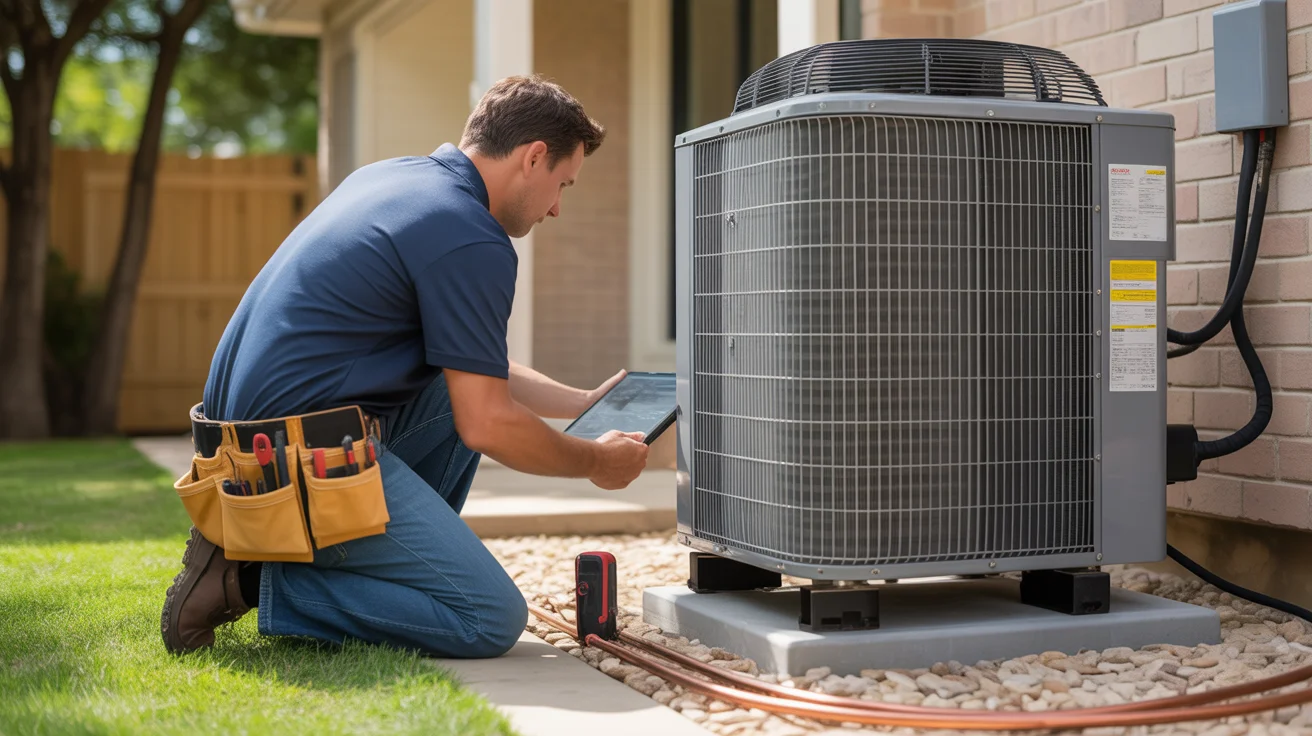
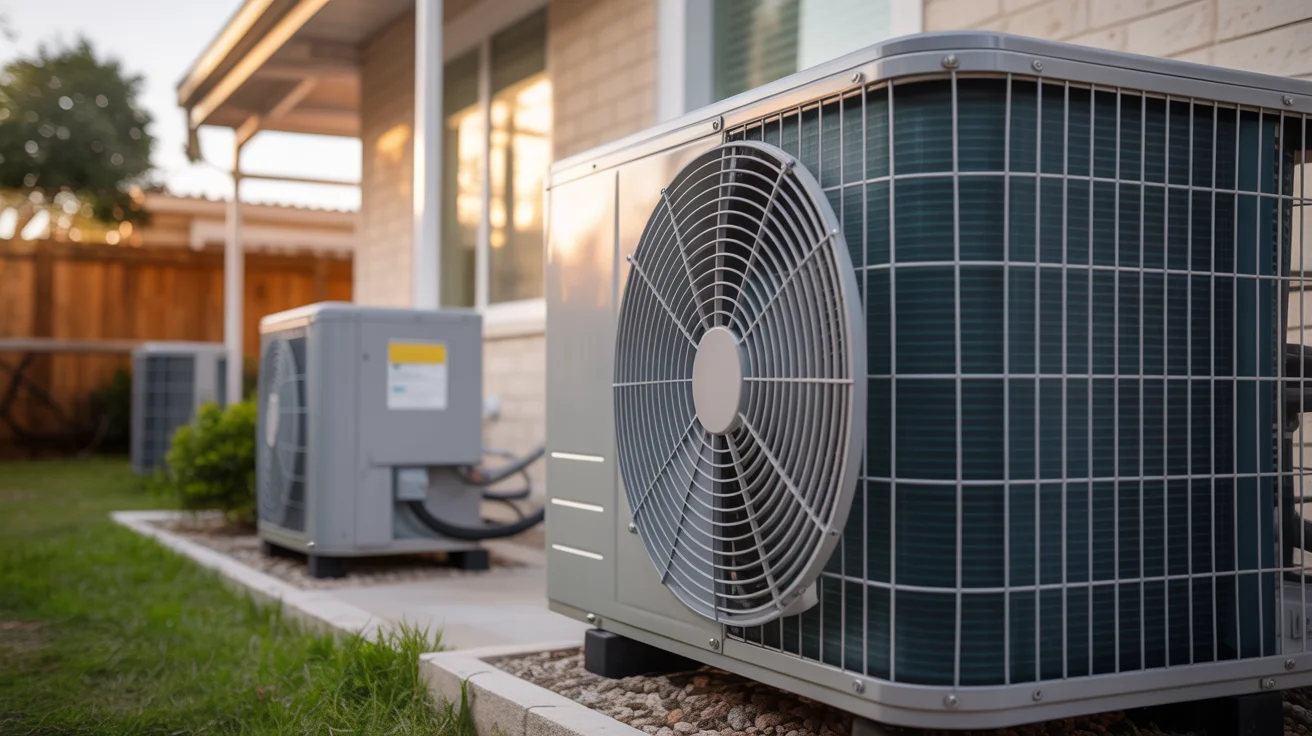
Your AC condenser unit is the big metal box sitting outside your house, and it’s doing the hardest job in your entire HVAC system. In North Texas, where we regularly hit 105°F+ for days on end, that condenser runs 2,400 hours a year. Systems in cooler states run maybe 600. That kind of workload breaks things faster, costs more to maintain, and shortens the lifespan of every component inside.
I’ve been servicing condensers across Frisco, Plano, McKinney, and Allen for over 15 years. This guide covers everything you need to know: how your condenser works, what maintenance you can do yourself, what repairs cost, when hail or storm damage is the real culprit, and when it’s time to stop repairing and start replacing. If your outside AC unit is not working right now, skip to the troubleshooting section below.
How Your AC Condenser Unit Works (And Why It Matters)
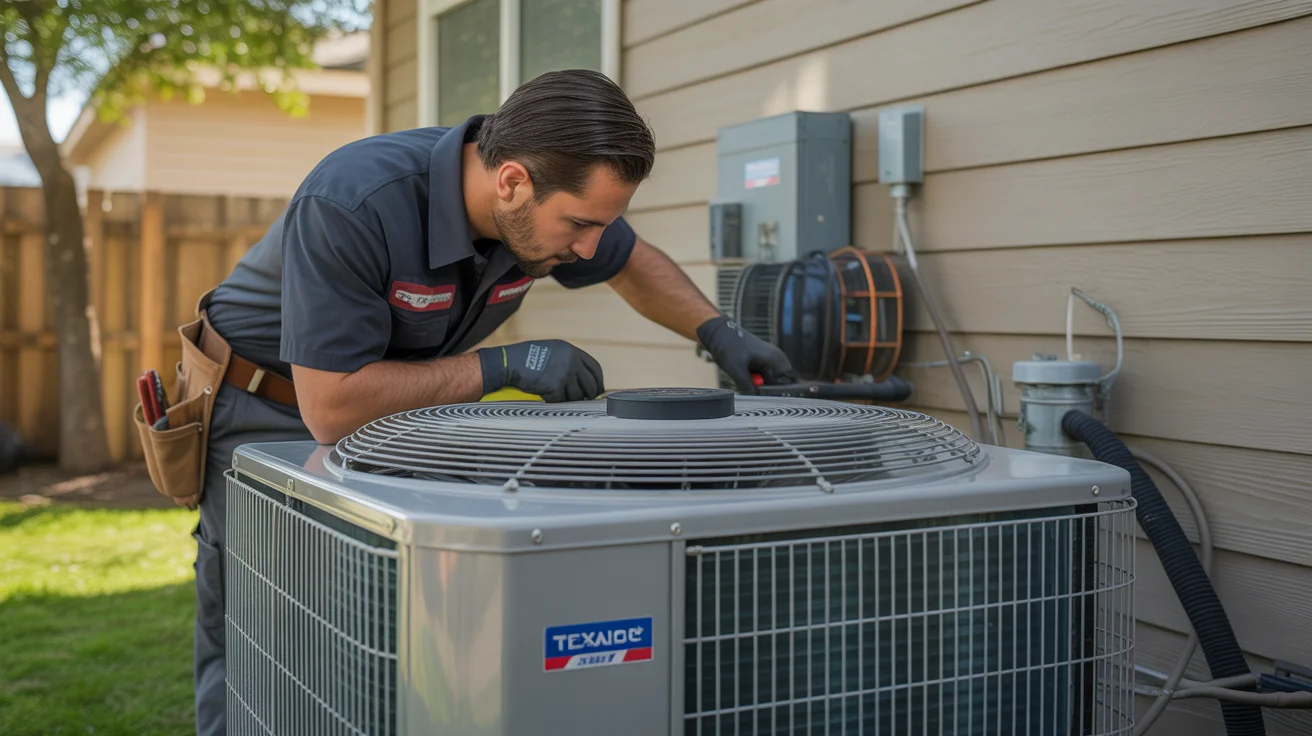
Your air conditioning system has two main halves: the indoor evaporator coil absorbs heat from your home’s air, and the outdoor condenser releases that heat outside. Refrigerant carries heat between the two. The compressor (inside the condenser unit) pressurizes the refrigerant, the condenser coils dissipate the heat, and the fan blows outdoor air across those coils to speed up the process.
Understanding the difference between the condenser vs evaporator helps you communicate with any technician. The evaporator is indoors (usually above or below your furnace), and it gets cold. The condenser is outdoors, and it gets hot. When someone says “the outside unit,” they mean the condenser. When they say “the inside coil,” they mean the evaporator.
Here’s the key takeaway: your condenser sits outside, fully exposed to North Texas sun, hail, dirt, and 107°F heat. Every component inside it (compressor, fan motor, capacitor, contactor, coils) takes a beating that systems in milder climates simply don’t experience.
Condenser Coil Cleaning: The Single Best Thing You Can Do
Dirty condenser coils are the number one cause of premature AC failure that I see in this area. When the coils get caked with dirt, cottonwood seeds, grass clippings, and pet hair, airflow drops. The system works harder, runs longer, and components overheat.
Condenser coil cleaning costs $75 to $230 when a professional does it. An acid wash for heavily fouled coils runs $300 to $350. That’s a fraction of the $1,500+ you’ll spend when a dirty coil causes a compressor burnout.
DIY Condenser Cleaning (Safe and Effective)
You can handle basic cleaning yourself. Do this every 4 to 6 weeks during cooling season:
- Turn off the power. Find the disconnect box next to the unit and flip it off. Also turn off the breaker inside.
- Remove large debris. Clear leaves, grass clippings, and anything else within 2 feet of the unit.
- Spray the coils. Use a garden hose (not a pressure washer) and spray from the inside out. This pushes debris out of the fins instead of deeper in.
- Straighten bent fins. Use a fin comb ($10 at any hardware store) to straighten any crushed or bent aluminum fins. Bent fins block airflow just like dirt does.
- Check the condensate drain. Pour a cup of bleach mixed with water through the drain line to prevent algae clogs.
One Plano homeowner called me last July because his system was “barely cooling.” His condenser coils were so packed with cottonwood fuzz that airflow was down about 60%. A 20-minute cleaning brought the system back to full capacity. No parts. No repair bill. Just maintenance he’d been skipping for two years.
When to Call a Professional for Coil Cleaning
If you see bent or damaged coil fins across a large area, oil residue on the coils (indicating a refrigerant leak), or heavy buildup that a garden hose can’t remove, call a tech. Chemical cleaning agents and professional-grade equipment handle what a hose can’t. Your annual HVAC maintenance visit should include a thorough condenser coil cleaning.
AC Condenser Repair Cost: Real Numbers from North Texas Jobs
Here’s a breakdown of ac condenser repair cost by component. These are real prices I’ve charged or quoted in the DFW area in 2026, not national averages.
| Repair | Parts | Labor | Total Cost |
|---|---|---|---|
| Capacitor replacement | $15-$40 | $100-$150 | $150-$250 |
| Contactor replacement | $20-$50 | $100-$150 | $150-$300 |
| Condenser fan motor | $100-$400 | $150-$250 | $250-$700 |
| Refrigerant recharge (R-410A) | $50-$150/lb | $100-$200 | $200-$600 |
| Leak repair (accessible) | $50-$100 | $150-$300 | $200-$400 |
| Condenser coil replacement | $400-$1,200 | $300-$600 | $700-$1,800 |
| Compressor replacement | $600-$2,000 | $400-$800 | $1,200-$3,500 |
Emergency and after-hours repairs add $150 to $250 to these prices. I charge a $250 after-hours fee because those 2 AM calls in July mean pulling a tech off a full schedule the next morning.
The most common condenser repair I do between May and September? Capacitor replacement. North Texas heat kills capacitors rated for 8-year lifespans in about 3 years. It’s a 15-minute fix, and the part costs less than dinner out. If your system is humming but the fan isn’t spinning, there’s a good chance that’s your problem.
Condenser Fan Motor Replacement: Signs and Costs
The condenser fan motor is what spins the big blade on top of your outdoor unit. When it fails, the condenser can’t dissipate heat, and the compressor overheats and shuts down on safety. A burned-out fan motor that goes unnoticed for even a few hours can cause compressor damage that costs 5 times more to fix.
Warning Signs of a Failing Fan Motor
- Fan spins slowly or intermittently. The motor bearings are wearing out.
- Loud screeching or grinding from the outdoor unit. Metal-on-metal contact inside the motor.
- Fan doesn’t spin but the compressor hums. The motor has seized, often a capacitor issue first (cheaper fix), but sometimes the motor itself.
- Unit shuts off after running a few minutes. The compressor is overheating because the fan isn’t moving enough air.
Condenser fan motor replacement runs $250 to $700 total in North Texas. The motor itself costs $100 to $400 depending on brand and type. High-efficiency ECM motors used in newer Carrier, Trane, and Lennox systems run $400 to $700+ for the part alone. Generic replacement motors for older systems are much cheaper.
A McKinney customer ignored a squealing condenser fan for two weeks last summer. By the time they called, the compressor had been overheating every cycle. The fan motor was $350. The compressor damage added $2,100. Early action on fan motor symptoms saves real money.
Outside AC Unit Not Working: Troubleshooting Before You Call
When your outside ac unit is not working, run through these checks before calling anyone. About 30% of my emergency calls in summer turn out to be something the homeowner could have caught.
5-Minute Outdoor Unit Checklist
Check the thermostat first. Make sure it’s set to COOL (not heat, not auto/fan), and the temperature is set at least 5 degrees below your current room temperature. Sounds basic, but I’ve driven to Allen for this exact issue more times than I’ll admit.
Check both breakers. Your AC has two breakers: one for the indoor air handler and one for the outdoor condenser. Check both at the main panel. Also check the disconnect switch next to the outdoor unit. These get bumped by lawnmowers and landscapers more often than you’d think.
Look at the outdoor unit. Is the fan spinning? Is the compressor humming? If the unit is completely silent, you likely have a power issue (breaker, disconnect, or blown fuse in the disconnect box). If you hear humming but the fan doesn’t spin, suspect a bad capacitor or fan motor.
Check for ice. Any frost or ice on refrigerant lines or on the unit itself means the system is low on refrigerant or has an airflow problem. Turn the system off immediately. Running a system with ice formation causes compressor damage that costs thousands.
Inspect for visible damage. Dents, bent fins, debris blocking the unit, or standing water around the base can all cause problems.
Hail and Storm Damage: The North Texas Condenser Killer
This is something national HVAC guides never cover, but it’s a major issue here. North Texas gets severe hailstorms every spring, and your condenser unit sits outside completely exposed. I replace more condenser coils from hail damage between March and June than from any other cause.
What Hail Does to Your Condenser
Hailstones dent and crush the thin aluminum fins on your condenser coils. Enough damaged fins restrict airflow the same way dirt does, forcing the system to work harder and overheat. Large hail can puncture the copper tubing inside the coils, causing refrigerant leaks. Hail also deforms fan blades, causing vibration and noise, and can crack the electrical disconnect housing.
After a Hailstorm: What to Check
- Visually inspect the condenser coils. Look at the fins from multiple angles. Dented or flattened fins across 30% or more of the coil surface significantly reduce cooling capacity.
- Listen for new noises. Bent fan blades hit other components and create sounds that weren’t there before the storm.
- Check for refrigerant leaks. An oily residue on the coils or ground near the unit often means a punctured tube. If your system suddenly blows warm air after a storm, this is the likely cause.
- Document everything. Take photos before you clean up or run the system. This matters for insurance.
Insurance Typically Covers Hail Damage
Here’s what most homeowners don’t realize: your homeowner’s insurance usually covers hail damage to your AC condenser. I’ve helped dozens of customers in Frisco and Plano file claims after spring storms. The condenser coil replacement ($700 to $1,800) or even a full unit replacement ($2,900 to $6,000) often falls under your policy minus the deductible. Call your insurance company before you call me, and I’ll provide the documentation they need for the claim.
Condenser Maintenance Schedule: What to Do and When
| Task | Frequency | DIY or Pro? | Cost |
|---|---|---|---|
| Clear debris (2-ft clearance) | Weekly during cooling season | DIY | Free |
| Hose down coils | Every 4-6 weeks (Mar-Oct) | DIY | Free |
| Straighten bent fins | As needed | DIY | $10 (fin comb) |
| Check/replace air filter | Monthly | DIY | $5-$30 |
| Professional coil cleaning | Annually (spring) | Pro | $75-$230 |
| Check refrigerant levels | Annually | Pro | Included in tune-up |
| Inspect electrical connections | Annually | Pro | Included in tune-up |
| Test capacitor and contactor | Annually | Pro | Included in tune-up |
| Full system tune-up | Twice yearly (spring + fall) | Pro | $80-$150 per visit |
The spring tune-up is non-negotiable in North Texas. Getting your condenser inspected and cleaned before May gives you the best chance of making it through summer without a breakdown. Every year, my busiest emergency weeks are in late June and early July, right when systems that skipped spring maintenance start failing under full heat load.
When to Replace Your AC Condenser Unit (The 50% Rule)
Repair vs. replace is the most expensive decision you’ll make with your HVAC system. Here’s how I help customers think through it:
Replace when the repair costs more than 50% of a new unit. A new condenser unit (installed) runs $2,900 to $6,100 depending on size, brand, and efficiency rating. If your repair quote is $1,500+ and the system is over 10 years old, replacement usually makes more financial sense.
Replace when refrigerant type is obsolete. If your system uses R-22 (Freon), which was phased out in 2020, refrigerant costs $100 to $150 per pound and climbing. A system needing 5+ pounds of R-22 is burning money every time it needs a recharge.
Replace when efficiency gains pay for it. Replacing a 10 SEER condenser with a 16 SEER unit can cut cooling costs by 20% to 40%. In North Texas, where AC accounts for 50% to 60% of your summer electric bill, that’s $40 to $100+ per month in savings during peak season.
Keep repairing when the system is under 8 years old, the repair is under $500, and performance is still strong. A capacitor, contactor, or fan motor on a 5-year-old system is routine maintenance, not a sign you need a new unit.
FAQ
How long does an AC condenser unit last in North Texas?
Condenser units last 10 to 15 years nationally, but North Texas heat and storms shorten that to 8 to 12 years for most systems. Consistent maintenance (annual tune-ups, regular coil cleaning, keeping 2 feet of clearance) pushes you toward the higher end of that range.
Can I run my AC if the condenser fan isn’t spinning?
No. Turn it off immediately. Without the fan moving air across the condenser coils, the compressor will overheat within minutes. Running without a fan can destroy a $2,000+ compressor. The fan motor or capacitor fix is almost always under $700.
What’s the difference between the condenser and the compressor?
The condenser is the entire outdoor unit, including the coils, fan, and compressor. The compressor is one component inside the condenser that pressurizes the refrigerant. People use “condenser” and “compressor” interchangeably, but they’re different parts with very different repair costs. See our AC compressor repair guide for more on compressor-specific issues.
Does homeowner’s insurance cover AC condenser damage?
It depends on the cause. Hail, wind, lightning, and fallen branches are typically covered. Normal wear and tear is not. After any major storm in North Texas, document the damage with photos and call your insurance company before authorizing repairs. I provide detailed damage reports for insurance claims.
How often should I clean my condenser coils?
Spray them down with a garden hose every 4 to 6 weeks during cooling season (March through October in North Texas). Schedule a professional chemical cleaning once a year, ideally in early spring before you need the system at full capacity. If you have pets, cottonwood trees, or a dusty lot, clean more frequently.
Keep Your Condenser Running All Summer
Your AC condenser unit takes the worst of what North Texas throws at it: extreme heat, hail, dust, and thousands of hours of runtime every year. The good news is that basic maintenance (hosing down coils, keeping clearance, changing filters) prevents most of the expensive failures I see.
If your outside unit is making new sounds, not cooling like it used to, or took a hit during the last storm, don’t wait for a 105°F day to find out it’s failing. Call (940) 390-5676 for a condenser inspection. I serve Frisco, Plano, McKinney, Allen, Prosper, The Colony, Little Elm, and Addison with same-day appointments when available and 2-hour emergency response when it can’t wait.