AC Compressor Repair Cost: $350-$4,800 (When to Fix vs Replace)
AC compressor repair runs $350-$1,200. Replacement: $1,500-$4,800. But 60% of 'compressor failures' are actually a $150 capacitor. Here's how to tell the difference.
- What Your AC Compressor Does (And Why North Texas Destroys Them)
- 6 Signs Your AC Compressor Is Failing
- Before You Call a Tech: 5-Minute DIY Check
- AC Compressor Repair Cost in North Texas (2026 Pricing)
- Repair or Replace: How to Make the Right Call
- How to Protect Your Compressor (and Your Wallet)
- When to Call for Emergency AC Compressor Repair
- Frequently Asked Questions
- What Your AC Compressor Does (And Why North Texas Destroys Them)
- 6 Signs Your AC Compressor Is Failing
- Before You Call a Tech: 5-Minute DIY Check
- AC Compressor Repair Cost in North Texas (2026 Pricing)
- Repair or Replace: How to Make the Right Call
- How to Protect Your Compressor (and Your Wallet)
- When to Call for Emergency AC Compressor Repair
- Frequently Asked Questions
It’s 104°F in Frisco, your outdoor unit just started making a grinding sound, and the air coming from your vents is warm. Your stomach drops. You Google “ac compressor repair” and see quotes ranging from $800 to $5,000.
Before you panic, here’s what 15+ years of North Texas HVAC work has taught me: most “compressor failures” aren’t actually compressor failures. That $2,000 quote might be a $150 capacitor swap. This guide covers the real signs of a bad compressor, what repairs actually cost in the DFW area, and how to decide between repair and replacement using real numbers from jobs I’ve done this year.
What Your AC Compressor Does (And Why North Texas Destroys Them)
Your AC compressor runs 2,400+ hours per year in North Texas. A system in Minnesota runs about 600. That’s four times the wear on every moving part, every electrical connection, every bearing inside that sealed unit.
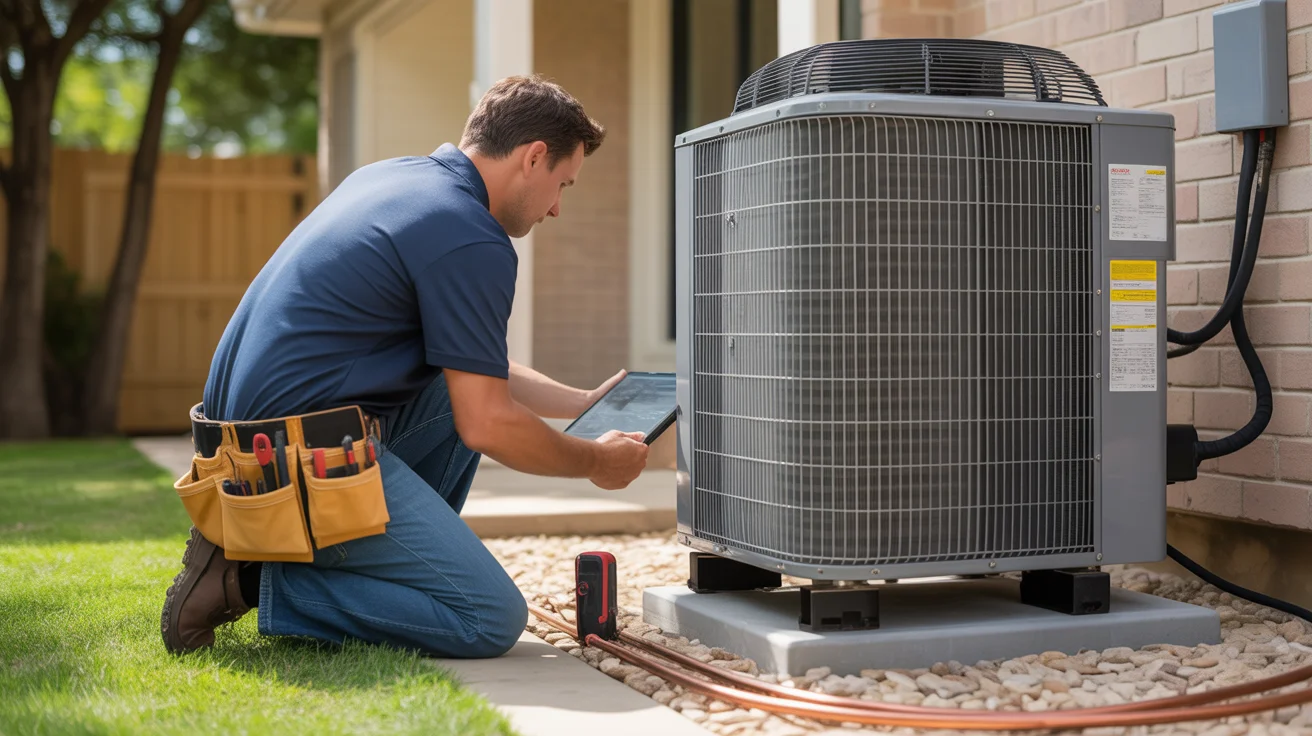
The compressor is the heart of your AC system. It pumps refrigerant between your indoor evaporator coil and the outdoor condenser, compressing low-pressure gas into high-pressure gas that releases heat outside your home. Without a functioning compressor, refrigerant doesn’t circulate and nothing cools. It’s a sealed unit, which means when internal components fail (bearings, windings, valves), the compressor itself typically needs to be replaced rather than repaired.
North Texas is uniquely brutal on compressors. Sustained temperatures above 105°F for six or more consecutive days push components past their design limits. Gulf moisture accelerates corrosion in electrical connections and control boards. The soil around foundations shifts with Texas clay, sometimes stressing refrigerant lines connected to the outdoor unit. Compressors rated for 15-year lifespans nationally last 8 to 12 years here. That’s not a defect. That’s what happens when your system never gets a real break from May through October.
6 Signs Your AC Compressor Is Failing
Know these six warning signs and you’ll walk into any repair conversation with confidence. Catching problems early is the difference between a $200 fix and a $2,500 replacement.
Warm Air from Your Vents
The most obvious sign. Your system runs, the fan blows, but the air isn’t cold. This could be a compressor issue, or it could be low refrigerant, a failed capacitor, or even a stuck reversing valve on a heat pump. Don’t assume the worst until a technician confirms it with pressure readings and an amp draw test.
Strange Noises from the Outdoor Unit
Grinding usually means failed bearings inside the compressor, and that’s a replacement situation. Clicking or chattering on startup signals electrical component failure, often a capacitor or contactor. Buzzing points to an electrical issue in the wiring or connections. Normal operation sounds like a steady, consistent hum. If the sound changed recently, something changed inside.
Hard Starting
Your outdoor unit shakes or vibrates when it kicks on, or it tries to start and shuts right back off. This is called “hard starting” and it means the compressor motor is struggling to overcome internal resistance. A hard-start kit ($150 to $300) can buy you another season or two, but it’s a warning that the compressor is declining. Think of it as a temporary bridge, not a permanent fix.
Circuit Breaker Tripping Repeatedly
If your AC keeps tripping the breaker, the compressor may be drawing too much power. This happens when internal windings short-circuit or the compressor overheats and locks up. Do not keep resetting the breaker and hoping it holds. Each time the compressor locks up and restarts, it causes more internal damage. Call a tech and leave the system off until they arrive.
Visible Leaks Around the Outdoor Unit
An oily residue near your outdoor unit often means refrigerant is leaking from a failed seal or corroded fitting. Refrigerant itself is invisible, but it carries compressor oil with it. Low refrigerant forces the compressor to work harder, run hotter, and eventually burn out its windings. A $200 to $400 leak repair now prevents a $2,000+ compressor replacement later.
Rising Electric Bills
A failing compressor runs longer cycles and operates less efficiently. If your summer electric bill jumped $50 to $100 compared to last year with no change in habits or thermostat settings, the compressor may be struggling to maintain proper refrigerant pressure. Efficiency drops gradually, so many homeowners don’t notice until the bill spikes.
One Allen homeowner heard clicking from the outdoor unit for three weeks. A $150 capacitor replacement would have solved it. By the time they called, the compressor had burned out from running on that failing capacitor. The final bill: $2,200. Early diagnosis saves thousands.
If you’re noticing any of these signs, don’t wait. Schedule an AC repair before a small problem becomes an expensive one.
Before You Call a Tech: 5-Minute DIY Check
These five checks take five minutes and could save you a service call fee. I’d rather you fix a simple problem yourself than pay me $150 to flip a breaker.
Check your thermostat. Make sure it’s set to COOL mode and the temperature is set below the current room temperature. Also check that the fan is set to AUTO, not ON. Sounds obvious, but I see this at least once a week, especially after a power outage resets the settings.
Inspect your air filter. Pull it out and hold it up to a light. If you can’t see light passing through, replace it immediately. A clogged filter restricts airflow across the evaporator coil, causes ice buildup, and can make the compressor overheat and shut down on safety lockout. This is the number one preventable cause of AC problems.
Check your circuit breakers. Look for switches in the OFF position or sitting in the middle (neutral position). Flip them fully off, then back on. Your AC typically has two breakers: one for the indoor air handler and one for the outdoor unit. Make sure both are on.
Look for ice. If you see ice on the refrigerant lines, the evaporator coil, or anywhere on the outdoor unit, turn the system off immediately. Run the fan only (set to ON at the thermostat) to melt the ice. Ice signals a refrigerant issue or airflow restriction that will destroy the compressor if it keeps running under those conditions.
Listen at the outdoor unit. Walk outside while the system is trying to run. Steady humming means the compressor is operating. Clicking, grinding, rattling, or complete silence when the thermostat is calling for cooling means it’s time to call a professional.
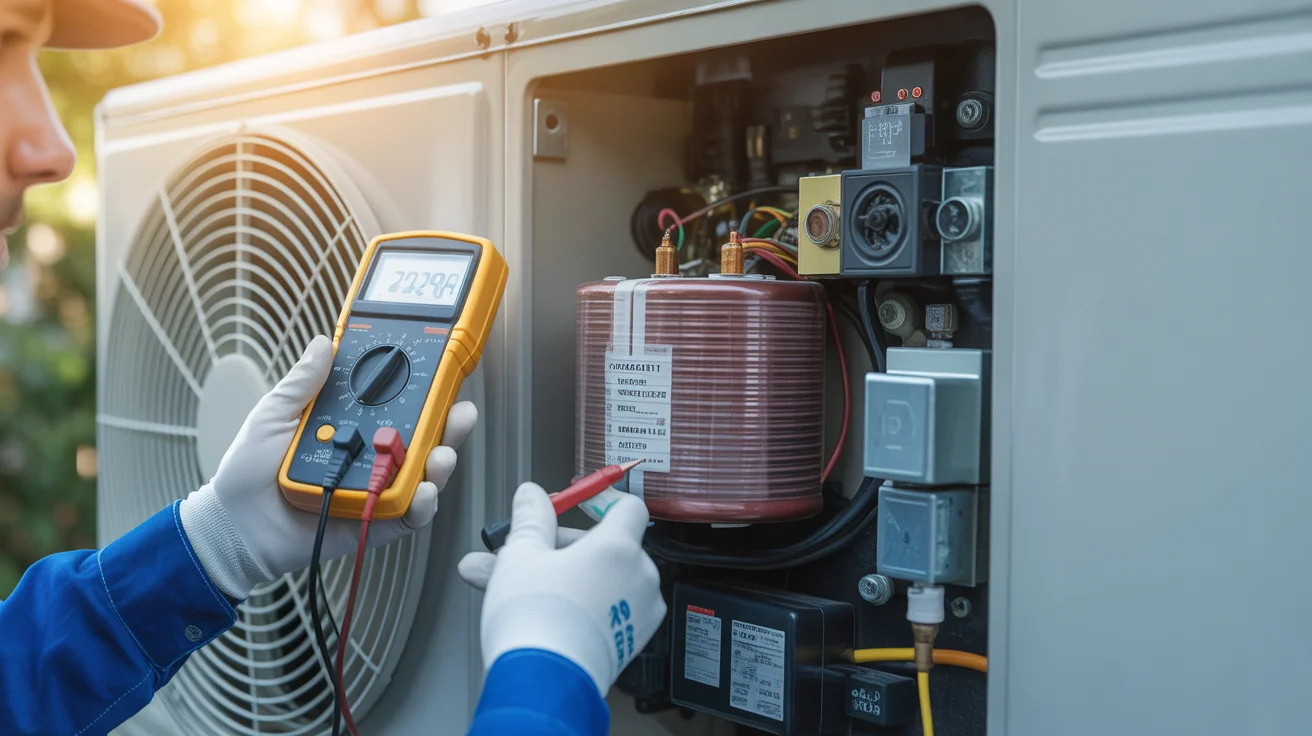
One Allen customer called me about a “dead compressor.” It turned out to be a $45 capacitor. The AC was running again in 30 minutes. Not every compressor symptom is a compressor problem, and a quick check can save you real money.
AC Compressor Repair Cost in North Texas (2026 Pricing)
National cost guides quote $800 to $2,300 for ac compressor replacement. Those numbers don’t tell the full story for the DFW market, where labor rates are higher and systems work harder. Here’s what you’ll actually pay in North Texas in 2026, based on real invoices from my service calls.
| Repair Type | Cost Range | Typical Scenario |
|---|---|---|
| Capacitor or contactor replacement | $150 to $350 | Most common “compressor” call |
| Hard-start kit installation | $150 to $300 | Compressor struggling to start |
| Refrigerant recharge (R-410A) | $200 to $600 | Low refrigerant causing compressor stress |
| Leak detection and repair | $200 to $600 | Finding and fixing refrigerant leaks |
| Compressor replacement (R-410A system) | $1,200 to $2,800 | Confirmed internal failure, system under 10 years |
| Compressor replacement (R-22 system) | $2,500 to $5,000+ | Phased-out refrigerant, usually better to replace full system |
DFW labor rates run $100 to $150 per hour in 2026. A compressor replacement takes four to six hours depending on system accessibility and whether additional components (the TXV valve, filter drier, or contactor) need replacing at the same time. Labor alone runs $400 to $900.
Emergency and after-hours repairs add $150 to $250 to any price above. If your compressor fails on a Saturday night in July, expect to pay toward the higher end of every range. Scheduling during weekday business hours saves real money when timing allows.
Warranty savings can be significant. Most manufacturers include a 5 to 12 year compressor warranty that covers the part itself. If your system is still within that window, you pay only labor ($600 to $900). One McKinney homeowner with an 8-year-old Trane had a confirmed compressor failure. Because the parts were still under the manufacturer warranty, they paid $650 for labor only instead of the full $1,800. Check your warranty paperwork or call the manufacturer with your model and serial number before agreeing to a full-price quote.
For a complete breakdown of all AC repair costs in this area, see our AC Repair Cost Guide for North Texas.
Repair or Replace: How to Make the Right Call
The HVAC industry’s “50% rule” says to replace your whole system if the repair costs more than half the price of a new one. That’s a reasonable starting point, but it misses critical factors in North Texas where systems age faster and refrigerant regulations are changing.
Here’s the decision framework I walk through with my customers:
System under 8 years old with R-410A refrigerant: Repair it. The rest of the system has plenty of life left, and you’ll get good ROI on the compressor investment. Make sure the tech checks for the root cause (low refrigerant, electrical issues) so the new compressor doesn’t suffer the same fate.
System 8 to 12 years old with R-410A: Repair IF the cost stays under $1,500. Above that threshold, you’re investing heavily in a system that’s past its peak performance years in this climate. Get quotes for both compressor repair and full system replacement before committing. The math often surprises people.
System 12+ years old OR uses R-22 refrigerant: Replace the full system. No debate. R-22 (Freon) hasn’t been manufactured since 2020, and each refill gets more expensive as remaining stockpiles shrink. A 12-year-old system in North Texas has already exceeded its expected high-performance lifespan, and the next component failure is never far behind.
One Frisco homeowner had a 14-year-old Carrier running R-22. The compressor failed in mid-July. Repair quote: $4,200 for the compressor plus R-22 recharge. I recommended a full system replacement at $6,500 instead. The new system uses R-454B refrigerant, came with a 10-year parts warranty, and runs about 30% more efficiently. Two summers later, their electric bills dropped $60 per month. The replacement paid for itself faster than the repair would have.
The refrigerant factor matters more than ever in 2026. The EPA began phasing down R-410A production in 2025 under the AIM Act. Repair parts and refrigerant for R-410A systems are still available today, but supply will tighten and costs will climb each year. If your R-410A system needs a compressor after 2028 or so, you may be facing significantly higher repair costs or limited parts availability. Factor this into your repair-vs-replace math now.
| Factor | Repair | Replace |
|---|---|---|
| Upfront cost | $1,200 to $2,800 | $4,500 to $8,000 |
| Timeline | Same day (usually) | 1 to 2 days |
| Warranty | Remaining original only | 10+ years new |
| Efficiency gain | None | 20 to 40% improvement |
| Refrigerant | Existing supply (shrinking) | R-454B (future-proof) |
How to Protect Your Compressor (and Your Wallet)
Most compressor failures I diagnose could have been prevented with $200 to $400 in annual maintenance. That’s not a sales pitch. That’s what the repair invoices consistently show.
Change your air filter every 30 days in summer. Not every 90 days like the packaging says. In North Texas, your system runs almost continuously from June through September. A dirty filter is the single easiest way to kill a compressor. Filters cost $10 to $25. Compressors cost $1,200 to $2,800.
Schedule an annual professional tune-up ($150 to $200). A proper inspection catches failing capacitors, low refrigerant charges, loose electrical connections, and corroded contactors before they cascade into compressor failure. One $150 tune-up that catches a weak capacitor prevents the $2,200 compressor replacement that Plano homeowner ended up paying.
Keep the outdoor unit clear. Maintain at least two feet of clearance on all sides. Trim back bushes and landscaping. Hose off the condenser coils monthly during summer to remove pollen, cottonwood fluff, and dirt that reduce heat transfer. When the condenser can’t release heat efficiently, the compressor runs hotter and harder.
Don’t ignore small symptoms. Clicking sounds, longer-than-usual run times, warm spots in certain rooms. These are early warnings that something is changing inside the system. A $150 diagnostic visit when symptoms first appear is always cheaper than the emergency call three weeks later.
Fix refrigerant leaks immediately. A slow leak drops your charge gradually, and the compressor compensates by working harder. Over weeks or months, that extra stress burns out the windings. A $200 to $400 leak repair prevents the $2,000+ compressor burnout that follows. Low refrigerant is the number one preventable cause of compressor death I see in the field.
When to Call for Emergency AC Compressor Repair
When it’s 104°F outside and your AC stops cooling, waiting until next week isn’t realistic. Some situations demand emergency service.
Call for emergency repair if: you have no cooling and vulnerable people in the home (elderly family members, young children, pets), outdoor temperatures are above 100°F, your system is making loud grinding or banging sounds, or you smell something burning near the outdoor unit.
What to expect with emergency service: A technician on-site within 2 hours of your call. An after-hours service fee of $250 applies on evenings, weekends, and holidays. The trade-off is speed. Many compressor-related issues, including capacitor failures, contactor replacements, and hard-start kit installations, can be completed during that same emergency visit.
A timing tip that saves money: If your compressor is failing but still producing some cooling, and conditions are survivable, scheduling a next-business-day appointment saves you the $250 emergency fee. Use fans and close blinds to manage until the tech arrives. But if cooling has stopped completely in extreme heat, don’t gamble with your family’s safety.
Jupitair offers 24/7 emergency AC repair with a 2-hour response commitment serving Frisco, Plano, McKinney, Allen, Prosper, The Colony, Little Elm, and Addison.
Need emergency ac compressor repair right now? Call (940) 390-5676.
Frequently Asked Questions
Can an AC compressor be repaired or does it need to be replaced?
Compressors are sealed units that typically must be replaced when they fail internally. The bearings, windings, and valves inside cannot be accessed for repair. However, many symptoms blamed on the compressor (no cooling, hard starting, system shutting off) are actually caused by external electrical components like capacitors ($150 to $350) or contactors ($200 to $400). A proper amp draw and pressure diagnosis determines which component actually failed.
How long does an AC compressor last in Texas?
Eight to twelve years with consistent maintenance in North Texas, compared to the 15 to 20 year national average. The 2,400+ annual runtime hours and sustained 100°F-plus temperatures accelerate wear on internal bearings, motor windings, and refrigerant seals far beyond what manufacturers test for in standard conditions.
Is it worth replacing a compressor on a 10-year-old AC unit?
For a 10-year-old R-410A system with a repair cost under $1,500, compressor replacement can still make financial sense. For R-22 systems at any age, almost always replace the full unit due to refrigerant costs. See the Repair or Replace section above for the complete decision framework with specific dollar thresholds.
Why is my AC running but not cooling?
Four common causes, in order of likelihood: a failed capacitor (most common and cheapest fix at $150 to $350), low refrigerant charge from a leak, a clogged air filter restricting airflow, or a failing compressor. A technician can diagnose the exact cause in 15 to 30 minutes with pressure and electrical readings. Try the 5-minute DIY checklist in this article first to rule out simple issues.
Does homeowners insurance cover AC compressor failure?
Standard homeowners insurance does not cover compressor failure from normal wear and tear. Home warranty plans may cover replacement with a $75 to $125 service call fee, though coverage varies by plan. Your best financial protection is the manufacturer’s compressor warranty (typically 5 to 12 years), which covers the part itself but not labor. Keep all maintenance records, as many warranties require proof of annual professional service to remain valid.