Ductless Mini Split Systems: Complete Guide for Texas Homes
North Texas HVAC pro breaks down mini split costs, sizing, brands, and when ductless makes sense (and when it doesn't). Real pricing from $2,000-$8,000 with honest pros and cons.
- What a Mini Split System Actually Is (And Isn’t)
- Mini Split Cost Breakdown for North Texas
- How to Size a Mini Split for Texas Heat
- Mini Split vs. Central Air: When Each One Wins
- Best Mini Split Brands for North Texas
- DIY Mini Split Installation: Why I Don’t Recommend It
- Best Use Cases for Mini Splits in North Texas
- Mini Split Maintenance: What You Need to Do
+ 3 more sections below...
- What a Mini Split System Actually Is (And Isn’t)
- Mini Split Cost Breakdown for North Texas
- How to Size a Mini Split for Texas Heat
- Mini Split vs. Central Air: When Each One Wins
- Best Mini Split Brands for North Texas
- DIY Mini Split Installation: Why I Don’t Recommend It
- Best Use Cases for Mini Splits in North Texas
- Mini Split Maintenance: What You Need to Do
+ 3 more sections below...
Ductless Mini Split Systems: Complete Guide for Texas Homes
I get asked about mini split systems at least twice a week now. A homeowner has a bonus room that’s always hot, a garage conversion they want to cool, or an addition where running new ductwork would cost more than the room itself. Mini splits solve real problems. But they’re not always the right answer, and I’ve seen too many people spend $5,000 on equipment that could have been handled with a $300 duct modification.
This guide covers what I’ve learned installing and servicing ductless mini splits across North Texas for over 15 years. Real costs, honest sizing advice, and the situations where I’d tell you to skip the mini split entirely.
What a Mini Split System Actually Is (And Isn’t)
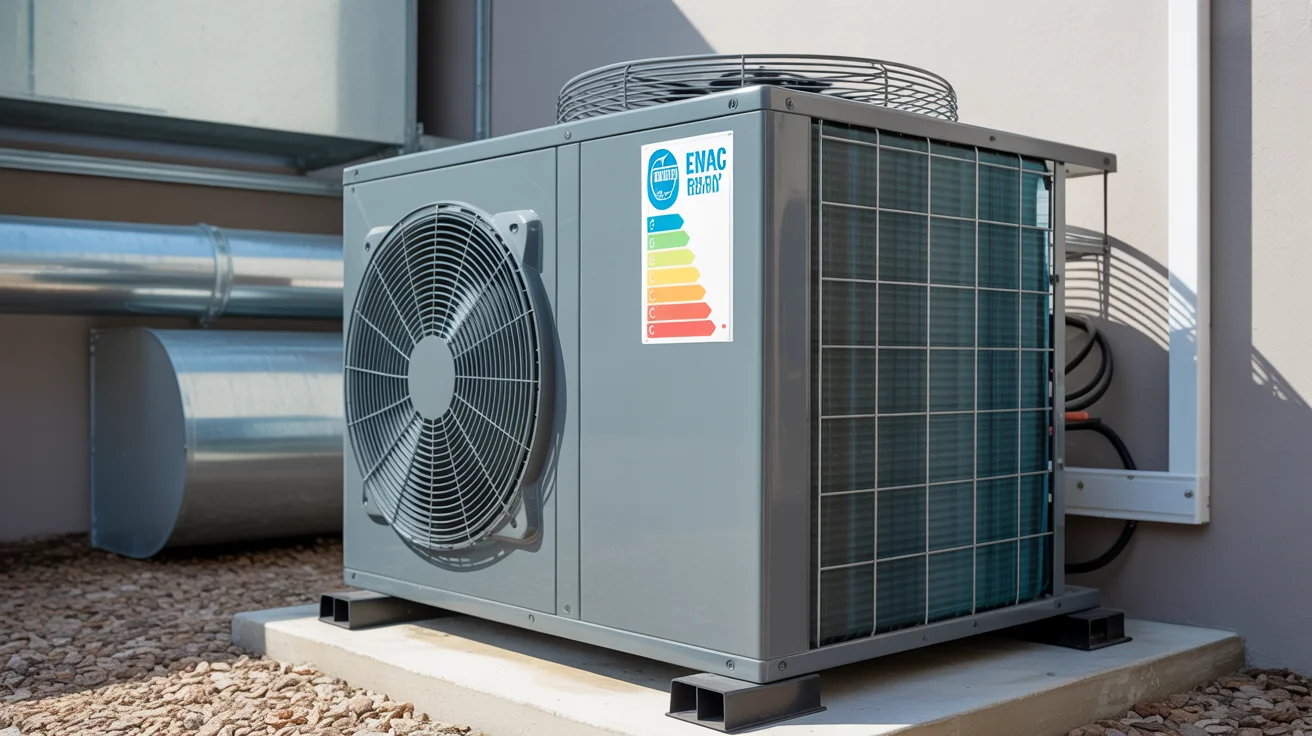
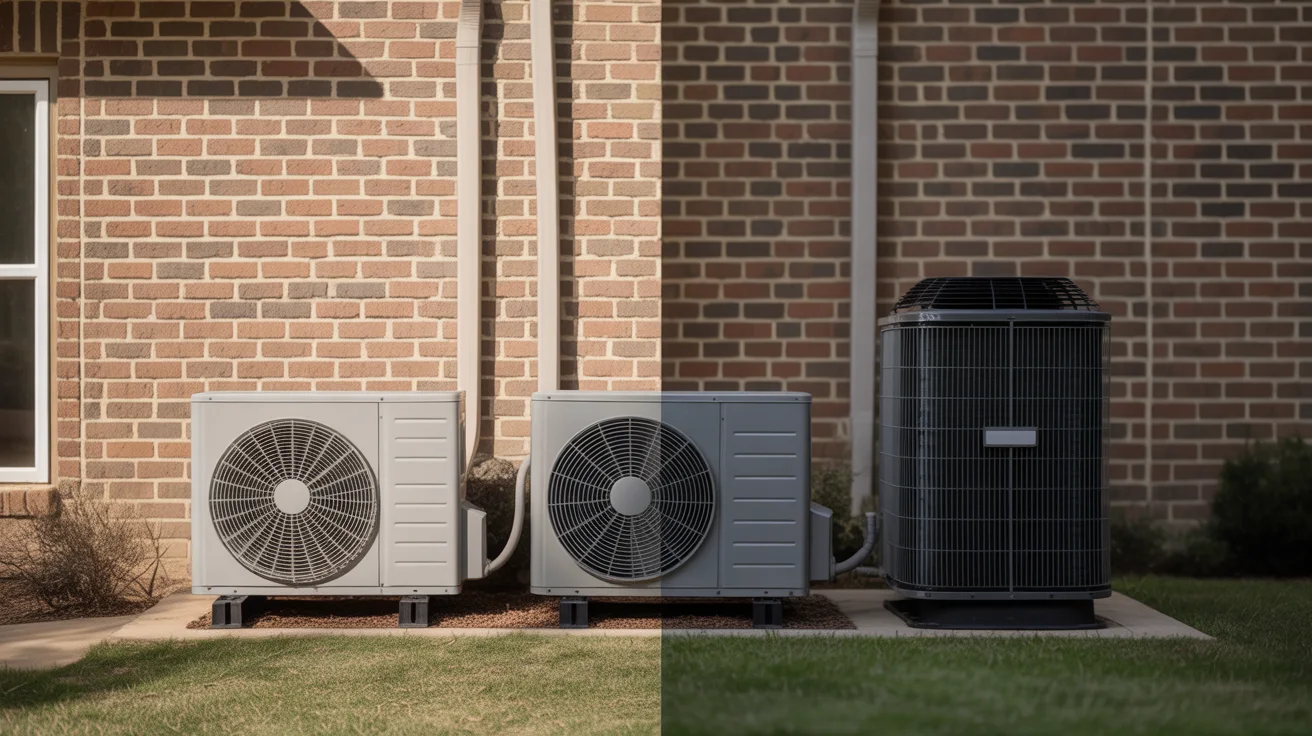
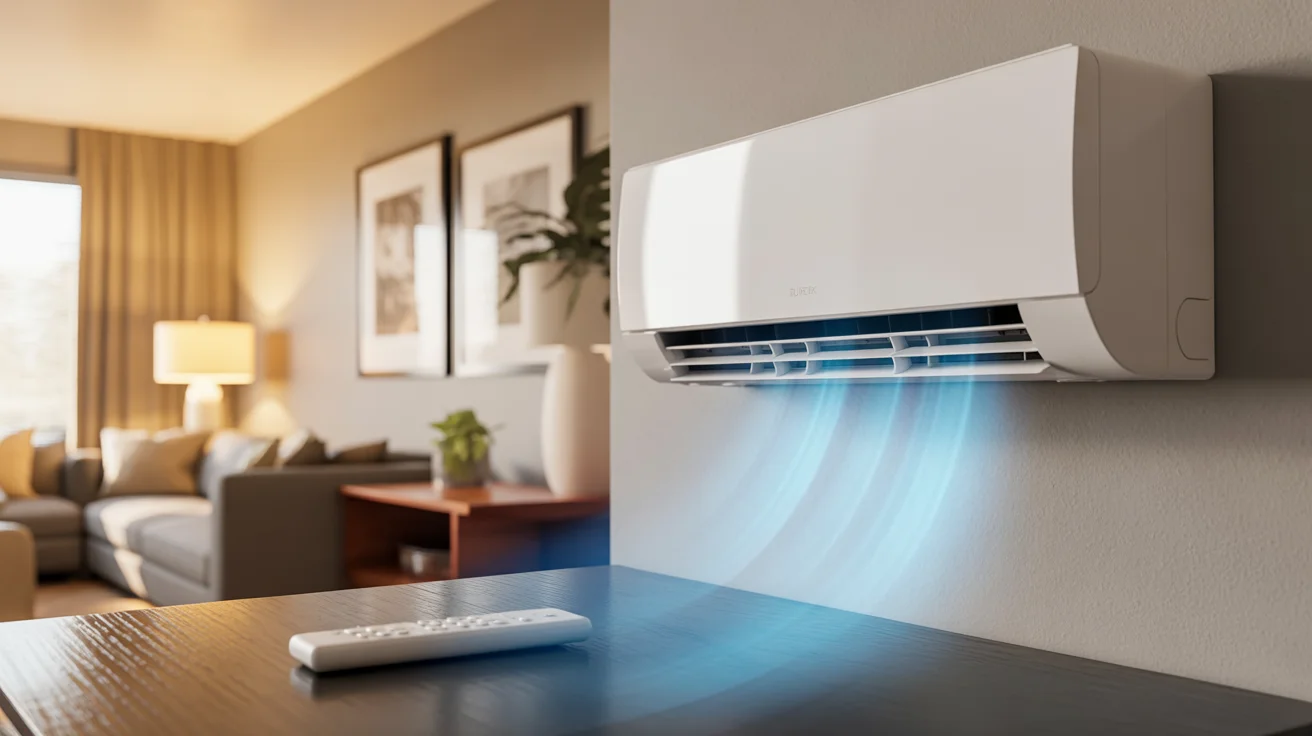
A ductless mini split is a heating and cooling system with two main parts: an outdoor compressor/condenser unit and one or more indoor air handlers mounted on your wall or ceiling. Refrigerant lines, a drain line, and electrical wiring connect the two through a small 3-inch hole in your exterior wall.
That’s it. No ductwork. No massive attic air handler. No return vents scattered through the house.
Each indoor unit controls the temperature in its own zone independently. Your bedroom can be 68 degrees while your living room sits at 74. Nobody fights over the thermostat because each room has its own remote.
Single-Zone vs. Multi-Zone
Single-zone systems have one outdoor unit connected to one indoor unit. These are perfect for solving one problem room. A garage, a sunroom, an attic conversion. Cost runs $2,000 to $4,500 installed in North Texas.
Multi-zone systems use one larger outdoor unit connected to 2, 3, 4, or even 5 indoor units. You’re looking at $5,000 to $8,000+ for a multi-zone setup, depending on how many heads you need and the total BTU capacity.
The outdoor unit has to be sized for the combined load of every indoor unit. I’ve seen DIY installs where someone bought a 24,000 BTU condenser and tried to run three 12,000 BTU heads off it. The math doesn’t work that way, and the system short-cycles itself to death within two years.
Mini Split Cost Breakdown for North Texas
I’ll give you the real numbers I see in the Dallas-Fort Worth area, not national averages that don’t account for our climate demands.
| System Type | Equipment Cost | Installation | Total Installed |
|---|---|---|---|
| Single-zone, 12K BTU | $1,200–$2,000 | $800–$1,500 | $2,000–$3,500 |
| Single-zone, 24K BTU | $1,800–$2,800 | $1,000–$1,800 | $2,800–$4,600 |
| 2-zone system | $2,500–$4,000 | $1,500–$2,500 | $4,000–$6,500 |
| 3-zone system | $3,500–$5,500 | $2,000–$3,000 | $5,500–$8,500 |
| 4-zone system | $4,500–$7,000 | $2,500–$3,500 | $7,000–$10,500 |
What Drives the Price Up
Line set length. The refrigerant lines connecting your indoor and outdoor units have a maximum run (usually 50 to 75 feet depending on the brand). Longer runs need more copper, more insulation, and more labor. If your outdoor unit sits on the opposite side of the house from the room you’re cooling, that adds $300 to $800.
Electrical work. Mini splits need a dedicated 220V circuit. If your electrical panel is already full (common in Frisco and Plano homes built in the early 2000s), you might need a subpanel. That’s $500 to $1,200 on top of the installation.
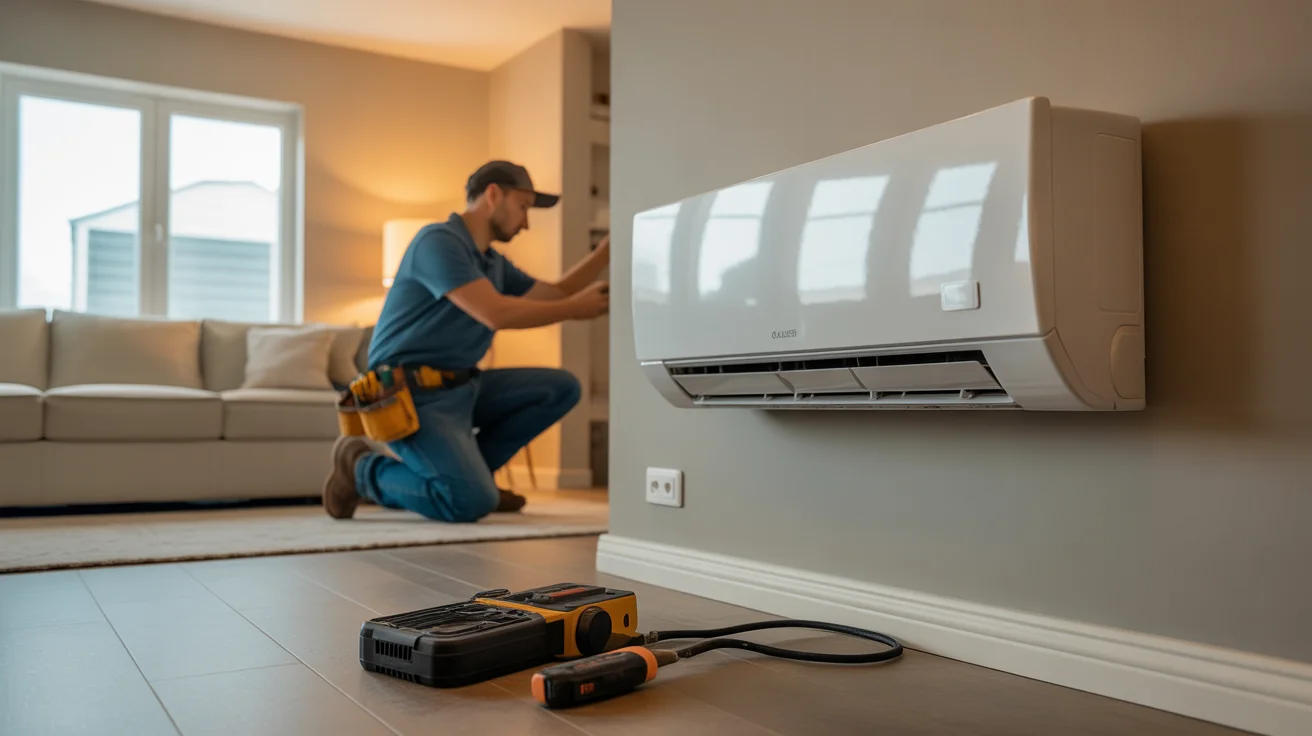
Installation height and access. Second-floor installs, cathedral ceilings, and tight attic spaces all add labor time. A straightforward first-floor install in a Plano ranch-style home takes 4 to 6 hours. A second-floor install in a McKinney two-story with limited exterior wall access can take a full day.
Permits. Collin County and Denton County both require HVAC permits for mini split installations. Budget $200 to $400 for the permit and inspection.
The Tax Credit You Should Know About
ENERGY STAR-certified ductless mini split heat pumps qualify for up to $2,000 in federal tax credits in 2026 under the Inflation Reduction Act. The system has to be installed by a licensed contractor and meet specific efficiency requirements (SEER2 16+ and HSPF2 9+). Most name-brand mini splits qualify. That credit can take a $4,500 install down to $2,500 out of pocket. I always tell customers to check with their tax advisor, but the savings are real.
How to Size a Mini Split for Texas Heat
Sizing matters more in North Texas than almost anywhere else. Our summers push 107 degrees regularly. An undersized mini split will run constantly from June through September and still leave your room at 82 degrees on the hottest days.
The BTU Calculation
The standard rule is 20 BTU per square foot. In North Texas, I bump that to 25 BTU per square foot for any room with significant sun exposure, high ceilings, or poor insulation.
| Room Size | Standard BTU | Texas-Adjusted BTU | Recommended Unit |
|---|---|---|---|
| 150–250 sq ft | 3,000–5,000 | 3,750–6,250 | 9,000 BTU |
| 250–400 sq ft | 5,000–8,000 | 6,250–10,000 | 12,000 BTU |
| 400–600 sq ft | 8,000–12,000 | 10,000–15,000 | 18,000 BTU |
| 600–900 sq ft | 12,000–18,000 | 15,000–22,500 | 24,000 BTU |
| 900–1,200 sq ft | 18,000–24,000 | 22,500–30,000 | 36,000 BTU |
Factors That Change the Math
Add 10-15% more capacity for each of these:
- West-facing windows (afternoon sun in Texas is brutal, especially July through September)
- Ceilings above 8 feet (add 12.5% for each additional foot of height)
- Rooms above a garage (heat radiates up through the garage ceiling all day)
- Kitchens (cooking appliances generate significant heat load)
- Garages and workshops (poor insulation, concrete slab, large door openings)
For garages specifically, I’ve written a detailed guide on how to cool a garage that covers insulation, sizing, and realistic expectations.
A Sizing Mistake I See Constantly
Homeowners buy based on the room they want to cool today without thinking about the room next door. A 12,000 BTU unit in your master bedroom works great with the door closed. Open the door to a long hallway and 400 additional square feet of unconditioned bonus room? Now that 12K unit is fighting a losing battle.
Plan for how you actually use the space. Doors open or closed. Connected rooms. Traffic patterns.
Mini Split vs. Central Air: When Each One Wins
This is the real question. I install both, and I make more money on central air installs. So when I tell you a mini split is the better choice, I’m leaving money on the table. Here’s how I break it down.
Mini Split Wins When:
- Your home has no existing ductwork. Running new ducts through a finished home costs $3,000 to $7,000 just for the ductwork, before you even buy the AC unit. A mini split skips all of that.
- You’re conditioning a single room or addition. Garage conversions, sunrooms, mother-in-law suites, above-garage bonus rooms. These spaces often can’t connect to your existing system without major modifications.
- Your existing ducts leak badly. Leaky ductwork wastes 20 to 30% of your cooling energy. If your ducts run through a 140-degree attic (and in North Texas, they do), that loss gets even worse. A ductless system eliminates that problem entirely.
- You want zone control. Different temperatures in different rooms without installing a zoned damper system on your central unit.
- Energy efficiency is a priority. Modern mini splits hit SEER2 ratings above 20, with some models reaching 30+. That’s significantly higher than most central systems.
Central Air Wins When:
- You already have good ductwork. If your home has properly sealed, insulated ducts, central air is almost always cheaper to install and operate for whole-home comfort.
- You’re cooling more than 3 zones. Once you need 4 or 5 indoor units, a multi-zone mini split system costs as much as a full central replacement, and central air still does a better job of whole-home temperature consistency.
- Aesthetics matter. Wall-mounted indoor units are visible. They’re not ugly, but they’re there. Central air hides everything behind vents and grilles.
- You’re replacing an existing central system. Swapping out a 15-year-old central unit for a new one is straightforward and cost-effective. Converting to mini splits in a home that already has ducts rarely makes financial sense.
The Hybrid Approach (My Favorite)
The setup I recommend most often: keep your central system for the main living areas and add a single-zone mini split for the problem room. That bonus room over the garage? The sunroom that’s always 10 degrees hotter than the rest of the house? One 12K or 18K BTU mini split solves it for $2,500 to $4,000 without touching your central system.
This is especially popular in Allen and Frisco neighborhoods where the homes are 15 to 20 years old. The original central systems still work fine for most of the house, but certain rooms were never comfortable from day one.
Best Mini Split Brands for North Texas
I’ve installed and serviced every major brand. Here’s what holds up in our climate and what doesn’t.
Top Tier
Mitsubishi Electric. The gold standard. Their Hyper-Heating models work down to -13 degrees (not that we need that in Texas, but it shows the engineering quality). Quietest indoor units on the market at 19 dB. Best warranty support I’ve dealt with. Premium price, typically 20-30% more than competitors.
Fujitsu. Excellent reliability, competitive pricing, and their RLS3H models handle both heating and cooling efficiently. I’ve installed hundreds of Fujitsu units in North Texas and the failure rate is remarkably low. Strong choice for the budget-conscious buyer who doesn’t want to sacrifice quality.
Daikin. The world’s largest HVAC manufacturer. Their mini splits are reliable and efficient, with some of the best SEER2 ratings available. Parts availability is excellent, which matters when your system needs service in August and you can’t wait two weeks for a component.
Mid Tier
LG and Samsung. Solid units with good technology (LG’s ThinQ app integration is genuinely useful). Slightly lower build quality than the top three on internal components, but significantly cheaper. Good option for conditioned garages and workshops where you want comfort without paying premium prices.
Carrier and Bryant. Both are Carrier brands, and their mini splits are actually manufactured by Midea. Decent performance, wide contractor availability, but I’ve seen more control board failures in these units than in Mitsubishi or Fujitsu.
What I’d Avoid
Off-brand units from Amazon or direct-import Chinese brands (MRCOOL, Pioneer, etc.) marketed as “DIY install” systems. The equipment is often fine for the first two years. The problem comes when you need warranty service or replacement parts. There’s no local distributor. No trained technicians. And when something fails in July at 105 degrees, you need someone who can get parts today, not in three weeks.
DIY Mini Split Installation: Why I Don’t Recommend It
You’ll find YouTube videos making mini split installation look like a weekend project. Pre-charged line sets. Plug-and-play electrical. Quick-connect fittings.
Here’s what those videos skip:
Refrigerant handling requires EPA Section 608 certification. It’s a federal violation to release refrigerant into the atmosphere. Pre-charged line sets technically avoid this, but if you ever need to repair, recharge, or relocate the system, you need a licensed technician anyway.
Improper installation voids the manufacturer warranty. Mitsubishi, Fujitsu, and Daikin all require installation by a licensed HVAC contractor to honor their warranties. That 12-year compressor warranty becomes a 0-year warranty if you install it yourself.
Vacuum and pressure testing. A proper mini split installation includes pulling a vacuum on the refrigerant lines to remove moisture and non-condensable gases. Skip this step and you’ll get ice buildup, reduced efficiency, and premature compressor failure. I’ve been called out to “fix” at least a dozen DIY installs where the only problem was moisture in the lines.
Electrical code compliance. North Texas building codes require a dedicated circuit with a disconnect box within sight of the outdoor unit. Permits and inspections exist for a reason. A DIY electrical connection that trips the breaker is annoying. One that starts a fire is catastrophic.
Condensate drainage. The indoor unit produces water as it cools. That water needs to go somewhere, and “somewhere” better not be inside your wall. Proper pitch on the drain line, P-traps where required, and connection to an appropriate drainage point all matter.
I’m not saying this to protect my business. I’m saying it because I’ve repaired enough DIY installations to know the callbacks cost more than a professional install would have in the first place.
Best Use Cases for Mini Splits in North Texas
Based on the jobs I do most often, here’s where mini splits consistently deliver the best return on investment.
Garage Conversions and Workshops
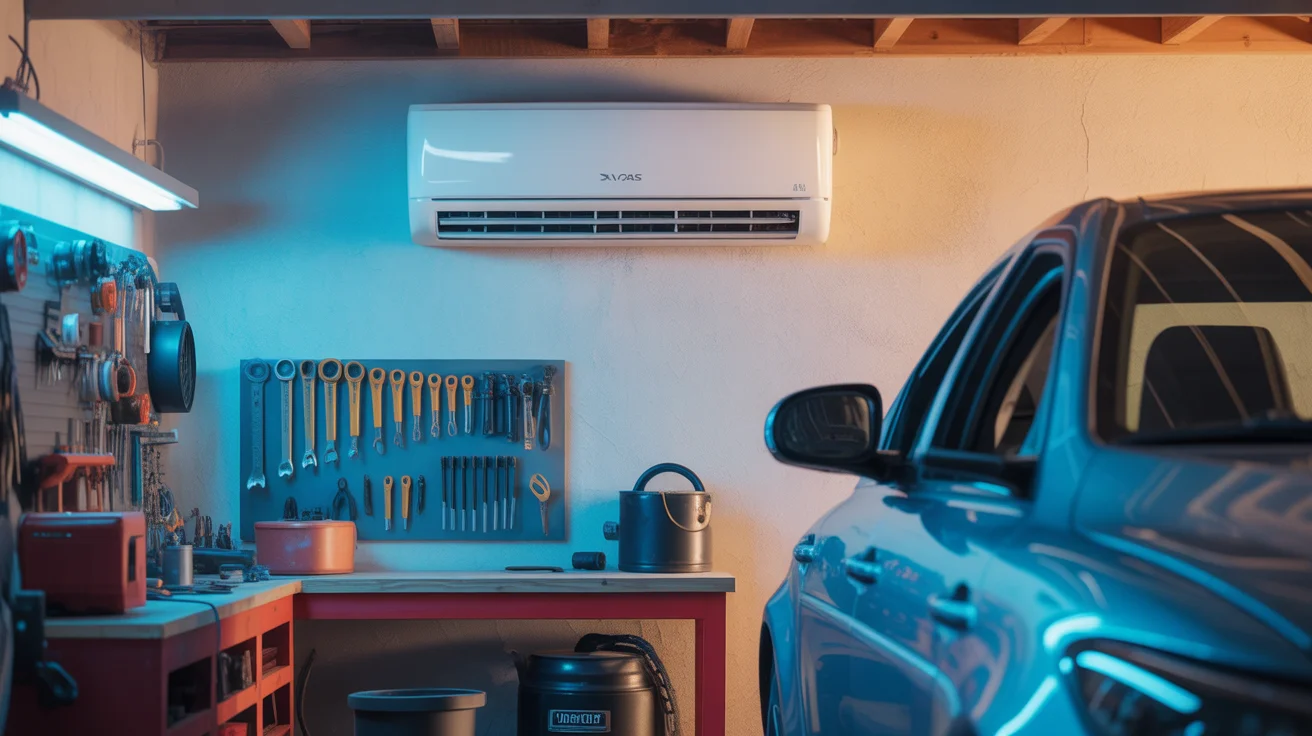
This is the number one request I get. You want to work in your garage in August without passing out. A single-zone 18,000 or 24,000 BTU unit handles most 2-car garages. Insulate the garage door first (or you’re throwing money at the electricity company). For the full breakdown, check my guide on how to cool a garage.
Sunrooms and Enclosed Patios
Sunrooms are heat magnets. All that glass creates a greenhouse effect that your central system was never designed to handle. A 12,000 BTU mini split turns a room that’s unusable five months a year into comfortable living space.
Above-Garage Bonus Rooms
The most common comfort complaint in North Texas homes. These rooms sit directly above an unconditioned garage with minimal insulation. The original builder ran one undersized duct up there and called it done. A mini split fixes it permanently.
Home Additions
Adding onto your home? A mini split costs less than extending your existing ductwork and doesn’t put additional strain on your current central system. If your central unit is already 10+ years old, the last thing you want is to increase its load.
Older Homes Without Ductwork
Some homes in the older parts of Plano and McKinney were built without central air, or with gravity furnace systems that can’t accommodate modern ductwork. Mini splits provide modern comfort without the invasive construction of adding ducts.
Mini Split Maintenance: What You Need to Do
Mini splits are lower maintenance than central systems, but they’re not zero maintenance.
Every 2 weeks: Clean or rinse the air filters on each indoor unit. Pop the front panel, slide out the filters, rinse with water, let them dry. Takes 5 minutes. This is the single most important thing you can do. Dirty filters kill efficiency and eventually cause ice buildup.
Every 6 months: Wipe down the indoor unit’s coil and fan with a coil cleaner spray. Check the condensate drain for clogs (a wet/dry vacuum on the drain line works well). Inspect the outdoor unit for debris, leaves, and dirt buildup on the coil fins.
Annually: Professional service. I check refrigerant levels, electrical connections, capacitor health, and overall system performance. In North Texas, I recommend this before summer starts (April or May). A professional tune-up runs $100 to $175 per unit.
One thing people don’t expect: mini split indoor units can develop mold and odor issues if they’re not cleaned regularly. The constant moisture on the coil in our humid climate creates a breeding ground. Regular filter cleaning and an annual deep clean prevent this.
When I Talk Customers Out of Mini Splits
Not every problem needs a ductless solution. Here’s when I recommend something else:
If your central air just needs a tune-up. That hot room might be a dirty coil, a refrigerant issue, or a damper problem. I’ve saved customers $3,000+ by diagnosing a $200 repair instead of selling them a mini split they didn’t need.
If your ductwork can be fixed. A leaky duct in the attic might be the entire reason your bonus room is uncomfortable. Sealing and insulating existing ducts costs $500 to $1,500 and often solves the problem completely.
If you need whole-home replacement. Replacing an aging central system with a new high-efficiency unit and properly sealed ducts is almost always better and cheaper than installing 4 or 5 mini split heads throughout the house. If you’re weighing a full system swap, read my comparison of heat pumps vs. traditional AC for the complete picture.
If the room just needs better insulation. A room above a garage that’s hot because the floor has zero insulation won’t be fixed efficiently by throwing a mini split at it. Insulate first, then assess whether you still need supplemental cooling.
FAQ
How long do mini split systems last in Texas?
A quality mini split from Mitsubishi, Fujitsu, or Daikin lasts 15 to 20 years with proper maintenance. Budget brands tend to last 8 to 12 years. Our Texas heat is hard on outdoor compressor units, so annual professional maintenance genuinely extends the lifespan.
Can a mini split heat in winter?
Yes. Modern mini split systems are heat pumps that both cool and heat. They’re efficient down to about 20 degrees (some models lower), which covers virtually all North Texas winter weather. On the rare single-digit nights, you’d need supplemental heat, but for 95% of winter days, a mini split handles heating efficiently.
Are mini splits loud?
Indoor units run between 19 and 40 dB, which is quieter than a library. Outdoor units produce 50 to 60 dB, similar to a normal conversation. They’re significantly quieter than window units and comparable to or quieter than most central AC outdoor units.
Do mini splits increase home value?
A professionally installed mini split in a problem area (garage conversion, addition, bonus room) can increase perceived value because buyers see a comfortable, conditioned space. However, wall-mounted units throughout a home that already has central air can actually deter buyers who see them as unusual. The hybrid approach (central air plus targeted mini splits) is the safest for resale.
How much electricity does a mini split use?
A 12,000 BTU mini split running 8 hours per day costs roughly $30 to $50 per month in electricity at North Texas rates. A 24,000 BTU unit running the same schedule costs $50 to $85. These are significantly lower than running a window unit of equivalent capacity because of the inverter compressor technology.
Ready to Find Out If a Mini Split Is Right for Your Home?
Give me a call at (940) 390-5676 and I’ll come take a look at your space. No pressure, no upsell. If a duct repair or insulation fix solves your problem for less money, I’ll tell you that. If a mini split is the right move, I’ll spec the correct size, recommend the right brand for your budget, and handle the entire installation with permits and warranty registration included.
I serve Frisco, Plano, McKinney, Allen, Prosper, The Colony, Little Elm, and Addison. Most consultations happen within 48 hours of your call.