How to Cool a Garage: What Actually Works in North Texas
North Texas HVAC pro breaks down garage cooling solutions with real costs. Mini splits, portable AC, insulation, and fans compared. BTU sizing for Texas heat included.
- Step 1: Figure Out How You Actually Use Your Garage
- Step 2: Insulate First (Everything Else Is Wasted Without This)
- Step 3: Size Your Cooling Correctly for Texas Heat
- Step 4: Compare Your Cooling Options (With Real Costs)
- Step 5: Install a Mini Split (The Best Long-Term Solution)
- Step 6: Set Up a Portable or Window AC (The Budget Route)
- Step 7: Add Ventilation and Fans as Backup
- Which Garage Cooling Solution Should You Pick?
+ 1 more sections below...
- Step 1: Figure Out How You Actually Use Your Garage
- Step 2: Insulate First (Everything Else Is Wasted Without This)
- Step 3: Size Your Cooling Correctly for Texas Heat
- Step 4: Compare Your Cooling Options (With Real Costs)
- Step 5: Install a Mini Split (The Best Long-Term Solution)
- Step 6: Set Up a Portable or Window AC (The Budget Route)
- Step 7: Add Ventilation and Fans as Backup
- Which Garage Cooling Solution Should You Pick?
+ 1 more sections below...
How to Cool a Garage: What Actually Works in North Texas
Last July I pointed a thermometer gun at the ceiling of a customer’s garage in Frisco. It read 143°F. The garage door was metal, west-facing, zero insulation. The homeowner had a box fan running. I felt bad for the guy.
How to cool a garage is one of the most common questions I get from North Texas homeowners between May and October. And most of the advice online is written by people who’ve never worked in a Texas garage. They tell you to plant a tree or open a window. That’s not going to cut it when it’s 107°F outside and your garage hits 140°F by 2 PM.
I’ve installed garage cooling systems across Frisco, Plano, McKinney, and Allen for 15+ years. Here’s what actually works, what wastes your money, and what each option really costs in 2026.
Step 1: Figure Out How You Actually Use Your Garage
Before you spend a dollar, answer one question: how much time do you spend in your garage?
Your answer determines everything. The right garage cooling solution for a weekend woodworker is completely different from someone running a home gym five days a week.
Daily use (4+ hours). Workshop, gym, office, band practice. You need real cooling. Budget $2,500 to $4,500 for a mini split installation. It pays for itself in comfort and energy savings within 3-4 years.
Weekend hobby (4-10 hours/week). Occasional projects, car detailing, tinkering. A portable AC or window unit works. Budget $300 to $700.
Storage only. You just want to protect paint, electronics, or a second fridge from extreme heat. Insulation plus a fan is usually enough. Budget $150 to $300.
Don’t overbuy for storage. Don’t underbuy for a workshop. I’ve seen both mistakes cost people real money.
Step 2: Insulate First (Everything Else Is Wasted Without This)
Running an AC in an uninsulated garage is like cooling your house with the windows open. The unit works overtime, your electricity bill spikes, and the space never gets comfortable.
Insulation alone drops garage temperatures 10 to 20°F. That’s the single biggest improvement per dollar you’ll make.
Garage Door Insulation
This is where most heat enters. An uninsulated metal garage door acts like a radiator, absorbing sun and baking your space from the inside.
A garage door insulation kit costs $100 to $200 and takes about two hours to install yourself. Look for kits with polystyrene or polyisocyanurate panels. Aim for R-8 to R-13.
I had a McKinney customer install a $150 door insulation kit on his west-facing garage. His peak temperature dropped from 138°F to 117°F. Still hot, but a manageable starting point for an AC unit.
Walls and Ceiling
If your garage walls are bare studs, you’re losing cooling through every surface. Fiberglass batt insulation (R-13 to R-19) in the walls makes a major difference.
For the ceiling, a radiant barrier is the secret weapon. It reflects up to 97% of radiant heat from the roof. Cost runs $200 to $500 installed. In a North Texas garage where roof temperatures hit 160°F+, a radiant barrier is one of the smartest investments you’ll make.
Weatherstripping
Gaps around the garage door edges let hot air pour in and cool air leak out. A full weatherstripping kit costs $30 to $75 and seals the bottom, sides, and top. Takes about an hour to install.
Step 3: Size Your Cooling Correctly for Texas Heat
Standard BTU calculators use 20 BTU per square foot. That works in Minnesota. In North Texas, you need 25 to 30 BTU per square foot for a garage.
Why the increase? Garages have no ductwork, minimal insulation (even after upgrades), a giant metal door, and a concrete slab that stores heat. Add west-facing sun exposure and you need even more capacity.
Here’s the sizing table I use for garage cooling in the DFW area:
| Garage Size | Square Feet | Standard BTU | Texas BTU (Recommended) |
|---|---|---|---|
| 1-car | 250-400 sq ft | 6,000-8,000 | 9,000-12,000 |
| 2-car | 400-600 sq ft | 8,000-12,000 | 12,000-18,000 |
| 3-car | 600-900 sq ft | 12,000-18,000 | 18,000-27,000 |
Add 20% more BTU if your garage has no insulation, faces west or south, has ceilings above 10 feet, or contains heat-generating equipment (compressors, welders, grow lights).
Undersizing is the number one mistake I see. A 10,000 BTU portable unit in a 600 sq ft uninsulated garage will run non-stop, freeze up, and never get below 90°F. I see this every summer.
Step 4: Compare Your Cooling Options (With Real Costs)
Here’s the honest comparison. I’m including upfront cost, what it actually costs to run each month in North Texas, and how long each option lasts. No affiliate links, no sponsored products.
| Feature | Mini Split | Portable AC | Window AC | Evaporative Cooler | Fans Only |
|---|---|---|---|---|---|
| Upfront Cost | $2,500-$4,500 installed | $300-$700 | $200-$500 | $150-$500 | $30-$200 |
| Monthly Electric | $30-$60 | $50-$90 | $40-$70 | $10-$20 | $5-$15 |
| Cooling Power | Excellent | Moderate | Moderate | Poor in Texas | None (wind chill only) |
| Noise Level | Quiet (25-40 dB) | Loud (65-75 dB) | Moderate (50-60 dB) | Moderate | Low-Moderate |
| Lifespan | 15-20 years | 3-5 years | 5-10 years | 5-8 years | 5-15 years |
| Best For | Daily use, workshops, gyms | Occasional use, renters | Budget with a window | Dry climates (NOT Texas) | Supplement only |
Let me break down each option honestly.
Mini Split: The Gold Standard
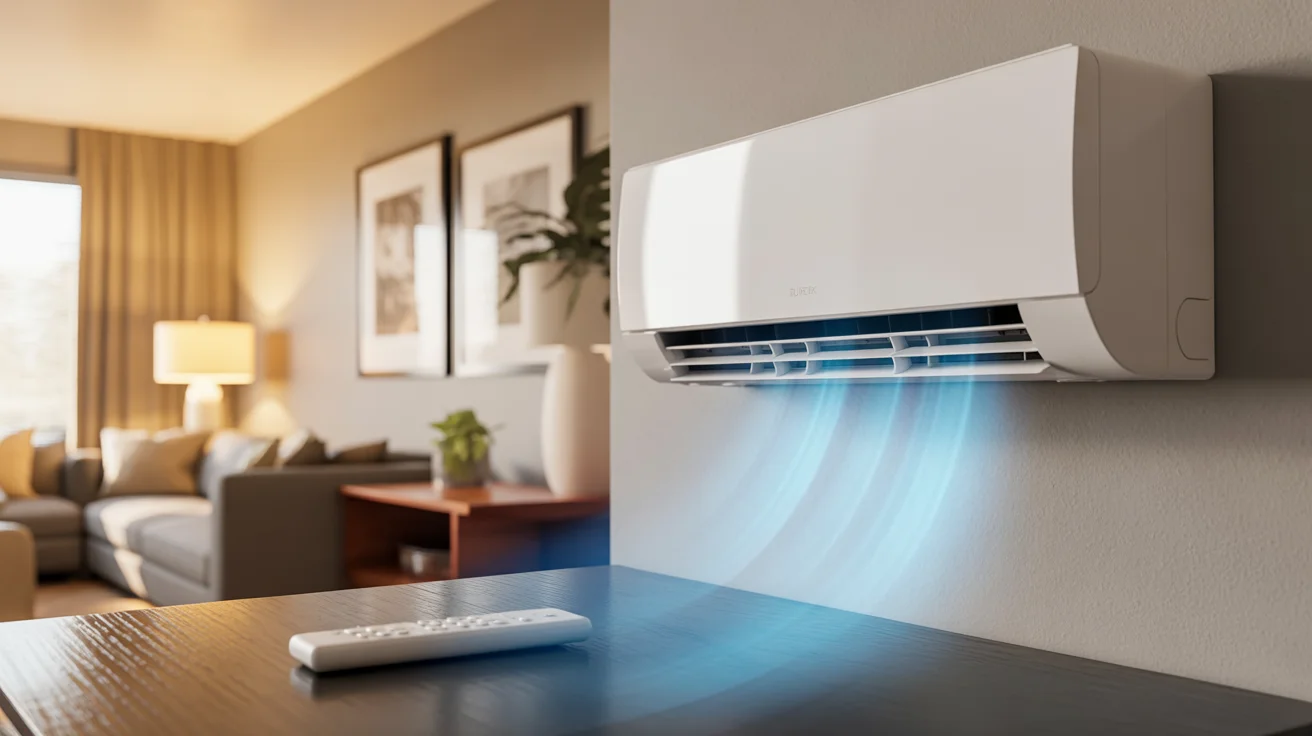
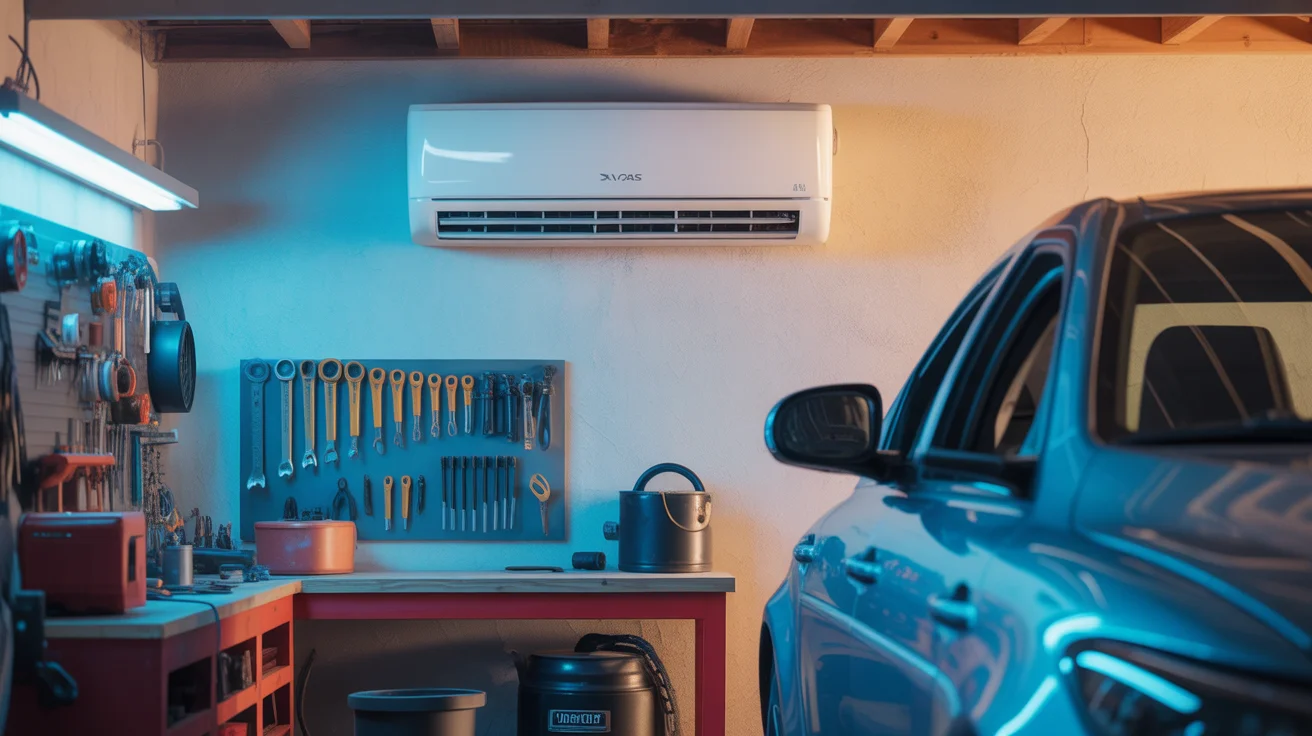
A garage mini split is the best long-term investment for anyone spending serious time in their garage. It’s quiet, efficient, mounts on the wall (no floor space lost), and heats in winter too.
At current DFW electricity rates ($0.12 to $0.15 per kWh), a 18,000 BTU mini split cooling a 2-car garage costs about $40 to $55 per month to run during peak summer. Compare that to a portable AC at $60 to $90 per month for worse cooling.
Over 5 years, the math works out:
- Mini split: $3,500 install + ($45 x 5 months x 5 years) = $4,625 total
- Portable AC: $500 unit + replacement at year 4 ($500) + ($70 x 5 months x 5 years) = $2,750 total
The portable looks cheaper on paper. But the mini split keeps your garage at 75°F consistently while the portable struggles to hold 85°F on the worst days. And you get winter heating included.
Portable AC: The Starter Option
A portable AC for garage use works if you’re in there a few hours on weekends. Grab a 14,000 BTU unit, vent the exhaust hose through a garage window or a panel in the door, and you’ll take the edge off.
Honest limitations: portable units lose 30% of their cooling through the exhaust hose setup. They’re loud enough that you’ll want earplugs if you’re on a phone call. And in a 140°F garage, even a 14,000 BTU portable will struggle to get below 85 to 90°F.
They last 3 to 5 years with heavy use. I’ve replaced a lot of portable units for customers who eventually switched to a mini split anyway.
Window AC: The Middle Ground
If your garage has a window, a window AC unit is a better value than a portable. No exhaust hose efficiency loss, easier to install, and cheaper. A 12,000 BTU window unit runs $250 to $400.
The downside: most garages don’t have windows. And leaving a window unit installed creates a potential security gap (easy entry point). Some HOAs also restrict visible window units.
Evaporative Cooler: Save Your Money
I need to be direct about this. Evaporative coolers (swamp coolers) do not work in North Texas. They rely on dry air to evaporate water, which creates a cooling effect. North Texas summer humidity runs 50 to 70%. At those levels, a swamp cooler is just a humidifier that makes your garage feel worse.
I’ve pulled three swamp coolers out of garages in Plano alone this year. Every customer said the same thing: “It just made it muggy.” Save that $300 and put it toward insulation or a real AC unit.
Fans: Good Supplement, Bad Standalone
A ceiling fan or high-velocity floor fan creates a wind chill effect that makes the space feel 4 to 6°F cooler. But fans don’t lower the actual air temperature. When it’s 130°F in your garage, a fan blowing 130°F air on you isn’t comfort. It’s a convection oven.
Use fans as a supplement to AC. Not as a replacement. A good 20-inch box fan costs $30. An industrial floor fan runs $100 to $200. They’re great for circulating cooled air from your AC unit to every corner of the garage.
Step 5: Install a Mini Split (The Best Long-Term Solution)
If you’ve decided on a mini split (smart choice for daily users), here’s what the installation involves.
Electrical work. A mini split needs a dedicated 240V circuit. If your garage doesn’t have one, an electrician will run a new circuit from your panel. Cost: $200 to $500 depending on distance.
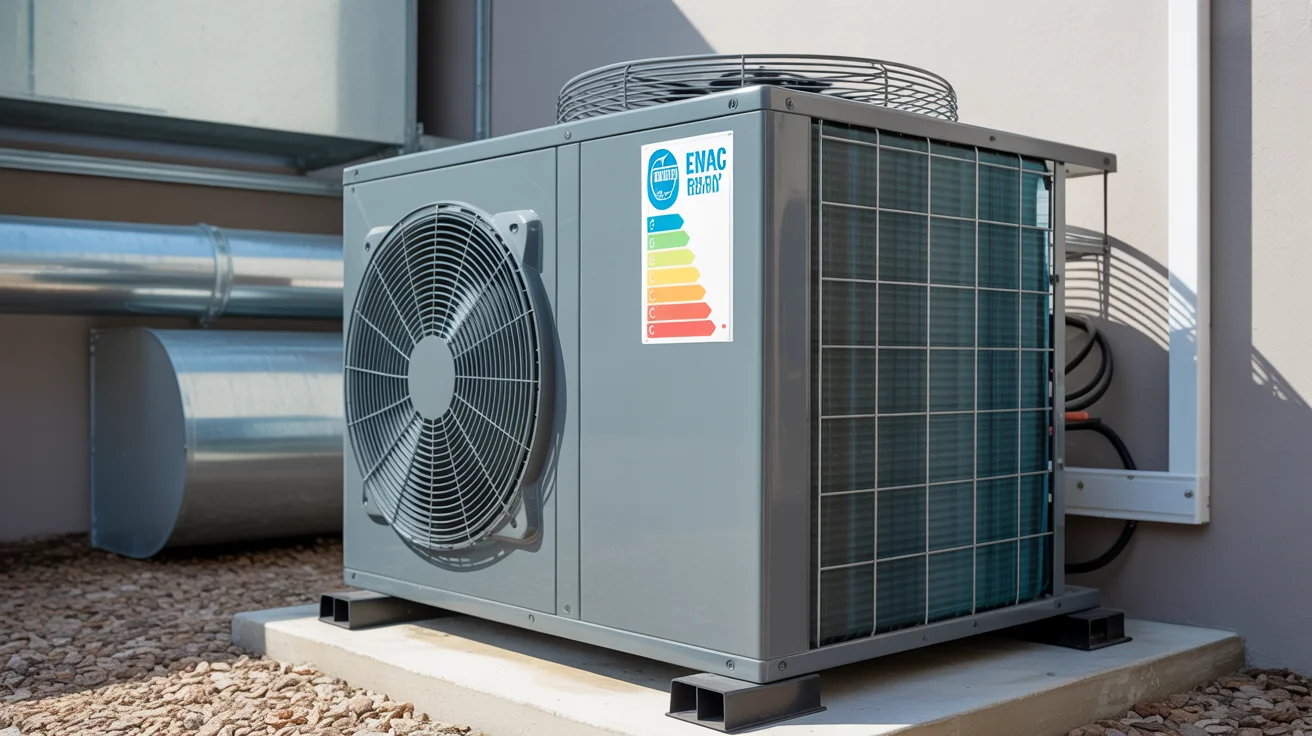
The unit itself. Two components: an indoor air handler mounted high on the wall and an outdoor compressor mounted on a pad or brackets outside. They connect through a small hole in the wall (about 3 inches) for refrigerant lines and wiring.
Professional installation in the DFW area runs $2,500 to $4,500 total, including the unit. That’s for a single-zone system, which is all a garage needs. Installation takes 4 to 6 hours.
SEER rating matters. Look for 18 SEER or higher. The difference between a 16 SEER and a 20 SEER unit saves $10 to $15 per month on electricity. Over 15 years, that’s $1,800 to $2,700 in savings.
One thing most people don’t realize: a mini split also heats. If you use your garage in winter, you won’t need a separate space heater. The heat pump installation works both directions.
If you need help sizing or installing a garage mini split in the North Texas area, call us at (940) 390-5676. We’ll measure your space, check your electrical panel, and give you an exact quote.
Step 6: Set Up a Portable or Window AC (The Budget Route)
Going the portable or window route? Here’s how to get the most out of it.
Placement matters. Put the unit on the side of the garage opposite the garage door. The door is the biggest heat source. Blowing cool air toward it wastes energy. Blow cool air into the space where you’re working and let the garage door side stay warmer.
Seal the exhaust. Portable AC units come with a window vent kit. If your garage doesn’t have a window, you can cut a hole in a piece of plywood and mount it in a garage door panel. Seal every gap with foam tape. A sloppy exhaust setup kills 30% or more of your cooling.
Don’t share circuits. A 14,000 BTU portable AC pulls 11 to 12 amps. If it’s on the same circuit as your shop vac or compressor, the breaker will trip. Use a dedicated outlet, or at minimum, don’t run high-draw tools simultaneously.
Pre-cool the space. Start the unit 30 to 60 minutes before you plan to work. Cooling a 140°F garage down to usable temps takes time. Walking in and turning it on means you’ll sweat for an hour before it catches up.
Step 7: Add Ventilation and Fans as Backup
Fans don’t replace cooling in Texas. But they make your cooling system work better.
A ceiling fan in a garage pushes cooled air down from the ceiling (where it naturally rises) back to floor level where you’re working. This can improve the perceived temperature by 4 to 6°F without any extra energy cost.
Evening ventilation trick. On nights when it drops below 85°F, open the garage door after sundown and set up a box fan blowing outward. This flushes the stored heat from the concrete slab and walls. Close up before morning and your AC has a much easier job the next day.
An exhaust fan mounted high on the back wall pulls hot air out of the ceiling zone. Pair it with a low intake vent near the floor and you create natural airflow that helps any cooling system perform better.
Which Garage Cooling Solution Should You Pick?
Here’s the quick decision framework:
You use the garage daily for 2+ hours? Install a mini split. It’s the best way to cool a garage in Texas for long-term comfort and efficiency.
You’re in there on weekends or occasionally? A portable or window AC works fine. Insulate the garage door first to help the unit keep up.
You just store stuff and want to keep it under 100°F? Insulate the door and ceiling, add a radiant barrier, and run a fan. That gets most garages down 15 to 20°F.
You’re a renter? Portable AC is your best bet. Take it with you when you move.
No matter which option you choose, insulation is step one. Every dollar you spend on insulation makes your cooling system work less and last longer.
Need help figuring out the best way to cool a garage in Texas? We’ve installed garage cooling systems across Frisco, Plano, McKinney, Allen, and the surrounding area. Call (940) 390-5676 for a free consultation and quote.
FAQ
Can I extend my home AC to the garage?
Technically possible but almost never a good idea. Your home HVAC system is sized for your living space. Adding a garage (especially an uninsulated one) overloads the system, increases your home energy bills, and may void your warranty. A separate mini split or standalone unit is the right approach. It keeps your home system focused on your home.
How many BTU do I need for a 2-car garage in Texas?
For a 2-car garage (400 to 600 sq ft) in North Texas, plan for 12,000 to 18,000 BTU. If the garage is uninsulated, west-facing, or has high ceilings, go to the higher end. Standard BTU calculators undersize for Texas by 20 to 30% because they assume moderate climates and insulated spaces.
Do portable AC units actually work in a garage?
They work, but with limitations. A 14,000 BTU portable unit can bring a well-insulated 2-car garage down to 80 to 85°F when it’s 100°F+ outside. In an uninsulated garage hitting 140°F, that same unit might only get you to 95°F. They’re also loud and lose efficiency through the exhaust hose. Fine for occasional use. Frustrating for daily use.
Is a garage mini split worth the money?
For daily users, yes. A mini split costs $2,500 to $4,500 installed but lasts 15 to 20 years, runs quietly, costs less per month to operate than a portable AC, and heats your garage in winter. If you spend 2+ hours a day in your garage, a mini split pays for itself in comfort and energy savings. See our AC installation page for details.
Does insulating the garage door actually help?
More than most people expect. I’ve measured 10 to 20°F reductions from garage door insulation alone. A $150 kit with polystyrene panels takes two hours to install and immediately reduces the heat load on any cooling system. It’s the highest-ROI improvement you can make. If you’re dealing with humidity too, check out our dehumidifier sizing guide for the full picture.
How much does it cost to cool a garage in North Texas?
Total costs depend on your approach. Insulation only: $150 to $500. Portable AC setup: $400 to $900 (unit plus insulation). Window AC: $300 to $600. Mini split professionally installed: $2,500 to $4,500. Monthly operating costs range from $30 to $90 depending on the system, your garage size, and how many hours you run it. Insulation reduces operating costs for every option.