Heat Pump Installation Cost (2026): $4,500-$12,000 Breakdown
Heat pump installed cost in 2026 by type and size. Mini-split $3,800-$7,500, ducted $6,000-$12,000. Includes rebates, tax credits, and real invoice examples.

- The Truth About Heat Pumps in North Texas (From Someone Who’s Installed 200+ of Them)
- What Heat Pumps Actually Cost in North Texas (With Real Installation Examples)
- The Stuff That Jacks Up Your Installation Price (Nobody Talks About This)
- When Heat Pumps Work Great in Texas (And When They Really Don’t)
- The Installation Day Reality Check
- Real Examples From Last Month (Names Changed, Prices Real)
- Financing Options That Actually Make Sense
- The Rebates Everyone Talks About (But Few Actually Get)
+ 6 more sections below...
- The Truth About Heat Pumps in North Texas (From Someone Who’s Installed 200+ of Them)
- What Heat Pumps Actually Cost in North Texas (With Real Installation Examples)
- The Stuff That Jacks Up Your Installation Price (Nobody Talks About This)
- When Heat Pumps Work Great in Texas (And When They Really Don’t)
- The Installation Day Reality Check
- Real Examples From Last Month (Names Changed, Prices Real)
- Financing Options That Actually Make Sense
- The Rebates Everyone Talks About (But Few Actually Get)
+ 6 more sections below...
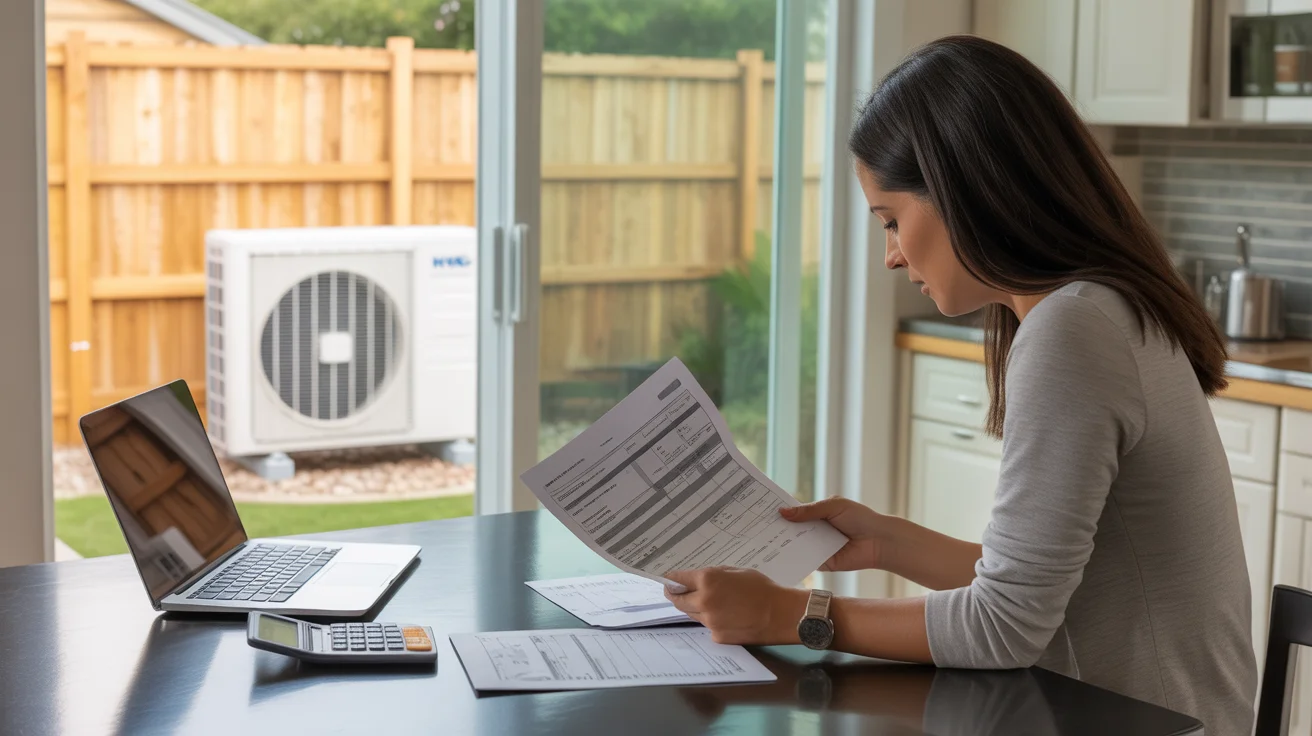
A complete heat pump installation in North Texas runs $6,500-$15,000 for most homes. That covers equipment, labor, permits, the whole deal. If you want the cheapest option, a minimum-efficiency unit (14.3 SEER2 / 7.5 HSPF2, the federal floor) starts around $4,200-$6,500. Mid-range 15.2-17.2 SEER2 systems land between $7,500 and $11,000. And if you want variable-speed with all the bells and whistles, you’re looking at $12,000-$18,500. Why such a wide range? Older homes (anything built before 1990) usually need ductwork changes that add $2,000-$4,000. Electrical panel upgrades can tack on another $1,500-$3,000. And bigger houses need bigger equipment. The IRS Energy Efficient Home Improvement Credit that used to hand you up to $2,000 back expired at the end of 2025, so budget without it. Oncor rebates are still live.
The Truth About Heat Pumps in North Texas (From Someone Who’s Installed 200+ of Them)
Need a heat pump installed? See our Heat Pump Installation service.
I was sitting in a couple’s living room in Frisco last Tuesday. The Hendersons. They wanted to know why their neighbor paid $6,800 for a heat pump but their quote came in at $11,400. Same brand, same size. Mrs. Henderson gave me a look like I was making it up.
So I pulled out my phone and showed them the attic photos I’d taken during the inspection. Their neighbor bought a 2019 build. Clean ductwork, electrical panel right where you’d want it, straightforward access. The Hendersons’ place was built in ‘87. Ducts that looked like someone designed them blindfolded. Electrical panel clear on the other side of the house. And the attic was so tight I hit my head twice just taking the pictures.
That $4,600 gap between the two quotes? Not profit. That was the cost of dealing with reality.
What Heat Pumps Actually Cost in North Texas (With Real Installation Examples)
I’ve been putting in HVAC systems around here since 2008. Started Jupitair because I got sick of watching companies hand people a number with zero explanation behind it. So here’s what we actually charge for heat pump work in 2026:
Basic Installation (The Easy Ones)
- 2-ton standard efficiency: $4,200 - $5,800
- 2.5-ton standard efficiency: $4,800 - $6,400
- 3-ton standard efficiency: $5,400 - $7,200
- 3.5-ton standard efficiency: $6,100 - $8,000
- 4-ton standard efficiency: $6,800 - $8,900
- 5-ton standard efficiency: $8,200 - $10,500
Variable-Speed Systems (The Good Stuff)
- 2-ton variable speed: $7,800 - $9,600
- 2.5-ton variable speed: $8,800 - $11,000
- 3-ton variable speed: $9,800 - $12,400
- 3.5-ton variable speed: $10,800 - $13,600
- 4-ton variable speed: $11,900 - $14,800
- 5-ton variable speed: $13,500 - $17,200
Energy Star Rated Heat Pumps (2025 Requirements)
If you want utility rebates, your heat pump generally has to be ENERGY STAR certified. For a split system that means 15.2 SEER2, 11.0 EER2, and 7.8 HSPF2 — all three, not just the SEER2 number. (The 8.5 HSPF2 figure you’ll see quoted around the internet is the Cold Climate criterion for ductless equipment, which is a different program and not what most North Texas installs are chasing.) For comparison, the plain legal floor is 14.3 SEER2 and 7.5 HSPF2, so ENERGY STAR is a real step above minimum but a smaller one than most people assume. Here’s what the big names run for a 3.5-ton ENERGY STAR system, fully installed:
- Trane XV18 (3.5-ton, 18 SEER2): $11,400 - $13,800
- Lennox XP21 (3.5-ton, 21 SEER2): $12,200 - $14,600
- Carrier Infinity (3.5-ton, 19 SEER2): $11,800 - $14,200
- Rheem Prestige (3.5-ton, 17 SEER2): $9,800 - $12,400
- Goodman GVZC20 (3.5-ton, 18 SEER2): $8,900 - $11,200
Those prices cover installation, permits, and standard warranty. Every one of those qualified for up to $2,000 in federal tax credits before the credit expired at the end of 2025.
14 SEER Heat Pump Cost (Entry-Level, Most Common)
This is the baseline. The workhorse. Note the exact number: 14.3 SEER2 / 7.5 HSPF2 is the federal floor for a split heat pump, nationwide. There is no such thing as a new 14 SEER2 heat pump — if you see one advertised, somebody is quoting the old scale. A minimum-efficiency unit won’t win any efficiency awards and won’t clear ENERGY STAR, but it’ll cool and heat your house just fine.
- 2-ton 14.3 SEER2 heat pump installed: $4,200 - $5,800
- 2.5-ton 14.3 SEER2 heat pump installed: $4,800 - $6,400
- 3-ton 14.3 SEER2 heat pump installed: $5,400 - $7,200
- 3.5-ton 14.3 SEER2 heat pump installed: $6,100 - $8,000
- 4-ton 14.3 SEER2 heat pump installed: $6,800 - $8,900
- 5-ton 14.3 SEER2 heat pump installed: $8,200 - $10,500
Most homes I work on in the 1,400-2,200 sq ft range end up with a 3-ton or 3.5-ton minimum-efficiency heat pump. That’s the sweet spot on price. Stretching to 15.2 SEER2 gets you into ENERGY STAR territory and the Oncor rebate, which is worth doing — just don’t let anyone tell you a lapsed tax credit will cover the difference.
We put in a 3.5-ton variable-speed Carrier in McKinney last month. $11,200. The week before that, a 3-ton Goodman in Allen for $6,400. Totally different jobs. The McKinney house needed ductwork redone in two rooms, a new thermostat wire pulled through the attic, and the homeowner decided he wanted the premium filtration add-on after his wife brought up her allergies. That stuff adds up fast.
The Stuff That Jacks Up Your Installation Price (Nobody Talks About This)
Back to the Hendersons and their $11,400 quote. Let me break down where that money actually went.
The Ductwork Disaster (+$1,800) Their ducts were sized for a 1980s furnace, and heat pumps need completely different airflow. We had to resize the main trunk line and add a return in the master bedroom. Also found mice living in one section. Not one mouse. A whole family. That was a fun afternoon.
Electrical Panel Shuffle (+$1,200) Heat pumps draw different amperage than a regular AC. Their panel was maxed out, so we put in a sub-panel and ran new 240V wiring across the house. My electrician spent six hours fishing wire through those walls. Not fast work.
The Concrete Pad Situation (+$400) The old unit was sitting on bare dirt. Just… dirt. Code says you need a proper pad now. Plus the new unit was physically bigger, which meant the old refrigerant lines didn’t reach. All new copper.
Permit and Inspection Fees (+$350) Frisco charges for installation permits. County wants their piece too. Then electrical permits on top. It’s not a huge line item by itself, but it adds up when you stack everything together.
The “While You’re At It” Add-Ons (+$850) New thermostat, UV light for the wife’s allergies, surge protector on the outdoor unit. Happens on almost every job. Once the walls are open and the tools are out, people figure they might as well get it all done. Can’t argue with that logic.
When Heat Pumps Work Great in Texas (And When They Really Don’t)
I’ll level with you. I like heat pumps. We put a Carrier variable-speed unit in my own house. But I’m not going to pretend they’re the answer for everybody because they’re not.
Where They Shine: The Patel family over in Prosper called a couple weeks back about their February electric bill. $487. They had a 15-year-old gas furnace paired with an aging AC and both were just eating money. We put in a 4-ton variable-speed heat pump. March bill came back at $218. Same weather pattern. Same thermostat settings. They didn’t change a thing except the equipment.
When the temperature sits between 35 and 65 degrees outside, a heat pump is hard to beat. That’s most of our winter here. The U.S. Department of Energy says heat pumps cut heating electricity use by roughly 50% compared to electric resistance heating. In that moderate range, you’re running about 40% cheaper than gas. And spring and fall? Forget about it. That’s where they really earn their keep.
Where They Struggle: February 2021. You remember. My phone rang nonstop for three straight weeks. Heat pumps turn into glorified space heaters once it drops below about 25 degrees. The backup strips kick on and your electric meter starts spinning like crazy.
The Johnsons in Allen learned this the hard way. During that freeze their heat pump just couldn’t keep up. House dropped to 58 degrees. They ended up in a hotel for three nights. Now they keep their old gas furnace as backup. Smart, honestly. I wish more people thought about it that way.
The Installation Day Reality Check
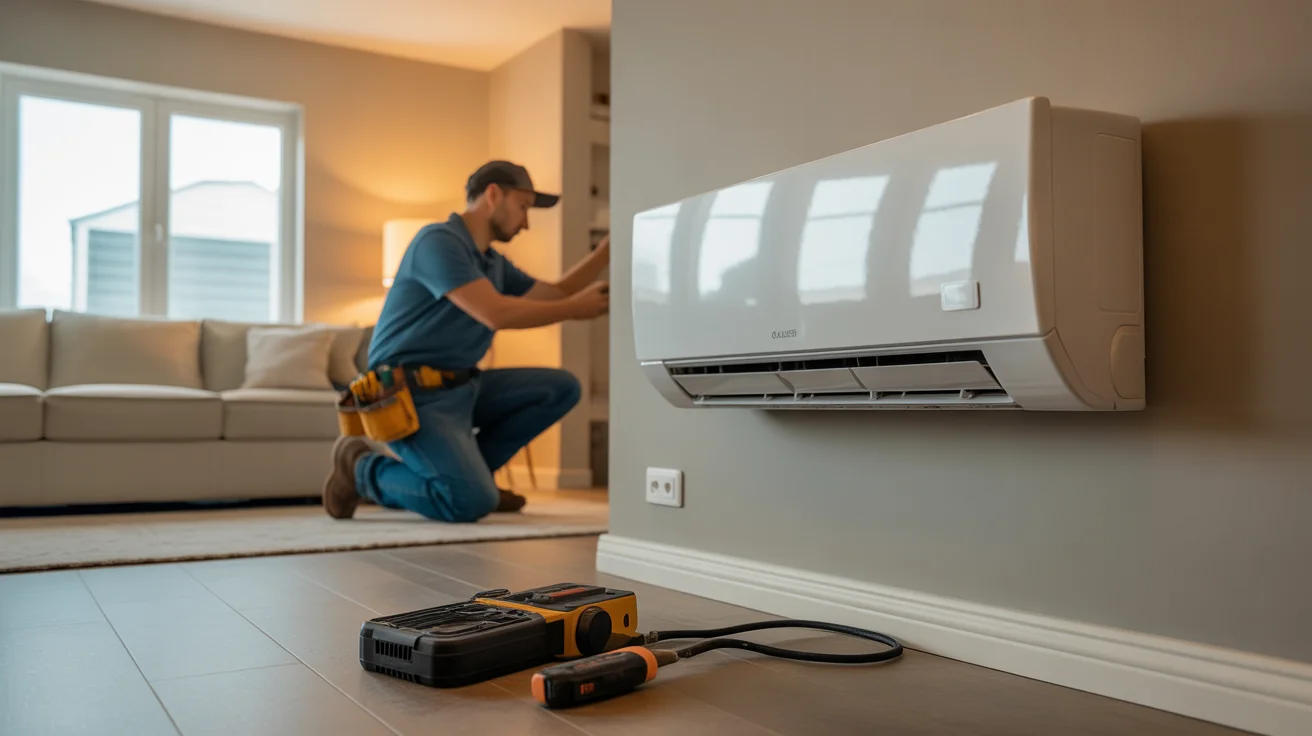
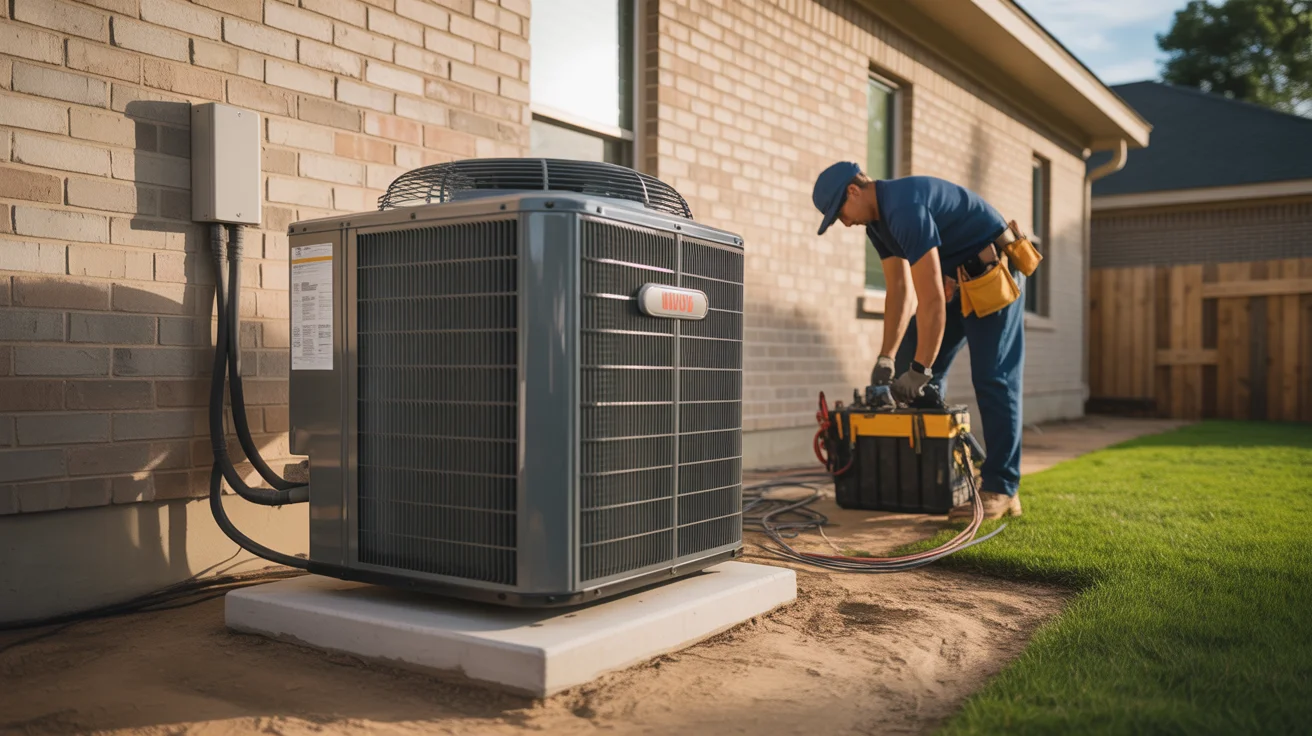
People picture an installation as us swapping one box for another. In and out by lunch. That’s not how it works. A job we did in Plano last Thursday? Eleven hours, start to finish. Here’s what that actually looked like:
7:00 AM - Show up, put down drop cloths everywhere, start tearing out the old equipment 8:30 AM - Pull out the return plenum and find it’s rusted through. Great. 10:00 AM - Finish building a new plenum from sheet metal, start mounting the new air handler 12:00 PM - Lunch break. Yes, we eat. 12:30 PM - Start the electrical work, discover the breaker is undersized 2:00 PM - Running new refrigerant lines through the wall, stumble into a wasp nest behind the siding 3:30 PM - Setting the outdoor unit on the pad, connecting everything up 5:00 PM - Pressure testing the lines, pulling a vacuum on the system, charging refrigerant 6:00 PM - Programming the new thermostat, testing every mode, cleaning up our mess
The homeowner asked why it took so long. I showed him photos of what we found inside his walls. He looked at them for about five seconds and said, “Yeah, okay. That makes sense.”
Real Examples From Last Month (Names Changed, Prices Real)
The Smooth Install - Richardson 3-ton Goodman, standard efficiency. Home built in 2018. Good attic access, electrical panel already had the right breaker, ductwork in decent shape. Seven hours, in and out. $6,200. Customer bought us lunch. Nice guy.
The Nightmare - Old Frisco 4-ton Trane variable speed in an ‘83 build. Found asbestos in the ductwork, which meant calling in a remediation crew before we could touch anything. Electrical panel was wedged into a crawlspace. The city added extra permit requirements halfway through the project. Three days of work. $16,400. The homeowner wasn’t thrilled about the price tag but called back two weeks later to tell me he’d never been that comfortable in 20 years of living there.
The Surprise Success - McKinney 2.5-ton Rheem in a condo. Should’ve been simple. Wasn’t. The previous installer had used the wrong size refrigerant lines, which we had to rip out and replace. The HOA had specific rules about where the outdoor unit could sit. We ended up craning the unit up to a third-floor patio. $8,900. Everyone on that job learned something new.
Financing Options That Actually Make Sense
Cash is always nice. But most people don’t have ten grand sitting in a checking account. I get that. Here’s what we can do:
What’s Actually Available:
- 0% for 18 months through Synchrony (if you qualify)
- 6.9% for 60 months through Wells Fargo
- 9.9% for 120 months through Goodman financing
The Washingtons in The Colony financed $12,000 at 0% for 18 months. Works out to $667 a month with zero interest. Their energy savings run about $180 a month, so the real hit to their wallet is more like $487 a month for a brand new system. Not bad.
But here’s something I feel like I have to say because I’ve watched it happen. That 0% promotional rate? If you miss a single payment, even by a day, the interest jumps to 26.99%. And it’s retroactive, meaning they charge you interest on the full original balance going back to day one. I’ve seen families get blindsided by this. Set up autopay the day you sign the papers. Don’t mess around with it.
The Rebates Everyone Talks About (But Few Actually Get)
Start with the bad news, because half the guides online still haven’t caught up: the federal heat pump tax credit is gone. IRS Section 25C covered equipment placed in service through December 31, 2025, and nothing replaced it. If a contractor is still working a $2,000 credit into your quote to make the numbers land, that’s a red flag about the rest of the quote.
Worth knowing what it actually required while it was live, because plenty of people were quoted wrong even then: for 2025 installs a heat pump had to be on the ENERGY STAR Most Efficient list, not merely ENERGY STAR certified. Those are two different bars, and the “16 SEER2 and you qualify” line a lot of salespeople used was never the rule.
Oncor has a rebate too. $400 for qualifying systems. Takes 8-12 weeks to show up. And I’d say half our customers just forget to send in the forms.
City rebates? Frisco ran a program for a while. It ended. Plano’s been talking about starting one. McKinney has nothing right now.
The Martinez family in Allen budgeted $2,400 in rebates into their purchase decision. When it was all said and done, they got $400 from Oncor. That’s it. My advice: plan your budget as if the rebates don’t exist. If you get them, great, it’s a bonus. Don’t count on them to make the math work.
Heat Pump vs Traditional AC/Furnace (The Numbers Nobody Shows You)
Let’s do the math on a 2,400 sq ft home in Plano. (If your existing furnace needs attention first, see our furnace repair in Plano page.)
Traditional setup:
- 4-ton AC: $7,800
- 80,000 BTU gas furnace: $3,400
- Total upfront: $11,200
- Summer cooling: about $280/month average
- Winter heating: about $120/month average
Same house with a heat pump:
- 4-ton heat pump: $10,900
- Backup heat strips come with it
- Total upfront: $10,900
- Summer cooling: about $275/month average (tiny bit better on efficiency)
- Winter heating: about $95/month average, BUT when it gets below 25 degrees that number shoots past $200
The Thompsons made the switch expecting huge savings. First winter was mild, and they saved about $300 total. Second winter brought a couple of cold snaps. They actually spent $180 more than they had the previous year running gas. Winter weather in Texas is a coin flip, and that makes the savings math a coin flip too.
The Honestly: Should YOU Get a Heat Pump?
After installing 200-plus of these things, I’ve got some opinions.
Get a heat pump if:
- Your gas furnace is dying and you’re buying something anyway
- Your attic insulation is in good shape (go look, seriously)
- You can live with 68 degrees during the worst cold snaps
- You like the simplicity of one system handling heating and cooling
- A $200+ electric bill during a freeze won’t make you lose sleep
Stick with what you’ve got if:
- Your gas furnace still runs fine
- You keep your house at 74 degrees all winter long
- Your insulation is thin or nonexistent
- Big electric bills stress you out
- You’re selling the house in two or three years
Mrs. Chen in Frisco asked me straight up: “What would you put in your mother’s house?”
Here’s what I told her. In North Texas, where you get brutal summers and the occasional winter that tries to kill you? Variable-speed heat pump with a gas furnace for backup. You get the efficiency of the heat pump nine months out of the year and the gas furnace picks up the slack when it drops below freezing. It costs more upfront, $14,000-$18,000, but you’re covered no matter what. That’s what I’d do.
Texas Electricity Plans for Heat Pump Homes
This is something most installers won’t bring up, but it matters a lot. When you switch to a heat pump, your electricity usage changes in a big way. You’re pulling almost everything off the electric grid now instead of splitting between gas and electric. That means your electricity plan choice is way more important than it used to be.
Does installing a heat pump affect my electricity rate?
Your rate itself stays the same. But your usage goes up because you’re not burning gas anymore. So whatever plan you’re on, you’re going to feel it more.
Are there electricity plans specifically for heat pump owners?
Sort of. Texas has a deregulated electricity market, which means you’ve got options. Here’s what works:
-
Time-of-use plans: Heat pumps run most efficiently when the outdoor temperature is moderate, so mornings and evenings. If you pre-cool or pre-heat during off-peak hours, these plans can save you 15-25%. Rhythm and TXU both offer time-of-use options worth looking at.
-
Free nights/weekends plans: Good fit if you work from home or run your heat pump a lot overnight. The system holds temperature on free electricity while you sleep. Savings of 20-30% are realistic.
-
Flat-rate plans with a low per-kWh cost: If the rate is under 12 cents per kWh, these often beat the “free” plans that come with high base rates. With a heat pump, total kWh matters more than gimmicks.
What to watch out for:
Plans that jack up the rate above 1,000 kWh will eat you alive. Your usage will probably jump from 1,200 kWh a month to somewhere between 1,800 and 2,500 once the heat pump is running.
The Martinez family in Allen (them again) went from gas heating to a heat pump and watched their electric bill go from $180 to $340. Turned out their plan charged a reasonable rate up to 1,000 kWh but then jumped to 18 cents above that. They switched to a flat 11-cent plan and dropped to $260 with the same heat pump doing the same work.
Before you install anything, pull up Power to Choose and look at plans based on your estimated usage. You can also compare Texas electricity rates side by side. It takes fifteen minutes and can save you a hundred bucks a month.
The Bottom Line From Someone Who’s Been Doing This Since 2008
Heat pumps aren’t magical. They’re not going to slash your bills by 70% the way some companies love to promise. But they’re solid equipment when they’re installed right and sized right for your house.
Our average heat pump job at Jupitair comes in around $9,800. That gets you a 10-year parts warranty, 2 years on labor, proper Manual J sizing, clean installation, and a straight answer about what makes sense for your situation.
Can you find someone who’ll do it for $6,000? Probably. They’ll run flex duct where they should use hard pipe, skip the electrical work that really needs doing, and be unreachable when something goes wrong six months later. You get what you pay for.
Had a customer last week tell me, “I don’t care about SEER ratings or any of that. Just make my house comfortable.” So we put in a 3.5-ton variable speed. She called yesterday to say it’s the first time her bonus room has ever stayed cool in the summer. That room had been a sauna for years. Sometimes comfort is the whole point.
And sometimes it’s not worth the upgrade. We’ll tell you that too.
Want a real quote based on your actual house? Call (940) 390-5676. We’ll come out, look at your ductwork, measure your rooms, check your panel. Takes about an hour. No charge anywhere in our service area.
One heads up: if you call during a heat wave or a freeze, we’re probably booked out two weeks. That’s just the reality. Plan ahead when you can.
Gary Musaraj owns Jupitair HVAC and has been installing heat pumps in North Texas homes since 2008. He’s replaced the system in his own house three times (long story) and made enough expensive mistakes along the way that you don’t have to.
Frequently Asked Questions
Q: How much is a 2 ton heat pump installed? A: A 2-ton heat pump costs $4,200-$5,800 for standard efficiency or $7,800-$9,600 for variable-speed models, fully installed in North Texas. This includes equipment, labor, permits, and basic materials. Add $500-$1,500 for electrical upgrades if your panel needs work, or $800-$2,000 for ductwork modifications on older homes. A 2-ton system typically serves 800-1,200 sq ft homes or smaller zones.
Q: What is the average cost to replace a 2 ton heat pump? A: Replacement is usually cheaper than new installation because ductwork and electrical are already in place. Expect $3,800-$5,200 for a standard 2-ton replacement or $7,000-$8,500 for variable-speed. If you’re replacing an older R-22 system, add $300-$500 for refrigerant line modifications to accommodate R-410A.
Q: How much for a heat pump system installed? A: Complete heat pump system costs in North Texas:
- 2-ton (800-1,200 sq ft): $4,200-$9,600
- 3-ton (1,200-1,800 sq ft): $5,400-$12,400
- 3.5-ton (1,600-2,200 sq ft): $6,100-$13,600
- 4-ton (2,000-2,800 sq ft): $6,800-$14,800
- 5-ton (2,500-3,500 sq ft): $8,200-$17,200
The lower end is standard efficiency with straightforward installation. Higher end is variable-speed with complications like attic work or electrical upgrades.
Q: How much is a new heat pump installed? A: New heat pump installation (not replacement) averages $9,000-$12,000 in North Texas for a typical 3-ton system. This is higher than replacement because it often includes new ductwork, electrical circuits, thermostat, and pad installation. Budget $7,000-$8,000 for builder-grade equipment or $14,000-$18,000 for premium variable-speed systems with smart controls.
Q: What is the Carrier 18 SEER heat pump cost in 2026? A: Carrier 18 SEER heat pumps (Carrier Infinity or Performance series) cost $9,500-$14,500 installed in North Texas, depending on size:
- 2-ton Carrier 18 SEER: $9,500-$11,200
- 2.5-ton Carrier 18 SEER: $10,200-$12,000
- 3-ton Carrier 18 SEER: $10,800-$12,800
- 3.5-ton Carrier 18 SEER: $11,800-$14,200
- 4-ton Carrier 18 SEER: $12,500-$15,200
- 5-ton Carrier 18 SEER: $14,200-$17,500
These prices include installation, permits, and standard 10-year parts warranty. The Carrier Infinity 18VS (variable-speed) runs about $1,500-$2,000 more than the single-stage 18 SEER. Carrier 18 SEER systems clear ENERGY STAR and so qualify for Oncor’s rebate, but not for a federal credit — that ended December 31, 2025.
Q: What does a 3-ton heat pump package unit cost installed? A: A 3-ton heat pump package unit (self-contained with all components in one outdoor cabinet) costs $7,500-$12,000 installed in North Texas. Package units are common for homes without attics or crawlspaces, mobile homes, or commercial applications.
Pricing by efficiency:
- 3-ton 13.4 SEER2 package heat pump: $7,500-$9,200
- 3-ton 15.2 SEER2 package heat pump: $8,800-$10,800
- 3-ton 17+ SEER package heat pump: $10,200-$12,000
Add $400-$800 for concrete pad work and $600-$1,200 for ductwork connections if replacing a split system. Package units typically cost $500-$1,500 less than equivalent split systems because there’s no indoor air handler to install. Major brands offering package heat pumps include Carrier, Trane, Goodman, and Rheem.
Q: How much does a Trane or Lennox 3.5 ton Energy Star rated heat pump cost in 2026? A: A 3.5-ton Energy Star rated heat pump from Trane or Lennox costs $10,500-$16,500 installed in North Texas, depending on efficiency tier:
Trane 3.5-ton heat pumps:
- Trane XR17 (17 SEER): $12,000-$14,000
- Trane XV18 (18 SEER variable-speed): $14,500-$16,500
Lennox 3.5-ton heat pumps:
- Lennox Elite EL18XPV (18 SEER): $13,500-$15,500
- Lennox Signature XP25 (up to 24 SEER): $16,000-$18,500
One caution on shopping this list: entry-level trim lines like Trane’s XR15 or the Lennox Merit series sit at or just above the legal floor, which puts them below the ENERGY STAR bar. They’re perfectly good equipment and we install them, but don’t buy one expecting a rebate.
To earn ENERGY STAR certification, a split heat pump has to hit 15.2 SEER2, 11.0 EER2 and 7.8 HSPF2. Don’t confuse that with 14.3 SEER2 / 7.5 HSPF2, which is simply the legal minimum every new unit has to clear. The federal tax credit that used to sit on top of this expired for equipment placed in service after December 31, 2025, so certification now matters for utility rebates rather than for a credit on your return. A 3.5-ton system typically serves 1,600-2,200 sq ft North Texas homes. See our Carrier vs Trane vs Lennox comparison for detailed brand analysis.
Sources & References
The heat pump efficiency ratings, installation costs, and federal incentive information in this article are based on the following authoritative sources:
- U.S. Department of Energy - Heat Pump Systems - Efficiency ratings and climate performance data
- IRS Energy Efficient Home Improvement Credit - Federal tax credits up to $2,000 for qualifying heat pumps (expired at the end of 2025)
- ENERGY STAR Heat Pump Requirements - CEE Tier efficiency specifications
- AHRI Equipment Directory - Verified equipment capacity and efficiency ratings
- Oncor Energy Efficiency Rebates - North Texas utility rebate programs
- Texas Department of Licensing and Regulation - HVAC - Contractor licensing requirements
Last Updated: January 2026
Need Professional HVAC Service?
Our certified technicians are ready to help with any HVAC needs in North Texas