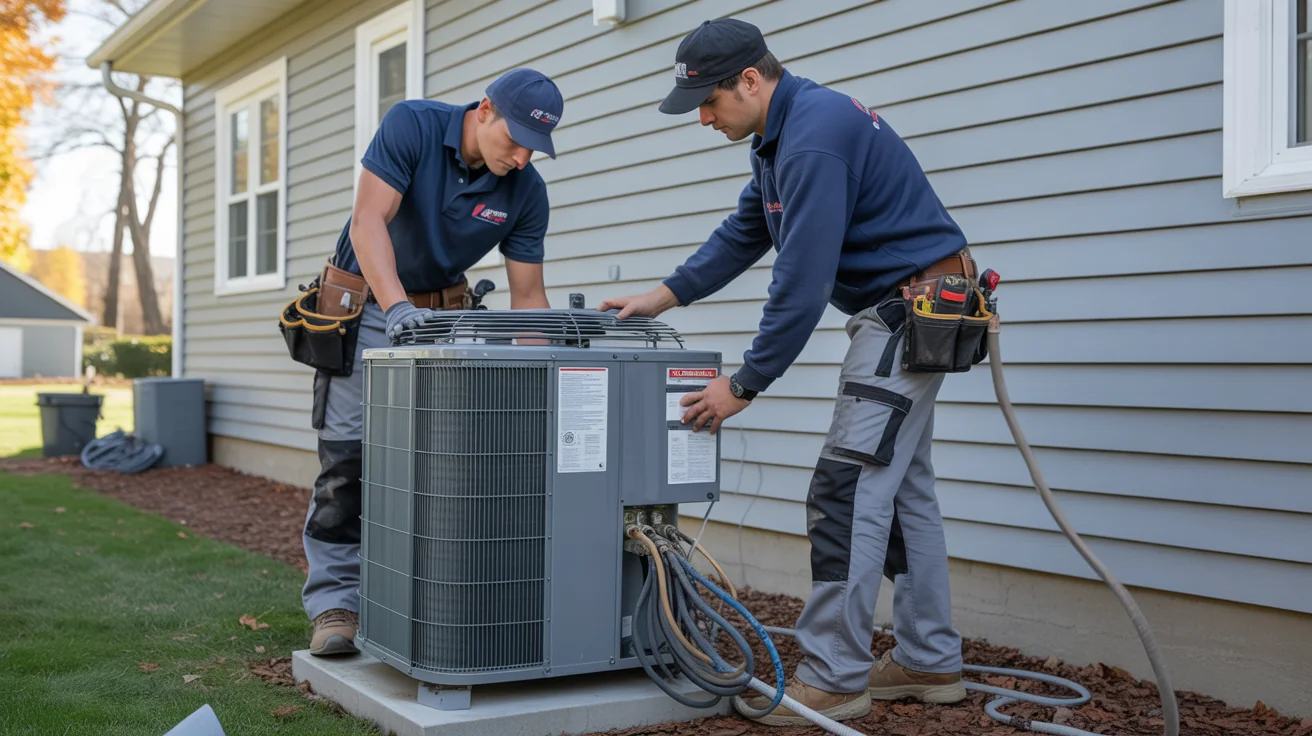
Advanced HVAC Installation Techniques
Advanced HVAC installation techniques built for North Texas extremes. Professional methods for reliable system performance in 100°F+ heat.
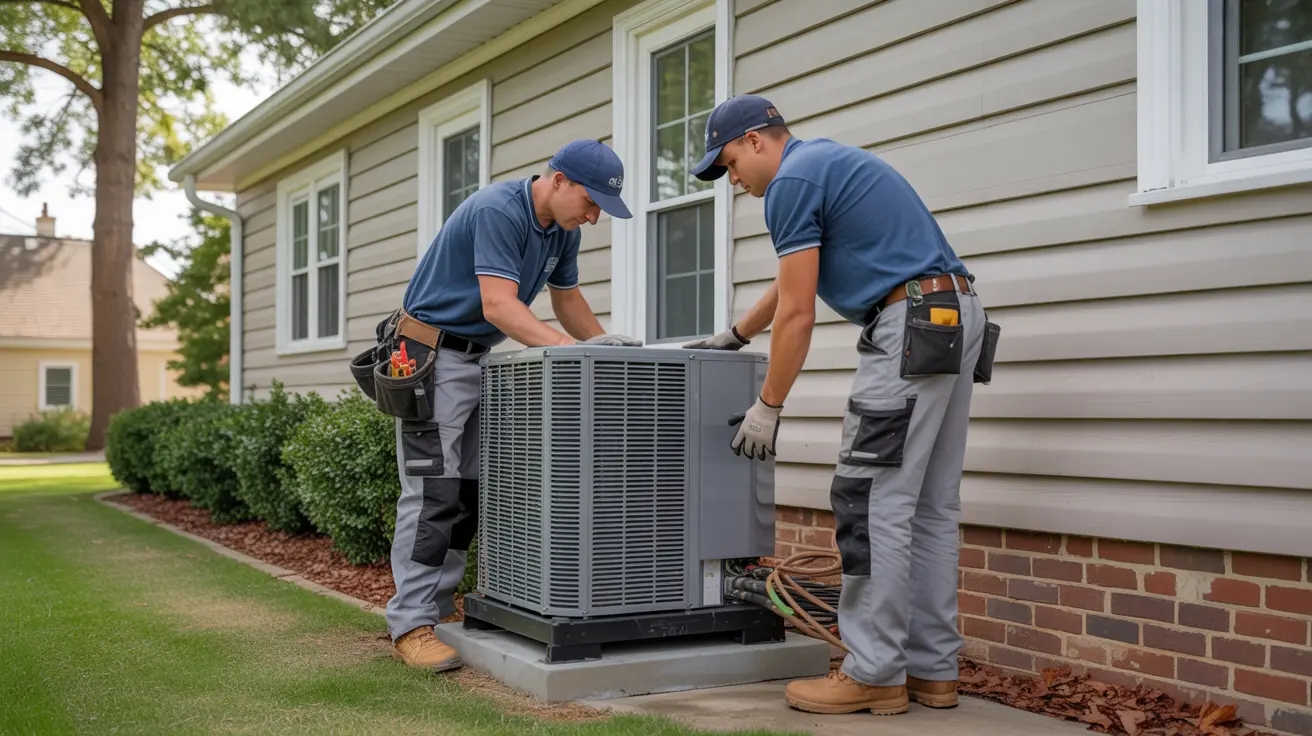
- Prevent Common North Texas HVAC Installation Failures
- Address North Texas HVAC Installation Challenges
- Advanced System Sizing and Design
- Ductwork Design Excellence
- Equipment Installation Excellence
- Advanced Electrical Installation
- Refrigerant System Installation
- Quality Control and Testing
+ 10 more sections below...
- Prevent Common North Texas HVAC Installation Failures
- Address North Texas HVAC Installation Challenges
- Advanced System Sizing and Design
- Ductwork Design Excellence
- Equipment Installation Excellence
- Advanced Electrical Installation
- Refrigerant System Installation
- Quality Control and Testing
+ 10 more sections below...
Here’s the short version: professional HVAC installation in North Texas runs $3,000-$25,000, and yes, that’s more than the guy on Craigslist. But a proper install gets you 15-30% better efficiency, your equipment lasts 5-8 years longer, and you dodge about 70% of the breakdowns I get called out for in the first five years. Bad installation is the single biggest reason systems die early around here. Not defective parts. Not bad luck. Sloppy install work. When your system has to grind through 120-plus days above 95°F and handle 50-degree temperature swings between noon and midnight, there’s nowhere for shortcuts to hide. That $1,000-$3,000 premium you pay for a real installation? It pays itself back inside three years, usually faster. Over ten years, the math works out to $6,000-$16,000 in your pocket from fewer repairs and lower energy bills.
Prevent Common North Texas HVAC Installation Failures
I got a call a couple months back from a homeowner in McKinney. Brand-new $14,000 system. Already failing. The compressor kept overheating, refrigerant was leaking out, and somehow their electric bills were actually worse than before the “upgrade.” I pulled the panels off and my stomach dropped.
Every shortcut in the book. Refrigerant lines kinked because somebody didn’t want to spend the time routing them properly. Electrical connections that wouldn’t last through a Tuesday afternoon thunderstorm. The outdoor unit? Sitting on concrete blocks. Not a pad. Blocks. Like it was a cinderblock bookshelf in a college dorm.
I’ve been installing systems across North Texas for fifteen-plus years now, and here’s what I’ve figured out: good installation isn’t about following some manual that was written in an office in Wisconsin by a guy who’s never had sweat dripping into his eyes at 2 PM in July. It’s about knowing what this climate actually does to equipment. How the heat warps things. How the storms test every connection. How running flat-out for four straight months exposes every single weak point.
And look, most people have no idea how much the installation quality matters. They shop for the best equipment and then hire whoever’s cheapest to put it in. That’s like buying a Ferrari and having your cousin who “knows cars” do the engine swap. A proper installation runs 15-30% more efficiently and lasts 5-8 years longer. It prevents roughly 70% of the breakdowns I respond to in the first five years. Those aren’t made-up numbers. That’s what I see on the ground, week after week.
I did an install last year for a family in Frisco who’d been burned badly before. Their previous installer took shortcuts on the refrigerant lines, and the result was a slow leak that bled money for three years before they figured it out. Thousands of dollars just floating into the atmosphere. When I redesigned the system and did the refrigerant work correctly, we picked up 25% more cooling capacity. Didn’t change the equipment. Just did the connections right. The husband called me six months later, right at the end of August, and said it was the first summer in five years they hadn’t dreaded opening their electric bill.
That’s what good installation does. Not flashy. Just correct.
Address North Texas HVAC Installation Challenges
Installing HVAC in North Texas is a different animal. I’ve watched perfectly good work fail because the installer approached it like they were somewhere with actual seasons and reasonable temperatures. This isn’t Ohio. This isn’t even Houston. North Texas has its own specific combination of misery that you have to plan for.
Thermal expansion. This one bites people constantly. Your outdoor unit bakes at 115 degrees all afternoon, then cools to 75 by sunrise. Everything moves. Refrigerant lines, electrical connections, mounting hardware. It all expands and contracts, day after day, for months. I’ve seen brand-new installations develop refrigerant leaks within six months because nobody accounted for that movement. You have to build in flexibility, use the right connectors, and think about how 40 degrees of temperature swing is going to stress every joint.
Moisture. Our humidity doesn’t play fair. It swings wildly, and condensation shows up in places you’d never think to check. Last summer I opened up an electrical panel on a system that was only eighteen months old, and the inside was corroding. Moisture got in during installation because the seals weren’t right. Nobody noticed because everything worked fine until it didn’t.
Storms. We get golf-ball hail. Straight-line winds that hit 70-plus mph. Flooding that can sit around equipment for days. Every installation needs to be built like it’s going to war, because eventually, it will. A unit that’s loosely mounted on the wrong side of the house is just waiting for the right spring storm to ruin someone’s week.
Grid stress. When it’s 105 and every AC in Collin County kicks on at the same time, the electrical grid gets ugly. Voltage spikes, brownouts, power quality problems. I’ve seen $3,000 control boards get fried because someone figured surge protection was optional. It’s not optional here. Not even close.
Continuous operation. This is the one that out-of-state guys never see coming. In most places, AC systems cycle on and off throughout the day. Components get breaks. Here? Your system runs 16 hours a day for 100 days straight. Maybe more. Installation techniques that work fine when equipment cycles normally will absolutely fall apart under that kind of continuous load.
Regional Code and Standard Requirements
Every city around here has their own thing going on with codes. Plano has noise ordinances that actually affect where you can put outdoor units. I’ve had to get creative with placement more than once because of that. McKinney has electrical connection requirements that go beyond the state code, and I’ve watched other contractors get failed by inspectors because they didn’t know the local rules.
The utility interconnection stuff is unlike anywhere else I’ve worked. When everyone’s AC fires up at 3 PM on a 105-degree day, the grid strains in ways that would genuinely surprise techs from other states. That’s why I oversize electrical connections and add surge protection on every install. Power quality problems will kill variable-speed equipment before you even realize something’s wrong.
Advanced System Sizing and Design
Related: System Sizing
Load Calculation Excellence
Related: Load Calculation
I’ll be straight with you. When I started out fifteen years ago, I sized systems the way everybody else did. One ton per 400 square feet, add a little extra because it’s Texas, call it good. Then I had a job in Allen that changed how I think about this. A 2,400 square foot home that needed a 5-ton system instead of the typical 4-ton because of huge west-facing windows and basically no insulation in the attic. If I’d gone with the rule of thumb, that family would’ve been miserable every summer.
Precision Load Calculation for North Texas
Now I run ACCA Manual J calculations on every job. Room by room. Takes about three hours, and most contractors won’t bother because three hours is three hours. But it’s the difference between a system that actually works and one that just sort of runs. I did the calculations for a home in Frisco where the owner was convinced they needed a bigger system because their old one “couldn’t keep up.” Turns out they needed a smaller unit with better ductwork. Smaller. Two years later, their energy bills were down 40% and every room in the house stayed comfortable. They couldn’t believe it.
The climate data piece trips up guys from other states all the time. Our 100°F design temperature for cooling isn’t just a box to check. It means your system will run at max capacity for weeks at a time. Not hours. Weeks. And the solar gain factor is something I had to learn to account for differently, especially on homes with big south and west-facing glass. The heat load just from direct sun through those windows can add a half-ton of cooling requirement all by itself.
Equipment Selection That Actually Works
Matching equipment to calculated loads sounds straightforward until you realize that a system designed for moderate climates might not have the thermal mass to handle sustained Texas heat. Learned this one the hard way in McKinney. We put in a high-efficiency variable speed system that was sized correctly on paper but kept ramping to max speed instead of modulating the way it should. The problem wasn’t the unit. It was that nobody accounted for the thermal inertia you need when it’s going to be 100+ degrees for six weeks without a real break.
Ductwork Design Excellence
Related: Ductwork Design
Advanced Ductwork Design and Layout
This is where I see the worst failures. Hands down. Ductwork that looks professional from the outside but can’t actually move air properly. Just last month in Plano, I found a 2,000 square foot home with trunk lines sized for maybe 1,200 square feet. The system was burning itself out trying to push air through ducts that were way too small. The homeowner thought they had a bad unit. Nope. Bad ducts.
ACCA Manual D isn’t some academic exercise. It’s the only reliable way to size ductwork in this climate. When I calculate duct sizes, I’m accounting for every elbow, every transition piece, every foot of run length. Most guys just eyeball it. Then they wonder why the system can’t push enough air, why certain rooms are hot, why the static pressure is through the roof. When your system runs nonstop for months, you can’t have it fighting its own ductwork the entire time.
Materials That Actually Work in Texas Heat
Material choices have to account for what North Texas attics actually do to things. And what they do is cook them. 140 degrees up there in July is normal. I’ve seen flex duct fall apart in five years because the contractor bought the cheapest stuff available. The R-8 insulation minimum isn’t just an energy code checkbox. In our climate, it’s the bare minimum to prevent condensation. Inadequate duct insulation leads to moisture, moisture leads to mold, and mold remediation costs thousands. Seen it too many times.
Vapor barriers trip up a lot of installers, especially guys who’ve worked out west where it’s dry. Our humidity swings are wild, and moisture will find any gap in your ductwork. I learned this one early in my career. Did what I thought was a beautiful installation in McKinney. Six months later, mold in the ducts. I’d skimped on the vapor barriers. The customer spent $3,000 on duct cleaning. I felt terrible about it, and I never cut that corner again. Sometimes the best lessons cost the most.
Equipment Installation Excellence
Outdoor Unit Installation
Advanced Outdoor Unit Positioning
Where you put the outdoor unit matters more than most people think. The typical approach is to find the closest spot to the line set penetration and drop the unit there. Done. I take a different approach. I spend a solid thirty minutes walking the property before I decide on placement, because heat rejection is everything when ambient temperatures hit 105.
Perfect example from last summer in Frisco. A homeowner had their unit on the south side of the house, sitting in direct afternoon sun. The compressor was hitting thermal overload every day around 4 PM. Just shutting down when they needed it most. We moved it to the north side where it got shade in the afternoon. Same unit, same refrigerant charge, 20% more cooling capacity. Probably added five years to the compressor’s life too.
Storm protection is just part of the job here. I’ve seen outdoor units wrecked by hail because they were sitting completely exposed. Now I always think about positioning for protection, and I use mounting systems rated for the straight-line winds we get in spring. Seventy-plus mph isn’t unusual. Your mounting job better be able to handle it.
Foundation Work That Actually Lasts
The pad work I see from other contractors… I don’t know what to say. A proper foundation means actual excavation, proper base prep, and 4-inch reinforced concrete that’s dead level. Not precast pads. Not cinder blocks. Not pavers from Home Depot. I’ve ripped out dozens of installations where the unit was sitting on a precast pad that had settled and was literally pulling the refrigerant lines apart from the stress. Slow, constant stress on the connections. That’s how you get leaks that nobody can find for months.
Vibration isolation is another thing people overlook. In tight neighborhoods like you see all over Plano, a loud outdoor unit will make your neighbors hate you. Good isolation pads cut noise transmission by about 40% and they prevent the subtle vibration that stresses refrigerant connections over years. I learned this after a callback from a customer whose installation was technically perfect but was keeping the neighbor’s bedroom wall humming at 2 AM. Not great for neighborhood relations.
Refrigerant Line Work That Doesn’t Leak
Here’s where the expensive mistakes happen. Refrigerant line sizing isn’t something you can fudge. The manufacturer specs assume certain line sizes for proper oil return and efficiency. I’ve worked on systems that were losing capacity because someone used oversized lines and the oil wasn’t making it back to the compressor. That’s how you kill a compressor. Slowly, expensively, and in a way that makes the warranty company argue about coverage.
The insulation has to be perfect. Our humidity finds every gap. I use vapor-tight insulation on the entire line set and seal every joint like it’s going to sit underwater. Because functionally, in our humidity, it kind of is. One little gap where condensation can form and you’ve got water dripping onto electrical components or running down inside a wall. I’ve seen both. Neither is fun to fix.
Indoor Unit Installation
Advanced Indoor Equipment Installation
Indoor unit placement seems simple. It’s not. I remember a job in Allen where the previous contractor shoved the air handler into a closet with maybe 18 inches of clearance on every side. Looked clean. Worked fine. Then the heat exchanger needed replacing three years later and we had to demo part of the closet wall just to get at it. Now I plan for service access from day one. Even if it makes the installation a little more complicated. Because somebody’s going to have to service this thing, and that somebody is probably me.
Condensate drainage is a bigger deal here than in most places because we pull so much moisture out of the air. Our systems produce way more condensate than equipment in dry climates. I’ve seen installations flood because the drain was undersized or improperly pitched. Primary and secondary drains on every install. And the secondary needs to be visible, like draining over a window or a spot the homeowner will notice, so they know something’s wrong before water starts coming through the ceiling.
Gas Appliance Installation That Doesn’t Kill People
I don’t use that heading to be dramatic. Gas installation mistakes can actually kill people. In McKinney last year, I found a furnace installation where the gas line was undersized, venting was wrong, and combustion air was restricted. The furnace couldn’t burn gas properly, so it was making carbon monoxide. The homeowner had been getting headaches all winter. Just thought they were getting sick a lot. Their furnace was poisoning them. Slowly, but it was doing it.
Gas line sizing requires actual calculations. BTU load, pipe length, pressure drop. You can’t just look at it and guess. I’ve seen installers tap into existing gas lines that were fine for a water heater but completely inadequate for a furnace pulling 100,000 BTU. You get lousy combustion, wasted gas, and potentially dangerous operation. Not a gray area.
Venting requirements have gotten stricter over the years, and they needed to. High-efficiency condensing furnaces can’t share vents with other appliances, and the vent materials have to handle the acidic condensate these units produce. I’ve pulled out vent pipes that were corroded nearly to the point of collapse because someone used standard galvanized instead of the required PVC or stainless. That’s not a mistake. That’s negligence.
Advanced Electrical Installation
Professional Electrical Installation Techniques
Electrical work is where the gap between a real technician and a handyman becomes painfully obvious. Especially here, where power quality issues will destroy expensive equipment. I’ve replaced more control boards due to electrical problems than from normal wear. The worst one? A $4,000 variable speed board that got fried because the installer skipped surge protection. A spring thunderstorm rolled through and that was that. Four grand, gone.
Power Supply and Protection That Actually Works
Sizing the circuit isn’t just about whether it can handle the amps on paper. It’s about what happens when every AC in the neighborhood fires up during a heat wave. Voltage drops. Sometimes badly. And sustained high-amperage operation at low voltage is how you cook compressor windings. I oversize electrical supply by at least 20% on every North Texas installation. Some guys think that’s overkill. I think it’s insurance.
Disconnect placement matters more than people realize. Texas storms can make outdoor areas pretty unpleasant for weeks at a time. I position disconnects where someone can safely reach them even during severe weather, and I use weatherproof enclosures that actually seal. Not the cheap ones that let water in after six months.
Wire sizing gets tricky in big Texas homes where you’re running long distances. I’ve found systems losing efficiency because voltage was dropping across undersized wires. The equipment had to work harder just to compensate. Proper wire sizing calculation has to factor in the rated load, the run distance, the ambient temperature in a 140-degree attic, and the voltage drop limits that keep equipment running efficiently. Skip any of those variables and you’re guessing.
Control Systems That Survive Texas Weather
Low-voltage wiring looks simple. Pull some thermostat wire, make your connections, done. Except I’ve seen thermostat systems fail because moisture wicked into connections during one of our humid stretches. Now I seal every low-voltage connection and route wires away from anywhere condensation might form. The number of service calls I’ve avoided by spending an extra half hour on proper sealing probably covers my truck payment each month. Maybe that’s an exaggeration. Maybe not.
Safety control wiring is where things get serious. I’ve found installations where safety controls were bypassed or wired wrong, creating carbon monoxide hazards. Every safety control gets tested at installation and again during final commissioning. When people’s lives are on the line, there’s no “close enough.”
Refrigerant System Installation
Advanced Refrigerant Procedures
Professional Refrigerant System Installation
Refrigerant work separates the technicians from the parts changers. The number of systems I’ve had to rescue because someone took shortcuts on the refrigerant side would genuinely surprise you. Two weeks ago in Frisco, I opened up a system that was “professionally” installed and the refrigerant lines had never been properly purged during brazing. The inside of the copper looked like a chimney flue. Black. Completely oxidized. Contaminated. That contamination creates acid in the system, and acid eats compressors alive.
Line Installation That Actually Lasts
When I braze refrigerant connections, I flow nitrogen through the entire time. Every single time. It adds twenty minutes to the job. Some guys think it’s a waste. But it’s the difference between clean copper inside those lines and the kind of oxidation that’ll destroy a $2,000 compressor in three years. I’ve seen the results of skipping this step too many times to ever consider it optional.
Leak testing is where corners get cut the most. Pressure testing at 1.5 times design pressure isn’t busy work. It’s the only way to know your connections will hold up through the thermal cycling we deal with here. I’ve caught leaks during pressure testing that would’ve been invisible once the system was charged and running, but would’ve slowly bled refrigerant and caused compressor damage over the next year or two. Finding a leak during testing costs nothing. Finding it a year later costs hundreds or thousands.
Evacuation to 500 microns or lower takes patience and real equipment. Most guys rush it because they want to get to the next job. But moisture in a refrigerant system does more long-term damage than almost any other installation mistake. In our humid climate, pulling a deep vacuum and holding it takes time. I’ve seen systems where sloppy evacuation caused ice buildup in the expansion valve and premature compressor failure. All because someone didn’t want to wait an extra forty-five minutes.
System Commissioning That Ensures Performance
The commissioning phase is where you find out if the installation was actually done right. I run electronic leak detection across every joint and connection in the entire system. Even tiny leaks become expensive problems when equipment runs as hard as it does here. A leak that might not matter in a mild climate will cost you hundreds in refrigerant every summer in Texas.
Refrigerant charging has to be precise. Not ballpark. Precise. I charge based on superheat and subcooling calculations, not just pressures. Pressure readings alone don’t tell you if the system has the right charge for peak performance. A system that’s 10% low might get by in Columbus, Ohio. In North Texas at 105 degrees, it’s going to struggle, run inefficiently, and fail early. No wiggle room.
Quality Control and Testing
Complete System Testing
I spend four to six hours commissioning every system I install. That feels like a lot until you realize that catching a problem during testing costs maybe a hundred bucks to fix. Finding that same problem six months later? Thousands. Last month in McKinney, I caught an expansion valve issue during commissioning that would’ve killed the compressor within a year. The homeowner never would’ve known something was wrong until the system failed on the hottest day of summer. Because that’s how it always works.
Performance Verification That Actually Matters
Capacity testing goes way beyond “yep, cold air is coming out.” I measure actual BTU delivery against rated capacity because a system running at 80% of its rating might feel okay in April but will absolutely fall on its face in August. Temperature differentials across the coils tell the real story. Proper charge, proper airflow, clean heat exchangers. It all shows up in those measurements, and if something’s off, I’d rather find it now than during a 107-degree Saturday when everyone’s phone is ringing.
Control system testing catches the stuff that only shows up under specific conditions. I run through every operational mode, every safety circuit, every sequence. Equipment that works great at 85 degrees might completely choke at 105 because of a control issue that only appears under heavy load. Found that out the hard way early on. Now I test for it every time.
Safety and Code Compliance That Protects Lives
Gas system safety testing isn’t a line item I skip. It’s life or death, literally. I test every gas connection, verify combustion air supply, check venting integrity, and run all safety controls under actual operating conditions. My combustion analyzer tells me exactly what’s coming out of that furnace. If it’s producing dangerous levels of CO, I’ll know immediately. I’ve found installations where safety controls had been bypassed. The homeowners were sleeping twenty feet from a furnace that could’ve killed them. They had no idea.
Specialized Installation Techniques
Heat Pump Installation
Learn more about our professional Heat Pump Installation services.
Advanced Heat Pump Installation:
1. Dual-Fuel System Integration Dual-fuel systems need careful coordination between the heat pump and the backup heat source. The changeover controls have to switch automatically based on outdoor temperature and efficiency curves so the homeowner never notices the transition. Getting the electrical coordination right between all the components, the control wiring, the protection devices, that’s where experience matters. You also need to establish the right changeover points. Set them wrong and you’re burning gas when the heat pump could handle it, or running the heat pump when it’s too cold to be efficient. Every safety control and interlock has to be tested across all operating modes.
2. Variable Speed Heat Pump Systems Variable speed systems are more complex to install, but they’re worth it when they’re done right. The communication protocols between the indoor and outdoor units need to be set up correctly for real-time performance feedback and diagnostics. Multi-stage operation has to be coordinated so the system matches the load without short-cycling or hunting. The defrost controls need calibration specifically for North Texas conditions because our humidity and temperature profile is different from what the factory default assumes. And I always set up performance monitoring so the system can track its own operation and flag problems before they become failures.
Zoning System Installation
Multi-Zone System Installation:
1. Zone Control Systems
Zoning System Installation Requirements:
- Damper installation: Proper damper sizing and installation
- Control panel installation: Professional control system installation
- Sensor placement: best temperature sensor placement
- Bypass systems: Proper bypass dampers for system protection
- Commissioning: Complete system balancing and programming
2. Advanced Zoning Technologies Pairing zoning with variable speed equipment gives you the best of both worlds. Precise comfort, low energy costs. Smart zone controls can learn occupancy patterns and adjust automatically, which is honestly pretty impressive when it works properly. Wireless zone systems cut down on installation complexity since you’re not running control wires through finished walls. Each room gets its own temperature management, which matters a lot in Texas where the upstairs can be ten degrees hotter than the main floor. The whole setup can be optimized to only condition occupied spaces, saving real energy without anybody having to think about it.
Ductless Mini-Split Installation
Learn more about our professional Ductless Mini-Split services.
Professional Ductless Installation:
1. Multi-Zone Ductless Systems
Outdoor unit sizing for multi-zone ductless systems requires calculating total capacity while making sure every indoor unit gets adequate refrigerant flow. Where you mount each indoor head matters a lot. Airflow patterns, aesthetics, and whether I can actually get to it for maintenance down the road. Refrigerant line routing needs to be clean and concealed, but you can’t sacrifice system efficiency for looks. Each zone gets its own electrical circuit with proper control wiring and shutoffs. And the controls need to work together across all zones so the system runs as one coordinated unit, not a bunch of individual AC units bolted to the wall.
2. Specialty Applications
Mini-splits are great for supplemental heating and cooling when you don’t want to tear out an entire existing system just to fix comfort in one area. I’ve done server room installs where the temperature control has to be dead accurate and the system needs redundancy in case something fails. Historic buildings are another good application. You can add modern comfort without destroying the architecture, which matters in some of the older neighborhoods around here. And commercial spaces like offices, retail shops, restaurants. Ductless makes sense when traditional ductwork isn’t practical or cost-effective.
Installation Quality Assurance and Professional Standards
Professional Standards and Procedures
Quality Control Protocols:
1. Installation Inspection Procedures
Before any equipment shows up, I verify that the site is actually ready. Saves a lot of headaches. During installation, I check my work at each stage rather than waiting until the end to find out something’s wrong. System commissioning is a full test of every component against design specs. Then I walk the customer through everything, show them how to operate the system, what the filter schedule looks like, what to watch for. And I make sure all the warranty and service paperwork is complete. Boring but important.
2. Performance Verification Standards
Installation Performance Standards:
- Cooling performance: Within 5% of rated capacity
- Heating performance: Within 5% of rated capacity
- Energy efficiency: Meeting or exceeding rated efficiency
- Airflow performance: ±10% of design airflow
- Temperature control: ±2°F of thermostat setting
Warranty and Service Planning
Professional Installation Warranties:
1. Installation Workmanship Warranty
I stand behind everything I install. Full coverage on all workmanship. If something I did causes a problem, I fix it. No arguments, no finger-pointing. Extended warranty options are available for folks who want extra peace of mind beyond the standard coverage. I also guarantee system performance, meaning the installation will meet the efficiency and comfort numbers I promised. My installations get priority scheduling if issues come up. And if you’re not happy? We’ll make it right. I don’t sleep well when a customer has a problem.
2. Ongoing Service Planning
A good installation is the start, not the finish. I set up maintenance schedules designed to protect the investment and keep everything running the way it should. Performance monitoring lets me catch efficiency drops before they become real problems. As technology changes and your needs evolve, I can help plan upgrades that make sense. I stay available for questions even years after the install, because I’d rather answer a quick phone call than get called out for something that could’ve been avoided. Emergency service gets priority scheduling for my installations. That’s just how I do things.
Cost-Benefit Analysis of Professional Installation
Investment Analysis
Professional Installation Investment:
Standard residential installations run $3,000-8,000 for straightforward systems with regular efficiency equipment. Advanced installs, meaning complex layouts or high-efficiency systems that need specialized techniques, range from $6,000-15,000. Commercial work starts at $10,000 and can go to $50,000 or more depending on the building and what the business needs. Specialty installations like historic retrofits, difficult access situations, or unusual equipment requirements fall in the $5,000-25,000 range.
Value of Professional Installation:
The efficiency gain alone is significant. 15-30% better performance compared to a subpar install. You’ll see about 70% fewer problems in those first several years. Manufacturer warranties stay intact because the work was done by a licensed contractor. And there’s the value that doesn’t show up on a bill. Property value, the relationship with a technician who actually knows your system. Those things add up over the life of the equipment.
Return on Investment
Professional Installation ROI:
ROI Calculation Example:
Energy savings: $300-800 annually
Reduced repairs: $200-500 annually
Extended equipment life: $300-600 annual value
Total annual benefit: $800-1,900
Professional installation premium: $1,000-3,000
Payback period: 6 months - 3 years
10-year net benefit: $6,000-16,000
Regional Installation Considerations
Dallas-Fort Worth Metro Installations
Urban Installation Challenges:
Working in tighter urban lots means dealing with limited space and sometimes creative solutions for equipment placement. Noise ordinances in cities like Plano require careful attention to where and how you mount outdoor equipment. Utility coordination gets complicated in dense areas with multiple jurisdictions and packed infrastructure. And some cities have beefed-up building codes that go beyond the state minimum, so you have to know what each municipality expects.
Suburban and Rural Installations
Distributed Area Considerations:
Out in the more spread-out areas, electrical service can be an issue. Sometimes the existing service panel needs an upgrade before you can install modern high-efficiency equipment. Getting equipment to remote properties or places with narrow driveways takes planning. Generator backup integration is something I recommend for areas prone to extended outages. And if you’re on well water, that affects any humidification or evaporative cooling components because water quality varies a lot from well to well.
Questions I Get All the Time
Q: How important is professional installation vs. DIY or handyman installation? A: Honestly, it’s everything. I’ve spent more hours than I can count fixing jobs done by handymen and DIY attempts that ended up costing the homeowner two or three times what a proper installation would have cost in the first place. Professional installation runs 15-30% more efficiently, lasts 5-8 years longer, and prevents roughly 70% of the breakdowns I see in the first five years. Oh, and your manufacturer warranty? Void if a licensed contractor didn’t do the install.
Q: What makes HVAC installation in North Texas different from other regions? A: Everything here is more intense. The heat, the electrical grid problems, the storms. Installation techniques that would be unnecessary overkill in, say, Virginia, are absolutely required here. I’ve worked alongside contractors from other states who couldn’t believe the conditions we deal with as a matter of routine.
Q: How long does professional HVAC installation typically take? A: Depends on the job. A straightforward replacement where the ductwork’s already good might take one to two days. Standard new installations usually run two to four days. Anything complex, like extensive ductwork or a house where access is difficult, could take three to seven days. I always give people a realistic timeline upfront. I’d rather under-promise and finish early than the other way around.
Q: What warranties come with professional installation? A: You get the manufacturer’s equipment warranty, which runs 5-12 years depending on the component. Plus my workmanship warranty covering everything I did. If something fails because of my installation, I fix it. No charge. I know my work is solid, so that’s not a promise that keeps me up at night.
Q: When is the best time to schedule HVAC installation? A: Spring and fall, no question. Weather’s better for the installers, your existing system isn’t running at maximum, and I have more availability before the summer rush hits. We can take the time to do things right instead of racing between emergency replacements during a heat wave.
Q: What permits and inspections are required for HVAC installation? A: Most installations need building permits and electrical permits. I handle all the paperwork and coordinate with city inspectors for the mechanical, electrical, and gas inspections. Every city around here has slightly different requirements, but I know what each one expects and I make sure we pass the first time.
Take Action: Schedule Professional HVAC Installation
Don’t cheap out on installation. The equipment is only as good as the work behind it, and in this climate, the work matters more than almost anywhere else in the country.
Ready for professional HVAC installation?
Call (940) 390-5676 for a straight conversation about what your home needs. No pressure, no upsell. Just honest advice from someone who’s been doing this across North Texas for fifteen-plus years. You can also schedule online at jupitairhvac.com/contact if that’s easier. Ask about our installation packages and warranty programs, and we’ll start with a free assessment to figure out the best approach for your situation and your budget.
Professional Installation Services
Jupitair HVAC provides installation services across North Texas with installers who actually know what they’re doing in this climate. We handle everything from design through commissioning, so nothing falls through the cracks between different contractors. Full warranties on equipment and workmanship. And the relationship doesn’t end when we leave. Priority service and ongoing support for every system we install.
Professional HVAC installation requires real expertise, proper procedures, and quality materials. At Jupitair HVAC, we install systems that perform, last, and hold up to North Texas conditions.
Jupitair HVAC - Your North Texas professional installation specialists since 2008. Licensed & Insured.
Related Resources
Looking for more information? Check out these helpful resources:
- View All HVAC Services - Complete list of our residential and commercial services
- Service Areas - We serve Frisco, Plano, McKinney, Allen, and surrounding areas
- Emergency Service - Available 24/7 for urgent HVAC needs
- Maintenance Plans - Keep your system running efficiently year-round
- HVAC Blog - Expert tips and advice for North Texas homeowners
Sources & References
The installation standards, efficiency data, and technical specifications in this article are based on the following authoritative sources:
- ACCA Quality Installation Standards - Industry standards for proper HVAC installation
- ASHRAE Installation Guidelines - Professional installation best practices
- U.S. Department of Energy - Central Air Conditioning - Equipment efficiency and installation requirements
- ENERGY STAR HVAC Installation - High-efficiency installation certification
- EPA Section 608 Certification - Refrigerant handling requirements for HVAC technicians
- AHRI Equipment Standards - Verified equipment ratings and specifications
Last Updated: January 2026
Need Professional HVAC Service?
Our certified technicians are ready to help with any HVAC needs in North Texas