AC Installation Cost in North Texas: Complete 2026 Pricing Guide
What a new AC unit actually costs in North Texas in 2026. Real pricing by tonnage, SEER2 tier, and brand from a local HVAC contractor, not national averages.
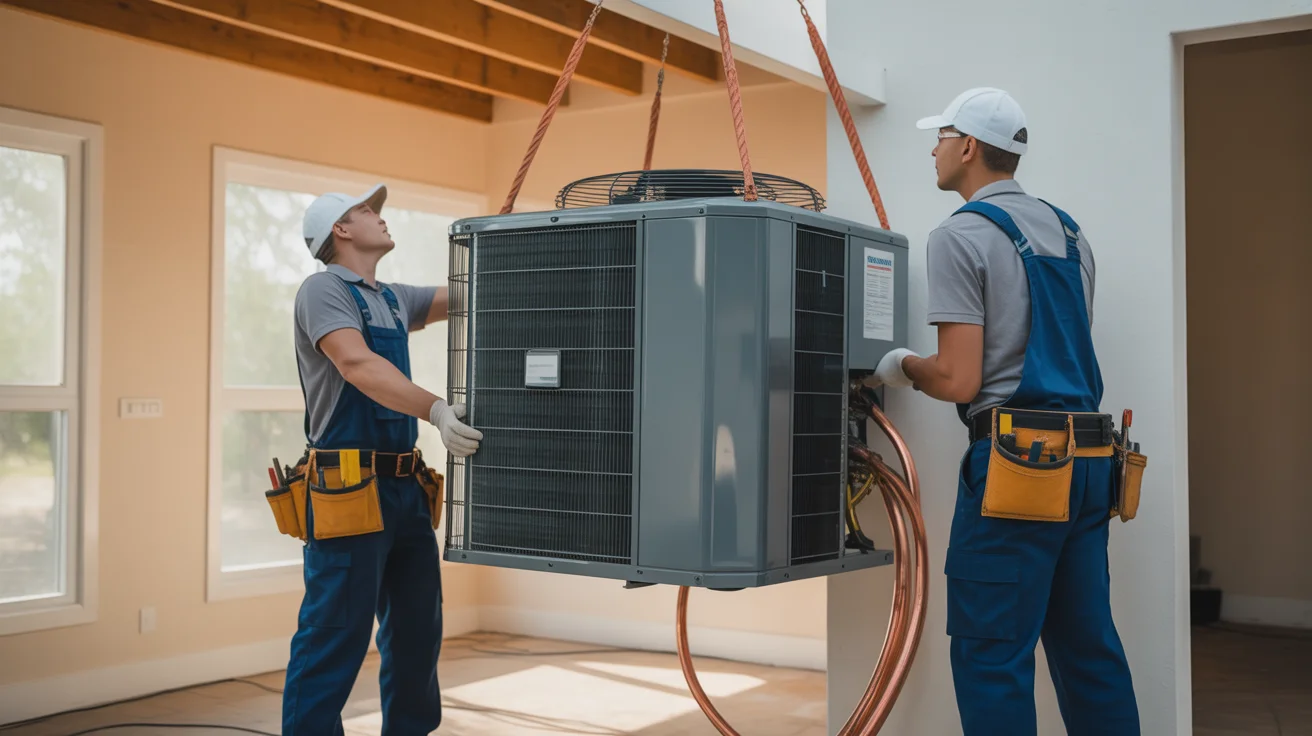
- What Determines Your AC Installation Cost
- AC Installation Cost by Tonnage (2026 North Texas Prices)
- AC Installation Cost by Brand
- What SEER2 Rating Should You Choose?
- Complete System vs. Condenser-Only Replacement
- Hidden Costs That Inflate Your AC Installation Quote
- The R-410A to R-454B Refrigerant Transition
- Rebates, Incentives, and Tax Credits for 2026
+ 7 more sections below...
- What Determines Your AC Installation Cost
- AC Installation Cost by Tonnage (2026 North Texas Prices)
- AC Installation Cost by Brand
- What SEER2 Rating Should You Choose?
- Complete System vs. Condenser-Only Replacement
- Hidden Costs That Inflate Your AC Installation Quote
- The R-410A to R-454B Refrigerant Transition
- Rebates, Incentives, and Tax Credits for 2026
+ 7 more sections below...
AC installation cost in North Texas ranges from $3,500 for a basic condenser swap to $15,000+ for a complete high-efficiency system with new ductwork. The average homeowner in the Dallas-Fort Worth area pays $7,500 to $12,000 for a full AC replacement in 2026. I’ve installed thousands of systems across Frisco, Plano, McKinney, Allen, and surrounding cities since 2008, and I’ll break down exactly what drives those numbers so you can budget with confidence.
This isn’t a national averages article. Every price in this guide reflects what I see on real invoices in North Texas, adjusted for our brutal summers and the specific demands they place on equipment.
What Determines Your AC Installation Cost
Four factors control roughly 90% of your final price. Understanding them saves you from sticker shock and helps you spot inflated quotes.
1. System size (tonnage). A 2-ton unit for a 1,000 sq ft home costs significantly less than a 5-ton unit for 3,000+ sq ft. Oversizing wastes money. Undersizing destroys equipment. I’ll cover sizing below.
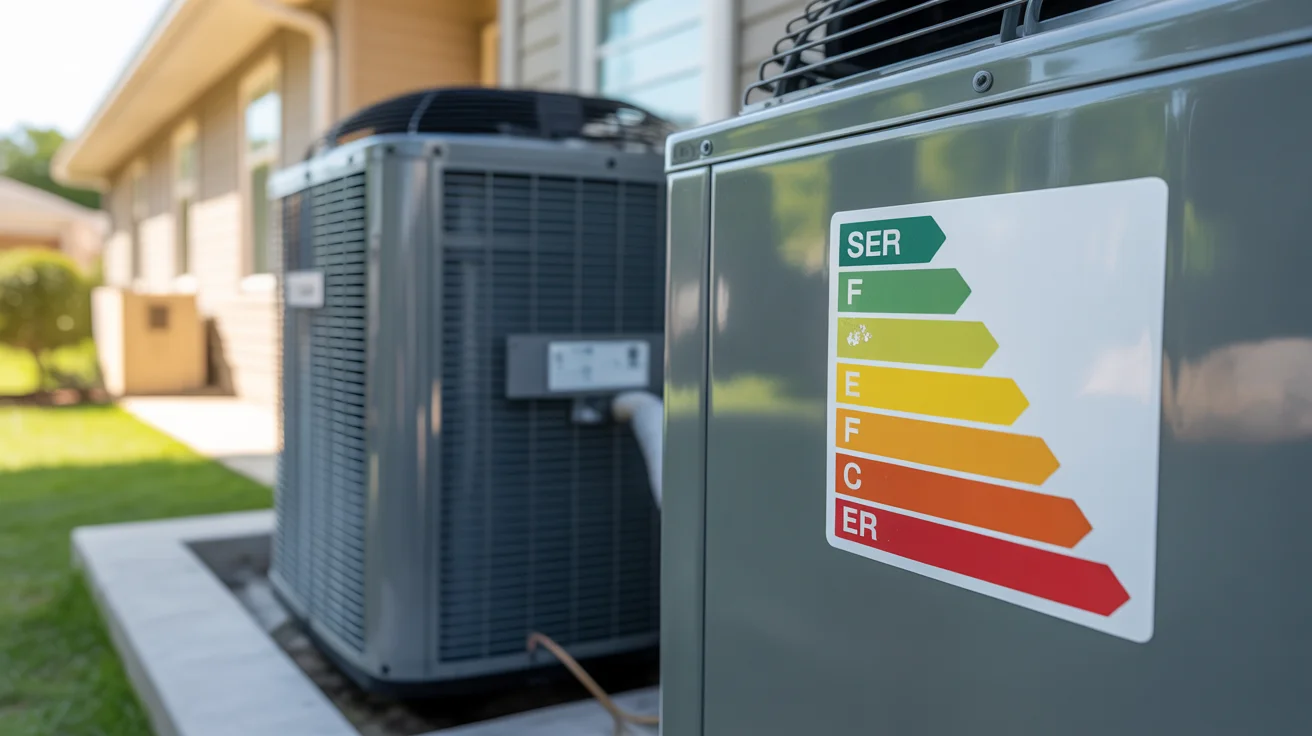
2. Efficiency rating (SEER2). The federal minimum is 14.3 SEER2 in the South region (that includes Texas). Jumping from 14.3 to 20 SEER2 adds $2,000 to $4,000 to the equipment cost, but cuts your cooling bills by 25-30%.
3. Installation complexity. Straightforward condenser-plus-coil swaps run cheaper than jobs requiring new refrigerant lines, electrical upgrades, ductwork modifications, or attic platform builds. North Texas homes built before 2005 often need additional work.
4. Brand and product tier. Carrier, Trane, Lennox, and Goodman all serve this market. Equipment cost varies by $1,500 to $3,000 between budget and premium lines for the same tonnage. I covered this in detail in my brand comparison guide.
AC Installation Cost by Tonnage (2026 North Texas Prices)
Tonnage is the single biggest price driver. Here’s what you should expect to pay for a complete AC installation (condenser + evaporator coil + labor + materials) in the DFW area this year.
| System Size | Home Size (sq ft) | Standard (14.3-16 SEER2) | Mid-Range (17-19 SEER2) | High-Efficiency (20+ SEER2) |
|---|---|---|---|---|
| 2 Ton | 800-1,200 | $3,500-$5,500 | $5,000-$7,000 | $6,500-$9,000 |
| 2.5 Ton | 1,200-1,600 | $4,000-$6,000 | $5,500-$7,500 | $7,000-$9,500 |
| 3 Ton | 1,600-2,100 | $4,500-$7,000 | $6,500-$9,000 | $8,000-$12,000 |
| 3.5 Ton | 2,100-2,400 | $5,000-$7,500 | $7,000-$9,500 | $8,500-$12,500 |
| 4 Ton | 2,400-2,800 | $5,500-$8,000 | $7,500-$10,500 | $9,500-$13,500 |
| 5 Ton | 2,800-3,500 | $6,500-$9,000 | $8,500-$12,000 | $11,000-$15,000 |
These prices include the outdoor condenser, indoor evaporator coil, refrigerant charge, labor, thermostat, and standard installation materials. They assume existing ductwork in reasonable condition.
The most common installation I do in North Texas is a 3 to 3.5-ton system in a 2,000 sq ft home. That typically lands between $7,000 and $10,000 depending on efficiency tier and brand. If your quote falls significantly outside these ranges (and you’re in the DFW area), ask questions.
AC Installation Cost by Brand
Brand matters, but probably less than you think. The difference between a mid-tier Carrier and a mid-tier Trane for the same tonnage is usually $500 to $1,500. What matters more is who installs it and whether they size it correctly.
That said, here’s what I typically see for a 3-ton system installed in North Texas:
| Brand | Budget Line | Mid-Range | Premium Line |
|---|---|---|---|
| Carrier | $5,500-$7,500 | $8,500-$10,500 | $11,000-$14,000 |
| Trane | $5,000-$7,000 | $8,000-$10,000 | $10,500-$13,500 |
| Lennox | $5,500-$7,500 | $9,000-$11,000 | $11,500-$15,000 |
| Goodman/Daikin | $4,000-$5,500 | $6,000-$8,000 | $8,500-$11,000 |
| York/Johnson Controls | $4,500-$6,000 | $6,500-$8,500 | $9,000-$12,000 |
My take: For most North Texas homes, a mid-range Carrier, Trane, or Goodman in the 16-17 SEER2 range gives you the best balance of upfront cost, energy savings, and reliability. Premium lines (20+ SEER2, variable speed) make financial sense if you plan to stay in your home 10+ years and your electric bills consistently run above $250/month in summer.
For a deeper comparison of what each brand handles best in our climate, read my Carrier vs Trane vs Lennox guide.
What SEER2 Rating Should You Choose?
SEER2 replaced SEER as the efficiency standard in January 2023. The testing conditions are more realistic (closer to actual installation conditions), so the numbers run about 5% lower than old SEER ratings. A unit that was “16 SEER” is now approximately “15.2 SEER2.”
Here’s how the efficiency tiers break down for North Texas homeowners:
Standard Efficiency: 14.3-16 SEER2
- Best for: Budget-conscious replacements, rental properties, homes you plan to sell within 5 years
- Upfront cost: Lowest
- Monthly savings vs old system: Still 20-30% better than a 10+ year old unit
- Typical annual cooling cost: $1,200-$1,600 for a 2,000 sq ft home
Mid-Range Efficiency: 17-19 SEER2
- Best for: Most North Texas homeowners staying 5-10 years
- Upfront premium: $1,500-$2,500 over standard
- Monthly savings vs standard: $25-$40/month during peak cooling (June through September)
- Payback period: 6-8 years in North Texas (faster than national average because we run AC 8+ months)
High Efficiency: 20+ SEER2
- Best for: Long-term homeowners, large homes (2,500+ sq ft), homes with high sun exposure
- Upfront premium: $3,000-$5,000 over standard
- Monthly savings vs standard: $40-$65/month during peak cooling
- Payback period: 8-12 years
- Features: Variable-speed compressor, quieter operation, better humidity control
Here’s what most people get wrong about SEER2. They compare only the upfront price difference. In North Texas, your AC runs 2,400+ hours per year. In Minnesota, it runs 600. The payback period on a higher SEER2 unit is 2-3x faster here than the national calculators suggest. I always run the math for each customer based on their actual square footage and electric rate.
Complete System vs. Condenser-Only Replacement
One of the first questions I get: “Can I just replace the outside unit?”
You can. But it’s not always smart.
Condenser-Only Replacement: $3,500-$7,000
This works when:
- Your indoor evaporator coil is less than 8 years old
- The coil is compatible with current refrigerant (R-410A or R-454B)
- Your existing ductwork is in good shape
- You’re doing a like-for-like swap (same tonnage, similar efficiency)
Full System Replacement: $7,000-$15,000+
This makes sense when:
- Both indoor and outdoor units are 10+ years old
- You’re switching refrigerant types (R-22 systems must be fully replaced)
- You want to change system size or efficiency tier
- Your ductwork needs repair or modification
Complete HVAC System (AC + Furnace): $9,000-$18,000+
If your furnace is also aging (15+ years), replacing everything at once saves $1,000 to $2,000 versus doing it in two separate jobs. You avoid two truck rolls, two sets of permits, and the matched system runs more efficiently.
My honest recommendation: If your indoor unit is older than 8 years, replace it with the condenser. Mismatched systems lose 10-15% efficiency, and you’ll end up replacing the indoor coil within a few years anyway. Pay once, do it right.
Hidden Costs That Inflate Your AC Installation Quote
The equipment price is only part of the story. Here are the additional costs I see catch homeowners off guard:
Ductwork Modifications: $500-$7,500
About 40% of the AC installations I do in North Texas require some ductwork work. Homes built in the 1990s and early 2000s in Frisco and McKinney frequently have undersized return air ducts. Upgrading from a 3-ton to a 4-ton system almost always requires larger ductwork.
- Minor duct repair/sealing: $500-$1,500
- Partial duct replacement: $1,500-$3,500
- Full duct replacement: $3,500-$7,500
Electrical Upgrades: $200-$2,000
Older homes may need a circuit breaker upgrade or new wiring to the disconnect box. A 5-ton system on a circuit that was sized for a 3-ton unit is a fire hazard and code violation.
- New disconnect box: $200-$400
- Breaker upgrade: $300-$600
- New circuit run: $500-$2,000
Refrigerant Line Set: $300-$1,200
If the existing copper lines are damaged, undersized for the new system, or incompatible with R-454B refrigerant, they need to be replaced. This is especially common when upgrading system size.
Permits and Inspections: $150-$400
North Texas cities (Frisco, Plano, McKinney, Allen) all require mechanical permits for AC installations. Any contractor who skips the permit is cutting a corner that can hurt you during a home sale or insurance claim.
Old System Removal and Disposal: $100-$300
Includes recovering refrigerant (EPA requirement), disconnecting the old system, and hauling it away. Most reputable contractors include this in their quote, but verify.
Thermostat Upgrade: $0-$500
A basic programmable thermostat is usually included. If you want a smart thermostat (Ecobee, Google Nest, Honeywell T10), expect to add $150-$500 including installation and setup.
The R-410A to R-454B Refrigerant Transition
Starting January 1, 2025, all new residential AC systems manufactured in the U.S. use R-454B (Puron Advance) instead of R-410A. This affects your 2026 installation in several ways.
What this means for you:
- New equipment uses R-454B by default. It’s a mildly flammable refrigerant (A2L classification) that’s better for the environment.
- R-410A systems are still available as existing inventory, but supplies are shrinking. By late 2026, most manufacturers will only offer R-454B equipment.
- You cannot mix refrigerants. If your existing lines had R-410A, a contractor may need to flush or replace them for R-454B compatibility.
- R-454B equipment costs roughly the same as R-410A equipment. The transition hasn’t caused a major price jump.
My advice: Don’t let anyone pressure you into buying an R-410A system “before they’re gone” at a premium. R-454B is the future, parts will be readily available for decades, and the equipment is just as reliable. For more on system types and how they differ, see my types of HVAC systems guide.
Rebates, Incentives, and Tax Credits for 2026
This is where 2026 gets a little complicated. The federal landscape changed, but there’s still money available.
Federal Tax Credits (Section 25C): Expired
The Energy Efficient Home Improvement Credit under Section 25C expired on December 31, 2025. If you installed a qualifying heat pump or high-efficiency system in 2025, you can still claim the credit on your 2025 tax return (up to $2,000 for heat pumps). But for installations completed in 2026, no federal tax credit is currently available for standard AC systems.
Exception: If Congress reinstates or replaces Section 25C, I’ll update this guide. Check my Texas HVAC rebates page for the latest information.
Oncor Take a Load Off Texas Program: Up to $600
If Oncor delivers your electricity (they serve most of Frisco, Plano, McKinney, Allen, Prosper, and The Colony), you can qualify for rebates on high-efficiency installations:
- Up to $300 per qualifying heat pump or AC unit that meets SEER2 and EER2 minimums
- Up to $600 for two qualifying units (common in larger homes with two systems)
- Must be installed by an Oncor-qualified contractor (Jupitair HVAC qualifies)
- Must include a DOE-listed smart thermostat
- Submit paperwork within 90 days of installation
- Funding is first-come, first-served and does run out
Manufacturer Rebates: $200-$1,500
Carrier, Trane, and Lennox all run seasonal promotions (typically spring and fall). These rebates stack with utility incentives. In spring 2026, I’m seeing:
- Carrier Cool Cash: up to $1,650 on qualifying systems
- Trane spring rebate: up to $1,000 on qualifying systems
- Lennox seasonal rebate: up to $1,200 on qualifying systems
Rebate amounts change quarterly. Call (940) 390-5676 for current offers.
Financing Options
Most homeowners don’t pay cash for a new AC system, and you don’t have to. Here’s what’s available:
- 0% APR for 60 months: Available through most major manufacturers (Carrier, Trane, Bryant). Requires approved credit. This is the best deal if you qualify.
- Low-interest financing (4.99%-8.99% APR): For 72-120 month terms. Monthly payments on a $10,000 system run $130-$170/month.
- Same-as-cash promotions: Pay in full within 12-24 months with zero interest. Miss the deadline and interest backdates to the purchase date (usually 26-28% APR). Read the fine print carefully.
At Jupitair HVAC, I offer multiple financing options with approval in minutes. No pressure, no gimmicks. Call (940) 390-5676 to discuss what works for your budget.
How to Size Your AC System Correctly for North Texas
Wrong sizing is the most expensive mistake in AC installation. An oversized system short-cycles, removes less humidity, and wears out faster. An undersized system runs constantly and never gets your home comfortable during July heat.
General Sizing Guidelines for North Texas
| Home Size (sq ft) | Typical Tonnage | Why North Texas Is Different |
|---|---|---|
| 800-1,200 | 2-2.5 ton | Even small homes need adequate capacity for 107°F days |
| 1,200-1,600 | 2.5-3 ton | Most common range for older Plano and Allen neighborhoods |
| 1,600-2,100 | 3-3.5 ton | Standard for newer Frisco and McKinney builds |
| 2,100-2,800 | 3.5-4 ton | Typical for two-story homes in Prosper and The Colony |
| 2,800-3,500 | 4-5 ton | Large homes, high ceilings, heavy window exposure |
| 3,500+ | 5+ ton or dual system | May need two systems for proper zoning |
Why North Texas Sizing Requires a Manual J Calculation
National “rule of thumb” sizing (1 ton per 500-600 sq ft) doesn’t work here. North Texas has specific conditions that affect load:
- Extreme design temperature: We size for 107°F outdoor temp, not the 95°F used in most states
- Attic heat gain: Texas attics hit 150°F+ in summer. Insulation level, radial barrier presence, and duct location dramatically affect load.
- Window orientation: West-facing windows in a Frisco home can add half a ton of cooling load by themselves
- Humidity load: Morning humidity regularly hits 85%, requiring additional dehumidification capacity
A proper Manual J load calculation takes 30-60 minutes and considers all of these factors. Any contractor who sizes your system by looking at your old unit’s nameplate is guessing. I do a full load calculation on every installation.
When Is the Best Time to Replace Your AC?
Timing your replacement can save $500 to $1,500.
Best Time: Late Winter and Early Spring (February through April)
- Contractors aren’t slammed with emergency calls yet
- More scheduling flexibility for you
- Manufacturers run spring promotions
- Oncor rebate funding is still available
- You’re ready before the first 100°F day
Worst Time: June through August
- Every contractor in North Texas is booked solid
- Emergency premium pricing is common
- Equipment availability can be limited (especially popular models)
- You’re making a $10,000 decision while your house is 90°F inside
Acceptable Time: September through November
- Summer rush is winding down
- Fall manufacturer promotions start
- Good weather for installation work
- You can negotiate better since demand drops
If your system is 12+ years old and making strange noises, don’t wait for it to die in July. Schedule a replacement now while you have time to compare quotes, choose the right system, and get on the schedule. Call (940) 390-5676 for a free estimate.
Red Flags in AC Installation Quotes
I’ve seen homeowners get burned by bad quotes. Here’s what to watch for:
No load calculation mentioned. If the quote doesn’t include a Manual J calculation or the contractor didn’t measure anything, they’re guessing at the size. That guess could cost you thousands in efficiency losses and premature failure.
Unusually low price. A 3-ton system installed for $3,000? Something is missing. Check for: used or refurbished equipment, no permit, no warranty labor coverage, improper refrigerant charge, or skipped line set flush.
Pressure to decide today. “This price is only good until 5 PM” is a sales tactic, not reality. Legitimate contractors give you time to compare quotes.
No permit included. Every city in our service area (Frisco, Plano, McKinney, Allen, Prosper, The Colony, Little Elm, Addison) requires permits for AC installations. No permit means no inspection, which means no guarantee the work meets code.
Vague warranty terms. Get the manufacturer warranty AND labor warranty in writing. Manufacturer covers parts (typically 10 years). Who covers labor for warranty repairs? For how long? At Jupitair, I include a labor warranty on every installation so you’re not stuck paying $500 in labor for a covered compressor replacement.
No mention of refrigerant type. With the R-410A to R-454B transition happening now, your quote should clearly state which refrigerant the system uses.
How Jupitair HVAC Handles AC Installations
I want to be transparent about our process so you know what to expect:
Step 1: Free in-home estimate. I come to your home, measure rooms, inspect ductwork, check electrical, and run a Manual J load calculation. No charge, no obligation. Takes about 45-60 minutes.
Step 2: Options presentation. You get 2-3 system options at different price points with clear pros and cons for each. I explain the differences in plain English, not sales jargon.
Step 3: Scheduling. Most installations happen within 3-7 business days of approval. During peak season (June through August), it may take 1-2 weeks.
Step 4: Installation day. A typical AC installation takes 4-8 hours depending on complexity. I protect your floors, remove all debris, and test the system thoroughly before leaving.
Step 5: City inspection. I pull the permit and schedule the inspection. You don’t have to do anything.
Step 6: Follow-up. I call within a week to make sure everything is running right. First-year check-up is complimentary.
Real-World Cost Examples from Recent Installations
These are actual Jupitair HVAC installations from January through March 2026 (customer details anonymized):
Example 1: Frisco, 2,200 sq ft, built 2015
- 3.5-ton Carrier 17 SEER2 (condenser + coil)
- Existing ductwork in good condition
- Smart thermostat included
- Total: $8,900
Example 2: Plano, 1,800 sq ft, built 1998
- 3-ton Trane 16 SEER2 (condenser + coil)
- Required new refrigerant lines (old R-22 system)
- Ductwork sealing included
- Total: $9,400
Example 3: McKinney, 3,100 sq ft, built 2008
- 4-ton Carrier 20 SEER2 variable speed (full system with furnace)
- Ductwork modifications for proper airflow
- Whole-home air purifier added
- Total: $14,200
Example 4: Allen, 1,400 sq ft townhome, built 2012
- 2.5-ton Goodman 16 SEER2 (condenser + coil)
- Straightforward swap, no modifications needed
- Total: $5,200
Notice the range. The Allen townhome cost $5,200. The McKinney home cost $14,200. Same service area, same contractor, wildly different prices. That’s why “how much does a new AC cost” never has a single answer.
FAQ
How much does a new AC unit cost in North Texas in 2026?
A new AC unit with installation costs $3,500 to $15,000+ in North Texas depending on system size, efficiency rating, and installation complexity. The average homeowner replacing a central air system in a typical 2,000 sq ft DFW home pays $7,500 to $10,000.
Is it cheaper to repair or replace my AC?
If your system is under 10 years old and the repair costs less than $2,000, repair usually makes sense. If it’s over 12 years old or the repair exceeds 50% of a new system’s cost, replacement is the smarter investment. I break this down thoroughly in my AC repair cost guide.
How long does AC installation take?
A standard condenser-plus-coil replacement takes 4-6 hours. A complete system replacement (AC, furnace, and ductwork modifications) takes 6-10 hours. Most installations are completed in a single day.
What size AC do I need for my house in Texas?
For North Texas specifically, most 2,000 sq ft homes need a 3 to 3.5-ton system. However, the correct answer requires a Manual J load calculation that accounts for insulation, window exposure, attic conditions, and our 107°F design temperature. Never accept sizing based on square footage alone.
Are there any federal tax credits for AC installation in 2026?
The Section 25C Energy Efficient Home Improvement Credit expired December 31, 2025. As of March 2026, no federal tax credit is available for standard AC installations. Heat pump installations may qualify if Congress reinstates incentives. Check our rebates page for updates.
What SEER2 rating should I get?
For most North Texas homeowners, 16-17 SEER2 offers the best value. It costs $1,500-$2,500 more than the minimum but saves $25-$40/month on cooling bills during peak season. In our climate, the payback period is 6-8 years, faster than the national average because we run AC 8+ months per year.
Can I finance a new AC system?
Yes. Most contractors offer financing through manufacturer partnerships. Common options include 0% APR for 60 months (with approved credit), low-interest loans for longer terms, and same-as-cash promotions. Jupitair HVAC offers multiple financing options. Call (940) 390-5676 to discuss what works for your situation.
How often should I replace my AC in North Texas?
AC systems in North Texas last 10-15 years on average. That’s shorter than the national average (15-20 years) because our systems run 2,400+ hours annually compared to 600-1,200 hours in cooler climates. With regular maintenance, you can push closer to the 15-year mark.
Get a Free AC Installation Estimate
Every AC installation starts with understanding your home’s specific needs. I provide free in-home estimates with a full Manual J load calculation, no pressure and no obligation.
Call (940) 390-5676 to schedule your free estimate, or request a quote online. I serve Frisco, Plano, McKinney, Allen, Prosper, The Colony, Little Elm, and Addison.
If you’re comparing quotes from other contractors, bring them along. I’ll walk you through what’s included (and what’s missing) so you can make the best decision for your home and budget.
Need Professional HVAC Service?
Our certified technicians are ready to help with any HVAC needs in North Texas