Types of HVAC Systems: A North Texas Homeowner's Guide
Compare 5 HVAC system types for North Texas homes: central AC, heat pumps, dual fuel, package units, and mini-splits. Real 2026 pricing, SEER2 ratings, and expert recommendations.
- Central AC Split System (The North Texas Standard)
- Heat Pump Systems (The Efficiency Champion)
- Dual Fuel Systems (My Top Pick for North Texas)
- Package Units (The Slab-on-Grade Solution)
- Ductless Mini-Splits (Perfect for Problem Rooms)
- Which HVAC System Is Right for Your Home?
- What SEER2 Rating Should You Get in Texas?
- FAQ
- Central AC Split System (The North Texas Standard)
- Heat Pump Systems (The Efficiency Champion)
- Dual Fuel Systems (My Top Pick for North Texas)
- Package Units (The Slab-on-Grade Solution)
- Ductless Mini-Splits (Perfect for Problem Rooms)
- Which HVAC System Is Right for Your Home?
- What SEER2 Rating Should You Get in Texas?
- FAQ
Most online guides list 13 types of HVAC systems, including boilers, fireplaces, and window units. In North Texas, you only need to know five. Our summers hit 107°F, our AC units run 2,400+ hours per year, and generic national advice doesn’t cut it. Here’s what actually matters for your home, with real pricing and my honest take on each system.
Central AC Split System (The North Texas Standard)
If your home was built after 2000 in the DFW area, you almost certainly have a central AC split system. About 80% of the homes I service in Frisco, Plano, and McKinney use this exact setup.
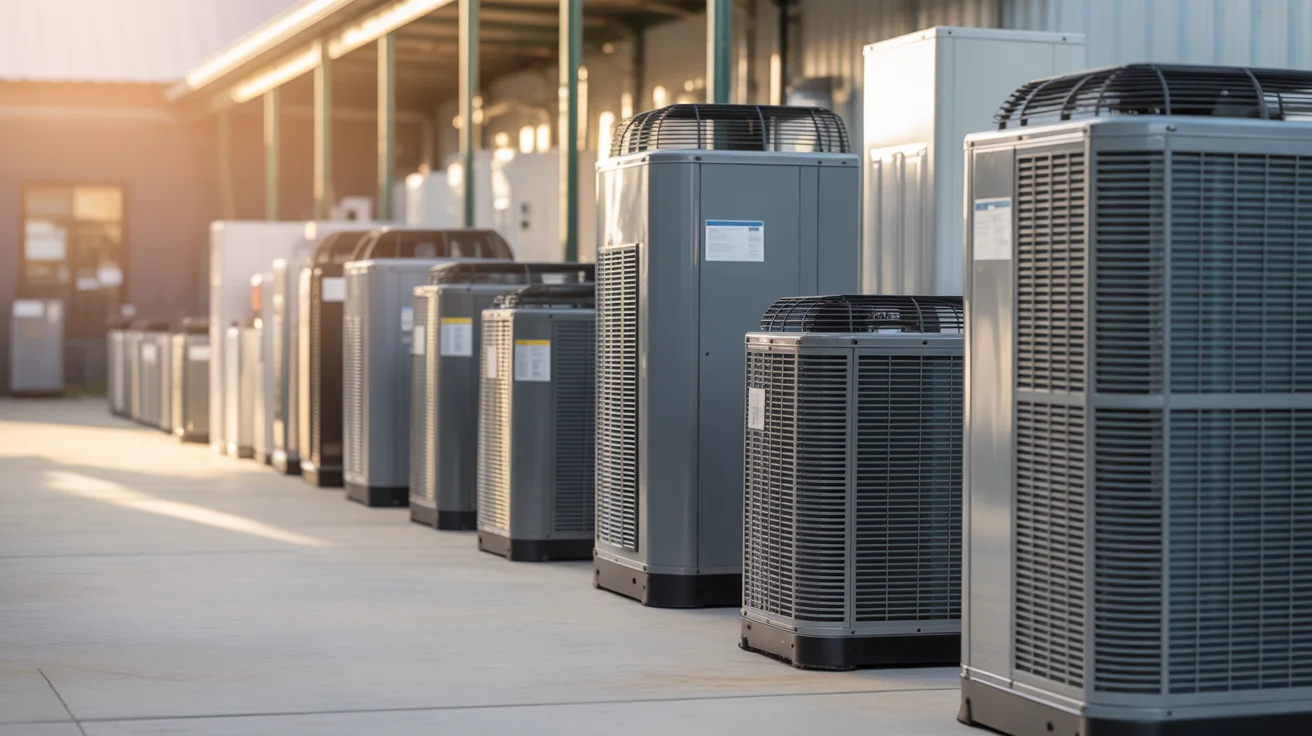
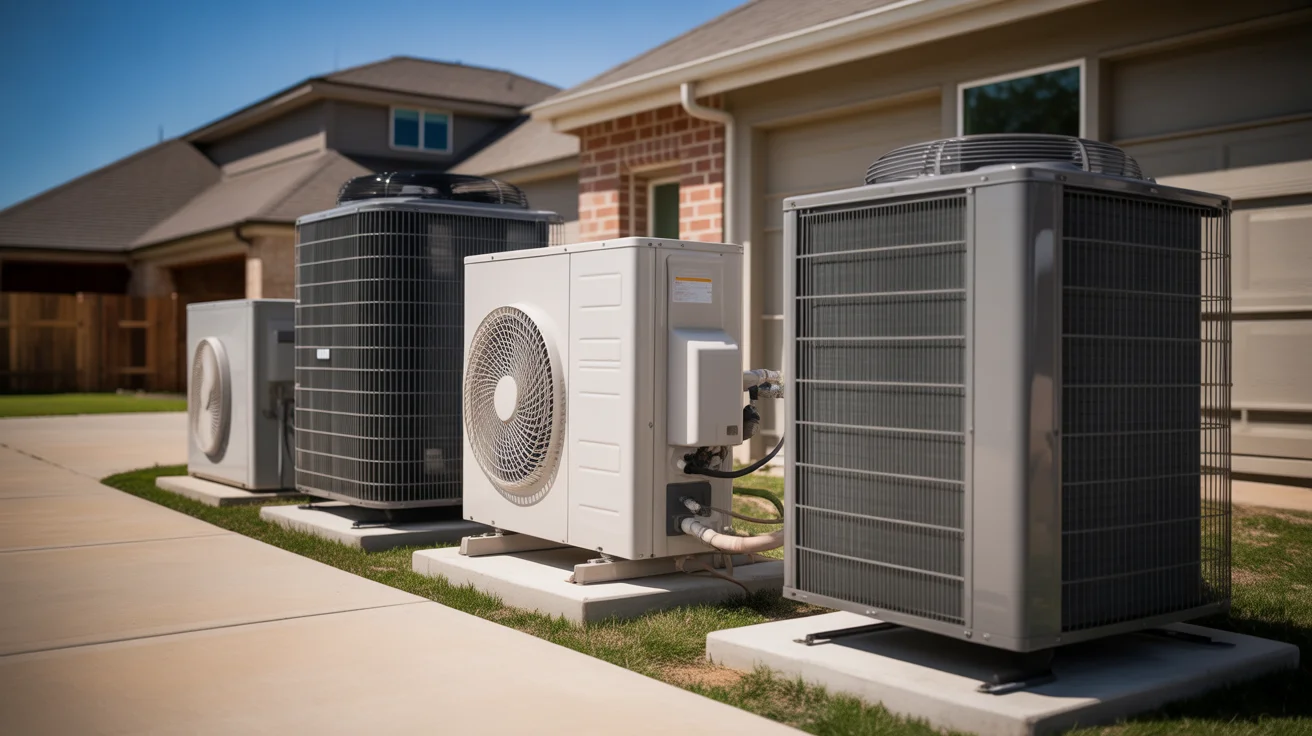
A split system has two main pieces. The outdoor condenser sits beside your house and handles the heat rejection. The indoor unit (evaporator coil + blower) lives in your attic or a utility closet, connected to the outdoor unit by copper refrigerant lines. Ductwork runs from the indoor unit to vents throughout your home. A gas furnace, typically mounted alongside the indoor coil, handles winter heating.
Why it dominates North Texas: Every new subdivision comes with ductwork already in the attic. Gas lines are standard. The system is proven, parts are widely available, and every HVAC company in DFW knows how to work on them.
North Texas pricing (2026):
| Tier | SEER2 Rating | Installed Cost |
|---|---|---|
| Entry | 14.3 SEER2 | $6,500 - $8,000 |
| Mid-range | 16 - 18 SEER2 | $8,000 - $10,500 |
| Premium | 20+ SEER2 | $10,500 - $12,000 |
Typical lifespan in North Texas: 12 to 15 years. National averages say 15 to 20, but our extreme heat cuts that short. Systems run nearly four times the hours of units in cooler states.
One thing I tell every customer: Have your ductwork inspected before installing a new system. I’ve seen brand-new 18 SEER2 units underperform because the existing ducts had gaps, crushed sections, or inadequate return air. A $300 duct inspection can save you thousands in wasted efficiency.
Best for: Most suburban homes with existing ductwork. If you’re replacing an old system and your ducts are in decent shape, this is the straightforward choice. Learn more about AC installation.
Heat Pump Systems (The Efficiency Champion)
Heat pumps outsold gas furnaces by 25% in the first half of 2025. That’s not a fluke. The technology has gotten dramatically better, and federal incentives are pushing the shift.
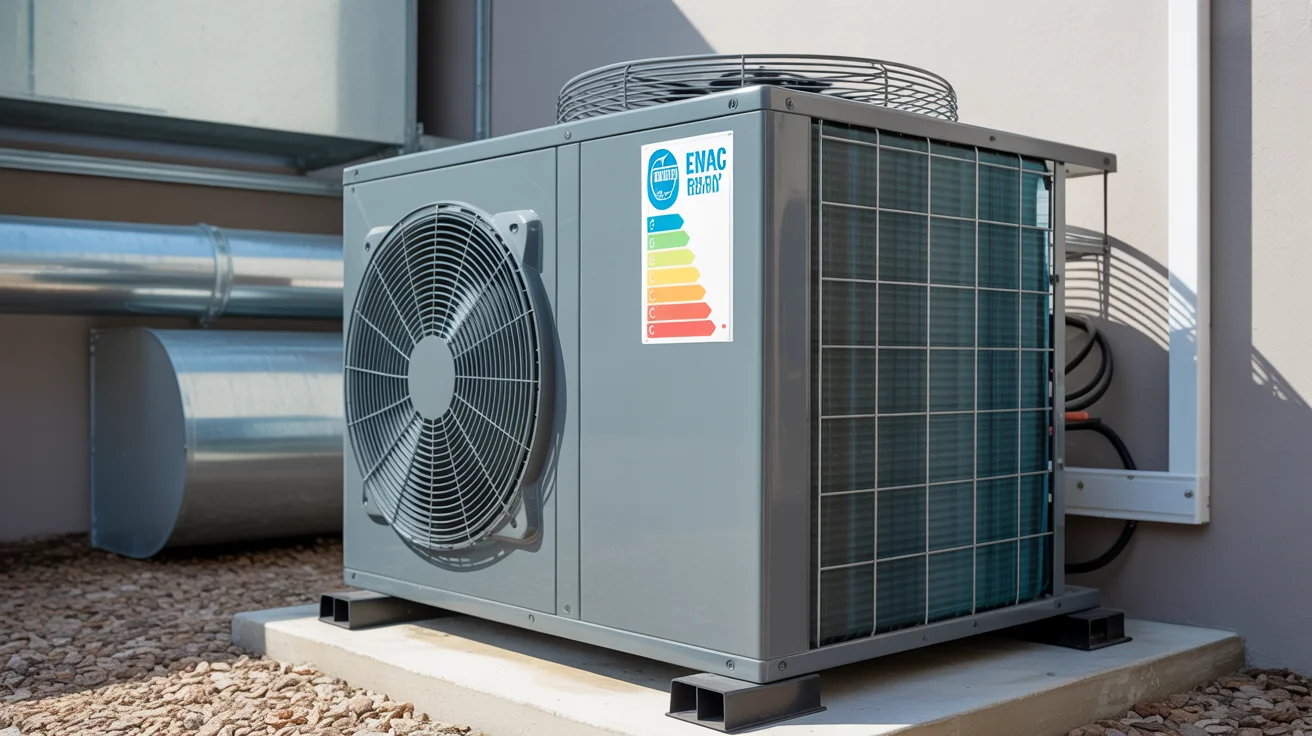
A heat pump works exactly like a central AC in summer. Same cooling, same comfort, same energy use. The difference shows up in winter: a heat pump reverses the refrigerant cycle to pull heat from outdoor air and move it inside. One system handles both heating and cooling.
The catch for North Texas: Heat pumps work efficiently down to about 35°F. Below that, they rely on backup electric resistance strips, and those strips are expensive to run. During a hard freeze, you’re essentially heating your home with a giant space heater.
North Texas pricing (2026):
| Tier | SEER2 Rating | Installed Cost |
|---|---|---|
| Entry | 14.3 SEER2 | $6,500 - $9,000 |
| Mid-range | 16 - 18 SEER2 | $9,000 - $13,000 |
| Premium (variable speed) | 20+ SEER2 | $13,000 - $18,500 |
The tax credit angle: Qualifying heat pumps earn you up to $2,000 in federal tax credits through 2032. That knocks a mid-range system into central AC territory price-wise.
Real customer example: A McKinney family asked me to install a standalone heat pump last January. I showed them their electric bill projections for a week of 25°F nights with resistance strip backup: roughly $45 to $60 per day just for heating. They switched to a dual fuel setup and saved an estimated $400 that first winter alone.
My honest take: Heat pumps make perfect sense in Austin or San Antonio where hard freezes are rare. In North Texas, where we get 10 to 15 days below freezing each winter, I usually steer customers toward a dual fuel system instead. You get the heat pump efficiency plus a gas furnace backup. More on that next.
Explore heat pump installation options.
Dual Fuel Systems (My Top Pick for North Texas)
A dual fuel system pairs a heat pump with a gas furnace. The system automatically switches between the two based on outdoor temperature, typically at the 35 to 40°F threshold.
Here’s why I recommend this for most North Texas homes: the heat pump handles about 350 days of the year. Efficient, quiet, lower energy bills. Then for those 10 to 15 freezing days (or the next Winter Storm Uri), the gas furnace takes over. No expensive electric strip backup. No cold house during a hard freeze.
The savings are real. Dual fuel systems cut annual energy costs by 30% to 50% compared to a traditional AC + furnace setup. Most customers see the system pay for itself within 3 to 5 years through lower utility bills.
North Texas pricing (2026): $8,000 to $16,000 installed, depending on size and efficiency tier. The $2,000 federal heat pump tax credit still applies since the system includes a heat pump. Factor that in, and the price gap between dual fuel and a standard split system shrinks fast.
How the switchover works: A thermostat with dual fuel capability monitors outdoor temperature via a sensor. When the temperature drops below the balance point (usually set around 35 to 40°F), the thermostat signals the system to shut off the heat pump and fire up the gas furnace. When temperatures rise back above the threshold, it switches back automatically. You don’t touch anything.
Who shouldn’t get dual fuel: If your home is all-electric with no gas line, running a gas line adds $1,500 to $3,000 to the project. In that case, a heat pump with a good variable-speed compressor might be the smarter play. Cold-climate heat pumps from Mitsubishi and Daikin now work efficiently down to 5°F, though they cost more upfront.
Best for: Any North Texas home with gas service and existing ductwork. This is the system I’d put in my own home today. Check available rebates and tax credits.
Package Units (The Slab-on-Grade Solution)
Your home has a tiny utility closet that can barely fit the water heater, no attic access, and no basement. Sound familiar? That’s where package units come in.
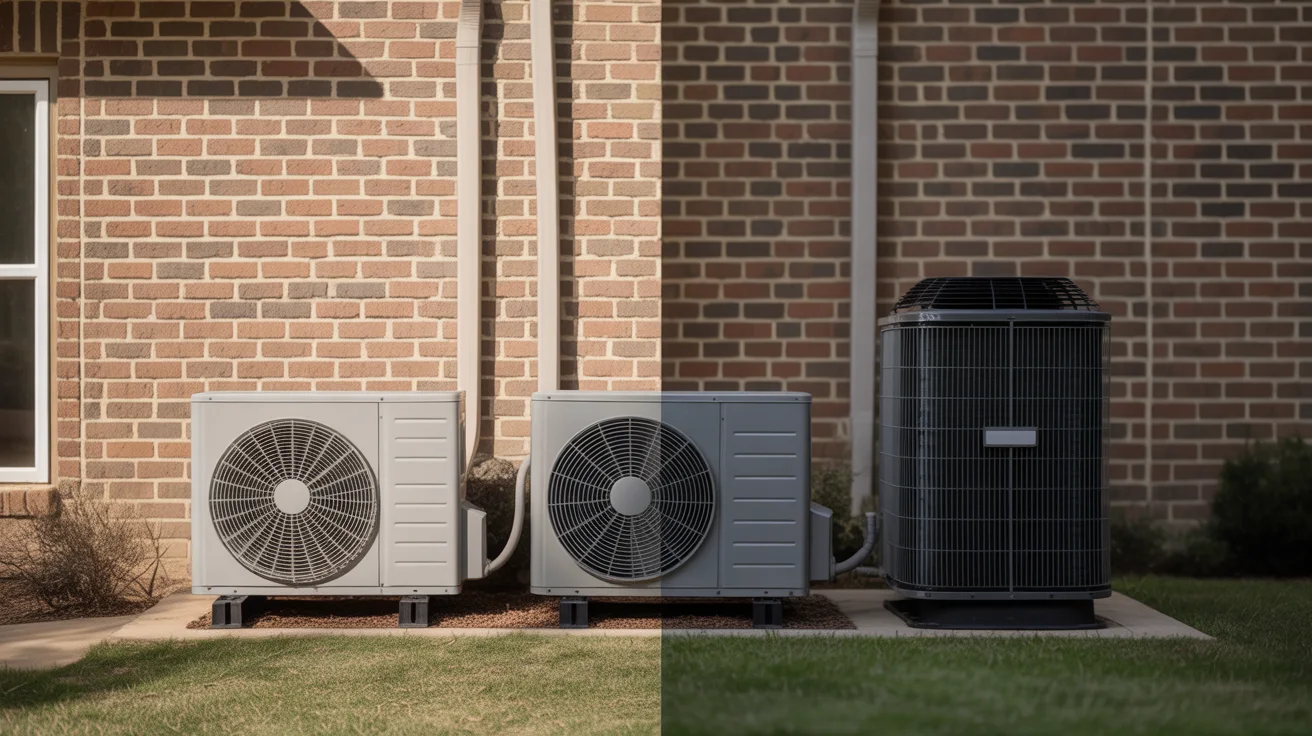
A package unit combines the condenser, evaporator coil, and furnace into one outdoor cabinet. Only the ductwork runs inside your home. You’ll see them beside or behind houses, sitting on a concrete pad.
Where I install them in North Texas: Older ranch-style homes on slab foundations, some newer single-story builds without attic space, and commercial properties where roof-mounted units make sense.
The trade-off nobody mentions: Package units cap out at about 16 SEER2. Compare that to split systems reaching 22+ SEER2. In North Texas, where your system runs 2,400+ hours per year, that efficiency gap adds up. A 14.3 SEER2 package unit vs a 16 SEER2 split system can mean $200 to $400 more per year in electricity.
North Texas pricing (2026): $5,500 to $10,000 installed. Cheaper upfront than a split system because installation is simpler (one location, one set of connections). But the higher electric bills over 10 to 12 years often erase that savings.
Maintenance note: Because the entire system sits outdoors, package units take more abuse from North Texas weather. Hail, dirt daubers, grass clippings, and summer heat all accelerate wear. I recommend quarterly filter changes and twice-yearly professional maintenance to maximize the lifespan.
Best for: Slab-on-grade homes where indoor space is genuinely limited. If you have attic or closet space for an indoor unit, a split system is almost always the better long-term investment.
Ductless Mini-Splits (Perfect for Problem Rooms)
That bonus room over the garage that’s always 10 degrees hotter than the rest of the house? A mini-split fixes that without tearing into your ceiling to run new ductwork.
A mini-split connects a slim wall-mounted indoor unit to a small outdoor compressor. No ducts, no major construction. Each indoor unit controls its own zone independently.
Efficiency is the headline. Mini-splits hit 25+ SEER2 ratings, the highest of any HVAC system type. They only condition the rooms you’re using, so there’s zero energy wasted on empty bedrooms or unused offices.
Where they shine in North Texas:
- Garage conversions and workshops
- Room additions where extending ductwork is impractical
- Sunrooms and enclosed patios
- Older homes without any ductwork
- Home offices that need independent temperature control
Why I don’t recommend them for whole-home cooling (usually): At $2,000 to $7,000 per zone, outfitting a 4-bedroom home gets expensive fast. You’d need 4 to 5 zones at $8,000 to $35,000 total. Compare that to a central system at $6,500 to $12,000. Plus, the wall-mounted units are visible in every room.
The ductwork comparison: Running new ductwork to an addition costs $3,000 to $7,500. A single-zone mini-split runs $2,000 to $7,000. For one or two rooms, a mini-split usually wins on cost and simplicity.
Installation is fast. Most single-zone mini-splits take half a day to install. We drill a 3-inch hole through the wall for the refrigerant line, mount the indoor unit, set the outdoor compressor on a pad, and you’re cooling by lunch. No attic work, no duct modifications, no drywall repair.
Which HVAC System Is Right for Your Home?
Here’s the comparison table I walk through with customers:
| System Type | Installed Cost | Max SEER2 | Best For | Lifespan |
|---|---|---|---|---|
| Central AC Split | $6,500 - $12,000 | 22+ | Most homes with ductwork | 12-15 yrs |
| Heat Pump | $6,500 - $18,500 | 22+ | Mild winters, tax credit seekers | 12-15 yrs |
| Dual Fuel | $8,000 - $16,000 | 20+ | North Texas (my recommendation) | 15-18 yrs |
| Package Unit | $5,500 - $10,000 | 16 | Slab homes, no indoor space | 10-12 yrs |
| Mini-Split | $2,000 - $7,000/zone | 25+ | Additions, problem rooms | 15-20 yrs |
Quick decision guide:
- “I have a typical suburban home with ductwork.” Central AC split or dual fuel. Dual fuel if you want lower energy bills and qualify for the tax credit.
- “I want the lowest energy bills possible.” Dual fuel for whole-home. Mini-split for individual rooms.
- “I’m on a tight budget.” Entry-level central AC split ($6,500 to $8,000) or package unit ($5,500 to $7,000).
- “I’m adding a room or converting my garage.” Mini-split. No contest.
- “I have a slab home with no attic space.” Package unit, unless you can fit an air handler in a closet (then consider a split system).
A note on home age: If your home was built before 1990, your ductwork may be undersized for modern high-efficiency systems. Older duct designs assumed lower airflow requirements. Installing a 20 SEER2 variable-speed system on 30-year-old ductwork can cause static pressure issues, reduced efficiency, and premature wear. I always inspect ducts before recommending a system upgrade.
Not sure which system fits your situation? I do free assessments where I look at your home layout, ductwork condition, and budget before recommending anything. Call (940) 390-5676 or schedule online.
What SEER2 Rating Should You Get in Texas?
If you’ve been shopping for HVAC systems, you’ve probably noticed the efficiency numbers look different than they used to. In 2023, the industry switched from SEER to SEER2. The new testing method uses five times more static pressure, which better reflects how systems actually perform in real homes.
What the numbers mean: A system that was rated 15 SEER under the old standard now shows approximately 14.3 SEER2. The system isn’t less efficient. The test is just harder.
Texas minimum: 14.3 SEER2 for split systems. That’s higher than the 13.4 minimum in northern states, because the DOE recognizes that our systems work harder.
My recommendation for North Texas: 16+ SEER2. Here’s the math. With 2,400+ annual runtime hours, every point of SEER2 matters more here than in Ohio or Minnesota. Going from 14.3 to 16 SEER2 saves roughly $150 to $250 per year. Over a 12-year system life, that’s $1,800 to $3,000 in savings.
The sweet spot is 16 to 18 SEER2 for most budgets. Going above 18 has diminishing returns. The jump from 18 to 20 SEER2 saves maybe $50 to $80 per year, but the equipment costs $2,000 to $4,000 more.
Variable speed vs. single stage: Variable-speed systems (usually 18+ SEER2) run at lower speeds most of the time, which means better humidity control and quieter operation. In North Texas humidity, that’s a real comfort upgrade, not just an efficiency number.
Single stage units are either full blast or off. They cycle on and off throughout the day, which creates temperature swings and doesn’t remove humidity as effectively. Two-stage units have a high and low setting, which helps. Variable speed (also called inverter-driven) units adjust continuously, running at 30% to 100% capacity as needed. They run longer at lower speeds, pulling more moisture from the air and keeping temperatures within 1°F of your thermostat setting.
For a 2,500 sq ft home in Plano, a variable-speed system typically costs $2,500 to $4,000 more than a single-stage unit. The energy savings alone might take 8 to 10 years to recoup. But the comfort difference is immediate, especially during those muggy April and October months when your AC barely runs but humidity creeps to 65% indoors.
FAQ
What is the most common HVAC system in Texas?
Central AC split systems with a gas furnace handle both heating and cooling in most Texas homes. Nearly 80% of DFW homes built after 2000 use this configuration. The outdoor condenser paired with an attic-mounted air handler and furnace is the standard setup in North Texas subdivisions.
How long does an HVAC system last in Texas?
AC units and heat pumps last 12 to 15 years in North Texas, shorter than the 15 to 20 year national average. Gas furnaces typically last 15 to 20 years. The reduced AC lifespan comes from running 2,400+ hours annually in extreme heat, nearly four times the usage in cooler states.
Is a heat pump worth it in Texas?
For cooling, heat pumps perform identically to standard ACs. The value comes from heating efficiency and the $2,000 federal tax credit (through 2032). In North Texas, a dual fuel system (heat pump + gas furnace) is typically a better fit than a heat pump alone because of our occasional hard freezes.
What SEER2 rating should I get in Texas?
The legal minimum in Texas is 14.3 SEER2 for split systems. For North Texas homes, 16+ SEER2 offers the best balance of upfront cost and long-term savings. See the SEER2 section above for the full cost-savings breakdown.
What is the difference between a split system and a package unit?
A split system separates components between indoor (evaporator, furnace) and outdoor (condenser) units. A package unit combines everything in one outdoor cabinet. Split systems reach 22+ SEER2; package units cap at about 16 SEER2. Split systems cost more to install but save money on energy bills over time.