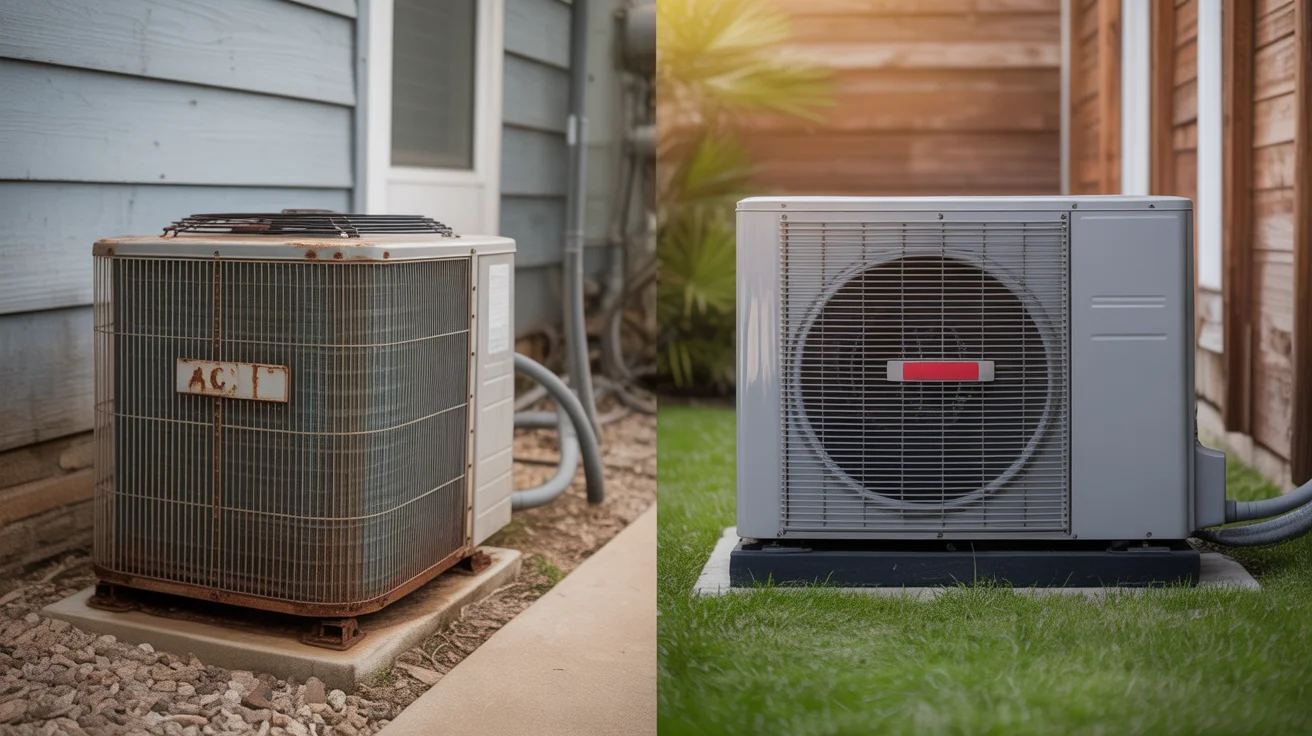
Best AC Brands for 2026: An Honest Ranking from a North Texas Installer
North Texas HVAC pro ranks the 9 best AC brands for 2026. Real installed pricing, honest pros and cons, warranty comparisons, and which brands survive Texas heat.
- 1. Carrier: The All-Around Leader
- 2. Trane: Built Like a Tank
- 3. Lennox: The Efficiency King
- 4. American Standard: Trane’s Secret Twin
- 5. Daikin: The Global Giant You Should Know
- 6. Rheem: Best Warranty in the Mid-Range
- 7. Goodman: Best Budget Pick
- 8. York: The Quiet Contender
+ 4 more sections below...
Best AC Brands for 2026: An Honest Ranking from a North Texas Installer
After 15+ years of installing, repairing, and replacing every major air conditioner brand in North Texas, I have opinions. Strong ones. And they probably won’t match what you read on most “best of” lists written by people who’ve never wired a disconnect box.
Here’s what most articles won’t tell you: about 80% of your AC’s lifespan depends on installation quality, not the brand name on the cabinet. But that other 20% still matters. The best AC brands give you better efficiency, stronger warranties, easier repairs, and parts that are actually available when something breaks in July.
I’ve ranked these 9 brands based on what I see in the field every day. Real installed pricing for the DFW area. Honest pros and cons. Which ones survive North Texas heat, and which ones I see on my repair truck too often.
1. Carrier: The All-Around Leader
If you want one brand recommendation and don’t want to overthink it, Carrier is your answer. They invented modern air conditioning back in 1902, and more than a century later, they’re still setting the standard. Their dealer network in the DFW area is the largest of any brand.
Carrier’s flagship Infinity 26 delivers up to 24 SEER2, which hits the sweet spot between premium efficiency and reasonable cost. Their variable-speed compressors adjust output to match your cooling load instead of cycling on and off all day. That means more even temperatures, lower humidity, and quieter operation. The Infinity smart thermostat also integrates with most home automation systems, which is a nice bonus for tech-savvy homeowners.
Installed cost in North Texas: $5,000 to $15,000 depending on model, size, and efficiency level. A mid-range 3-ton Carrier runs about $7,500 to $9,000 installed with a standard thermostat. Their Performance series (16-17 SEER2) offers solid efficiency at the lower end of that range for budget-conscious buyers who still want Carrier quality.
From an installer’s perspective, Carrier systems are well-engineered and straightforward to work on. Parts are always available locally. When something fails at 2 AM in August, I can usually get the part the same morning.
| Pros | Cons |
|---|---|
| Largest dealer network in DFW | Premium pricing on flagship models |
| Variable-speed technology | Extended labor warranty costs extra |
| Smart home integration (Infinity controls) | Parts slightly pricier than Goodman/Rheem |
| Proven extreme heat performance | Warranty not transferable to new owners |
| Parts always available locally |
Best for: Homeowners who want reliability without compromise and plan to stay in their home 10+ years.
Skip if: You’re on a tight budget or planning to sell within 5 years (warranty doesn’t transfer).
2. Trane: Built Like a Tank
I’ve serviced Trane systems that were installed 18 years ago and still cooling without a major repair. That’s not marketing. That’s what I see when I open the cabinet.
Trane builds their systems for punishment. The XV20i tops out at 21.5 SEER2, which isn’t the highest number on paper, but Trane’s approach has always been durability first, efficiency second. Their Climatuff compressors and spine fin coils are designed for climates like ours where systems run 2,400+ hours per year.
Installed cost in North Texas: $5,000 to $14,000 for most residential models. The XV20i flagship can push higher, but most homeowners land in the $7,000 to $10,000 range.
Here’s something most articles miss: Trane manufactures systems in Tyler, Texas. They understand this climate. They also have the largest technician training network in the state, which means any competent HVAC tech can service a Trane blindfolded. Standardized parts keep repair costs reasonable even after the warranty expires.
| Pros | Cons |
|---|---|
| Exceptional durability and build quality | Lower max SEER2 than Lennox or Carrier |
| Transferable warranty (great for resale) | Premium pricing on flagship models |
| Manufactured in Texas (Tyler, TX) | Variable-speed limited to top tier |
| Standardized parts (cheaper long-term repairs) | |
| Every HVAC tech knows Trane systems |
Trane is the brand I recommend when someone asks “what will last the longest?” If your priority is a system that runs for 15 to 20 years with minimal drama, Trane delivers.
3. Lennox: The Efficiency King
Lennox headquarters is in Richardson, Texas, about 20 minutes from our shop. They design their systems for this climate, and it shows in the numbers.
The SL28XCV achieves 28 SEER2. That’s the highest efficiency rating of any residential air conditioner on the market in 2026. At 56 decibels, it’s also one of the quietest. If you’re replacing a 10 SEER system from 2010, a Lennox SL28XCV could cut your cooling costs by more than half.
Their Quantum Coil technology uses aluminum instead of copper, which resists corrosion better in our humid summers. That’s a real advantage when your outdoor unit sits through North Texas weather year-round.
Installed cost in North Texas: $6,000 to $15,000+ depending on the model line. The SL28XCV flagship is at the top of that range. Their Merit and Elite lines offer more accessible entry points starting around $6,000 installed.
Now for the honest part. Lennox uses proprietary components that can make repairs more expensive and harder to source. Not every HVAC company services Lennox, and you may have fewer options if you need emergency work done. The warranty also doesn’t transfer if you sell your home.
| Pros | Cons |
|---|---|
| Highest SEER2 in the industry (28) | Highest upfront cost |
| Whisper-quiet operation (56 dB) | Proprietary parts (harder to service) |
| Quantum Coil resists corrosion | Warranty not transferable |
| Headquartered in Richardson, TX | Fewer independent dealers/service providers |
| Best long-term energy savings |
Best for: Homeowners who plan to stay 15+ years and want the lowest possible energy bills. The upfront premium pays back through electricity savings over time.
Skip if: You want maximum service flexibility or plan to sell your home soon.
4. American Standard: Trane’s Secret Twin
Same factory. Same engineers. Same Climatuff compressors and spine fin coils. Different name on the box and a lower price tag.
American Standard is manufactured by Trane Technologies and shares nearly identical internals with Trane systems. The AccuComfort Platinum 20 delivers up to 22 SEER2 with variable-speed operation. Where Trane charges a premium for the name, American Standard typically costs 10 to 15% less for equivalent performance.
Installed cost in North Texas: $3,500 to $8,000 for most residential models. That’s a significant savings over comparable Trane systems.
Like Trane, the warranty is transferable to new homeowners (with registration). That’s a genuine selling point if you’re thinking about resale value.
| Pros | Cons |
|---|---|
| Same internals as Trane (proven durability) | Slightly fewer model options than Trane |
| 10-15% lower cost than equivalent Trane | Less brand recognition (neighbors won’t know it) |
| Transferable warranty (resale value) | Smaller dealer network than Trane |
| Variable-speed available in mid-range |
If you want Trane quality and your budget says otherwise, American Standard is the move. I install these regularly for homeowners who do their research.
5. Daikin: The Global Giant You Should Know
Most North Texas homeowners haven’t heard of Daikin. That surprises people when I tell them Daikin is the world’s largest HVAC manufacturer and controls nearly 40% of the U.S. residential market through their ownership of Goodman and Amana. If you’ve seen a Goodman or Amana system, you’ve already experienced Daikin engineering.
The Daikin-branded DX20VC hits 24.5 SEER2 with variable-speed operation, putting it in direct competition with Carrier’s Infinity line. What sets Daikin apart is their warranty: 12 years on parts and compressor when registered, and it’s transferable. That’s the strongest warranty package in the premium segment. No other premium brand gives you 12 years of transferable coverage.
Installed cost in North Texas: $5,000 to $12,000. Daikin manufactures in Houston, so parts availability in Texas is excellent. Their growing dealer network means more options each year, though it’s still smaller than Carrier or Trane’s established networks.
| Pros | Cons |
|---|---|
| World’s largest HVAC manufacturer | Less brand recognition in the US |
| 12-year transferable warranty | Fewer dedicated Daikin dealers |
| 24.5 SEER2 (competitive with Carrier) | Growing but still niche for residential |
| Houston TX manufacturing |
Best for: Homeowners who value warranty length and transferability over brand name recognition. Excellent choice if resale value matters.
Skip if: You want the largest possible local dealer network for service calls.
6. Rheem: Best Warranty in the Mid-Range
Here’s a warranty detail that most best AC unit brands comparison articles miss entirely. Rheem’s “Residential Comfort Guarantee” covers both parts AND labor for 10 years on qualifying models. Every other brand on this list charges extra for labor coverage, or doesn’t offer it at all.
That matters more than you think. A warranty that covers the $400 compressor but not the $300 labor to install it only covers half the bill.
The Prestige RA20 delivers up to 20 SEER2, which sits comfortably in the high-efficiency range. Rheem systems are common in new construction across DFW, and that’s not a bad thing. It means every HVAC company in the area can service them, and parts are everywhere.
Installed cost in North Texas: $4,500 to $10,000. Mid-range pricing for mid-range performance, but the warranty makes the total value stronger than the sticker price suggests.
| Pros | Cons |
|---|---|
| Parts + labor warranty included (10 yr) | Not as efficient as premium brands |
| EcoNet smart controls | Less brand prestige |
| Common in new construction (easy to service) | Mid-range build quality |
| Parts available everywhere | Warranty not transferable |
Compared to Goodman at a similar price, Rheem’s included labor warranty tips the value equation in Rheem’s favor for homeowners who want worry-free coverage.
7. Goodman: Best Budget Pick
Not everyone has $12,000 for a new AC system. And honestly, not everyone needs to spend that much. If budget is your primary concern, Goodman delivers the most cooling per dollar spent. I install more Goodman systems than any other brand in my service area, and the callback rate is lower than you’d expect from a “budget” brand.
Goodman’s top residential model, the GSXC18, reaches 19 SEER2. That’s not going to win efficiency awards, but it’s well above the 14.3 SEER2 minimum required in Texas. The real draw is the price and the warranty. Select Goodman models come with a lifetime compressor warranty, which is remarkable at this price point.
Installed cost in North Texas: $3,500 to $8,300. A standard 3-ton Goodman system runs about $4,500 to $6,000 installed, making it the most affordable name-brand option.
Since Daikin acquired Goodman in 2012, build quality has improved significantly. These aren’t the “builder grade” Goodmans from 15 years ago. The engineering behind the scenes is the same team that designs Daikin’s premium line. Goodman also manufactures in Houston, so parts are never an issue in Texas.
| Pros | Cons |
|---|---|
| Lowest installed cost | Lower efficiency ceiling (19 SEER2 max) |
| Lifetime compressor warranty (select models) | Shorter component lifespan in extreme heat |
| Daikin engineering and backing | Budget reputation (perception issue) |
| Houston TX manufacturing | Single-stage on most models |
| Parts available everywhere in Texas |
Goodman is the right choice when you need a reliable AC system and the budget won’t stretch to Carrier or Trane. There’s no shame in a Goodman. A well-installed Goodman beats a poorly installed Trane every single time.
8. York: The Quiet Contender
York doesn’t get the marketing attention of Carrier or Trane, but technicians respect the brand. I’ve worked on York systems that were well-built and easy to diagnose. Their Affinity YXV delivers 21 SEER2 with variable-capacity operation, which puts it in the same ballpark as Trane’s flagship for significantly less money.
Installed cost in North Texas: $4,000 to $9,000. That’s mid-range pricing for near-premium performance. The variable-capacity models provide the same “always comfortable” feel as Carrier and Trane flagships without the premium price tag.
York is backed by Johnson Controls, a massive industrial company with deep resources. They dominate the commercial HVAC space, and that engineering expertise trickles down to their residential line. The downside is a smaller residential dealer network compared to Carrier or Trane, which can mean longer wait times for service in the DFW area.
| Pros | Cons |
|---|---|
| Variable-capacity at mid-range pricing | Smaller dealer network |
| Quiet operation | Less premium brand perception |
| Johnson Controls backing | Fewer top-tier model options |
| Competitive pricing for the performance |
Best for: Homeowners who want variable-speed comfort without premium brand pricing and have a trusted York dealer nearby.
Skip if: Having the widest possible service network matters to you.
9. Amana: Lifetime Warranty on a Budget
Amana’s lifetime compressor warranty isn’t an upgrade or an add-on. It comes standard on every unit they sell. That’s unmatched in the budget segment, and it’s the single best warranty-to-price ratio on this entire list.
The AVXC20 reaches an impressive 24.5 SEER2, which rivals premium brands at a fraction of the cost. That efficiency number is especially noteworthy considering the price point. You’d have to spend $10,000+ on a Carrier or Daikin to match that SEER2 rating. Like Goodman, Amana is part of the Daikin family, so the engineering quality has improved substantially in recent years.
Installed cost in North Texas: $3,500 to $7,500. For a system with a lifetime compressor warranty and 24.5 SEER2 capability, that’s strong value. The compressor is the most expensive single component in your AC (typically $1,500 to $2,500 to replace), so lifetime coverage on it is a big deal.
| Pros | Cons |
|---|---|
| Lifetime compressor warranty (standard) | Limited model range |
| Up to 24.5 SEER2 | Fewer dealers than Goodman |
| Daikin family engineering | Budget brand perception |
| Strong value proposition | Less marketing support |
If you want the security of a lifetime compressor warranty and higher efficiency than Goodman offers, Amana fills that gap perfectly.
The Truth About Brand vs. Installation Quality
I need to be straight with you. I’ve seen $15,000 Lennox systems fail in 3 years because the installer didn’t do a proper load calculation or charge the refrigerant correctly. And I’ve seen $4,000 Goodman systems run beautifully for 12 years because the installer did everything right.
That 80/20 rule is real. 80% of your AC’s performance and lifespan comes down to who installs it. A brand-new system with the wrong refrigerant charge loses 20% efficiency on day one. Oversized equipment short-cycles, wears out faster, and never properly dehumidifies your home. Undersized equipment runs nonstop and can’t keep up when we hit 107 degrees in July.
Here’s what to look for in your installer:
- Manual J load calculation (not “we’ll put the same size as what you had”)
- EPA certification and state licensing
- Written warranty on labor, not just the manufacturer’s parts warranty
- Photos of their work (clean linesets, proper drainage, level pad)
- Willingness to explain their sizing and brand recommendation for your specific home
The best brand in the world won’t save you from a bad install. When you’re ready to talk about which brand fits your home and budget, call us at (940) 390-5676 for a proper assessment.
The Bottom Line
Here are my quick picks by situation:
- Best overall: Carrier (reliability + dealer network + technology)
- Best durability: Trane (built for punishment, transferable warranty)
- Best efficiency: Lennox (28 SEER2, lowest energy bills long-term)
- Best value: American Standard (Trane internals, lower price)
- Best budget: Goodman ($3,500+ installed, Daikin engineering)
- Best warranty: Amana (lifetime compressor, standard)
One more thing to consider: the HVAC industry is transitioning from R-410A refrigerant to R-454B. If you’re buying in 2026, ask your installer which refrigerant the system uses. R-454B is the future, and systems using it will be easier and cheaper to service long-term.
Don’t forget to check for federal tax credits up to $2,000 on qualifying high-efficiency systems. That can offset a significant chunk of the price difference between budget and premium brands.
Ready to get brand-specific pricing for your home? Call us at (940) 390-5676. I’ll give you honest numbers on the brands that make sense for your situation, your budget, and your home’s cooling needs.
Frequently Asked Questions
What SEER2 rating should I get in Texas?
At minimum, Texas requires 14.3 SEER2. But for North Texas homes where your AC runs 2,400+ hours per year, I recommend 16 SEER2 or higher. The energy savings pay back the upfront difference within 3 to 5 years. Above 20 SEER2 makes sense if you plan to stay in the home 10+ years.
Is Carrier better than Trane?
They’re different tools for different priorities. Carrier leads in smart home integration and variable-speed technology. Trane wins on raw durability and has a transferable warranty that adds resale value. Both are excellent. Your choice should depend on whether you prioritize technology features (Carrier) or long-term durability (Trane). See our AC repair cost guide for what repairs look like on each brand.
What is the most reliable AC brand?
Based on my service records, Trane and Carrier have the fewest callback rates in the first 5 years. American Standard (Trane’s sister brand) is equally reliable. Lennox is reliable too, but repairs cost more when they happen due to proprietary parts.
How long do AC units last in Texas?
The national average is 15 to 20 years, but in North Texas our systems work harder. Expect 12 to 18 years with proper maintenance. Premium brands like Trane and Carrier tend toward the higher end. Budget brands like Goodman average 10 to 15 years. Annual maintenance makes a bigger difference than brand choice.
Are expensive AC brands worth the extra money?
Sometimes. A Lennox SL28XCV at 28 SEER2 can save $600+ per year in electricity compared to a base-model Goodman at 15 SEER2. Over 15 years, that’s $9,000 in savings against maybe a $5,000 price difference. But if you’re selling in 5 years, the math doesn’t work. Buy based on how long you’ll own the home.