AC Capacitor Failure: Signs, Costs, and Why Texas Heat Kills Them Fast
Learn to spot bad AC capacitor symptoms, understand replacement costs ($180-$400), and why North Texas heat destroys capacitors in 2-3 years instead of 10. Expert guide from a local HVAC tech.
- What an AC Capacitor Actually Does
- AC Start Capacitor vs Run Capacitor: What’s the Difference?
- 7 Bad AC Capacitor Symptoms You Can Spot Yourself
- Why Texas Heat Kills AC Capacitors Years Early
- AC Capacitor Replacement Cost in North Texas (2026)
- How to Prevent Capacitor Failure (Or At Least Delay It)
- When a Bad Capacitor Means a Bigger Problem
- FAQ
- What an AC Capacitor Actually Does
- AC Start Capacitor vs Run Capacitor: What’s the Difference?
- 7 Bad AC Capacitor Symptoms You Can Spot Yourself
- Why Texas Heat Kills AC Capacitors Years Early
- AC Capacitor Replacement Cost in North Texas (2026)
- How to Prevent Capacitor Failure (Or At Least Delay It)
- When a Bad Capacitor Means a Bigger Problem
- FAQ
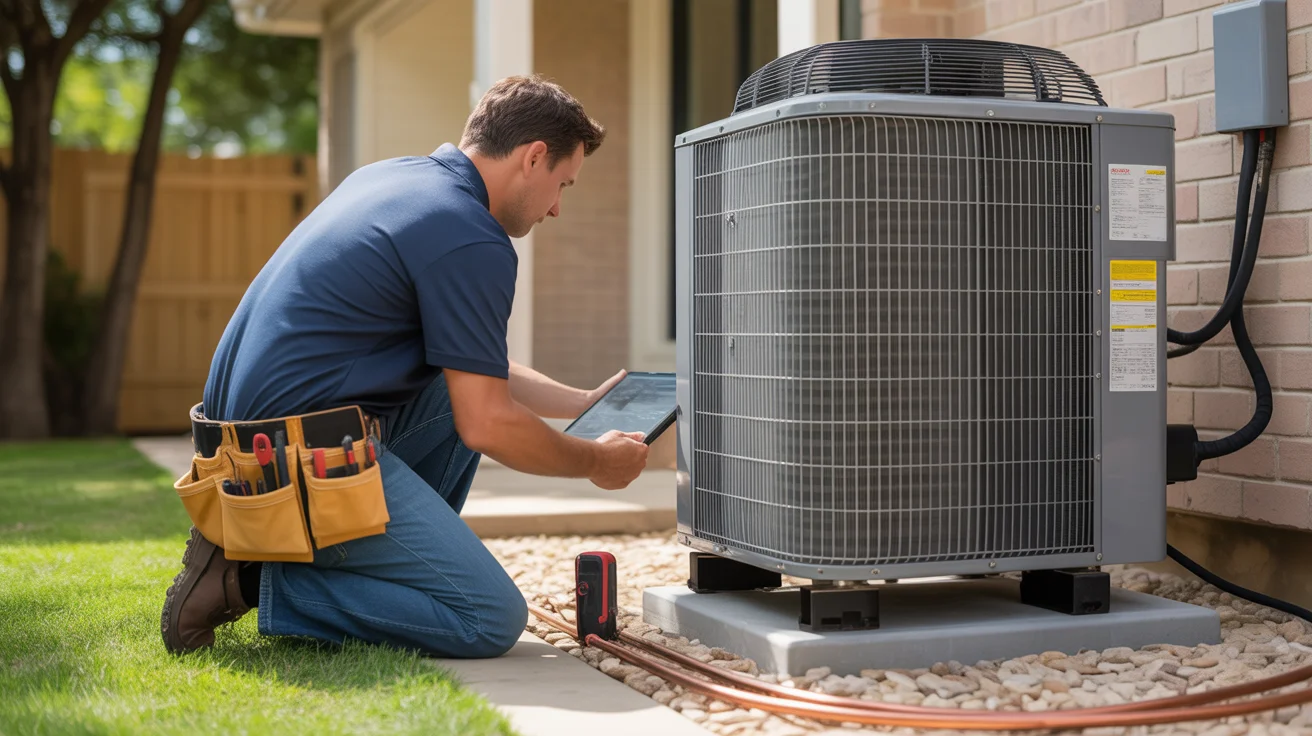
Your AC just stopped blowing cold air. The outdoor unit hums but the fan won’t spin. You nudge it with a stick and it kicks on (please don’t do this, by the way). That right there is the single most common AC capacitor failure I see in North Texas, and I see it dozens of times every summer.
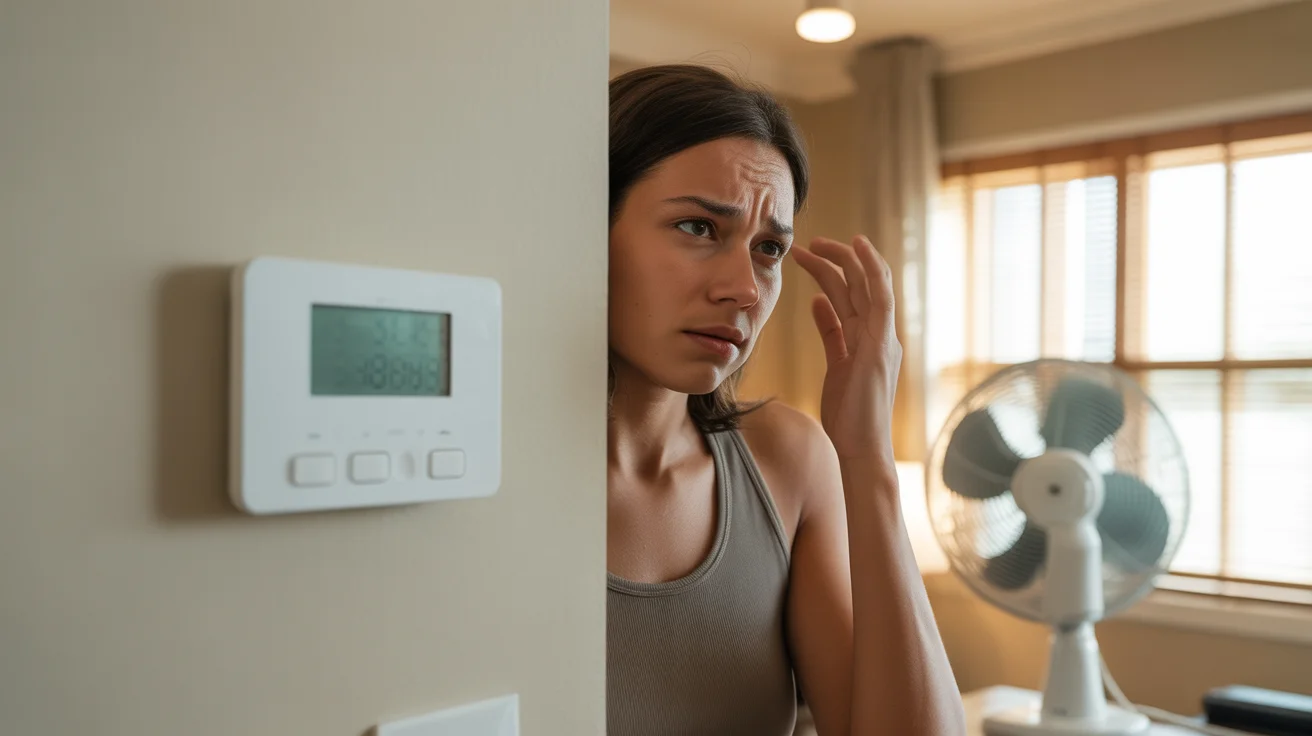
Capacitors are the number one AC repair I handle between May and September. They’re cheap parts, fast to replace, and absolutely critical to your system running. But most homeowners have never heard of them until one fails on the hottest day of the year. This guide covers how to tell if your capacitor is bad, what replacement costs in the DFW area, and why our Texas heat burns through these parts years ahead of schedule.
What an AC Capacitor Actually Does
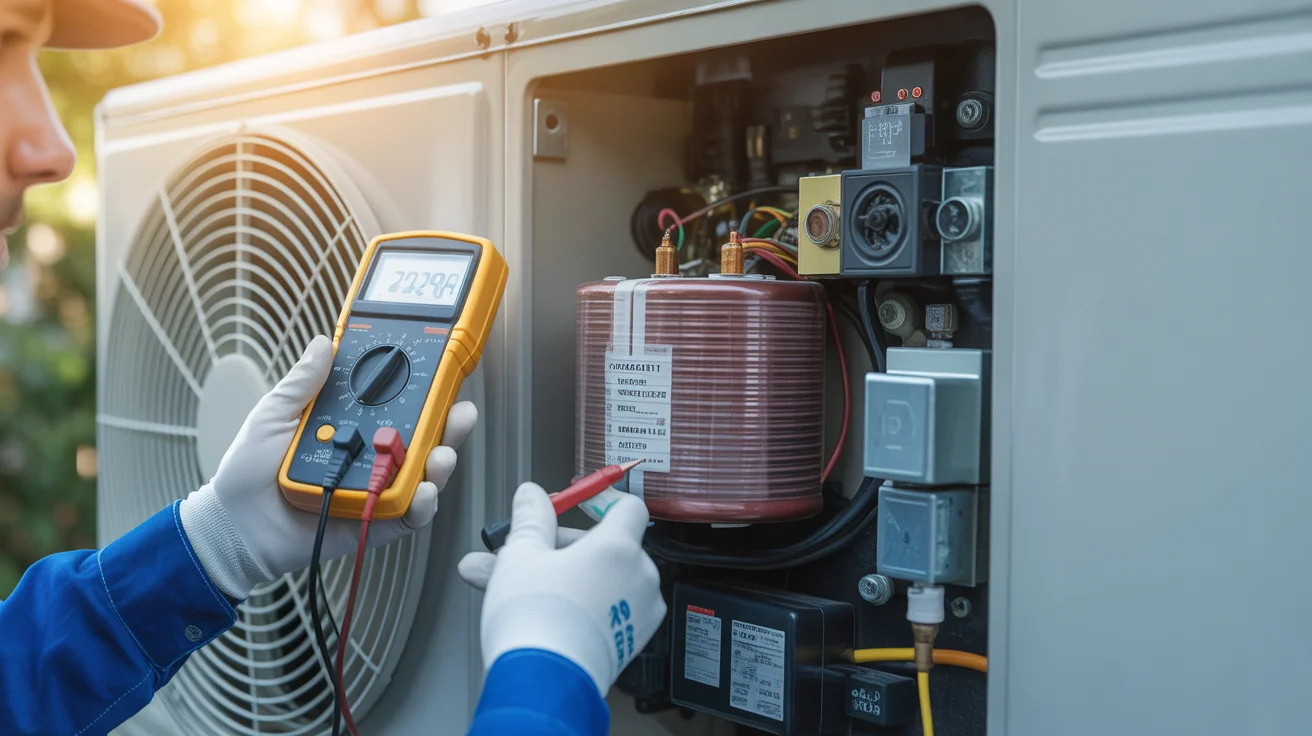
Think of your HVAC capacitor as a small battery that delivers a jolt of electricity. Your AC has electric motors in the compressor and the condenser fan. Those motors need a surge of energy to start and a steady flow to keep running.
That’s where capacitors come in. They store electrical energy and release it in controlled bursts. Without a working capacitor, your compressor can’t start, your fan can’t spin, and your system sits outside humming uselessly while your house hits 95°F.
Most residential AC units have two types of capacitors (sometimes combined into one dual capacitor):
- Compressor capacitor: Powers the compressor motor that circulates refrigerant
- Fan motor capacitor: Powers the condenser fan that blows air over the outdoor coils
On most modern units, both functions live inside a single oval-shaped dual run capacitor. When that one part fails, everything stops.
AC Start Capacitor vs Run Capacitor: What’s the Difference?
This is a question I get at least once a week, so let me break it down simply.
An AC start capacitor delivers a large burst of energy for a fraction of a second to get the motor spinning. It kicks in, does its job, and disconnects. Start capacitors have high capacitance ratings (typically 430 to 516 microfarads) and come in a black plastic casing.
An AC run capacitor stays in the circuit the entire time the motor operates. It provides continuous energy to keep the motor running efficiently. Run capacitors have lower ratings (5 to 80 microfarads) and come in a metallic or silver casing.
Here’s why this matters to you: most residential AC systems in North Texas use a run capacitor (or a dual run capacitor that handles both the compressor and fan motor). Start capacitors are less common in standard residential setups. If a technician tells you that you need a start capacitor replaced on a system that doesn’t have one, ask questions.
| Feature | Start Capacitor | Run Capacitor |
|---|---|---|
| Duration | Fraction of a second | Continuous while running |
| Capacitance | 430-516 MFD | 5-80 MFD |
| Appearance | Black plastic case | Silver/metallic case |
| Purpose | Gets motor spinning | Keeps motor running efficiently |
| Common in residential AC? | Less common | Standard on most units |
7 Bad AC Capacitor Symptoms You Can Spot Yourself
Catching bad AC capacitor symptoms early saves you money. A failing capacitor that goes ignored will burn out your compressor motor or fan motor, turning a $200 repair into a $1,500+ problem. Here’s what to watch for.
1. AC Hums But Won’t Start
The most telltale sign. You hear the outdoor unit humming (the electrical current is reaching the motor) but nothing spins. The capacitor can’t deliver enough charge to overcome the motor’s inertia. If you’ve ever nudged the fan blade and watched it start spinning, that’s a dead capacitor, not a motor problem.
2. Slow or Struggling Startup
The unit eventually kicks on, but there’s a noticeable delay or the fan blade rotates sluggishly before reaching full speed. A healthy capacitor fires the motor instantly. Hesitation means the capacitor is losing its ability to hold a charge.
3. AC Shuts Off Randomly
Your system starts fine but cycles off after a few minutes. A weak run capacitor can’t sustain the energy the motor needs, causing overheating and thermal shutdown. The system cools down, restarts, and the cycle repeats. This is hard on the compressor.
4. Warm Air from the Vents
Everything sounds normal inside, but the air isn’t cold. If the compressor capacitor fails while the fan motor capacitor still works, the fan blows but no refrigerant circulates. The result: your system runs, your electric bill climbs, and your house stays hot.
5. Higher Than Normal Electric Bills
A dying capacitor forces the motor to draw more amperage to compensate. I’ve seen monthly electric bills jump $40 to $80 in North Texas summers from a single failing capacitor. If your bill spikes without a change in usage, this is worth checking.
6. Buzzing or Clicking from the Outdoor Unit
A healthy AC startup is a quick hum followed by the fan spinning up smoothly. Buzzing, clicking, or chattering sounds from the outdoor unit suggest the capacitor is trying and failing to energize the motor. Repeated failed start attempts damage the motor windings.
7. Visible Damage on the Capacitor
This one requires opening the access panel (kill the power first, or better yet, leave it to a technician). A failed capacitor often shows physical signs: the top is bulged or swollen instead of flat, the casing is cracked, or there’s oily residue leaking from the bottom. Any of these means the capacitor is done.
Why Texas Heat Kills AC Capacitors Years Early
Here’s the part that frustrates North Texas homeowners the most. AC capacitor failure in our area happens at roughly triple the national rate. A capacitor rated for a 10-year lifespan nationally lasts 2 to 4 years in the DFW metroplex. That’s not a defect and it’s not bad luck. It’s physics.
The Runtime Problem
Your AC in Frisco, Plano, or McKinney runs approximately 2,400 hours per year. A system in Minneapolis runs about 600 hours. That’s four times the operational stress on every electrical component, including capacitors. More hours running means more charge-discharge cycles, and every cycle degrades the internal chemicals slightly.
The Temperature Problem
Capacitors contain electrolytic chemicals sealed inside a metal casing. These chemicals are sensitive to heat. Most capacitors are rated to operate up to 158°F internally. On a 107°F North Texas afternoon, with the unit running at full load in direct sunlight, internal capacitor temperatures regularly exceed that limit.
When the electrolyte overheats, it evaporates faster. The capacitor gradually loses its ability to store and release the correct charge. Performance drops until one day it can’t start the motor at all.
The Thermal Cycling Problem
North Texas temperatures can swing 30 to 40 degrees in a single day. Those constant expansions and contractions stress the capacitor’s physical structure. Solder joints weaken. Internal connections loosen. The casing develops micro-fractures that allow the electrolyte to leak.
I replace more capacitors in Allen and The Colony between June and August than some northern technicians replace in five years. It’s just the reality of running HVAC equipment in this climate.
AC Capacitor Replacement Cost in North Texas (2026)
AC capacitor replacement cost in the DFW area ranges from $180 to $400 for a professional service call including parts and labor. Here’s how that breaks down.
| Component | Cost Range |
|---|---|
| Capacitor part (retail) | $10-$45 |
| Diagnostic fee | $75-$100 |
| Labor (15-30 minutes) | $75-$150 |
| Total professional replacement | $180-$400 |
At Jupitair, I charge a flat diagnostic fee of $89 that gets waived if you proceed with the repair. A standard AC capacitor replacement runs $180 to $300 depending on the unit and capacitor type. Dual run capacitors cost slightly more than single capacitors.
Factors That Affect Your Price
- Capacitor type: Dual run capacitors cost more than singles ($25-$45 vs $10-$20 for the part)
- Voltage and MFD rating: Higher-rated capacitors for larger systems cost more
- Access difficulty: Rooftop units or cramped mechanical closets add labor time
- Emergency/after-hours: Expect a $150-$250 surcharge for weekend or evening calls
- Brand-specific parts: Some manufacturers use proprietary capacitors that cost 2x generic
Why You Shouldn’t DIY This
The part costs $15. I get why the $200+ service call feels steep. But capacitors store electrical charge even when the system is off. A charged capacitor can deliver a shock strong enough to stop your heart. Professional HVAC technicians discharge capacitors with insulated tools before touching anything.
Beyond safety, a wrong capacitor rating (wrong MFD or voltage) will damage your compressor motor. The replacement capacitor must match the original specifications exactly. I’ve fixed systems where a homeowner installed a “close enough” capacitor from a hardware store and burned out a $1,200 compressor motor within a month. That $200 service call looks different next to a $1,500 compressor replacement.
How to Prevent Capacitor Failure (Or At Least Delay It)
You can’t stop Texas heat, but you can reduce the stress on your capacitors and catch failures before they cascade into bigger problems.
Annual maintenance matters. During a tune-up, I test capacitor strength with a multimeter. A healthy 45 MFD capacitor should read within 6% of its rating. If it reads 40 MFD, it still works today but it’s declining fast. Replacing a weak capacitor during a spring tune-up costs less (no emergency fee) and prevents a mid-July failure when every HVAC company in Collin County has a 3-day wait list.
Keep the outdoor unit clear. Bushes, debris, and fence panels that block airflow force the system to run harder and hotter. Give the condenser at least 2 feet of clearance on all sides.
Shade the outdoor unit (carefully). A shade structure that doesn’t restrict airflow can reduce internal temperatures by 5 to 10 degrees. That adds meaningful life to capacitors and other components. Don’t plant bushes right against the unit for shade, because that restricts the airflow you’re trying to protect.
Replace with quality parts. Not all capacitors are equal. I use American-made capacitors rated for higher temperatures. They cost a few dollars more than the cheapest option but last significantly longer in our climate. Ask your technician what brand they’re installing.
When a Bad Capacitor Means a Bigger Problem
Sometimes the capacitor isn’t the root cause. It’s the symptom. If you’re replacing capacitors every year or two, something else is stressing the system.
Oversized or undersized system. A system that short-cycles (turns on and off frequently) hammers the start capacitor with excessive startups. An undersized system that runs constantly wears out the run capacitor faster.
Failing compressor motor. A motor with bad bearings draws excessive amps, which overloads and kills the capacitor. Replace the capacitor without fixing the motor and you’ll be back in 60 days.
Electrical issues. Voltage fluctuations, loose wiring connections, or a bad contactor can all cause premature capacitor failure. A thorough technician checks these during every capacitor replacement.
If your technician swaps a capacitor and doesn’t check the amp draw on your motors, the contactor condition, and the incoming voltage, they’re doing half the job. A capacitor replacement should include a basic system health check. That’s what separates a $200 repair that lasts from a $200 repair you’ll repeat in three months.
For a complete breakdown of all AC repair costs, see my AC repair cost guide for North Texas. If your tech suspects compressor damage, my compressor repair guide covers repair vs. Replacement decisions.
FAQ
How long does an AC capacitor last in Texas?
In North Texas, expect 2 to 4 years from a standard capacitor. Nationally, capacitors are rated for 10 to 20 years, but our 2,400+ hours of annual runtime and extreme heat cut that lifespan dramatically. Higher-quality capacitors rated for improve temperatures can stretch to 5 years locally.
Can I run my AC with a bad capacitor?
Technically the system might limp along with a weak capacitor, but you should not. A failing capacitor forces the compressor motor to draw excess current, which overheats the motor windings. Running the system this way can destroy a $1,200 to $2,500 compressor motor within weeks. Turn the system off and call for service.
How do I know if it’s the capacitor or the compressor?
If the outdoor unit hums but nothing spins, it’s usually the capacitor. If the fan spins but you hear grinding, clicking from the compressor, or the compressor is hot to the touch and tripping the breaker, the compressor itself may be failing. A technician can confirm in minutes with an amp clamp and multimeter. Capacitor replacement runs $180 to $400 versus $1,500 to $4,800 for a compressor repair, so it’s worth getting the right diagnosis.
Should I buy the capacitor myself and have a tech install it?
I don’t recommend it. The capacitor must match your system’s exact MFD and voltage rating. Wrong specs damage the motor. Also, most technicians (myself included) won’t warranty work done with customer-supplied parts. The part itself is $10 to $45, so the savings aren’t worth the risk or the lost warranty.
Why is my new AC already needing a capacitor replacement?
Even new systems use standard capacitors that are vulnerable to North Texas heat. A 2-year-old unit needing its first capacitor is normal here. It doesn’t mean the system is defective. If your unit is under manufacturer warranty, the part may be covered (though you’ll still pay a service call fee). Check your warranty paperwork or call the installer.
Your AC making a humming sound? Fan won’t spin? Don’t wait for the compressor to burn out. Call Jupitair HVAC at (940) 390-5676 for same-day capacitor diagnosis and replacement across Frisco, Plano, McKinney, Allen, Prosper, The Colony, Little Elm, and Addison. $89 diagnostic fee waived with repair.