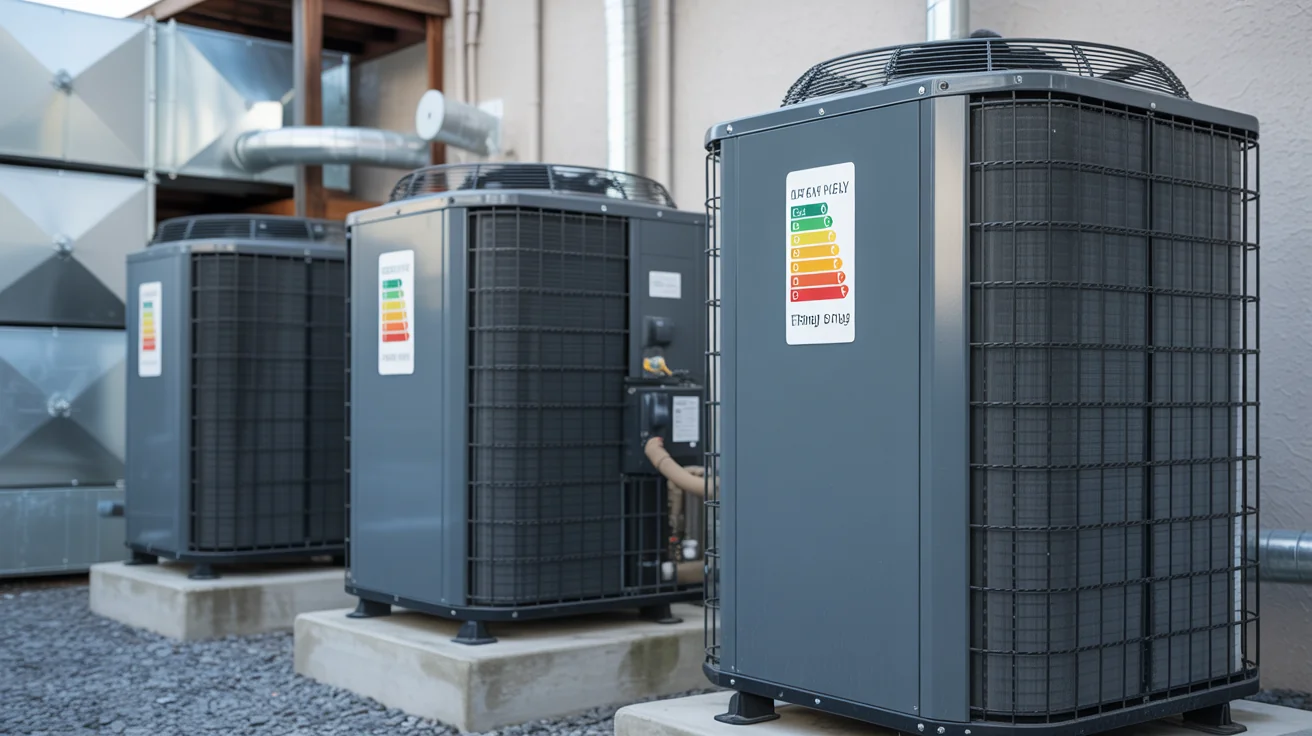
Troubleshooting HVAC Electrical Problems Safety Guide: Professional Diagnostics & Emergency Procedures
Complete HVAC electrical troubleshooting safety guide for North Texas homeowners. Diagnostic procedures, safety protocols, and when to call professionals.
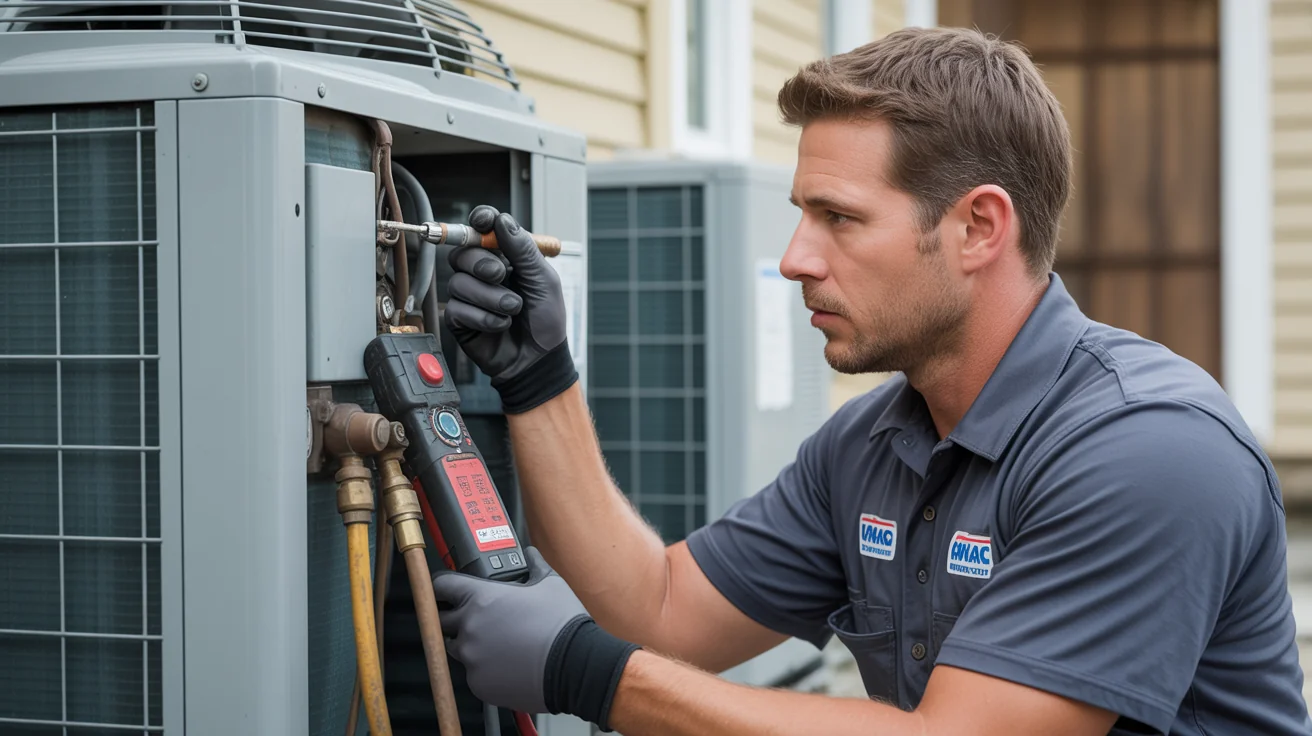
Before you touch anything on your HVAC system, kill the power at the breaker. Then grab a non-contact voltage tester and confirm it’s actually dead. Wait five minutes after that for capacitors to bleed off their charge. I know that sounds like a lot of steps before you’ve even started looking at the problem, but HVAC electrical issues cause over 13,000 house fires a year. The stuff you can safely check yourself? Breaker position, thermostat display, visible wire damage, basic continuity with the power off. Anything beyond that - especially if breakers keep tripping, you smell burning, see sparks, or feel even a tingle from the equipment - call us at (940) 390-5676. A 240V circuit doesn’t give you a warning shock. It just kills you.
Essential HVAC Electrical Safety for North Texas Homes
Most homeowners I talk to have no idea how dangerous HVAC electrical work actually is. We’re talking 13,000+ house fires a year, $4,500 or more in damage when somebody guesses wrong on a diagnosis. And the frustrating part? Most of these electrical problems can be identified safely if you know what you’re doing and you know where to stop.
That’s what this guide is for. I want you to be able to figure out what’s going on with your system without putting yourself in a bad spot. And I want you to recognize the moment it’s time to put down the tools and pick up the phone.
Why HVAC Electrical Safety Is Critical in North Texas
I got a call last month from a homeowner in Plano. His contactor was buzzing, so he grabbed a screwdriver and started poking at it. With the power still on. The arc flash burned his hand and arm, caught the insulation in his outdoor unit on fire, and by the time the fire department got there he was looking at $45,000 in damage. He’s lucky he walked away from it.
The Electrical Reality That Scares Me
Fifteen years doing this work in North Texas and I’ve seen stuff that still bothers me. Our climate is brutal on electrical components in ways that people up north just don’t deal with. Your AC is pulling 30 to 45 amps continuously for months when it’s 105 outside. That kind of sustained load stresses every connection, every wire, every terminal in the system.
Heat breaks down wire insulation faster than most people realize. I’ve opened up outdoor units where the insulation on the wiring just crumbled in my hands. That’s a dead short waiting to happen. And the constant cycling between hot days and cool nights works connections loose over time. A loose connection creates resistance. Resistance creates heat. Heat creates fire. It’s that simple.
Then there’s storm season. Lightning in North Texas is no joke. I’ve seen strikes that turned control boards into puddles and sent voltage spikes through the whole house, frying TVs, computers, everything on the circuit. Our thunderstorms roll through and take out expensive components faster than you’d think possible.
The DIY Danger Zone
What really worries me is the attitude that electrical work is easy because “it’s just wires.” I’ve walked into houses where the homeowner’s DIY wiring job was genuinely terrifying. One guy in McKinney kept bypassing safety controls because they “kept tripping.” Those controls existed to prevent carbon monoxide from filling his house. He had no idea.
CRITICAL SAFETY WARNING: NEVER work on live electrical circuits. I really can’t say this strongly enough. The electricity running through your HVAC system will kill you. It won’t just zap you like a static shock from your carpet. Turn off the breaker, verify it’s off with a tester, and if something feels wrong, just call somebody. No repair bill is worth your life.
HVAC Electrical System Overview
Understanding HVAC Electrical Components
High-Voltage Components (240V): Your outdoor unit has a main disconnect - that’s the big switch on the wall near the condenser. The compressor draws between 15 and 30 amps when it’s running. The condenser fan motor pulls another 3 to 8 amps. If you’ve got electric heat strips, those are eating 15 to 25 amps per element. Heat pump systems with backup electric heat draw even more.
Low-Voltage Components (24V): Your thermostat runs on thin 18 to 24 gauge wire at 24 volts. The control circuit is a whole web of safety switches, relays, and contactors. Gas furnaces have their own ignition and flame-sensing circuits. Various sensors throughout the system monitor temperature, pressure, and safety conditions.
Control Components: Contactors are basically big switches - 24 volts on the coil side controls high voltage on the contact side. Relays do similar switching at lower loads. Capacitors store energy to help motors start and run smoothly. And the transformer steps your 240V down to the 24V that all the controls need.
Common Electrical Problems
High-Voltage Issues: Tripped breakers are the one everybody knows about. Could be an overload, a short circuit, or a ground fault. I see them constantly during summer when systems are working their hardest. Burned contactors are another big one - the contacts get pitted from arcing over time, and eventually they either stick closed or won’t close at all. Failed capacitors are probably the single most common repair I do. They go bad and the motor can’t start properly, which stresses the compressor. Old wiring deteriorates from heat and corrosion, and that’s when things get dangerous.
Low-Voltage Problems: A dead thermostat is usually the simplest issue - dead batteries, a tripped float switch, or a blown fuse on the control board. Transformer failures kill all 24V power to the system, so nothing works at all. Shorted control wiring creates weird intermittent problems that are honestly some of the hardest things to track down. Bad sensors can make the system act unpredictably or shut down entirely.
Safe Electrical Troubleshooting Procedures
Related: Troubleshooting
Essential Safety Equipment
Required Safety Tools: A non-contact voltage tester is the single most important tool you can own. Fifteen bucks at Home Depot and it tells you whether something is live without you having to touch it. A digital multimeter lets you measure voltage, current, and resistance safely when the power is off. Insulated screwdrivers and pliers are worth the extra cost. A good flashlight or headlamp is critical because you’re usually working in tight, dark spaces. And wear safety glasses. I’ve seen arc flashes send sparks flying.
Personal Safety Equipment: Wear rubber-soled shoes. Sounds basic, but they insulate you from ground. Keep your hands dry - moisture makes you a much better conductor, and that’s not what you want to be. Take off your ring, your watch, any metal jewelry. I’ve seen a wedding ring cause a nasty burn on a guy who touched the wrong terminal. And don’t do this alone. Have somebody nearby who can call 911 if something goes wrong.
Step-by-Step Safety Protocol
Pre-Troubleshooting Safety Checks:
- Turn off power: Flip the breaker off at your electrical panel
- Verify power off: Use your non-contact voltage tester at the disconnect
- Test your tester: Make sure the tester actually works on a circuit you know is live
- Lock out power: Put tape over the breaker so nobody flips it back on while you’re working
- Wait 5 minutes: Capacitors hold a charge. Give them time to discharge
Safe Diagnostic Approach:
- Eyes first, hands second: Look for anything obviously wrong before you touch a single thing
- Use your nose: Burned insulation has this sharp, acrid smell you won’t forget once you’ve smelled it
- Listen: Arcing sounds like crackling or popping. Buzzing usually means a contactor is struggling
- Check connections visually: Loose, corroded, or blackened connections are red flags
- Take photos: Before you move anything, document what you see
What Homeowners Can Safely Check
Safe Visual Inspections: Check whether your HVAC breakers have tripped. Sometimes they sit in the middle position and it’s not obvious. Go look at the disconnect switch on the wall by your outdoor unit and make sure it’s in the ON position. If your thermostat screen is blank or showing an error code, that’s useful information. Scan any visible wiring for damage - charred spots, melted insulation, wires that have come loose. Look at components for obvious burn marks or damage.
Simple Electrical Tests (Power OFF Only): With the power completely off, you can use a multimeter to check fuses and do basic continuity tests. You can check heating elements and motor windings for proper resistance readings. You can trace wiring to figure out which wire goes where. And you can verify that connections are actually tight and clean. But I want to stress this - power must be OFF for all of these. No exceptions.
Common HVAC Electrical Problems
Tripped Breakers and Electrical Overloads
Why Breakers Trip: An overload means the system is pulling more current than the breaker is rated for. This happens a lot in summer when everything’s working at maximum capacity. A short circuit is when a hot wire contacts neutral or ground - that dumps a huge amount of current through the breaker instantly. Ground faults happen when current leaks through damaged insulation. And if you have arc fault breakers, they’ll trip when they detect the specific electrical signature of a dangerous arc.
Safe Breaker Troubleshooting:
- Don’t just flip it back on: Figure out why it tripped first
- Look at the panel: Any discoloration, burning smell, or damage?
- Try one reset: If nothing looks wrong, try resetting it once
- If it trips again, stop: Call us. Something is actually wrong
When to Call Professional Immediately:
- Breaker keeps tripping after you reset it
- You smell something burning near the panel
- You see sparks or hear crackling at the breaker
- The breaker handle is hot to the touch
- Anything that looks scorched or melted
Capacitor Failures
Capacitor Function: Start capacitors give the motor that extra kick of torque to get spinning. Run capacitors keep the motor running efficiently once it’s going. Here’s the thing about capacitors - they fail way more often than the motors they support. In North Texas heat, I replace them constantly. Probably the single most common part I carry in my van.
Safe Capacitor Diagnosis:
- Power has to be OFF: Never, ever test a capacitor with power on
- Discharge it first: Use an insulated screwdriver across the terminals - capacitors store energy even after you kill the power
- Look at the top: If it’s bulging, leaking oil, or has burn marks, it’s done
- Meter it: A multimeter with capacitance testing will tell you if the values are within spec
- Leave replacement to a pro: These are high-voltage components and they hold a charge. Not a DIY job
Capacitor Safety Warnings: A capacitor can shock you badly even with the breaker off. That stored energy is real and it hurts. Always discharge before handling. Always. I’ve been hit once early in my career and I never forgot it. If you’re not comfortable working with them, that’s completely reasonable. Call a professional.
Contactor Problems
Contactor Function: The contactor is basically a heavy-duty relay. Low voltage (24V from your thermostat) energizes a coil, which pulls in a set of contacts that carry high voltage to your compressor and fan motor. Over time those contacts get pitted and burned from arcing. The coil can fail. The mechanical parts wear out. I probably replace two or three contactors a week during summer.
Safe Contactor Inspection:
- Power OFF: Always, before opening anything
- Look at the contacts: Are they pitted, burned, or stuck together? If the contacts weld themselves shut, your compressor runs nonstop
- Check alignment: The contacts should meet squarely and cleanly
- Inspect the coil: Look for signs of overheating or physical damage
- Get a professional opinion: Contactors seem simple but diagnosing them properly takes the right tools and experience
Thermostat and Control Circuit Issues
Common Control Problems: Dead thermostat with no display and no response. System that turns on and off randomly. Temperature readings that are way off. Heat and cool modes that won’t switch properly. I see all of these regularly, and honestly, most of the time it’s something simple.
Safe Thermostat Troubleshooting:
- Batteries first: You’d be surprised how often this is the answer
- Check your settings: Make sure it’s in the right mode - heat, cool, auto - and the fan setting is correct
- Compare temperatures: Is the thermostat reading match what the room actually feels like?
- Look at the wires: With power off, pull the thermostat off the wall and check for loose connections
- Beyond this, call us: Control circuit issues get complicated fast
When to Stop and Call Professionals
Immediate Professional Service Required
Dangerous Conditions: If you see sparks or arcing of any kind, stop what you’re doing. If you smell burning - that sharp electrical smell - get away from it. If any electrical component feels hot to the touch when it shouldn’t be. If you feel any kind of shock or tingle from the equipment. If you see smoke. Any of these and you need to call right away.
Complex Problems: When the same thing keeps breaking, there’s a deeper issue. If you’re seeing multiple electrical symptoms at once, something systemic is going on. Any work on 240V circuits belongs to a licensed professional, full stop. Control system problems usually need specialized diagnostic equipment. And if safety controls on a gas furnace are acting up, don’t guess. Gas plus electricity is not a combination where you want to learn by trial and error.
Professional Diagnostic Capabilities
Advanced Testing Equipment: We use oscilloscopes for analyzing complex electrical waveforms - something no homeowner is going to have sitting around. Insulation resistance testers check whether wire insulation is breaking down before it actually fails. Power quality analyzers tell us if the electrical supply itself has problems. Thermal imaging cameras show us hot spots that are invisible to the naked eye. And combustible gas detectors verify safety on gas appliances.
Professional Expertise: We make sure every repair meets current electrical code. We do load calculations to verify your electrical panel can handle your equipment. We follow proper lockout/tagout procedures and arc flash protection protocols. Professional repairs keep your equipment warranty intact. And we find root causes, not just symptoms. Replacing a part without knowing why it failed means you’ll be replacing it again in six months.
Emergency Electrical Procedures
Power Loss Emergency Response
Complete Power Loss:
- Check your main breaker: Has the main breaker at your panel tripped?
- Look around the neighborhood: Are other houses dark too?
- Call your utility company: Report the outage if it’s widespread
- Generator safety: If you have a generator, make sure it’s connected properly through a transfer switch. Backfeeding into your panel can kill a lineman
- Professional restart: After a long outage, have your HVAC system professionally checked before firing it back up
Partial Power Loss:
- Which circuits are down? Figure out which breakers tripped
- Reduce the load: Turn off some stuff before trying to reset breakers
- This might be serious: Losing only some circuits can point to bigger problems in your panel
- Protect your equipment: Leave the HVAC off until power stabilizes
Electrical Emergency Safety
Fire Prevention: If you can safely reach the breaker, turn off power. If fire is spreading, get everyone out. Call 911 for any electrical fire - don’t try to be a hero. Never use water on an electrical fire. If you have an extinguisher, make sure it’s rated Class C or ABC. Most kitchen extinguishers are.
Electrocution Prevention: If someone is being electrocuted, do NOT grab them. You’ll become part of the circuit. Kill the power at the breaker if you can reach it safely. Call 911 immediately. If you need to separate them from the source, use something made of wood or dry plastic - a broom handle, a wooden chair. CPR training is worth having if someone in your household has a heart condition or you work around electricity.
Professional Electrical Service
When Professional Service Is Required
High-Voltage Work: All 240V work needs a licensed professional. Any modifications to your electrical panel. Running new circuits for HVAC equipment. Making sure everything is up to code. Most of this work requires permits, and inspectors will check it. DIY 240V work that gets discovered can void your homeowner’s insurance. Not worth the risk.
Complex Diagnostics: Intermittent electrical problems are the worst. The system works fine when you’re watching it and acts up when you walk away. Multiple systems interacting in weird ways. Programming advanced thermostats and control systems. Optimizing electrical efficiency. Running complete safety checks on the whole system. This is all stuff that takes years of experience and the right equipment.
Jupitair’s Electrical Services
Emergency Electrical Response: We’re available 24/7 for electrical emergencies. We’re licensed and insured. We don’t cut corners on safety procedures, ever. We carry advanced diagnostic equipment on every truck. And every repair meets or exceeds current electrical codes.
Complete Services: Full electrical system troubleshooting and diagnosis. Component replacement for capacitors, contactors, and controls. Damaged wiring repair and restoration. Panel upgrades when your current setup can’t handle the load. Complete electrical safety evaluations for peace of mind.
Cost Analysis of Electrical Problems
Typical Electrical Repair Costs
Related: Repair Costs
Common Component Replacement: Capacitors run $180-$400 installed. That’s probably the best value repair in HVAC because a $200 capacitor can save a $3,000 compressor. Contactors are $200 to $400. Transformers run $250 to $450. Thermostats range from $200 to $600 depending on the model. Wiring repairs are $150 to $500 based on how much needs to be redone.
Professional Service Costs: A diagnostic visit runs $149 to $249, and we credit that toward the repair if you go ahead with it. Emergency service carries a $199–$250 after-hours premium ($199 from 5 PM to midnight; $250 after midnight, weekends, and holidays). Complex diagnostics can run $200 to $400 for the tough ones. A full safety inspection is $150 to $300.
Cost of Ignoring Electrical Problems
Equipment Damage: A compressor that fails because of an electrical problem costs $1,200 to $2,800 to replace. Blower motors damaged by power quality issues run $800 to $1,500. Control board damage from voltage problems is $500 to $2,000. And if a major electrical failure takes out the whole system? You’re looking at $8,000 or more for a replacement.
Safety and Property Risks: House fire damage averages over $50,000. Your insurance might not cover damage from DIY electrical work - I’ve heard of claims being denied. Medical bills from electrocution or electrical burns add up fast. And if an inspector finds unpermitted electrical work, you’re paying fines on top of paying a professional to redo everything properly.
Preventing Electrical Problems
Maintenance Prevention
Regular Electrical Maintenance: Once a year, get a professional to go through your electrical connections. We’ll tighten everything up, because thermal cycling loosens connections over time. We test components to catch things that are failing before they actually die. We check your incoming power quality. And we make sure your surge protection is working, because one good lightning strike without it can cost you thousands.
Environmental Protection: Make sure outdoor electrical connections are sealed against weather. Check for rodent damage on wiring - mice and rats love to chew through wire insulation, and it causes shorts. Keep bushes and vegetation trimmed back from your outdoor unit. And make sure water drains away from electrical components, not toward them.
Long-Term Electrical Health
System Upgrades: If your electrical panel is more than 25 years old, it might be time for an upgrade. Make sure your circuits have enough capacity for your equipment, especially if you’ve replaced your HVAC system with a higher-efficiency model that draws more power. GFCI protection should be on any circuits near water. Whole-house surge protectors are a smart investment in North Texas with our thunderstorm activity. And use licensed contractors for all electrical work. Always.
Frequently Asked Questions
Q: Can I reset a tripped breaker safely? A: Yes, but only once. If it trips a second time, something is actually wrong and resetting it again won’t fix it. You could make it worse. Call a pro.
Q: Why does my AC breaker keep tripping? A: Could be dirty condenser coils making the system work harder than it should. Could be a failing capacitor. Could be compressor problems or a wiring fault. If it’s tripping repeatedly, you need a professional to figure out which one.
Q: Is it safe to use extension cords for HVAC equipment? A: Absolutely not. HVAC equipment needs a dedicated circuit. Extension cords create fire hazards and violate electrical code. I’ve seen melted extension cords that came very close to starting fires.
Q: How can I tell if my electrical problem is serious? A: Burning smells, sparks, breakers that won’t stay on, components that are hot when they shouldn’t be, or any shock sensation from the equipment. Any one of those means call a professional now, not later.
Q: What should I do if my thermostat stops working? A: Try fresh batteries first. Then check your breaker and the fuse on the air handler. If those are all fine, give us a call. It could be a wiring issue or a failed transformer, and both need professional diagnosis.
Q: Can power surges damage my HVAC system? A: They absolutely can. Compressors, fan motors, and especially control boards are all vulnerable to surges. I recommend whole-house surge protection for every homeowner in North Texas. A $200 surge protector beats a $4,000 compressor replacement any day.
Your Electrical Safety Action Plan
Immediate Safety Assessment
- Do a walkthrough: Look at your electrical panel, your outdoor disconnect, and visible wiring for anything that looks off
- Get basic tools: A non-contact voltage tester and a decent multimeter. Maybe $40 total
- Know your plan: If something electrical goes wrong, who do you call? Have the number ready
- Save our number: (940) 390-5676 for when you need professional help fast
Long-Term Electrical Health
- Annual maintenance: Schedule a professional electrical inspection once a year
- Plan ahead: If your panel is old or you’re upgrading equipment, think about electrical upgrades too
- Learn the basics: Knowing how to safely kill power and use a voltage tester can save your life
- Keep records: Hold onto paperwork from any electrical work done on your system
Get Professional Electrical Service
Don’t mess around with electrical problems. I say that as someone who’s been doing this for fifteen years and still treats electricity with deep respect every single day.
Need help right now? Call (940) 390-5676 for 24/7 emergency electrical service. We carry specialized HVAC diagnostic equipment on every truck and we know how to use it. Safety isn’t just a word we throw around - it’s how we run every call. We can be at your door within 2 hours anywhere in the North Texas area.
Your family’s safety isn’t something to gamble with. Let us handle the electrical work so you don’t have to.
Licensed Electrical Contractors | HVAC Electrical Specialists | Serving North Texas since 2008
Jupitair HVAC: Licensed & Insured electrical contractors providing safe HVAC electrical services across Plano, Frisco, McKinney, Allen, The Colony, Little Elm, and surrounding North Texas communities.
Sources & References
The electrical safety procedures and troubleshooting guidelines in this article are based on the following authoritative sources:
- Consumer Product Safety Commission - Electrical Safety - Home electrical safety guidelines
- OSHA Electrical Safety - Workplace electrical safety standards
- National Fire Protection Association - NFPA 70 - National Electrical Code
- U.S. Department of Energy - HVAC Electrical - HVAC system electrical requirements
- Texas Department of Licensing - Electricians - Texas electrical contractor licensing
Last Updated: January 2026
Need Professional HVAC Service?
Our certified technicians are ready to help with any HVAC needs in North Texas