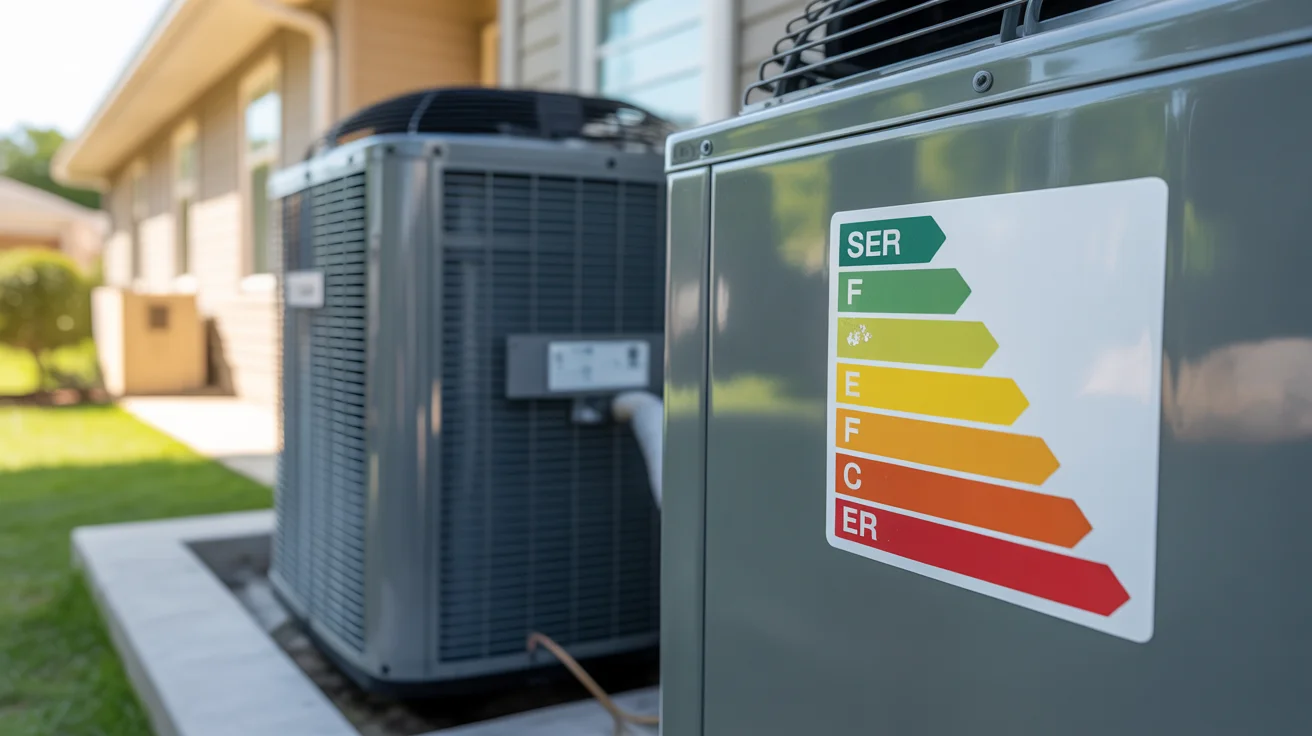
HVAC Energy Efficiency: How to Cut Your Texas Electric Bill
Practical HVAC energy efficiency tips from a North Texas technician. Real savings data, SEER2 ratings explained, maintenance ROI, and rebates that cut your electric bill $40-$150/month.
- Why Your Electric Bill Is So High (It’s Probably Your AC)
- Free Fixes That Save $20 to $60 Per Month
- Maintenance That Pays for Itself: The $150 Tune-Up ROI
- SEER2 Ratings Explained (Without the Jargon)
- Smart Thermostat Savings: $100 to $200 Per Year
- Duct Leaks: The Hidden Energy Thief
- Upgrade Decisions: When Efficiency Pays and When It Doesn’t
- Texas Rebates and Tax Credits That Reduce Your Costs
+ 4 more sections below...
- Why Your Electric Bill Is So High (It’s Probably Your AC)
- Free Fixes That Save $20 to $60 Per Month
- Maintenance That Pays for Itself: The $150 Tune-Up ROI
- SEER2 Ratings Explained (Without the Jargon)
- Smart Thermostat Savings: $100 to $200 Per Year
- Duct Leaks: The Hidden Energy Thief
- Upgrade Decisions: When Efficiency Pays and When It Doesn’t
- Texas Rebates and Tax Credits That Reduce Your Costs
+ 4 more sections below...
HVAC Energy Efficiency: How to Cut Your Texas Electric Bill
The average North Texas homeowner pays $155 to $170 per month for electricity. In July, that number jumps to $250 or higher. Your HVAC system is responsible for roughly 50% to 60% of that total, which means HVAC energy efficiency is the single biggest lever you have to bring your bill down.
I’ve been servicing air conditioners and furnaces across Frisco, Plano, McKinney, and Allen since 2008. Over 15 years, I’ve seen thousands of systems running far below their potential. Not because they were broken, but because nobody showed the homeowner a few straightforward fixes.
This guide covers everything from free fixes you can do today to smart upgrades that pay for themselves. I’ll include real numbers, not vague promises.
Why Your Electric Bill Is So High (It’s Probably Your AC)
A typical North Texas home uses around 1,000 kWh per month in spring. Come July, that can spike past 2,000 to 2,500 kWh. The difference is almost entirely air conditioning.
Here’s why your system works so hard:
- Extreme runtime. North Texas ACs run over 2,400 hours per year, compared to about 600 hours in cooler states. That’s four times the national average.
- 107-degree peaks. When outdoor temps hit triple digits, your system runs at maximum capacity for 10 to 14 hours straight.
- Gulf humidity. Morning humidity above 85% forces your AC to work overtime removing moisture, not just cooling air.
- Newer homes, bigger loads. Most DFW suburbs built after 2000 have 2,500+ square feet of conditioned space with large window areas facing west.
Your system isn’t lazy. It’s just fighting harder conditions than it was designed for. The good news: small efficiency improvements compound into serious savings when your AC runs that many hours.
Free Fixes That Save $20 to $60 Per Month
Before you spend a dollar on upgrades, try these. Every one of them costs nothing and makes a measurable difference.
Change Your Air Filter (Seriously)
A clogged air filter increases energy consumption by 5% to 15%, according to the Department of Energy. During North Texas summer, that translates to $15 to $40 per month wasted.
I see this on almost every service call. The homeowner bought the right filter six months ago and forgot about it. In our climate, filters need replacement every 30 to 60 days during cooling season (May through September). Not quarterly. Monthly.
Quick test: Hold your filter up to a light. If you can’t see light through it, replace it today.
Adjust Your Thermostat Strategy
Every degree you raise your thermostat above 72 saves roughly 3% on cooling costs. Setting it to 78 when you’re home and 85 when you’re away can cut $30 to $50 off a summer bill.
I know 78 sounds warm. But pair it with ceiling fans (which cost about $0.01 per hour to run) and you’ll feel 4 to 6 degrees cooler. That’s the equivalent of 72 without the electric bill.
The biggest mistake I see: Homeowners who set the thermostat to 65 thinking it will cool the house faster. It won’t. Your AC has one speed (unless you have a variable-speed system). All you’re doing is making it run longer.
Seal the Obvious Air Leaks
Feel around your doors, windows, and where pipes enter the house. If you feel warm air coming in, you’re paying to cool the outdoors.
Weatherstripping a single exterior door costs about $8 and takes 15 minutes. A tube of caulk for window gaps runs $5. These are the highest-ROI home improvements that exist, and most homeowners skip them because they seem too simple to matter.
According to ENERGY STAR, sealing air leaks and adding insulation can save up to 15% on heating and cooling costs.
Close Blinds on Sun-Facing Windows
Solar heat gain through windows is one of the biggest cooling loads in a North Texas home. West-facing and south-facing windows in the afternoon can add 2 to 3 degrees to your indoor temperature, forcing your AC to cycle more frequently.
Heavy curtains, cellular shades, or exterior solar screens reduce heat gain by 45% to 70%. One Plano customer added solar screens to six west-facing windows for about $300 total. Her July bill dropped $35 compared to the previous year.
Maintenance That Pays for Itself: The $150 Tune-Up ROI
Regular AC maintenance is the single best investment for energy efficiency. Here’s why I say that with actual data, not just because I sell tune-ups.
What Dirty Coils Actually Cost You
Your AC has two sets of coils (evaporator inside, condenser outside). When they get dirty, heat transfer drops and your system compensates by running longer and harder.
Research from the EPA shows dirty evaporator coils increase electricity usage by up to 39% on a 3-ton unit. On a 5-ton system, that number climbs to 47%. For a home spending $200 per month on cooling, that’s $78 to $94 in wasted electricity.
A professional coil cleaning during a tune-up costs $150 to $200 as part of a full maintenance visit. If it saves even $50 per month over a four-month summer, that’s a $200 return on a $150 investment. Every single year.
The Maintenance Savings Breakdown
| Maintenance Task | Cost | Monthly Savings | Annual ROI |
|---|---|---|---|
| Filter replacement (monthly) | $8 to $15/filter | $15 to $40 | 400%+ |
| Professional tune-up (annual) | $150 to $200 | $30 to $60 | 200% to 300% |
| Duct sealing | $300 to $600 | $20 to $50 | 100% to 150% |
| Refrigerant check and top-off | $150 to $350 | $15 to $30 | 80% to 120% |
The Department of Energy estimates that proper maintenance delivers roughly $4 to $5 in savings for every $1 spent. Those numbers line up exactly with what I see in the field.
When to Schedule
Spring (March through April) is the ideal time. You catch problems before peak season when repair demand is lower, scheduling is easier, and you get the full summer benefit of a clean, tuned system.
If you missed spring, schedule now anyway. Even mid-summer maintenance makes a noticeable difference on your next bill.
SEER2 Ratings Explained (Without the Jargon)
If you’re shopping for a new AC or heat pump, you’ll see SEER2 ratings everywhere. Here’s what they actually mean for your wallet.
What SEER2 Is
SEER2 stands for Seasonal Energy Efficiency Ratio 2. It replaced the old SEER rating in January 2023 with updated testing that better reflects real-world conditions (higher static pressure in ductwork, for example).
Think of it like miles per gallon for your AC. A 16 SEER2 unit uses less electricity to produce the same cooling as a 10 SEER2 unit, just like a car getting 30 MPG uses less gas than one getting 18 MPG.
What the Numbers Mean in Dollars
Here’s the part that matters. I calculated these based on a 3-ton system running in North Texas with electricity at $0.12/kWh (a realistic Oncor territory rate):
| Old System SEER | New System SEER2 | Annual Cooling Cost | Annual Savings |
|---|---|---|---|
| 10 SEER | 10 SEER (baseline) | $1,440 | — |
| 10 SEER | 14 SEER2 | $1,029 | $411 |
| 10 SEER | 16 SEER2 | $900 | $540 |
| 10 SEER | 18 SEER2 | $800 | $640 |
| 10 SEER | 20 SEER2 | $720 | $720 |
| 14 SEER | 16 SEER2 | $900 | $129 |
| 14 SEER | 20 SEER2 | $720 | $309 |
The formula is simple: Annual Cost = (36,000 BTU x 1,000 cooling hours) / (SEER x 1,000) x electricity rate. North Texas systems run roughly 1,200 hours in cooling mode, so your actual savings may be higher than what generic calculators show.
The Sweet Spot for Most North Texas Homes
A 16 SEER2 system hits the best balance of upfront cost versus long-term savings for most homeowners. Going from an old 10 SEER unit to a 16 SEER2 cuts your cooling costs by roughly 37%.
Jumping to 20+ SEER2 saves more per year, but the equipment costs $3,000 to $5,000 more upfront. At $720 per year in savings, a 20 SEER2 system takes 7 to 10 years to pay back the premium over a 16 SEER2 unit. For most families, that math doesn’t justify the extra spend unless you’re planning to stay in the home for 15+ years.
If you’re considering a new system, our AC installation page covers the full process and what to expect.
Smart Thermostat Savings: $100 to $200 Per Year
A programmable or smart thermostat is the most cost-effective upgrade after maintenance. ENERGY STAR estimates certified smart thermostats save about 8% on heating and cooling bills, which translates to $100 to $200 per year for a typical North Texas home.
What Makes Smart Thermostats Worth It
- Learning schedules. They adapt to when you’re home and away, eliminating wasted cooling on an empty house.
- Geofencing. Your phone tells the thermostat when you’re heading home, so it pre-cools just in time.
- Usage reports. You see exactly how many hours your system ran and why, which makes you more conscious about habits.
- Humidity control. Higher-end models let you set humidity targets independently of temperature, which matters in our climate.
Models That Work Best Here
For North Texas, I recommend thermostats with humidity sensing and adaptive scheduling:
| Thermostat | Cost | Best Feature | Annual Savings |
|---|---|---|---|
| Ecobee Premium | $230 to $250 | Built-in air quality monitor + room sensors | $150 to $200 |
| Google Nest Learning | $200 to $250 | Auto-schedule learning | $130 to $180 |
| Honeywell T9 | $170 to $200 | Room sensors for multi-zone | $120 to $160 |
Any of these qualifies for Oncor’s rebate program when paired with a heat pump installation.
Duct Leaks: The Hidden Energy Thief
The average home loses 20% to 30% of conditioned air through leaky ductwork, according to ENERGY STAR. In a North Texas attic that reaches 140 degrees in summer, those leaks are catastrophic.
How to Spot Duct Problems
- Uneven room temperatures. One bedroom is 78 while another is 84.
- Excessive dust. Leaky return ducts pull in attic insulation particles and dust.
- High bills despite new equipment. You upgraded your AC but the bills didn’t improve.
- Visible gaps. Check accessible ductwork in your attic or crawlspace for disconnected joints, crushed flex duct, or deteriorated tape.
What Duct Sealing Costs and Saves
Professional duct sealing runs $300 to $600 for most homes. If you’re losing 25% of your cooling through duct leaks, sealing them effectively gives you 25% more cooling capacity from the same equipment.
One McKinney customer had a 4-ton system that couldn’t keep his house below 80 degrees on hot days. The system was only three years old. I found two major disconnects in the attic plus a dozen smaller leaks at joints. After sealing, his house held 74 degrees on a 105-degree day and his August bill dropped $65.
The fix cost $450. It paid for itself in seven weeks.
Upgrade Decisions: When Efficiency Pays and When It Doesn’t
Not every efficiency upgrade makes financial sense. Here’s my honest breakdown based on real payback periods.
Upgrades Worth the Money
| Upgrade | Cost | Monthly Savings | Payback Period |
|---|---|---|---|
| Smart thermostat | $170 to $250 | $10 to $18 | 12 to 18 months |
| Duct sealing | $300 to $600 | $20 to $50 | 6 to 18 months |
| Attic insulation (R-30 to R-38) | $1,500 to $2,500 | $25 to $45 | 3 to 5 years |
| AC upgrade (10 SEER to 16 SEER2) | $8,000 to $12,000 | $45 to $70 | 8 to 12 years |
Upgrades That Rarely Pay Back
- Whole-house dehumidifiers in tight homes. If your AC is properly sized and your home isn’t unusually humid, the $2,400 to $3,500 install may not save enough to justify the cost.
- 20+ SEER2 systems for small homes. A 1,500 sq ft home doesn’t run enough hours to recoup the premium.
- Solar attic fans. They cost $400 to $600 installed but only reduce attic temperature by 5 to 10 degrees. For most homes, better insulation delivers far more savings per dollar.
I’d rather tell you what not to buy than sell you something that doesn’t make sense. That’s how I’ve kept customers for 15 years.
Texas Rebates and Tax Credits That Reduce Your Costs
North Texas homeowners have access to some of the best HVAC rebate programs in the country right now. Stacking utility rebates with federal tax credits can cut $1,500 to $3,000 off a high-efficiency system.
Oncor Rebates (2026)
Most of Frisco, Plano, McKinney, and Allen fall in Oncor’s service territory:
- Heat pumps: Up to $600 per qualifying unit (SEER2 16 or higher required)
- Smart thermostat: Required with heat pump rebate (ENERGY STAR certified)
- Submission deadline: Within 90 days of installation
- Program period: February through November (or until funding runs out)
Oncor has allocated over $7.4 million for HVAC incentives in 2026.
CoServ Rebates (2026)
Parts of Prosper, The Colony, and Little Elm are served by CoServ:
- HVAC equipment: Up to $500 per qualifying unit
- Submission deadline: Within 60 days of installation
Federal Tax Credits (Section 25C)
These apply no matter which utility serves your home:
- Heat pumps: Up to $2,000 tax credit
- Central AC or furnace: Up to $600 tax credit
- Requirements: Must meet efficiency standards (SEER2 16+ for AC, HSPF2 9+ for heat pumps)
For the full breakdown of every available rebate and how to stack them, see our Texas HVAC Rebates and Tax Credits guide.
Real Example: What Stacking Looks Like
A Frisco homeowner replacing a 12-year-old 10 SEER system with a 16 SEER2 heat pump:
- System cost: $10,500 installed
- Oncor rebate: -$600
- Federal tax credit: -$2,000
- Net cost: $7,900
- Annual energy savings: ~$540
- Effective payback: Under 15 years (closer to 10 when you factor in avoided repair costs on the old system)
The Efficiency Audit: Finding Your Biggest Savings
Every home is different. The fixes that save one homeowner $100 per month might only save you $30, depending on your home’s age, insulation, ductwork, and current equipment.
That’s why I recommend starting with an efficiency audit before spending money on upgrades. During an audit, I check:
- Current system performance. Is your AC delivering 15 to 20 degrees of cooling (supply temperature versus return temperature)? If not, something is wrong.
- Ductwork integrity. I test for leaks with a pressure test and identify disconnections or damage.
- Insulation levels. Attic insulation below R-30 in North Texas is costing you money every month.
- Air infiltration. Where is outside air entering your home and driving up your cooling load?
- Thermostat programming. Many smart thermostats are installed but never properly configured.
After the audit, you get a prioritized list of fixes ranked by cost versus savings. No guessing, no pressure.
Call (940) 390-5676 to schedule an efficiency audit. I’ll tell you exactly where your energy dollars are going and which fixes make financial sense for your specific home.
Your Energy Efficiency Action Plan
Here’s the order I recommend tackling efficiency improvements. Start at the top (free), and work down as your budget allows:
- Today (free). Replace your air filter, set thermostat to 78 when home and 85 when away, close blinds on sun-facing windows.
- This weekend ($15 to $30). Weatherstrip exterior doors, caulk window gaps, clear 2 feet around your outdoor unit.
- This month ($150 to $250). Schedule a professional AC maintenance tune-up. Get a smart thermostat installed.
- This season ($300 to $600). Have ductwork inspected and sealed.
- When your system needs replacing ($8,000 to $12,000). Upgrade to 16 SEER2 or higher and claim every rebate available through our rebates guide.
The homeowners who follow this sequence typically see $40 to $150 per month in savings during peak cooling season. That’s $200 to $750 over a single North Texas summer.
Frequently Asked Questions
How much can I really save on my electric bill with HVAC improvements?
Most North Texas homeowners save $40 to $150 per month during summer with a combination of proper maintenance, thermostat management, and air sealing. Upgrading from an old 10 SEER system to a modern 16 SEER2 unit adds another $35 to $55 per month in savings. The exact amount depends on your home’s size, insulation, and current equipment condition.
What SEER2 rating should I look for when buying a new AC?
For most North Texas homes, 15.2 to 16 SEER2 is the sweet spot balancing upfront cost with long-term savings. Going higher (18 to 20+ SEER2) saves more per year but costs significantly more upfront and takes longer to pay back. If you plan to stay in your home for 15+ years, a higher SEER2 may make sense. See our AC installation guide for help choosing the right system.
How often should I change my AC filter in North Texas?
Every 30 to 60 days during cooling season (May through September). North Texas dust, pollen, and heavy AC runtime clog filters faster than the manufacturer’s “every 90 days” recommendation. During peak summer, check monthly. Hold the filter up to a light. If you can’t see through it, replace it.
Is a smart thermostat worth the investment?
Yes. A smart thermostat typically saves 8% on heating and cooling costs, which is $100 to $200 per year for a North Texas home. At $170 to $250, most models pay for themselves within 12 to 18 months. They also qualify for rebates when installed with a new heat pump through Oncor’s program.
Do I need an energy audit, or can I just follow these tips?
The tips in this guide will help any home. But if your electric bills seem unusually high for your home’s size, or if you’re planning a major upgrade, an audit pinpoints the specific issues costing you the most. I’ve seen homes where 80% of the problem was a single duct disconnect in the attic. Without an audit, you’d never find it. Call (940) 390-5676 to schedule one.
What rebates are available for HVAC upgrades in North Texas?
Oncor offers up to $600 for qualifying heat pumps (SEER2 16+) and CoServ offers up to $500. Federal Section 25C tax credits add up to $2,000 for heat pumps or $600 for AC/furnace. Stacking these can save $1,500 to $3,000 on a new system. Visit our complete rebates guide for current details and application steps.
Jupitair HVAC helps North Texas homeowners cut energy costs with professional maintenance, efficiency audits, and high-efficiency system installations. Serving Frisco, Plano, McKinney, Allen, Prosper, The Colony, Little Elm, and Addison since 2008. Call (940) 390-5676 for a free consultation.
Sources & References
- U.S. Department of Energy - Air Conditioner Maintenance - Filter and maintenance efficiency impact
- ENERGY STAR - Heat & Cool Efficiently - Thermostat savings and air sealing data
- SEER Energy Savings Calculator - SEER to SEER2 conversion and savings formulas
- Average Electric Bill in Texas (2026) - Texas electricity rates and usage data
- Oncor Residential Energy Efficiency - 2026 rebate program details
- Texas HVAC Rebates & Tax Credits (2026) - Complete rebate stacking guide
Last Updated: March 2026