Commercial HVAC Cost: What North Texas Businesses Actually Pay (2026)
Real commercial HVAC costs for North Texas businesses. RTU, VRF, chiller pricing, installation, operating costs, and hidden expenses explained.

Commercial HVAC costs in North Texas range from $6,500 for a basic rooftop unit replacement to $500,000+ for large chiller systems. Most small businesses (under 5,000 sq ft) spend $8,000-$25,000, while mid-size buildings run $25,000-$80,000 installed. Operating costs add $2-$6 per square foot annually. The real number that catches business owners off guard is the hidden costs: permits, crane rental, structural engineering, and electrical upgrades that can add $7,000-$25,000 to any commercial project.
I get asked about commercial HVAC pricing every single week. And every time, the business owner has already gotten a quote that left out half the real costs. Last month I met with a restaurant owner in Addison who got a $22,000 quote for a new RTU. Sounded reasonable. But nobody told him about the $3,200 crane rental, $1,800 in permits, or the $4,500 electrical panel upgrade his building needed. His actual cost was $31,500.
That is why I wrote this. No surprises. Here is what commercial HVAC actually costs in North Texas in 2026.
Cost by Building Type
Every building has different HVAC demands. A dental office and a restaurant might be the same square footage, but the restaurant needs twice the cooling capacity because of kitchen heat. Here is what I see across different business types.
Office Buildings
Office buildings are the most straightforward. Standard occupancy, predictable hours, moderate heat loads.
- Small office (1,500-3,000 sq ft): $8,000-$18,000 installed
- Mid-size office (3,000-10,000 sq ft): $18,000-$45,000 installed
- Large office (10,000-30,000 sq ft): $45,000-$150,000 installed
Most offices in Frisco and Plano use rooftop units or split systems. If you have a multi-story building with individual tenant spaces, VRF starts making sense because each tenant can control their own zone.
Retail Spaces
Retail has higher demands than office because of constant door openings, customer traffic, and display lighting that generates heat.
- Small retail (1,000-2,500 sq ft): $8,000-$15,000 installed
- Strip mall unit (2,500-5,000 sq ft): $12,000-$30,000 installed
- Large retail (5,000-15,000 sq ft): $25,000-$65,000 installed
I see a lot of strip mall tenants sharing a system or inheriting whatever the landlord installed 15 years ago. If you are a tenant, check your lease. Some landlords are responsible for HVAC replacement and some put it on you.
Restaurants
Restaurants are the most expensive per square foot because of kitchen exhaust, grease, humidity, and the need for makeup air systems.
- Quick-service (1,000-2,000 sq ft): $15,000-$35,000 installed
- Full-service (2,000-5,000 sq ft): $30,000-$65,000 installed
- Large restaurant (5,000+ sq ft): $60,000-$120,000 installed
Restaurant systems work harder than any other commercial application. That is why a 2,000 sq ft restaurant costs more than a 5,000 sq ft office. The heat load from commercial cooking equipment is massive.
Medical and Dental Offices
Medical facilities need precise temperature control, better filtration, and sometimes separate zones for procedure rooms.
- Dental office (1,500-3,000 sq ft): $15,000-$30,000 installed
- Medical clinic (3,000-8,000 sq ft): $30,000-$75,000 installed
- Surgical center (5,000-15,000 sq ft): $75,000-$200,000 installed
The filtration requirements alone add 15-25% to the cost compared to a standard office. HEPA filtration, humidity control, and positive/negative pressure rooms all cost more.
Warehouses and Industrial
Warehouses are cheaper per square foot because you are not cooling to 72 degrees. Most just need to keep workers comfortable and protect inventory.
- Small warehouse (5,000-10,000 sq ft): $12,000-$30,000 installed
- Mid-size warehouse (10,000-30,000 sq ft): $25,000-$80,000 installed
- Large warehouse (30,000+ sq ft): $60,000-$250,000+ installed
Evaporative cooling and spot cooling are popular warehouse options that cost way less than full AC. I have seen warehouse owners save 60% by using evaporative coolers in North Texas.
Cost by System Type
Rooftop Units (RTUs)
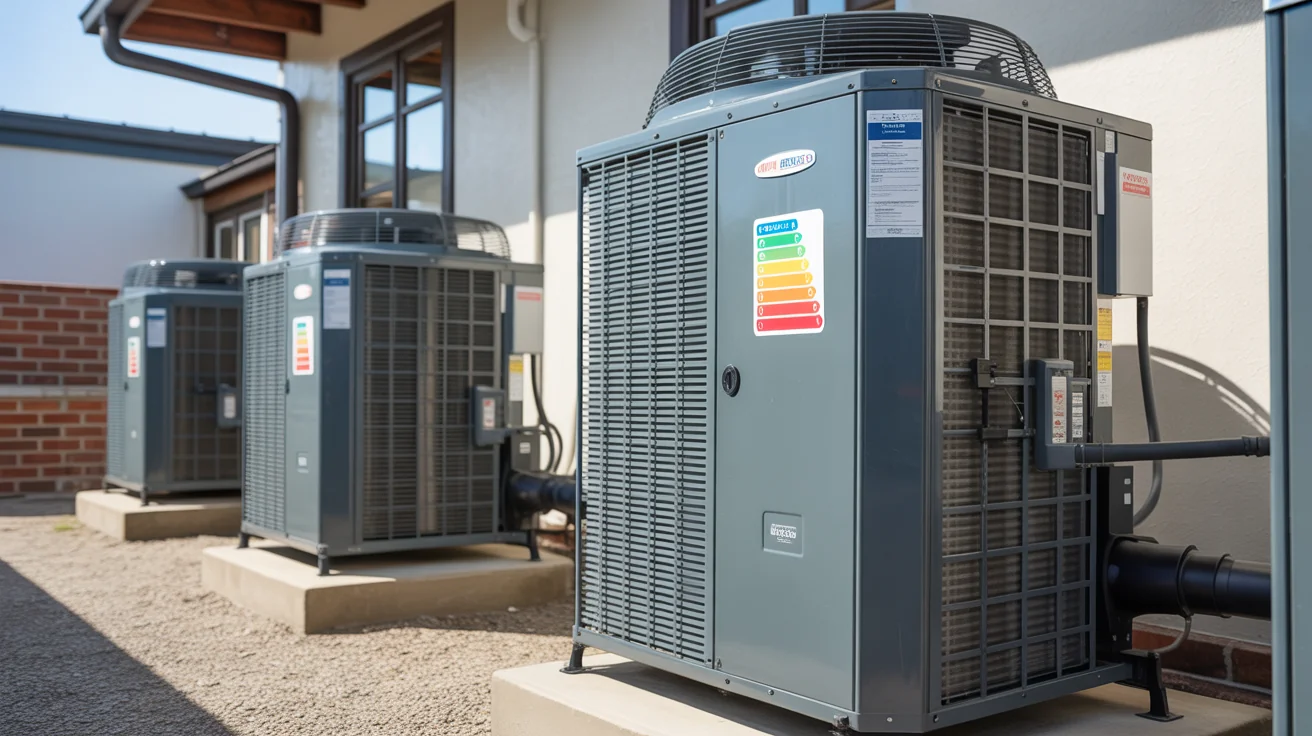
RTUs are the workhorse of commercial HVAC in North Texas. They sit on the roof, keeping your floor space free, and they are the most common system I install.
- 3-5 ton: $6,500-$15,000 installed
- 7.5-10 ton: $12,000-$28,000 installed
- 15-20 ton: $22,000-$45,000 installed
- 25+ ton: $35,000-$65,000 installed
RTUs make sense for single-story buildings up to about 20,000 sq ft. They are reliable, easy to maintain, and parts are readily available. For RTU replacement, I can usually have a new unit running in 1-2 days.
Split Systems
Commercial split systems work like residential ones but bigger. The condenser sits outside and the air handler is inside. Good for buildings where roof access is difficult or the structure cannot support rooftop weight.
- 3-5 ton: $8,000-$18,000 installed
- 7.5-10 ton: $15,000-$32,000 installed
- 15-20 ton: $28,000-$55,000 installed
Split systems cost 10-20% more than RTUs for the same capacity because of the refrigerant line runs and additional labor. But they are quieter and easier to access for maintenance.
VRF Systems (Variable Refrigerant Flow)
VRF is the premium option. One outdoor unit connects to multiple indoor units, each with its own thermostat. Perfect for multi-tenant buildings or spaces that need individual zone control.
- Small VRF (3-8 zones): $20,000-$40,000 installed
- Mid-size VRF (8-16 zones): $40,000-$65,000 installed
- Large VRF (16+ zones): $60,000-$80,000+ installed
VRF costs more upfront but saves 20-40% on energy compared to traditional systems. For a building spending $3,000/month on electricity, that is $7,200-$14,400 in annual savings. The system pays for itself in 5-8 years.
Chiller Systems
Chillers are for big buildings. If you are under 30,000 sq ft, you probably do not need one. These use chilled water to cool the building and are the most efficient option for large spaces.
- Air-cooled chiller (30-100 ton): $50,000-$150,000 installed
- Water-cooled chiller (100-300 ton): $100,000-$300,000 installed
- Large chiller plant (300+ ton): $200,000-$500,000+ installed
Chillers last 20-30 years and are extremely efficient at scale. But the upfront cost, maintenance complexity, and space requirements make them impractical for anything under about 50,000 sq ft.
Installation Costs Breakdown
The equipment itself is only 40-60% of your total cost. Here is where the rest goes.
Labor: 25-35% of total cost. Commercial installations take 2-10 days depending on system size. Expect $85-$150/hour for commercial HVAC technicians in North Texas.
Ductwork: New or modified ductwork adds $5,000-$25,000. If your building has existing ductwork in good shape, you save significantly.
Controls and thermostats: Commercial building automation systems cost $2,000-$15,000 depending on complexity. A simple programmable thermostat is $200-$500. A full BAS with remote monitoring runs $8,000-$15,000.
Electrical work: Panel upgrades, new circuits, and disconnect switches add $1,500-$8,000. Older buildings in McKinney and Allen frequently need electrical upgrades for modern high-efficiency equipment.
Refrigerant piping: For split and VRF systems, piping runs cost $15-$45 per linear foot installed. A 100-foot run adds $1,500-$4,500.
Operating Costs Per Square Foot
This is the number most business owners ignore. Your HVAC costs money every single month, not just when you buy it.
| Building Type | Annual Cost Per Sq Ft | Monthly Example (5,000 sq ft) |
|---|---|---|
| Office | $2.00-$3.50 | $833-$1,458 |
| Retail | $2.50-$4.00 | $1,042-$1,667 |
| Restaurant | $4.00-$6.00 | $1,667-$2,500 |
| Medical | $3.00-$5.00 | $1,250-$2,083 |
| Warehouse | $1.00-$2.50 | $417-$1,042 |
These numbers include electricity, maintenance, filters, and minor repairs. In North Texas, June through September accounts for 45-55% of your annual HVAC operating costs because of the extreme heat.
Hidden Costs Nobody Mentions
This is the section I wish every commercial HVAC contractor would be honest about. Here are the costs that show up after you sign the contract.
Permits and Inspections
Every commercial HVAC installation in North Texas requires permits. Costs vary by city.
- Frisco: $800-$1,500
- Plano: $600-$1,200
- McKinney: $500-$1,000
- Allen: $500-$900
- Addison: $700-$1,200
Some contractors include permits in their quote. Many do not. Always ask.
Crane Rental
Any rooftop unit over 400 pounds needs a crane to get it up there. That is basically every commercial RTU.
- Small crane (under 10 ton unit): $1,500-$3,000
- Large crane (10+ ton unit): $3,000-$5,000
- If your building is in a tight spot with limited access, add $1,000-$2,000 for rigging
Structural Engineering
Older buildings, especially in Addison and Plano, may need a structural engineer to verify the roof can hold the new unit. This costs $2,000-$5,000 and can add 2-4 weeks to your timeline.
Electrical Panel Upgrades
If your building was built before 2000, there is a good chance the electrical panel cannot handle a modern high-efficiency system. Upgrades run $3,000-$15,000 depending on what is needed.
Curb Adapters
When replacing an RTU, the new unit probably will not match the old roof curb. Adapter curbs cost $800-$2,500 plus installation.
Code Compliance
Building codes change. A straight replacement might trigger code requirements for additional disconnects, gas piping upgrades, or updated controls. Budget $1,000-$5,000 for surprises.
Financing and Leasing Options
Most commercial HVAC purchases over $15,000 are financed. Here is what I see in North Texas.
Equipment financing: 4-8% interest, 5-10 year terms. A $40,000 system at 6% over 7 years runs about $585/month. Many manufacturers offer promotional rates through dealers.
Equipment leasing: $800-$1,200/month for a $40,000 system on a 5-year lease. You do not own the equipment, but maintenance is often included and you can upgrade at lease end.
PACE financing (Property Assessed Clean Energy): Available in some North Texas municipalities. The loan attaches to the property, not the business. Good for building owners investing in high-efficiency equipment.
Section 179 deduction: In 2026 you can deduct the full cost of commercial HVAC equipment in the year of purchase, up to $1,220,000. This is a significant tax benefit that many business owners miss.
ROI of High-Efficiency Commercial Equipment
Spending more upfront on efficient equipment saves money long-term. Here is the math.
A 10-ton RTU replacement for a 4,000 sq ft retail space in Frisco:
- Standard efficiency (14 SEER2): $18,000 installed, $3,800/year operating cost
- High efficiency (17 SEER2): $24,000 installed, $2,850/year operating cost
The high-efficiency unit costs $6,000 more but saves $950/year. Payback in 6.3 years. Over a 15-year lifespan, you save $8,250 net.
Add Oncor rebates ($200-$400/ton for high-efficiency commercial equipment) and the payback drops to under 5 years.
For VRF systems replacing multiple RTUs, I have seen energy savings of 30-40% on buildings spending $4,000+/month on cooling. At that level, the premium equipment pays for itself in 3-4 years.
How to Get an Accurate Commercial HVAC Quote
After twelve years of writing commercial HVAC quotes, here is my advice.
- Get at least three quotes from licensed commercial HVAC contractors
- Make sure every quote includes permits, crane, electrical, and curb adapters
- Compare total installed cost, not just equipment price
- Ask about warranty on labor and equipment separately
- Check references for similar building types, not just residential work
- Verify licensing and commercial insurance minimums ($1M+ liability)
If you need a quote for your North Texas business, contact us and I will walk through every cost line by line. No surprises.
Frequently Asked Questions
How much does a commercial HVAC system cost in North Texas?
Commercial HVAC costs range from $6,500 for a small RTU replacement to $500,000+ for a large chiller system. Most small businesses (under 5,000 sq ft) spend $8,000-$25,000. Mid-size buildings (5,000-20,000 sq ft) typically run $25,000-$80,000 installed. These numbers include equipment, labor, and basic installation but may not include permits, crane, or electrical work.
What is the operating cost per square foot for commercial HVAC?
In North Texas, commercial HVAC operating costs run $2-$6 per square foot per year depending on building type, system efficiency, and usage hours. Restaurants and medical offices sit at the high end ($4-$6/sq ft). Office buildings with newer equipment sit at the low end ($2-$3.50/sq ft). Summer months account for nearly half of annual costs.
How long does a commercial HVAC system last in Texas?
RTUs last 15-20 years with proper maintenance, though North Texas heat often brings that closer to 12-15 years in practice. VRF systems last 15-20 years. Chillers can run 20-30 years. Without regular preventive maintenance, cut all those numbers nearly in half. I have pulled out 8-year-old RTUs that were completely shot because nobody ever changed the filters.
Is it cheaper to lease or buy commercial HVAC equipment?
For most North Texas businesses, buying makes sense if you plan to stay in the space 7+ years. Leasing works better for newer businesses, tenants with shorter leases, or those who want predictable monthly costs with maintenance included. A $40,000 system might cost $800-$1,200/month on a 5-year lease versus $585/month to finance the purchase.
What hidden costs come with commercial HVAC installation?
Permits run $500-$2,500 in North Texas depending on the city. Crane rental for rooftop units costs $1,500-$5,000. Structural engineering reports cost $2,000-$5,000 for older buildings. Electrical upgrades can add $3,000-$15,000. Curb adapters for RTU replacements add $800-$2,500. A good contractor includes all of these in the initial quote. If the quote looks too low, they probably left something out.
Need Professional HVAC Service?
Our certified technicians are ready to help with any HVAC needs in North Texas