AC Keeps Tripping Breaker: Causes, Fixes, and Safety Guide
Your AC keeps tripping the breaker and you're tired of resetting it. Learn the 8 most common causes, which fixes are safe to DIY, and when to call a pro. Real costs from a North Texas HVAC tech.
- Why Your AC Trips the Breaker (The Short Version)
- 1. Dirty Air Filter (The Fix You Can Do Right Now)
- 2. Dirty Condenser Coils
- 3. Bad Capacitor
- 4. Compressor Hard Starting
- 5. Refrigerant Leak (Low Charge)
- 6. Electrical Short in the Motor Windings
- 7. Loose Wiring or Corroded Connections
+ 6 more sections below...
- Why Your AC Trips the Breaker (The Short Version)
- 1. Dirty Air Filter (The Fix You Can Do Right Now)
- 2. Dirty Condenser Coils
- 3. Bad Capacitor
- 4. Compressor Hard Starting
- 5. Refrigerant Leak (Low Charge)
- 6. Electrical Short in the Motor Windings
- 7. Loose Wiring or Corroded Connections
+ 6 more sections below...
You reset the breaker. The AC kicks on. Twenty minutes later, it trips again. You reset it one more time. It trips in ten. Now you’re standing in front of your electrical panel in a 96°F house wondering if something is seriously wrong.
Yes, something is wrong. And no, you should not keep resetting it.
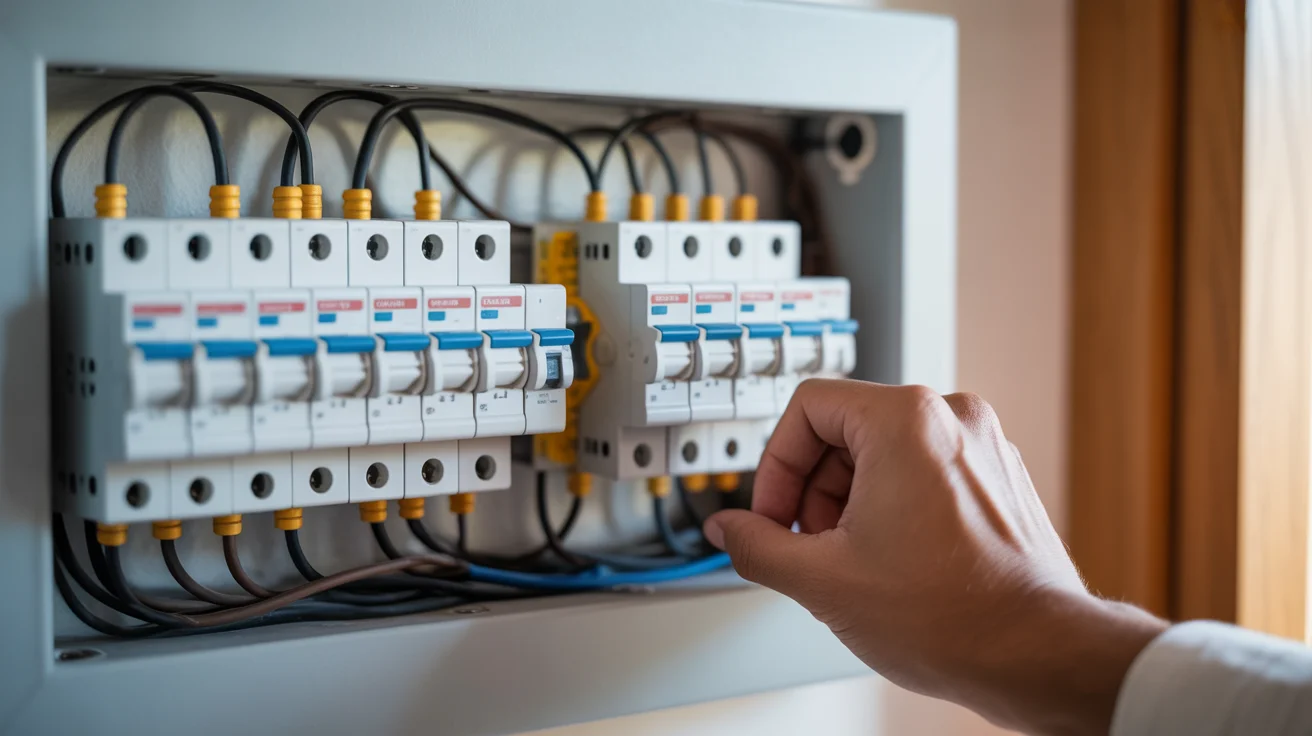
An AC tripping breaker is your electrical system telling you that something in the circuit is pulling too much current. The breaker’s job is to cut power before wires overheat and start a fire. Every time you force it back on without fixing the root cause, you’re overriding a safety device designed to protect your home. I’ve been doing HVAC work in North Texas for over 15 years, and breaker issues are one of the calls I take most seriously. Here’s what’s causing it, what you can safely check yourself, and when you need a professional.
Why Your AC Trips the Breaker (The Short Version)
Your air conditioner runs on a dedicated 20 to 60 amp circuit. When any component inside the system draws more amperage than that circuit is rated for, the breaker trips. It’s doing exactly what it’s supposed to do.
The problem is figuring out why the current draw spiked. Sometimes it’s a $5 air filter. Sometimes it’s a $2,000 compressor. The causes below are listed from the most common (and cheapest) to the most expensive, based on what I actually see on service calls in Frisco, Plano, McKinney, and the rest of the DFW area.
1. Dirty Air Filter (The Fix You Can Do Right Now)
A clogged air filter is the single most overlooked cause of an air conditioner tripping circuit breaker. When the filter is packed with dust, pet hair, and debris, your blower motor has to work significantly harder to pull air through it. That extra effort means extra amperage. Push the motor far enough and the breaker trips.
I’ve walked into homes where the filter hadn’t been changed in over a year. The blower was pulling 12 amps on a motor rated for 8. That’s a guaranteed trip.
What to do: Pull out your filter right now. Hold it up to a light. If you can’t see light through it, replace it immediately. In North Texas during summer, I recommend changing filters every 30 to 45 days. This fix costs $5 to $20 and takes two minutes.
2. Dirty Condenser Coils
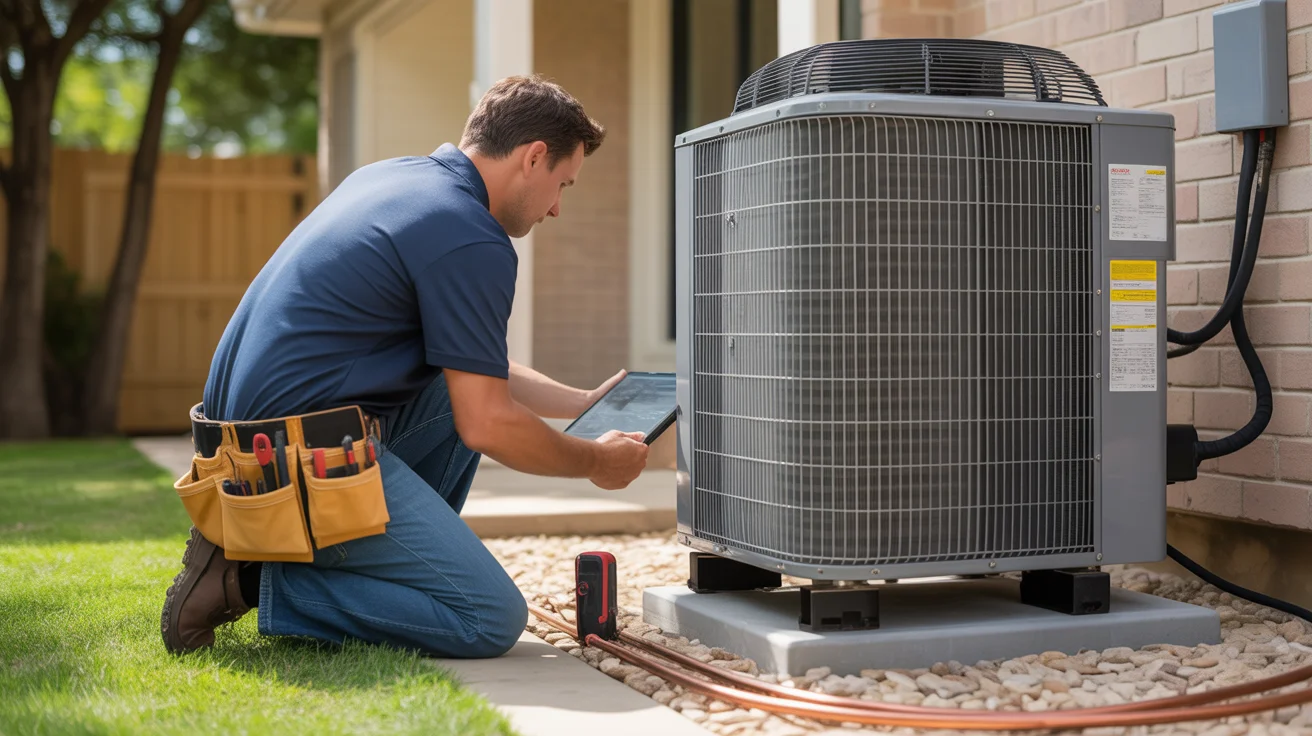
Your outdoor unit dumps heat into the outside air through condenser coils. When those coils get coated in dirt, grass clippings, cottonwood fluff (a North Texas special), or general grime, they can’t release heat efficiently. The system runs longer and harder, current draw climbs, and the breaker trips.
In the DFW suburbs, I see condenser coils that look like they’ve been wrapped in a blanket of cotton and dust. Especially in neighborhoods with new construction nearby, where drywall dust and dirt get into everything.
What to do: Turn off the system at the breaker. Gently spray the outdoor coils with a garden hose (from the inside out, not outside in). Don’t use a pressure washer. If the coils are severely caked, call for a professional coil cleaning ($150 to $250). This is one of the highest-value maintenance items you can do before summer hits.
3. Bad Capacitor
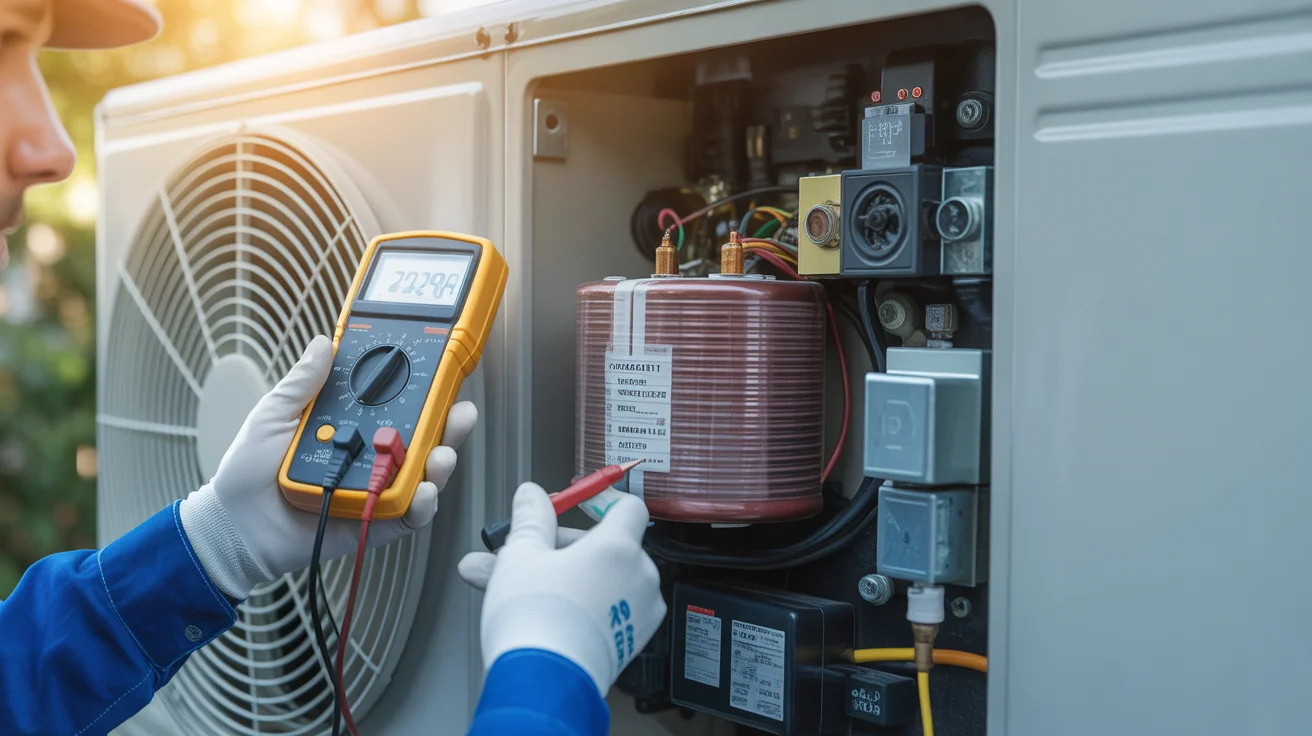
This is the number one part I replace on AC service calls, and it’s a frequent cause of AC keeps tripping breaker complaints. The capacitor gives your compressor and fan motors the electrical boost they need to start and keep running. When a capacitor starts failing, the motors struggle to start, draw excessive current during startup, and trip the breaker.
You might notice the outdoor fan spinning slowly, the unit humming but not fully starting, or the system cycling on and off rapidly before tripping. Those are classic bad capacitor symptoms.
Cost: $150 to $350 for a professional capacitor replacement. This is not a DIY repair. Capacitors store lethal voltage even after the system is powered off. A tech can swap one in under 30 minutes.
4. Compressor Hard Starting
Your compressor is the single biggest electricity consumer in your AC system. When it’s new and healthy, it draws a surge of current for a fraction of a second during startup, then settles into its normal running amps. As compressors age, that startup surge gets bigger and longer. Eventually, it exceeds the breaker’s rating.
This is called hard starting. The compressor shakes, strains, and either trips the breaker immediately on startup or runs for a few minutes before overheating and tripping.
A hard-start kit ($150 to $300 installed) can reduce startup amperage and buy you another year or two. But if your compressor is hard starting and your system is 12+ years old, it’s a sign of deeper decline. Read my full breakdown in the AC compressor repair guide before committing to expensive repairs on aging equipment.
Cost: $150 to $300 for a hard-start kit. $1,800 to $4,800 for compressor replacement if that’s the underlying issue.
5. Refrigerant Leak (Low Charge)
When your system loses refrigerant through a leak, the compressor has to work harder to maintain pressure. That extra work means higher current draw. Low refrigerant also causes the compressor to run hotter, which degrades internal winding insulation over time, which leads to electrical shorts, which trips the breaker. It’s a chain reaction.
Signs of low refrigerant alongside breaker tripping include ice forming on the refrigerant lines, reduced cooling performance, and the system running almost continuously without reaching the set temperature.
Cost: $200 to $600 for a leak repair and refrigerant recharge. If the leak is in the evaporator coil or compressor itself, costs jump to $1,000 to $2,000+. This requires professional AC repair with EPA-certified refrigerant handling.
6. Electrical Short in the Motor Windings
Electric motors in your air handler and outdoor unit have copper wire windings coated in insulation. North Texas heat degrades that insulation over time. When insulation breaks down, copper touches copper where it shouldn’t, creating a short circuit. A shorted motor draws massive amperage instantly, and the breaker trips to prevent a fire.
This is one of the more serious HVAC electrical problems because a shorted winding doesn’t fix itself. Each time you reset the breaker and the motor tries to start, it can worsen the short. I’ve seen wiring insulation melt inside outdoor units because homeowners kept resetting breakers for days before calling.
Warning sign: If the breaker trips within seconds of turning the system on (not minutes), suspect a motor short. Stop resetting and call a technician.
Cost: $400 to $1,200 for a motor replacement depending on whether it’s the condenser fan motor or blower motor.
7. Loose Wiring or Corroded Connections
Vibration, heat cycles, and age loosen electrical connections inside your AC system and at the disconnect box. A loose wire creates resistance. Resistance creates heat. Heat creates more resistance. Eventually, the connection arcs or draws enough extra current to trip the breaker.
Corrosion is the other culprit, especially in North Texas where Gulf humidity accelerates oxidation on terminals and contactors. I see green and white buildup on electrical connections in outdoor units constantly, particularly on systems older than 8 years.
Cost: $150 to $350 for a service call to tighten connections, clean terminals, and replace corroded contactors. This is routine electrical maintenance that prevents much bigger problems.
8. Undersized or Failing Breaker
Sometimes the problem isn’t the AC at all. It’s the breaker itself. Breakers wear out over time, and a breaker that’s been tripping repeatedly loses its ability to hold its rated amperage. It starts tripping at lower and lower current levels.
I also see undersized breakers on systems that have been replaced or upgraded. Someone installs a new 4-ton unit on a circuit that was wired for the old 3-ton system, and the breaker can’t handle the increased load.
Cost: $150 to $300 for a breaker replacement by a licensed electrician. If the wiring needs to be upsized, expect $300 to $600.
The Safety Rules: What NOT to Do
This is where I need to be direct with you, because ac short cycling and breaker tripping involve real electrical hazards.
Do not keep resetting the breaker. Once is reasonable. Twice is pushing it. Three times and you’re risking wire damage, compressor burnout, or a fire. If the breaker trips twice in a row, leave it off and call a professional.
Do not bypass the breaker with a larger one. I’ve seen homeowners (and a few handymen who should know better) swap a 30-amp breaker for a 40-amp to “solve” the tripping. This defeats the safety protection. The wiring in your walls is rated for the original breaker size. A larger breaker lets more current flow through wires that can’t handle it. This causes house fires.
Do not ignore a burning smell. If you smell hot plastic, burning rubber, or see discoloration around the breaker or disconnect box, you have an active electrical hazard. Turn off the main breaker for that circuit and call for emergency AC repair immediately.
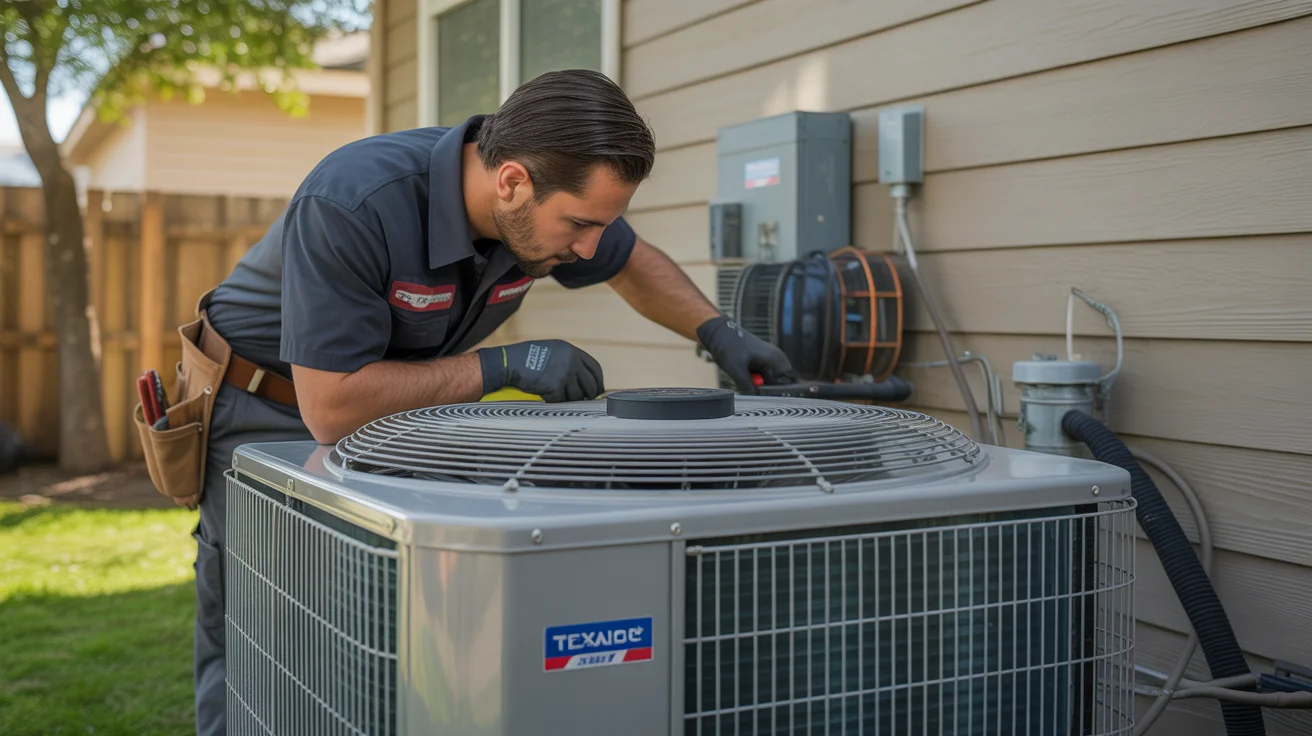
Do not work inside the electrical panel or outdoor disconnect. The breaker panel has live 240-volt connections even when individual breakers are off. The outdoor disconnect box carries high voltage. These are not safe for DIY troubleshooting beyond flipping the breaker switch itself.
What You Can Safely Check Before Calling
Not everything requires a service call. Run through this checklist before picking up the phone:
| Check | How | Fix |
|---|---|---|
| Air filter | Pull it out, hold to light | Replace if dirty ($5 to $20) |
| Outdoor unit airflow | Visual inspection, 2-foot clearance | Clear debris, trim vegetation |
| Condenser coils | Look through the grille for dirt buildup | Gently rinse with garden hose |
| Vents and registers | Walk the house, check all supply vents | Open any closed or blocked vents |
| Thermostat setting | Verify COOL mode, 5°F below room temp | Adjust setting, replace batteries |
If everything on this list checks out and the breaker still trips on the next cycle, you need a technician with an amp clamp and electrical testing equipment. The remaining causes (bad capacitor, motor short, refrigerant leak, compressor failure, wiring issues) all require professional diagnosis.
When to Call for Emergency Service
Call immediately if any of these apply:
- Burning smell from the breaker panel, disconnect box, or indoor unit
- Breaker trips instantly (within seconds) when you turn the system on
- Visible damage to wiring, scorch marks, or melted plastic anywhere in the system
- The breaker feels hot to the touch
- Multiple breakers trip at the same time (this could indicate a serious panel issue)
- Indoor temperature above 90°F with elderly, infants, or medically vulnerable family members
For electrical emergencies and AC failures in Frisco, Plano, McKinney, Allen, Prosper, The Colony, Little Elm, and Addison, call (940) 390-5676. I take electrical safety calls seriously because the consequences of ignoring them are serious.
Cost Summary: AC Breaker Tripping Repairs
Here’s what you’re looking at for the most common fixes, based on real pricing from jobs I’ve done in the North Texas area:
| Problem | Repair Cost | DIY Possible? |
|---|---|---|
| Dirty air filter | $5 to $20 | Yes |
| Condenser coil cleaning | $150 to $250 | Partial (hose rinse) |
| Capacitor replacement | $150 to $350 | No |
| Hard-start kit | $150 to $300 | No |
| Contactor/wiring repair | $150 to $350 | No |
| Breaker replacement | $150 to $300 | No (licensed electrician) |
| Refrigerant leak repair | $200 to $600 | No |
| Motor replacement | $400 to $1,200 | No |
| Compressor replacement | $1,800 to $4,800 | No |
Most ac tripping breaker calls I handle end up being $150 to $400 repairs (capacitors, contactors, or wiring). The expensive repairs (compressor, motor) are less common but worth diagnosing early before secondary damage adds to the bill.
FAQ
Why does my AC trip the breaker after running for 10 to 20 minutes?
This pattern usually points to a compressor overheating. The compressor starts fine but builds up heat as it runs, then draws excessive current and trips the breaker. Common causes include low refrigerant, dirty condenser coils restricting heat dissipation, or internal compressor wear. Clean the outdoor coils and check the filter first. If it keeps happening, you need a technician to check refrigerant levels and compressor amp draw.
Can a dirty filter really trip a breaker?
Yes. A severely clogged filter forces the blower motor to work much harder than it’s designed to. The motor draws more amps, generates more heat, and eventually exceeds the breaker’s rating. I see this 2 to 3 times a month during summer. It’s the cheapest fix on this list and the easiest to prevent.
Is it safe to reset the AC breaker once?
One reset is reasonable. Wait 30 minutes before resetting to let the compressor pressure equalize and components cool down. If it trips again after one reset, leave it off. Repeated resets can damage the compressor, overheat wiring, and create fire hazards. Two trips in a row means something needs professional attention.
Why does my AC trip the breaker only on the hottest days?
On extreme heat days (100°F+ in North Texas), your system runs at maximum capacity for hours. Components that are borderline, like a weak capacitor, slightly low refrigerant, or partially clogged coils, can push current draw just past the breaker’s threshold under peak load. The system works fine at 90°F but can’t handle 105°F. That borderline condition will only get worse as the season goes on.
Could the problem be the breaker itself and not the AC?
Absolutely. Breakers degrade over time, especially ones that have tripped multiple times. A worn breaker might trip at 25 amps when it’s rated for 30. An electrician can test breaker health with a load test. If your breaker is more than 15 years old and has been tripping, the breaker itself may need replacement ($150 to $300).
AC keeps tripping the breaker? Don’t keep resetting it and hoping. Call (940) 390-5676 for same-day electrical diagnosis and repair across North Texas. I’ll find the actual cause, give you an honest price, and fix it right the first time.
Jupitair HVAC serves Frisco, Plano, McKinney, Allen, Prosper, The Colony, Little Elm, and Addison. Licensed, Bonded & Insured. 15+ years of North Texas HVAC experience.