Why Does My AC Smell Bad? 7 Odors and What They Mean
Your AC shouldn't smell like anything. If it does, something's wrong. Here are 7 common AC smells, what causes each one, how urgent they are, and what it costs to fix them in North Texas.

Your AC smells bad, and you’re wondering if it’s dangerous, expensive, or both. I get this call at least three times a week during summer in North Texas, and the answer depends entirely on what you’re smelling.
Some AC odors mean “change your filter this weekend.” Others mean “turn off the system and call right now.” After 15+ years of diagnosing AC smells across North Texas, I can help you figure out which situation you’re in.
Here are the 7 most common AC smells, ranked from least to most urgent, with what causes each one and what it costs to fix.
1. Musty or Mildew Smell (Dirty Sock Syndrome)
Severity: Low to moderate Cause: Mold and bacteria on evaporator coils or in ductwork Cost to fix: $75-$400
If your AC smells musty, you’re not alone. This is the single most common odor complaint I hear, especially from April through October when humidity in the DFW area sits above 60%.
Your evaporator coil is cold and wet every time the system runs. In North Texas, where outdoor humidity regularly hits 75-85%, that coil collects serious moisture. Bacteria and mold colonize the damp surface, and the air blowing across it picks up that stale, locker-room scent. HVAC techs call it Dirty Sock Syndrome, and it’s exactly as pleasant as it sounds.
What you can do right now:
- Replace your air filter (a clogged filter traps moisture and makes it worse)
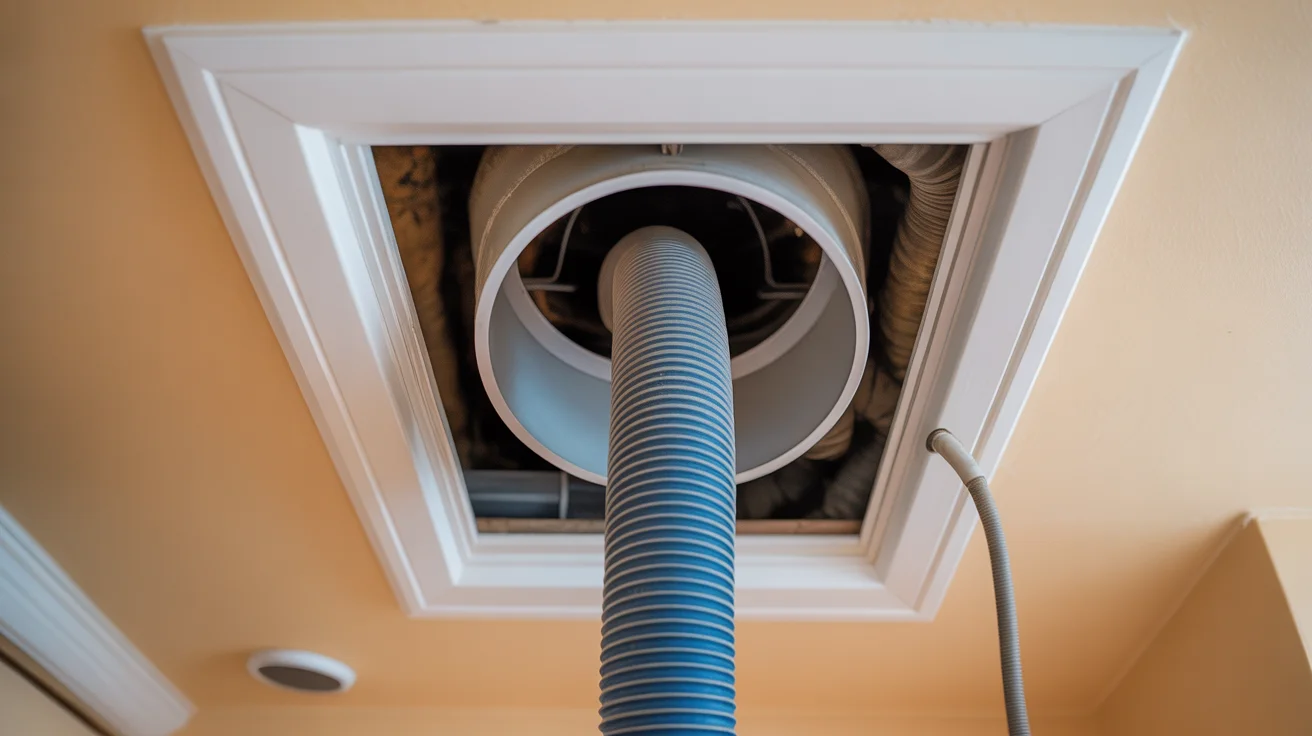
- Check your condensate drain line for clogs. Pour a cup of white vinegar down the line monthly.
- Make sure your system runs long enough per cycle. Short cycling keeps the coil wet without giving it time to dry.
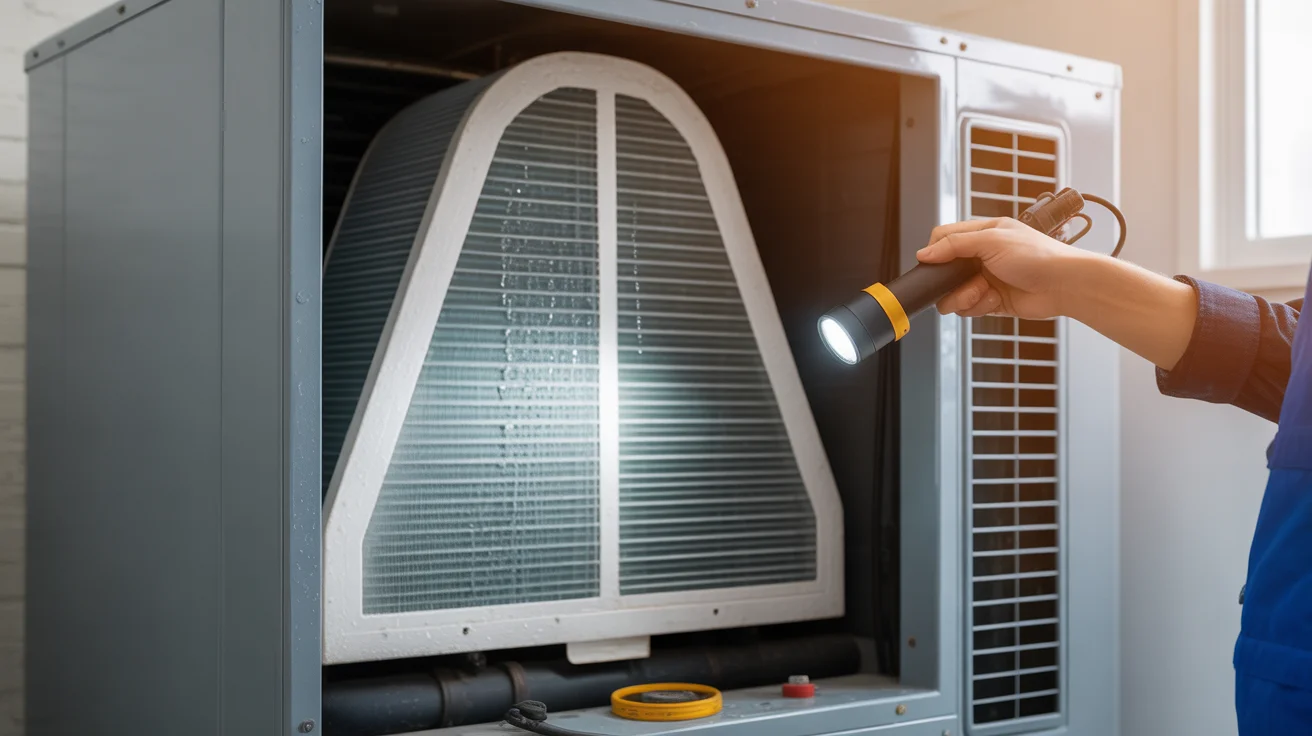
When to call a pro: If the smell persists after a filter change and drain line flush, the evaporator coil needs professional cleaning ($150-$400). I use a commercial coil cleaner and antimicrobial treatment that kills the bacteria colony. A standard AC maintenance visit includes this. For deeper concerns, our indoor air quality guide covers the full picture.
2. Vinegar or Sour Smell
Severity: Low to moderate Cause: Organic buildup, condensate issues, or electric motor problems Cost to fix: $75-$350
When your AC smells like vinegar, it’s usually one of three things.
Condensate pan buildup is the most common culprit. Standing water mixed with dust and organic debris creates a fermentation effect. The drain pan under your indoor unit catches condensation and routes it outside, but if the line is partially clogged, that stagnant water turns sour.
Mold on the coil can produce a sharp, acidic smell rather than the typical musty odor. It depends on the specific mold species growing in your system.
An overheating blower motor occasionally produces a vinegar-like chemical smell from burning insulation. Less common but more serious.
What you can do right now:
- Locate your condensate drain pan (usually under the indoor air handler) and check for standing water
- Clear the drain line with a wet/dry vacuum or flush it with vinegar
- If the smell is sharp and chemical rather than sour, turn off the system and call for service
When to call a pro: If clearing the drain doesn’t solve it within 24 hours, a clogged secondary drain line or cracked drain pan ($150-$350 to replace) could be the issue.
3. Stale or Dusty Smell
Severity: Low Cause: Dust accumulation in ducts or on components Cost to fix: $0-$500
That stale, dusty burst when your AC kicks on for the first time in spring? Totally normal. Dust settles in ductwork during the off-season and gets blown out when the system starts again. In most cases, this clears within a day or two.
I see heavier dust problems in newer Frisco and Prosper construction. Homes built in the last few years sometimes have leftover drywall dust and construction debris in the duct system that never got cleaned out.
What you can do right now:
- Run the system for 24-48 hours. The smell should fade.
- Replace your air filter with a fresh one before the first run of the season.
- Check return vents for visible dust buildup and vacuum them.
When to call a pro: If the dusty smell persists past a few days, or if you’re seeing dust particles blowing from vents, a professional duct cleaning ($300-$500 for a typical North Texas home) solves the problem. Read our full duct cleaning guide to understand when it’s worth the money and when you can skip it.
4. Sweet or Chemical Smell
Severity: High Cause: Refrigerant leak Cost to fix: $200-$1,500
A faintly sweet, almost chloroform-like smell near your AC is a red flag. Refrigerant leaks produce a distinct chemical sweetness that doesn’t smell like any household product.
Refrigerant exposure in enclosed spaces causes headaches, nausea, and dizziness. And the leak means your system is losing cooling capacity every hour.
A small leak repair with refrigerant recharge runs $200-$600. If the leak is in the evaporator coil (common on systems 8-12 years old), you’re looking at $800-$1,500 for coil replacement. R-410A prices have climbed, and if your system uses the older R-22, replacement is the only practical option since R-22 is no longer manufactured.
What you can do right now:
- Open windows to ventilate the area
- Turn off the AC system
- Do not attempt to locate or seal the leak yourself
When to call a pro: Immediately. Refrigerant leaks don’t fix themselves, and running the system low on refrigerant damages the compressor ($2,000-$3,500 to replace). Call (940) 390-5676 and we’ll get a tech out the same day to locate the leak and give you honest repair vs. replace numbers.
5. Rotten Egg or Sulfur Smell
Severity: High to critical Cause: Dead animal in ductwork OR natural gas leak Cost to fix: $150-$500 (animal removal) or emergency gas service (free from utility)
When your AC smells like rotten eggs, you need to figure out the source fast because the two possible causes require very different responses.
Natural gas leak: Utility companies add mercaptan (a sulfur compound) to odorless natural gas so you can detect leaks. If the smell is strong, persistent, and present even when the AC is off, treat it as a gas leak. Evacuate immediately and call Atmos Energy at 866-322-8667 from outside. Do not flip switches or use your phone inside. Our gas smell safety guide has the full emergency protocol.
Dead animal in ductwork: If the smell only appears when the AC runs and is localized to certain vents, a rodent or lizard likely died in your duct system. Unpleasant but not dangerous. The smell peaks 3-5 days after the animal dies.
What you can do right now:
- Determine if the smell is present only when the AC runs (animal) or all the time (possible gas)
- If you suspect gas, evacuate and call the utility. No exceptions.
- If it’s only when the AC runs, note which vents produce the strongest smell
When to call a pro: An HVAC tech can locate and remove the carcass, sanitize the duct section, and seal entry points ($150-$500 depending on accessibility). I find these in attic ductwork frequently in Allen and McKinney homes where squirrels chew through flex duct.
6. Burning or Electrical Smell
Severity: Critical Cause: Overheating motor, melting wire insulation, or electrical short Cost to fix: $200-$1,200
A burning smell from your AC demands immediate action. Turn off the system at the thermostat, then at the breaker. Do not run it again until a technician inspects it.
The three most common sources:
Overheating blower motor ($300-$800 to replace). The bearings seize, the windings overheat, and you smell burning metal and insulation. Capacitors rated for 8-year lifespans fail after 3 years in North Texas heat, and when a failing capacitor forces the motor to work harder, it overheats.
Melting wire insulation ($200-$600 to repair). Loose connections create resistance, resistance creates heat, heat melts wire coating. This is a genuine fire hazard.
Burning dust on heat strips (harmless, seasonal). A brief burning dust scent when heat kicks on for the first time in fall is just dust burning off auxiliary heat strips. Should clear in 15-20 minutes. If it doesn’t, shut down and call.
What you can do right now:
- Turn off the system at the thermostat AND the breaker
- Check for visible smoke or discoloration around the air handler
- Do not reset the breaker repeatedly if it trips
When to call a pro: Immediately for any persistent burning smell. This is a same-day emergency. Call (940) 390-5676. Our trucks carry replacement motors, capacitors, and contactors for same-day repair on the most common failures.
7. Sewage or Waste Smell
Severity: Moderate to high Cause: Dry P-trap, cracked sewer vent, or backed-up condensate line Cost to fix: $75-$500
A sewage smell from your vents almost never means the AC unit itself is the problem. The smell is entering the duct system from somewhere else.
Dry P-trap is the most frequent cause. Your AC system connects to a drain, and that drain’s P-trap (the U-shaped pipe section) can dry out during periods of infrequent use. Without water in the trap, sewer gas travels freely up the line and into your ductwork. This happens a lot during shoulder seasons when the AC cycles infrequently.
Cracked sewer vent line near ductwork allows sewer gas to leak into the attic where your ducts run, and the blower distributes it throughout the house.
Backed-up condensate line connecting to a shared drain can pull sewer odors backward through the AC system.
What you can do right now:
- Pour water down all floor drains near the HVAC system to refill P-traps
- Check for dried-out drains in bathrooms, laundry rooms, and utility areas you don’t use often
- Run water in all sinks and showers to fill traps throughout the house
When to call a pro: If filling P-traps doesn’t solve it within a few hours, the issue is likely a cracked vent line or condensate line problem. An HVAC tech and possibly a plumber need to trace the odor source ($150-$500 depending on the repair).
Quick Reference: AC Smell Diagnosis Chart
| Smell | Urgency | Likely Cause | DIY Fix? | Pro Cost |
|---|---|---|---|---|
| Musty/mildew | Low-moderate | Mold on coil or in ducts | Try filter + drain flush | $150-$400 |
| Vinegar/sour | Low-moderate | Condensate buildup | Clear drain line | $75-$350 |
| Stale/dusty | Low | Dust in ducts | Run system 24-48 hrs | $300-$500 |
| Sweet/chemical | High | Refrigerant leak | No, turn off system | $200-$1,500 |
| Rotten eggs | High-critical | Dead animal or gas leak | Check if gas, evacuate if so | $150-$500 |
| Burning | Critical | Electrical/motor failure | No, shut off power | $200-$1,200 |
| Sewage | Moderate-high | Dry P-trap or sewer vent | Pour water in drains | $75-$500 |
When to Call vs. When to Wait
Not every AC smell needs a service call. Here’s my honest breakdown.
Handle it yourself:
- Dusty smell at season startup (run the system, replace filter)
- Mild musty odor (clean drain line, replace filter, see if it clears in 48 hours)
- Sewage smell (fill P-traps with water first)
Call today, not an emergency:
- Persistent musty smell after DIY steps
- Vinegar smell that won’t clear
- Stale smell lasting more than a week
Call right now:
- Any burning or electrical smell
- Sweet chemical odor (refrigerant)
- Rotten egg smell (evacuate first if you suspect gas)
For any AC smell that concerns you, call (940) 390-5676. I’d rather answer a quick question over the phone than have you ignore a burning smell that turns into a real problem. We serve Frisco, Plano, McKinney, Allen, Prosper, The Colony, Little Elm, and Addison with same-day AC repair service.
Preventing AC Odors Before They Start
Most AC smells are preventable with basic maintenance:
- Change your filter every 30-60 days during cooling season (May through September). A clean filter is your first defense against musty smells and dust buildup.
- Pour vinegar down the condensate drain monthly. One cup kills algae and bacteria before they create odors.
- Schedule annual maintenance before summer. A professional coil cleaning catches problems when they’re cheap to fix, not after they start stinking up your house.
- Keep the area around your indoor unit clean and dry. Moisture and dust near the air handler feed mold growth.
- Seal duct connections in the attic. Loose joints let attic air (and whatever’s living up there) into your air supply.
North Texas humidity means more opportunity for mold, bacteria, and condensate problems than drier climates. A little preventive effort goes a long way.
FAQ
Why does my AC smell musty when I first turn it on?
Moisture sits on the evaporator coil between cycles. Bacteria and mold feed on that moisture, and the smell is strongest at startup because the first rush of air blows across the contaminated coil. Running the system consistently and keeping the drain line clear usually solves it. If it persists, the coil needs professional cleaning.
Can AC smells make you sick?
Some can. Mold spores trigger allergies, asthma, and respiratory irritation. Refrigerant leaks cause headaches and dizziness in enclosed spaces. Sewer gas contains methane and hydrogen sulfide, both harmful with prolonged exposure. If anyone in your household has unexplained respiratory symptoms, check your AC system. Our indoor air quality guide covers the health risks in detail.
How much does it cost to fix a smelly AC in North Texas?
Ranges from $0 (replace your own filter, flush the drain line) to $1,500 (refrigerant leak with coil replacement). The most common professional fix is evaporator coil cleaning at $150-$400. Duct cleaning runs $300-$500. Electrical repairs average $200-$800. I always diagnose before quoting because the smell alone doesn’t tell the whole story.
Should I use air fresheners to cover up AC smells?
No. Air fresheners mask the symptom while the cause gets worse. A musty smell means mold is growing. A burning smell means something is overheating. Covering it up with fragrance doesn’t stop mold from spreading through your ductwork or prevent an electrical component from failing. Find and fix the source.
How often should I clean my AC to prevent odors?
Filter replacement every 30-60 days during summer. Condensate drain flush monthly. Professional coil cleaning and system tune-up once per year (ideally in March or April before peak season). Duct cleaning every 3-5 years, or sooner if you notice persistent odors, visible mold, or have completed home renovations.
Your AC is trying to tell you something. If you’re smelling anything unusual from your vents, call (940) 390-5676 for honest diagnosis and fast repair across North Texas. Jupitair HVAC, serving Frisco, Plano, McKinney, Allen, Prosper, The Colony, Little Elm, and Addison since 2008.