AC Refrigerant Guide: R-22, R-410A, and the 2026 R-454B Transition
Everything North Texas homeowners need to know about AC refrigerant in 2026. R-22 phaseout, R-410A costs rising, R-454B transition explained. Real recharge pricing from a local HVAC pro.

- The Three Refrigerants You Need to Know
- R-22: The Refrigerant That Won’t Go Away Quietly
- R-410A: Still Working, But the Clock Is Ticking
- R-454B: The New Standard (And What It Means for You)
- AC Refrigerant Recharge Costs: The Real Numbers
- 5 Signs Your AC Needs Refrigerant (And 3 Signs It Doesn’t)
- The “R-22 Replacement” Scam I See Every Summer
- When to Repair vs. Replace: The Refrigerant Decision Matrix
+ 2 more sections below...
- The Three Refrigerants You Need to Know
- R-22: The Refrigerant That Won’t Go Away Quietly
- R-410A: Still Working, But the Clock Is Ticking
- R-454B: The New Standard (And What It Means for You)
- AC Refrigerant Recharge Costs: The Real Numbers
- 5 Signs Your AC Needs Refrigerant (And 3 Signs It Doesn’t)
- The “R-22 Replacement” Scam I See Every Summer
- When to Repair vs. Replace: The Refrigerant Decision Matrix
+ 2 more sections below...
A Plano homeowner called me last summer convinced her AC needed “more freon.” She’d been told by another company that a recharge would fix everything for $800. What she actually had was a 19-year-old R-22 system with a corroded evaporator coil. Recharging it would have been like putting premium gas in a car with a cracked engine block.
AC refrigerant confusion is at an all-time high right now. R-22 has been phased out. R-410A prices are climbing. A brand-new refrigerant called R-454B just became the standard for new equipment. If you don’t work in HVAC, it’s genuinely hard to know what applies to your system, what a recharge should cost, and whether someone is trying to sell you something you don’t need.
I’ve been working on North Texas AC systems since 2008. This guide covers every refrigerant you’ll encounter as a homeowner, what each one costs, and how to make smart decisions whether your system is 3 years old or 20.
The Three Refrigerants You Need to Know
Your AC system uses exactly one type of refrigerant. Which one depends on when your system was manufactured. Here’s the breakdown:
| Refrigerant | Also Called | Used In Systems Made | Status in 2026 |
|---|---|---|---|
| R-22 | Freon, HCFC-22 | Before 2010 | Phased out. No new production. |
| R-410A | Puron | 2010 to 2024 | Still works, but no longer in new equipment. |
| R-454B | Opteon XL41 | 2025 and newer | New standard for all new AC systems. |
If your system was installed before 2010, you almost certainly have R-22. Between 2010 and 2024, R-410A. If you bought a new system in 2025 or later, it runs on R-454B.
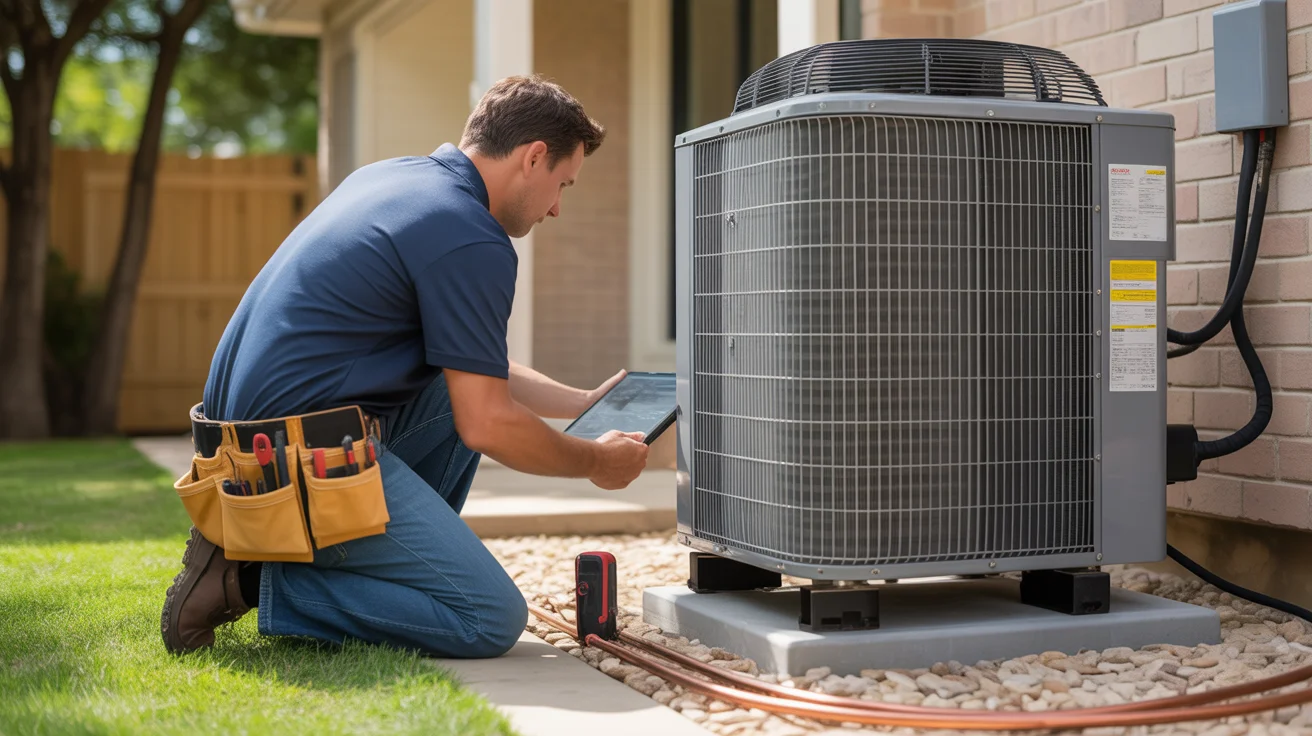
Not sure which one you have? Check the data plate on your outdoor unit. It’s a metal sticker (usually on the side panel) that lists the refrigerant type along with the model and serial number.
R-22: The Refrigerant That Won’t Go Away Quietly
R-22 was the standard freon for AC systems for decades. It worked well, technicians knew it inside and out, and nobody thought twice about it. Then scientists confirmed it was destroying the ozone layer.
The EPA began phasing out R-22 in 2010. By January 2020, all new production and import of R-22 stopped completely. That was six years ago. The only R-22 available today is reclaimed from decommissioned systems or recovered during service calls.
What R-22 Costs in 2026
The supply-and-demand math on R-22 is brutal. When I started in this business, R-22 cost $8 to $12 per pound wholesale. Today, if you can find it at a supply house in the DFW area, expect to pay $90 to $150 per pound. Some distributors are quoting over $200 per pound when supply runs low in midsummer.
A typical R-22 recharge (3 to 5 pounds) runs $400 to $750 including labor. That’s just to add refrigerant. It doesn’t fix the leak that caused the system to lose refrigerant in the first place. Leak repair adds another $200 to $800 depending on location and severity.
When Recharging R-22 Makes No Sense
I tell customers this straight: if your R-22 system needs more than a minor top-off, you’re better off replacing it. Here’s why.
- Cost per recharge keeps climbing. Every year, R-22 gets scarcer and more expensive. A recharge that costs $600 today could cost $900 next summer.
- The leak will come back. R-22 systems are 15 to 25+ years old at this point. Old copper lines, corroded coils, and worn Schrader valves don’t heal themselves.
- Efficiency gap is massive. A new 16-SEER2 system uses 30% to 50% less electricity than a 10-SEER R-22 unit. In North Texas, where your AC runs 2,400+ hours per year, that’s $400 to $800 in annual energy savings.
- No R-22 replacement is a true drop-in. Products marketed as “R-22 substitutes” (R-407C, R-422D, MO99) work in some systems but reduce efficiency and can void warranties on remaining components.
If your R-22 system is still cooling well with no leaks, ride it out. The moment it needs significant refrigerant work, that’s your signal to replace.
R-410A: Still Working, But the Clock Is Ticking
R-410A replaced R-22 starting in 2010 and became the dominant residential refrigerant for 15 years. If your AC was installed between 2010 and 2024, this is what’s in your system.
The good news: R-410A refrigerant is not being banned. Your R-410A system is perfectly legal to own, operate, and service. Nobody is coming to make you swap it out.
The less-good news: R-410A has a high global warming potential (GWP of 2,088, compared to R-454B’s GWP of 466). The AIM Act, passed by Congress in 2020, directed the EPA to phase down production of high-GWP refrigerants. As of January 2025, manufacturers stopped producing new residential equipment that uses R-410A.
What This Means for Your R-410A System Right Now
Your system will continue to work exactly as it always has. R-410A is still manufactured for servicing existing equipment. Supply houses across North Texas stock it. I can get it tomorrow.
But pricing tells a story. R-410A wholesale prices have risen from $8 to $12 per pound a few years ago to $25 to $45 per pound in 2026, depending on the distributor. A standard AC refrigerant recharge for an R-410A system (2 to 4 pounds) costs $150 to $400 including labor. Still reasonable, but roughly double what it cost in 2022.
Will R-410A prices spike like R-22 did? Probably not as dramatically. R-410A can be recovered, reclaimed, and resold (R-22 couldn’t as easily). The reclaim infrastructure is much better now. But gradual price increases over the next 5 to 10 years are a safe bet.
R-410A Recharge: When It Makes Sense
Unlike R-22, recharging an R-410A system is still a reasonable repair in most cases. The math works if:
- Your system is less than 10 years old
- The leak is accessible and repairable
- Total repair cost (leak fix + recharge) stays under $600
- The rest of the system is in good condition
If your R-410A system is 12 to 15 years old and needs a major refrigerant repair, it starts making more sense to replace. Not because of the refrigerant, but because the system is approaching end-of-life anyway. I cover the full repair-vs-replace math in my AC repair cost guide.
R-454B: The New Standard (And What It Means for You)
Every new residential AC system manufactured after January 1, 2025 uses R-454B refrigerant (or in some cases, R-32). This isn’t optional for manufacturers. It’s federal law under the AIM Act.
R-454B is a blend of R-32 and R-1234yf. It delivers a 78% reduction in global warming potential compared to R-410A while performing at similar efficiency levels. Some manufacturers report up to 5% efficiency gains in systems designed specifically for R-454B.
The Flammability Question
You’ll see articles calling R-454B “mildly flammable.” That’s technically accurate (it carries an A2L safety classification), and I understand why it raises eyebrows. Here’s the practical reality.
R-454B requires a direct flame or spark source, specific concentration levels, and confined space conditions to ignite. The equipment designed for R-454B includes built-in safety features (leak detection sensors, emergency shutoffs, specific ventilation requirements) that make ignition scenarios essentially impossible in a properly installed residential system.
I’ve installed R-454B systems. The safety protocols are thorough. If your equipment is installed by a licensed, trained technician following current building codes, flammability is not a real-world concern. What I would not recommend is having an unlicensed handyman install any HVAC equipment, especially with the new refrigerant requirements.
Should You Rush to Buy an R-454B System?
No. If your current R-410A system is working well, there’s no reason to replace it just because a new refrigerant exists. Waiting actually works in your favor because:
- Prices will stabilize. New technology always carries early-adopter pricing. R-454B equipment costs are already dropping as production scales up.
- Technician training is still catching up. More technicians trained on R-454B means more competition and better service.
- Your R-410A system has years left. A well-maintained R-410A unit installed in 2018 should run until 2030 to 2035 with no refrigerant supply issues.
When your current system reaches the end of its life (typically 12 to 18 years in North Texas), your replacement will use R-454B. That’s the natural upgrade path. No rush required.
AC Refrigerant Recharge Costs: The Real Numbers
Every homeowner searching “AC refrigerant recharge cost” deserves straight pricing, not “it depends” followed by a sales pitch. Here’s what I charge and what you should expect across the North Texas market in 2026:
| Refrigerant | Cost Per Pound | Typical Recharge (Labor Included) | Leak Repair (Additional) |
|---|---|---|---|
| R-22 | $90-$150/lb | $400-$750 | $200-$800 |
| R-410A | $25-$45/lb | $150-$400 | $150-$600 |
| R-454B | $30-$50/lb | $175-$425 | $150-$600 |
A few things to keep in mind with these numbers.
Refrigerant doesn’t just “run out.” Your AC is a sealed system. If it’s low on refrigerant, there’s a leak somewhere. Any company that wants to recharge your system without finding and fixing the leak is selling you a temporary fix. You’ll be calling again in 6 to 12 months.
Pound counts vary by system size. A 2-ton unit (common in smaller North Texas homes) holds 4 to 8 pounds total. A 5-ton unit (typical for 2,500+ sq ft homes) holds 12 to 20 pounds. Most recharges only add 2 to 5 pounds, not a full charge.
After-hours pricing adds $150 to $250. If your AC dies at 2 AM in July, you’ll pay a premium for emergency service. That’s standard across the industry.
5 Signs Your AC Needs Refrigerant (And 3 Signs It Doesn’t)
Before you call for a recharge, check these symptoms. Some point to low refrigerant. Others look similar but have cheaper fixes.
Signs That Suggest Low Refrigerant
- Warm air from vents while the system runs. The blower works, but the air isn’t cold. This is the classic low-refrigerant symptom.
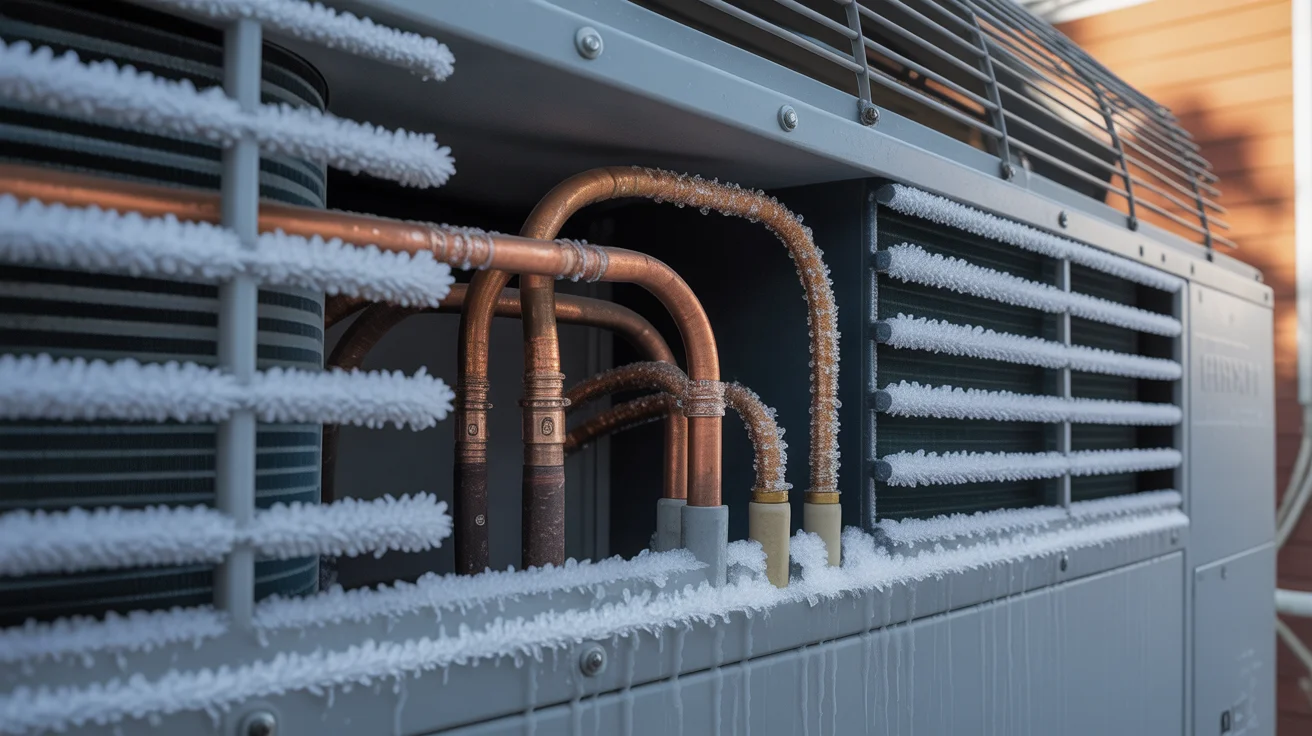
- Ice forming on refrigerant lines or the evaporator coil. Counterintuitive, but low refrigerant pressure causes the remaining refrigerant to get too cold, freezing moisture on the coil.
- Hissing or bubbling sounds near the indoor or outdoor unit. This often indicates an active refrigerant leak.
- Electric bills spiking with no change in usage. A system low on refrigerant runs longer and harder to maintain temperature.
- The system runs constantly but never reaches the set temperature. On 100°F+ days in North Texas, a properly charged system should still reach your thermostat setting within a few degrees.
Signs That Look Like Low Refrigerant But Aren’t
- Dirty air filter. A clogged filter restricts airflow and makes the system feel like it’s not cooling. This is the number one misdiagnosis I see. Check your filter before calling anyone.
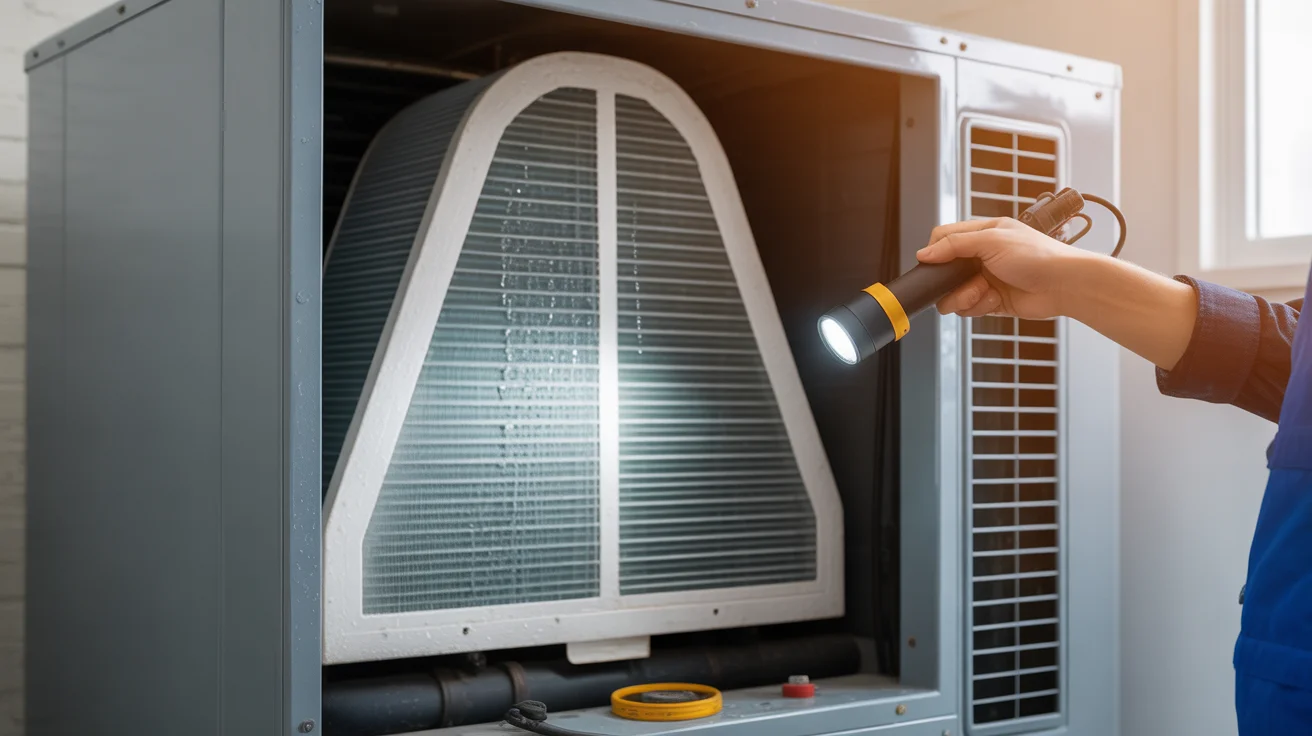
- Frozen coil from airflow restriction. Ice on the coil can come from a dirty filter or a failing blower motor, not just low refrigerant. I see this weekly during summer.
- Thermostat issues. A miscalibrated or failing thermostat can make a perfectly charged system appear to underperform. Try setting it 5 degrees lower than normal. If cold air starts flowing, the issue is the thermostat, not the refrigerant.
For a full diagnostic walkthrough, check my AC compressor repair guide which covers the overlap between refrigerant issues and compressor problems.
The “R-22 Replacement” Scam I See Every Summer
Every summer, I get calls from homeowners who were told they need an “R-22 freon replacement” refrigerant like R-407C or MO99 because “R-22 isn’t available anymore.” The pitch goes something like this: for $1,200, they’ll flush your system and recharge it with a drop-in substitute that works “just as well.”
Here’s what they don’t tell you.
These substitutes operate at different pressures and temperatures than R-22. They reduce system efficiency by 5% to 15%. They can damage seals and gaskets designed for R-22. And if your compressor fails afterward, the manufacturer won’t cover it because you used an unapproved refrigerant.
The honest conversation is simple. If your R-22 system still cools well, keep running it and maintain it. If it needs major refrigerant work, skip the band-aid and replace the whole system. The $1,200 “drop-in replacement” is money you could put toward a new, efficient system that will cost less to operate every month.
When to Repair vs. Replace: The Refrigerant Decision Matrix
I built this decision framework from 15+ years of North Texas AC repair calls. It’s not perfect for every situation, but it handles 90% of the refrigerant decisions I help homeowners make.
Replace the system if:
- You have R-22 and need more than a minor top-off (under 1 pound)
- Total repair cost exceeds 40% of a new system’s price
- The system is over 15 years old regardless of refrigerant type
- You’ve had two or more refrigerant leaks in the past three years
- Your current SEER rating is below 13
Repair and recharge if:
- You have R-410A and the system is under 10 years old
- The leak is in an accessible location (service valve, Schrader cap)
- Total repair plus recharge cost stays under $600
- The rest of the system is in good mechanical condition
Wait and monitor if:
- Your R-410A system is 10 to 14 years old with a first-time small leak
- You’re planning to replace within the next 2 to 3 years anyway
- The recharge holds through the current cooling season
FAQ
How often does an AC need refrigerant?
Never, if everything is working correctly. Refrigerant doesn’t get “used up” like gasoline. A properly sealed AC system should hold its charge for its entire lifespan. If your system needs refrigerant added, there’s a leak that should be found and fixed.
Can I recharge my own AC?
No. EPA regulations require a Section 608 certification to purchase and handle AC refrigerants. Beyond the legal issue, adding the wrong amount of refrigerant (too much or too little) causes compressor damage that costs far more than a professional recharge. This is always a professional-only job.
Is R-410A going to become as expensive as R-22?
Unlikely to reach R-22 levels. R-410A has a much better reclaim and recovery infrastructure. It will get more expensive gradually over the next decade, but the extreme scarcity that drives R-22 prices up to $150+ per pound probably won’t happen with R-410A.
Will my R-410A system still work in 5 years?
Yes. The R-410A phaseout applies to manufacturing new equipment, not to operating or servicing existing systems. R-410A will remain available for service and repairs for many years. Your system will work until it reaches the end of its mechanical life, same as always.
Is R-454B safe for my home?
Yes. R-454B carries an A2L (mildly flammable) safety classification, but the equipment designed for it includes leak detection, automatic shutoffs, and ventilation safeguards. When installed by a licensed technician to current building codes, the real-world risk is negligible. Think of it like natural gas in your home. Technically flammable, but safely managed by proper equipment and installation.
How do I know which refrigerant my system uses?
Check the data plate on your outdoor unit. It’s a metal label (usually on the side or back panel) that lists the refrigerant type along with model number, serial number, and electrical specifications. If you can’t find it, any HVAC technician can identify it in about 30 seconds.
Get Your Refrigerant Questions Answered
If your AC isn’t cooling like it should, or you’re not sure whether to recharge, repair, or replace, I’m happy to take a look and give you a straight answer. No pressure, no upsell pitch. Just an honest assessment from someone who’s worked on thousands of North Texas systems.
Call (940) 390-5676 or schedule a service call. I serve Frisco, Plano, McKinney, Allen, Prosper, The Colony, Little Elm, and Addison. Emergency service available 24/7 with a 2-hour response time.