AC Blower Motor: Signs of Failure, Repair Costs, and Replacement Guide
Is your AC blower motor failing? North Texas HVAC pro Gary Musaraj breaks down the warning signs, real replacement costs ($400-$1,200), PSC vs ECM motors, and when to repair vs replace.
- What Your AC Blower Motor Actually Does
- 6 Warning Signs Your Blower Motor Is Failing
- What Blower Motor Replacement Actually Costs in North Texas (2026)
- Before You Call for Service: DIY Troubleshooting Checklist
- Repair vs Replace: Making the Right Call
- Why Blower Motors Fail Faster in North Texas
- Frequently Asked Questions
- When to Call a Professional
- What Your AC Blower Motor Actually Does
- 6 Warning Signs Your Blower Motor Is Failing
- What Blower Motor Replacement Actually Costs in North Texas (2026)
- Before You Call for Service: DIY Troubleshooting Checklist
- Repair vs Replace: Making the Right Call
- Why Blower Motors Fail Faster in North Texas
- Frequently Asked Questions
- When to Call a Professional
Your AC blower motor is the component that actually pushes cooled (or heated) air through your ductwork and into every room of your house. When it fails, your system might still be running outside, but you’ll feel zero airflow from the vents. It’s one of the most common AC repairs I handle during North Texas summers, and it’s also one of the most misdiagnosed.
I’ve replaced hundreds of blower motors across Frisco, Plano, McKinney, and the surrounding DFW suburbs over the past 15+ years. This guide covers everything you need to know: what a blower motor actually does, how to spot the warning signs early, what replacement costs in 2026, and whether you should repair or replace your entire system.
What Your AC Blower Motor Actually Does
Think of your HVAC system as having two halves. The outdoor unit (condenser) handles refrigerant and heat exchange. The indoor unit (air handler) is where your blower motor lives. Its only job is to spin a fan wheel that pulls air through the return ducts, pushes it across the evaporator coil to get cooled, and forces it out through your supply vents.
Without a working blower motor for your AC unit, the rest of the system is useless. The compressor can run, the refrigerant can cycle, but none of that cold air reaches your living room. I’ve had customers in Allen and Prosper call me saying “my AC is running but not cooling,” and about 30% of the time the outdoor unit is functioning perfectly. The blower motor inside just quit.
PSC vs ECM: Two Types You Need to Know
Not all blower motors are equal. The type your system uses determines everything from replacement cost to energy bills.
| Feature | PSC Motor | ECM Motor |
|---|---|---|
| Speed | Single speed (full blast or off) | Variable speed (adjusts to demand) |
| Part Cost | $150-$450 | $400-$800 |
| Total Replacement | $400-$700 | $700-$1,200 |
| Energy Use | Higher (runs at 100% always) | Up to 75% less electricity |
| Noise Level | Louder | Noticeably quieter |
| Common In | Systems built before 2015 | Most systems 2015 and newer |
| Lifespan | 10-15 years | 15-20 years |
PSC (Permanent Split Capacitor) motors have one speed. When your thermostat calls for air, the motor kicks on at full power. Older homes across Frisco and Plano almost always have PSC motors.
ECM (Electronically Commutated Motor) motors are the newer standard. They ramp up and down based on how much heating or cooling your home needs. They’re significantly more expensive to replace, but they use so much less electricity that most homeowners recoup the extra cost within 5 to 7 years. In North Texas, where your AC runs 2,400+ hours per year, the savings add up fast.
6 Warning Signs Your Blower Motor Is Failing
Blower motors rarely die without warning. Catching these signs early can save you from a complete failure on a 107-degree July afternoon.
1. Weak or Reduced Airflow From Vents
Put your hand up to a supply vent while the system is running. You should feel strong, steady air. If the airflow feels weak compared to what you’re used to, the motor could be losing power. This is especially noticeable in rooms farthest from the air handler.
Before blaming the motor, check your air filter first. A clogged filter restricts airflow and mimics a failing blower motor almost exactly. I’d estimate 40% of “HVAC blower motor not working” calls I get in the summer turn out to be a $10 filter swap.
2. Strange Noises From the Indoor Unit
A healthy blower motor is nearly silent. When it starts failing, you’ll hear it. The sounds to watch for:
- Squealing or screeching: Worn bearings or a slipping belt (on older belt-driven models). This means friction is building and the motor is working harder than it should.
- Grinding or metal-on-metal: The bearings have failed. This is urgent. Running the motor in this state can damage the fan wheel and housing, turning a $500 repair into a $1,200 one.
- Rattling: Could be a loose mounting bracket, or the fan wheel is wobbling on a worn shaft.
- Humming but not spinning: The motor is getting power but can’t start. Usually a bad capacitor (cheap fix) or a seized motor (replacement needed).
For a deeper breakdown of every AC sound and what it means, check out my guide to AC noises and what they mean.
3. The Motor Starts Then Shuts Off Repeatedly
Your blower kicks on, runs for a few minutes, then cuts out. Waits. Starts again. This short cycling usually means the motor is overheating internally. Most blower motors have a thermal overload switch that shuts them down to prevent a burnout. Once they cool down, they restart.
This is your system giving you a warning. The motor is dying, but it’s not dead yet. If you catch it at this stage, you can schedule the replacement on your timeline instead of scrambling for an emergency call on a Saturday afternoon.
4. Higher Than Normal Electric Bills
An ECM blower motor running at peak efficiency uses a fraction of what a failing motor consumes. But even a PSC motor, when its bearings are worn or windings are degraded, draws significantly more electricity to produce the same airflow. If your summer electric bill jumped $40 to $80 with no other explanation, the blower motor deserves a look.
5. Burning Smell From the Vents
An electrical or hot plastic smell coming from your supply vents is a serious warning sign. This usually means the motor windings are overheating, or dust buildup on the motor is getting hot enough to burn. Turn off your system immediately and call for service. A motor that’s running hot enough to produce a burning smell is a fire risk.
6. Complete Silence From the Air Handler
The most obvious sign. Your thermostat is set to cool, the outdoor unit is running, but the indoor air handler is completely silent. No fan noise, no airflow, nothing. At this point, the motor has either seized, lost its electrical connection, or the capacitor has failed.
Quick test: switch your thermostat fan setting from AUTO to ON. If you still hear nothing, the motor or its capacitor is the problem.
What Blower Motor Replacement Actually Costs in North Texas (2026)
Here’s what you’ll pay in the DFW area for a blower motor replacement in 2026. These are real numbers from my service calls, not national averages that don’t account for our market.
| Repair | Parts | Labor | Total Cost |
|---|---|---|---|
| Capacitor only (if motor is fine) | $15-$40 | $100-$150 | $150-$200 |
| PSC motor replacement | $150-$450 | $200-$300 | $400-$700 |
| ECM motor replacement | $400-$800 | $250-$350 | $700-$1,200 |
| Fan wheel + motor combo | $350-$900 | $250-$350 | $600-$1,400 |
| Emergency/after-hours | Same parts | +$150-$250 | Add to above |
A few things that affect your final price:
- Motor type matters most. ECM motors cost roughly double what PSC motors cost. If your system has an ECM, budget accordingly.
- Warranty status. Most manufacturer warranties cover the blower motor for 5 to 10 years. If your system is under warranty, you only pay labor ($200-$350). Check your paperwork or call your installer.
- Accessibility. Attic installations in Plano and McKinney homes are tougher to work in during summer. Some companies charge more for attic work. I don’t, but it’s worth asking.
- Aftermarket vs OEM. OEM (original manufacturer) motors typically cost 20-40% more than aftermarket. For most systems, a quality aftermarket motor works perfectly fine and carries its own warranty.
For the full picture on all AC repair pricing, see my complete AC repair cost breakdown for North Texas.
Before You Call for Service: DIY Troubleshooting Checklist
You can safely check these yourself before scheduling a service call. About 1 in 3 “blower motor not working” situations I respond to turn out to be something simpler.
Check your air filter. Pull it out and hold it up to light. If no light passes through, it’s completely blocked. A severely clogged filter can cause the motor to overheat and trigger the safety shutoff. Replace the filter, wait 30 minutes for the motor to cool, then try again.
Check the circuit breaker. Your air handler has its own breaker. Look for a breaker in the OFF position or sitting in the middle (tripped). Reset it once. If it trips again, stop and call a technician. Repeated tripping means a short circuit.
Check the thermostat fan setting. Set it to ON (not AUTO). This tells the blower to run continuously regardless of whether the system is calling for cooling. If the blower responds, the motor works and the issue is elsewhere.
Listen carefully. If you hear a hum from the air handler but the fan isn’t spinning, that often points to a failed capacitor (about $150 to fix) rather than the motor itself. The capacitor provides the startup jolt the motor needs to begin spinning.
Check for ice. Look at the visible part of the evaporator coil and the copper refrigerant lines. Ice buildup restricts airflow and forces the motor to work harder. If you see ice, turn the system off and switch the fan to ON to melt it. Ice usually signals a refrigerant or airflow problem that needs professional attention.
Repair vs Replace: Making the Right Call
Not every blower motor issue means you need a new motor. Here’s how I guide my customers through this decision.
Repair makes sense when:
- The capacitor failed but the motor is fine (most common and cheapest scenario)
- The motor is less than 8 years old with worn bearings that can be serviced
- Your system is relatively new (under 10 years) and otherwise healthy
Replace the motor when:
- The motor windings are burned out (no repairing this)
- Bearings have seized and damaged the shaft
- The motor is cycling on thermal overload repeatedly
- It’s a PSC motor in a system that’s 12+ years old (consider upgrading to ECM)
Replace the entire system when:
- The system is 15+ years old and the motor fails
- Refrigerant type is R-22 (phased out, increasingly expensive)
- You’ve already spent $1,500+ on repairs in the past two years
- Energy bills are consistently climbing despite repairs
I tell my customers in Frisco and The Colony the same thing: if your system is under 10 years old, replace the motor. If it’s over 15, that motor failure is your system telling you it’s time. The 10-to-15-year range is where the decision gets harder, and that’s where a honest technician’s assessment matters most.
Why Blower Motors Fail Faster in North Texas
National averages say blower motors last 15 to 20 years. In North Texas, I see them fail in 10 to 15. The math is simple.
Your AC runs roughly 2,400 hours per year here, compared to 600 hours in northern states. That’s four times the wear on the bearings, windings, and capacitor. Add in the dust and particulates that blow through DFW (construction dust in Prosper and Little Elm is especially bad right now), and those motor internals take a constant beating.
Summer brownouts and voltage fluctuations also stress blower motors. When voltage drops during peak demand, the motor draws more amperage to compensate. Repeated voltage stress degrades the windings over time. A whole-home surge protector ($200-$400 installed) is one of the smartest investments you can make to protect your blower motor and every other electrical component in your HVAC system.
Frequently Asked Questions
How long does it take to replace a blower motor?
A straightforward AC fan motor replacement takes 1 to 2 hours for a professional. If the unit is in an attic or a tight closet, add another 30 minutes to an hour. Most replacements are completed in a single visit.
Can I replace a blower motor myself?
Technically, yes. But I wouldn’t recommend it unless you have electrical experience. Blower motors involve line voltage (120V or 240V), capacitor discharge risks, and precise wiring connections. A wiring mistake can fry the new motor on startup or create a fire hazard. The labor cost for professional installation ($200-$350) is worth the safety and the warranty coverage.
Should I upgrade from PSC to ECM when replacing?
If your air handler supports it and you plan to keep the system for 5+ more years, yes. The energy savings in North Texas are substantial because the motor runs so many hours per year. You’ll pay $300 to $500 more upfront but save $50 to $100 per year on electricity. For systems over 12 years old, though, put that money toward a full system replacement instead.
Why does my blower motor keep tripping the breaker?
A blower motor that trips the breaker is drawing too much current. Common causes include seized bearings (the motor can’t spin freely), a short in the motor windings, or a failing capacitor forcing the motor to draw excessive amperage. This needs professional diagnosis. Don’t keep resetting the breaker.
Is a blower motor the same as the condenser fan motor?
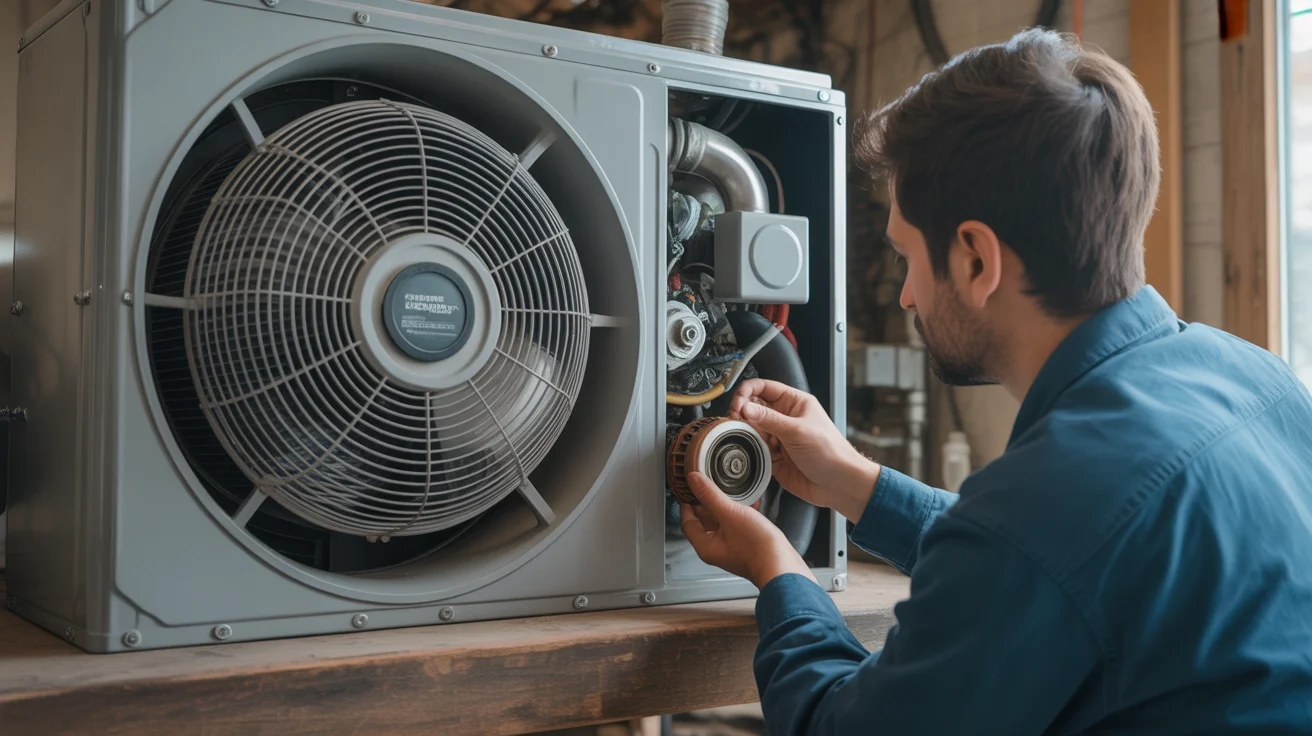
No. The blower motor is inside your home in the air handler. The condenser fan motor is outside in the AC unit. They’re completely different parts with different costs. When someone says their “AC fan motor” is broken, I always ask which unit they mean, because the repair approach and cost are different.
When to Call a Professional
If you’ve gone through the DIY checklist above and your blower motor still isn’t working, it’s time for a professional diagnosis. Blower motor issues that go unaddressed strain your entire system. A failing motor that keeps running can damage the fan wheel, overheat the control board, and even lead to compressor failure.
I offer same-day AC repair service across Frisco, Plano, McKinney, Allen, Prosper, The Colony, Little Elm, and Addison. The diagnostic fee is $89 and gets waived if you proceed with the repair.
Call (940) 390-5676 to schedule blower motor diagnosis and repair. If your system is completely down during summer heat, mention it when you call. I prioritize no-cooling emergencies and offer 2-hour response times for urgent situations.