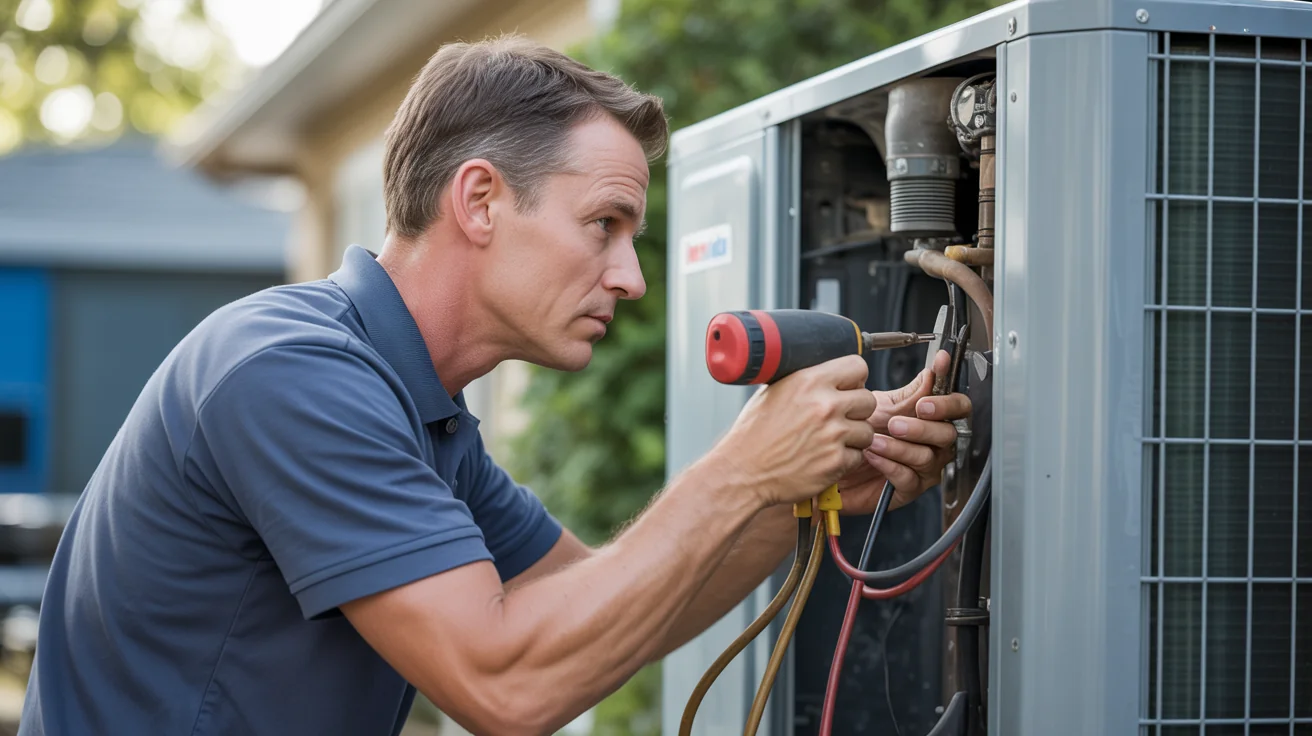
Texas Storm Season HVAC Protection Guide: Complete Weather Preparedness
Complete Texas storm season HVAC protection guide covering severe weather preparation, equipment protection, damage prevention, and emergency response.
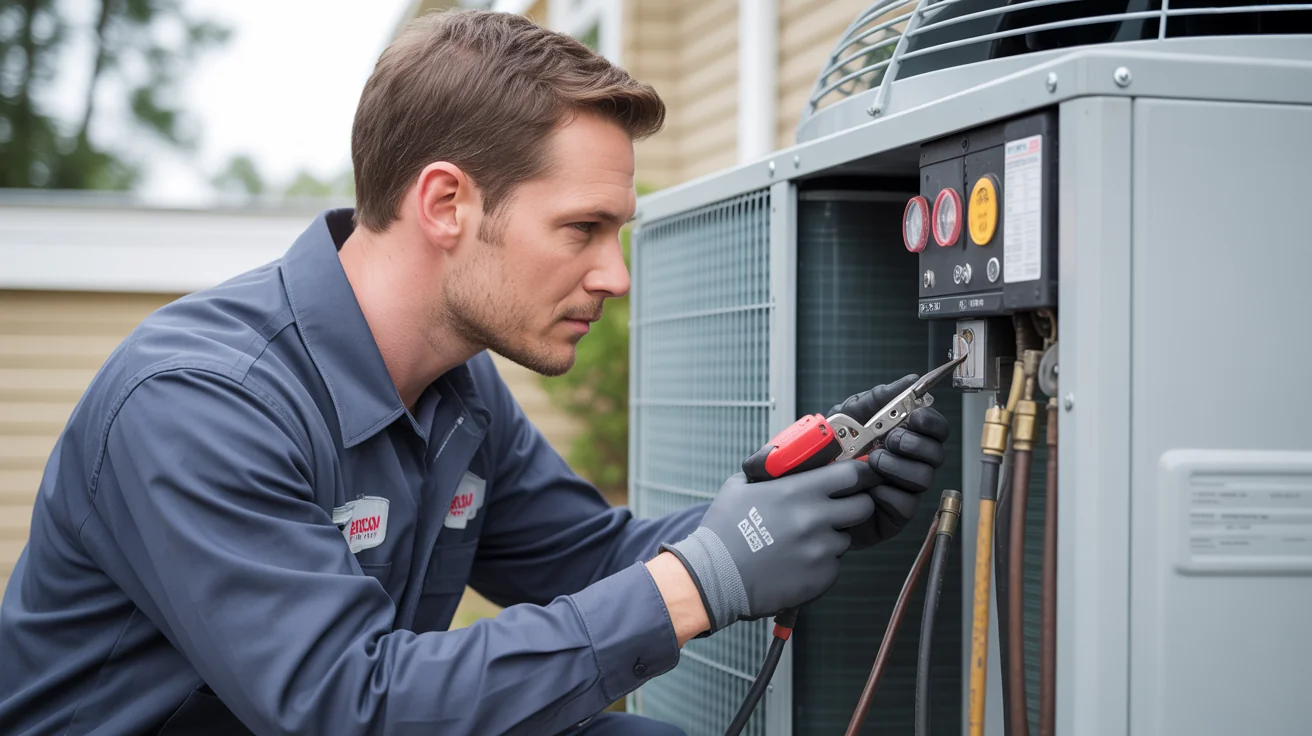
Protect your HVAC system from Texas storms by installing a hail guard ($200-$500), shutting off the system before storms arrive, and maintaining 15 feet of clearance from trees. During severe weather warnings, switch your thermostat to OFF and shut off the disconnect box near the outdoor unit. After hail, check condenser fins for damage before restarting—bent fins reduce efficiency by 10-25%. Golf ball-sized hail can destroy condenser coils ($1,500-$3,000 replacement). File insurance claims within 30 days with photo documentation.
The $38,400 Storm Disaster That Started with Golf Ball Hail
I got the call on a Wednesday morning last March. The Miller family, nice folks over in North Texas, had just taken a twenty-minute beating from golf ball-sized hail. Their roof looked like somebody went at it with a ball-peen hammer. Both cars, done. And their HVAC condenser? Looked like Swiss cheese.
But here’s the part that really got to them.
The hail punched clean through their condenser coils. Water found its way into the ductwork, and from there it spread through the house like a slow-motion flood. By the time they noticed, water was dripping from ceiling vents in three rooms. Three.
The bill made me wince, and I wasn’t even the one paying it: $18,600 for system replacement at emergency rates. $12,800 in water damage from flooded ductwork. $4,200 for a hotel while the house got put back together. $2,800 in ruined belongings. And $6,500 out of pocket after insurance did its thing.
Total: $38,400 from one storm.
You know what would’ve stopped the whole mess? A $180 hail guard and about $200 in professional storm prep. That’s it.
Here’s what gets me: After 15+ years of post-storm service calls across North Texas, I’d estimate 9 out of 10 homeowners have zero protection on their outdoor equipment. None. We live in Tornado Alley. Hail Alley. Whatever you want to call it. And people leave $15,000 worth of equipment sitting outside like it’s a lawn ornament.
Storm season coming up? Call Jupitair HVAC at (940) 390-5676 for storm season HVAC protection and emergency response across North Texas.
Why Texas Weather Wants to Destroy Your HVAC System
I tell people all the time: we’re sitting at the crossroads of every kind of severe weather you can imagine. And your outdoor AC unit? It’s just sitting there taking it.
Texas Storm Statistics (Annual Averages):
Around 132 tornadoes touch down in Texas every year. That’s not some freak thing. That’s normal here. Your condenser is out there with no roof over it, no garage to hide in, just bolted to a pad. Hail damage alone runs over $1.6 billion a year statewide, and a huge chunk of that is HVAC equipment because those units are completely exposed. Straight-line winds above 80 mph? They’ll shift a condenser off its pad, rip electrical connections loose, and send your neighbor’s patio furniture through your coils. And flash flooding will submerge ground-level equipment faster than you’d believe, turning a $12,000 system into an expensive paperweight.
North Texas Storm Concentration:
Our peak season runs March through June, then picks back up September through November. That’s a lot of months to be vulnerable. Being in the middle of Hail Alley’s epicenter means some neighborhoods get hit with damaging hail every single year. Not occasionally. Annually. We average over 50 severe weather days a year in the DFW area. And the urban heat island effect actually makes storms worse over the metro, which is exactly where most of the HVAC equipment is. Great.
Understanding Texas’s unique power grid matters here too. Learn how ERCOT operates and what it means for your HVAC system during extreme weather in our ERCOT Grid Guide.
Understanding Texas Storm Threats to HVAC Systems
Hail Damage: The Silent HVAC Killer
This is the big one, and it’s the one I see the most damage from. People think about their roof and their car when hail hits. Your HVAC? Afterthought. But it shouldn’t be.
Hail Impact on HVAC Equipment:
Marble-sized hail will bend your condenser fins. Golf ball-sized hail? It’ll punch right through the coils and you’ve got refrigerant leaking everywhere. That’s a coil replacement north of $2,500, assuming nothing else got wrecked. Fan blades get destroyed too, and when an unbalanced fan keeps spinning, it takes out bearings and the motor with it. Hail also cracks open the housing that protects your electrical components, which creates short-circuit risks and potential fire hazards. And if a refrigerant line gets punctured, you’re often looking at a full system replacement because the damage cascades through everything.
Hidden Hail Damage Problems:
This is what really worries me. Tiny dents in the coils that you can’t see with your eyes. They’ll cut your efficiency by 15-30%, and you won’t know until your electric bill shows up 40% higher than normal. Electrical insulation gets compromised during a storm but might not fail for weeks or months. By then, good luck proving it was storm-related for your insurance claim. Housing dents mess with airflow in subtle ways. Things get noisier over time. And mounting hardware that took a hit causes your unit to slowly shift, stressing connections until something breaks three months later.
Professional Hail Assessment:
When I inspect a system after a hail storm, I’m using thermal imaging to catch coil damage you’d never spot by just looking. I run efficiency tests that measure exactly how much performance you lost, which gives the insurance company numbers they can actually work with. Electrical safety checks catch the dangerous stuff before you flip the system back on. And everything gets documented in detail for your claim.
Wind Damage: More Than Just Blown Equipment
People picture a tornado picking up their condenser and throwing it down the street. That happens, sure. But straight-line winds do plenty of damage without a tornado.
Straight-Line Wind Threats:
A condenser that wasn’t anchored properly will slide right off its pad in 80 mph winds. Flying debris turns into projectiles during storms, and those thin aluminum fins don’t stand a chance. Ductwork connections in the attic can separate when the house flexes in high winds, which lets moisture and debris into your air distribution system. Electrical connections get stressed and exposed, creating real safety hazards.
Tornado and Severe Wind Protection:
Enhanced anchoring systems can keep your equipment in place through some serious wind speeds. Debris shields protect the coils from flying objects. Some newer thermostats and monitoring systems can automatically shut down your equipment when conditions get dangerous. And after a severe event, you want a technician out there fast to assess damage and get things restored safely.
Flooding: The Hidden HVAC Destroyer
Flash floods are sneaky. One bad thunderstorm and suddenly your condenser is sitting in six inches of water. In North Texas, this happens more than people realize.
Flash Flood Risks:
If water reaches the electrical components of your outdoor unit, it’s usually a total loss. Ductwork that takes on flood water spreads contaminated moisture throughout your entire house. Water and live electrical connections are a fire and electrocution risk. And if the ground shifts enough to move the concrete pad, your whole mounting system is compromised.
Flood Protection Strategies:
Elevating your equipment above the 100-year flood line is the smart move if your property sits in a low area. Waterproof covers on electrical connections prevent water from getting where it shouldn’t. Proper drainage around the unit keeps water flowing away. And if flooding does happen, knowing how to safely shut the system down prevents the worst outcomes.
Pre-Storm HVAC Protection Measures
Physical Equipment Protection
Hail Guards and Covers:
I install a lot of these, and they’re honestly the best money you can spend on storm protection. A heavy-duty aluminum hail guard over the condenser coils stops the worst of it. Impact-resistant fan guards keep the blades intact. Electrical box covers shield your control components from water and debris. And if you’ve got a quick-deploy storm cover, you can throw it on when a watch gets issued and pull it off after the storm passes.
Professional Installation Benefits:
Sizing matters here. Put the wrong guard on and you restrict airflow, which creates a whole different problem. I’ve seen DIY hail guards that were mounted so loosely they became projectiles themselves during a storm. That’s worse than having nothing. Professional installation means proper airflow is maintained, manufacturer warranties stay intact, and the protection actually protects.
Equipment Anchoring and Securing
Wind-Resistant Mounting:
Hurricane straps that exceed local code requirements. That’s the baseline. Reinforcing the concrete pad so the unit stays put in severe weather. Anti-vibration mounts that also improve storm resistance. And flexible connections on the utility lines so the system has a little give during movement instead of snapping.
Professional Securing Services:
I’ll do an engineering assessment of your specific setup. Every property is different. Then we bring everything up to code or beyond, install proper mounting, and come back annually to verify everything is still solid. Bolts loosen. Concrete cracks. Things change over time.
Landscaping and Environment Preparation
Storm-Resistant Landscaping:
That big oak tree hanging over your condenser? It’s a problem waiting to happen. I can’t tell you how many calls I get where a branch came down during a storm and crushed the top of a unit. Anything within 15 feet needs to be trimmed back. Loose items in the yard become missiles in high wind. Drainage should always flow away from the equipment. And keep a clear path for emergency service access because if I can’t get to it, I can’t fix it.
Preventive Trimming and Clearing:
Get a tree service out before storm season to remove dead branches near your equipment. Clear potential projectiles from the area. Make sure your drainage channels aren’t clogged. Keep the access path open so a technician can get to the unit quickly after a storm.
Storm Season Monitoring and Preparation
Weather Monitoring and Alert Systems
Advanced Weather Tracking:
Most of us in North Texas have a weather app on our phone at this point. Good. But you can go further. There are weather services that’ll send alerts specifically about threats to your area. Smart thermostats can integrate with weather data and automatically shut your system down before a storm arrives. That’s worth looking into, especially if you travel or work away from home.
Smart Home Integration:
If you’ve got a weather station at the house, some of the newer HVAC controls can talk to it. When conditions cross certain thresholds, protection activates automatically. Remote monitoring lets you check system status from wherever you are during and after a storm. And some systems will text you if something goes wrong.
Pre-Storm System Preparation
Professional Pre-Storm Services:
This is what I push hardest. Let me come out and look at your system before storm season starts. I’ll find the vulnerable spots, do preventive maintenance, make sure you’re in the best possible shape before anything hits. I keep emergency parts stocked so if you do take damage, we’re not waiting weeks for a compressor to ship from Ohio.
24-Hour Pre-Storm Checklist:
When you see a severe storm in the forecast, here’s what to do:
- Secure loose items around the equipment. Patio furniture, trash cans, garden tools. Anything that could fly.
- Deploy storm covers if you have them and severe hail or wind is forecast.
- Check emergency supplies. Flashlights, our phone number, your insurance info.
- Document your system’s condition. Quick photos from a few angles. If you end up filing a claim, this is gold.
Emergency Contact and Response Planning
Emergency Response Preparation:
Keep a list somewhere easy to find: your HVAC company (that’s us), your insurance agent, your electric company. Have your equipment model and serial numbers written down. Know what your insurance actually covers before you need it. And have a plan for staying cool or warm if the system goes down for a few days.
Professional Emergency Partnerships:
Our storm prep customers get priority when things go sideways. If you’ve been proactive about protection, you go to the front of the line for post-storm inspections. We’ll help with insurance documentation, and we work fast to get your system back online because I know what it’s like sitting in a 95-degree house in July.
Post-Storm HVAC Assessment and Recovery
Immediate Safety Assessment
Critical Safety Checks:
After a storm, don’t just walk out there and flip the breaker back on. Check for downed power lines near the unit. Look for gas leaks if you’ve got a gas furnace or dual fuel system. Make sure the equipment hasn’t shifted or tipped. And check for standing water around the base.
Professional Post-Storm Inspection:
When I come out after a storm, I’m doing a full assessment. Not just what’s obvious. I check for hidden damage with diagnostic equipment, verify it’s safe to operate, and document everything you’ll need for insurance. Starting up a damaged system without an inspection can turn a $1,500 repair into a $15,000 replacement real fast.
Storm Damage Documentation
Insurance Claim Support:
Get your phone out and take pictures from every angle. Every dent, every bent fin, every piece of debris. Then I’ll run performance tests, do an electrical assessment, and put together a detailed report with repair estimates. Insurance companies want specifics. Vague descriptions get vague settlements.
Damage Assessment Process:
Here’s how I work through it:
- Visual inspection first. Walk around, photograph everything obvious.
- Performance testing. How much capacity and efficiency did you actually lose?
- Electrical testing. Is it safe to run?
- Refrigerant system check. Any leaks? Pressure holding?
- Ductwork inspection. Did anything get disconnected or take on water?
Emergency Repair vs. Replacement
Repair Feasibility Assessment:
Not every storm-damaged system needs to be replaced. Sometimes it’s a fan blade and some straightened fins and you’re back in business. But sometimes the damage is bad enough that repair doesn’t make sense. I look at how extensive the damage is, how much efficiency you’ve lost, whether it’s safe, and whether the repair cost is more than it’s worth compared to replacement.
Emergency Replacement Scenarios:
Sometimes there’s no saving it. The compressor is flooded. The coils are destroyed. The electrical damage is so extensive that the unit is a fire risk. Or the system was already 15 years old and on its last legs, and the storm just finished it off. In those cases, replacement is the right call, and we can usually get a new system in within a day or two even during peak storm season.
Texas Regional Storm Patterns and Preparation
North Texas Storm Season Timeline
Primary Storm Season (March-June):
March brings the first rounds of severe weather with large hail and the occasional tornado. April and May are when things really ramp up. That’s peak tornado season, and the storms can be violent. June transitions into summer heat but still throws hail and wind at us. The time to prepare is February, before any of this starts.
Secondary Storm Season (September-November):
People forget about this one. September brings post-summer storms as the atmosphere destabilizes. October sees cold fronts colliding with leftover Gulf moisture, which makes for nasty thunderstorms. November squeezes out the last severe weather before winter. Get your system inspected again in August so you’re ready for round two.
Regional Storm Characteristics
DFW Metroplex Storm Patterns:
The urban heat island effect isn’t just about it being hotter in the city. It actually intensifies storms that form over the metro area. There are convergence zones where weather systems collide and things get violent fast. Certain corridors through the metroplex tend to see more hail than others. And flash flooding hits hardest in areas with a lot of concrete and not enough drainage.
Storm Preparation by Region:
North Dallas County sees a lot of hail. Enhanced protection is basically mandatory if you want your equipment to last. Collin County sits in a tornado corridor, so equipment anchoring is critical. Areas to the east deal with flash flooding more often, so elevation matters. And western areas get hammered by straight-line winds that require wind-resistant mounting.
Climate Change Impact on Texas Storms
Intensifying Storm Patterns:
I’m not going to get political about this, but I’ll tell you what I’ve seen over 15 years. The hail is bigger. The storms are meaner. We’re getting severe weather in months that used to be quiet. Stronger updrafts produce larger hail. Wind speeds during storms have gotten worse. Flash flooding has intensified because there’s more moisture in the atmosphere. And the storm season has stretched in both directions.
Adaptation Strategies:
We’re building to higher standards now than we did ten years ago. Newer equipment is designed to handle tougher conditions. Forecasting has gotten better, which gives us more lead time to prepare. And working with a professional who understands how these patterns are shifting makes a real difference in keeping your system protected.
Professional Storm Protection Services
Complete Storm Preparation Programs
Annual Storm Readiness Service:
Here’s what we do. Before storm season, I come out and go over your whole system. I look for anything vulnerable, install hail guards or covers if you don’t have them, make sure everything is anchored and secured, tune up the system so it’s running at peak performance, and establish a plan for what happens if a storm hits. It runs $150-$300 depending on what you need.
Storm Season Monitoring:
For our maintenance customers, we stay on top of weather threats. When something big is headed your way, we’ll reach out. After a storm passes through your area, we follow up. And if you need emergency service, you’re already in our system and at the top of the list.
Emergency Response and Recovery
24/7 Storm Response:
We’re available after hours and on weekends because storms don’t check the calendar. Safety comes first for everyone involved. I get a diagnosis quickly so we can start making decisions. And emergency repairs focus on getting your cooling or heating back online as fast as possible.
Storm Recovery Services:
We’ll work with your insurance company on damage assessment and claims. If the repair is going to take a while, we’ll figure out temporary solutions so you’re not suffering in the heat. The goal is always getting your system back to where it was before the storm hit. And based on what we learn from the damage, we’ll upgrade your protection so it doesn’t happen again.
Custom Protection Solutions
Property-Specific Protection:
Every property is different. Your lot might sit in a low spot. Your neighbor’s tree might be the real threat. Your equipment might be on a rooftop. I evaluate your specific situation, design protection that actually addresses your risks, install it properly, and test it before storm season arrives.
Commercial Storm Protection:
For businesses, a storm taking out your HVAC isn’t just uncomfortable. It can shut you down. We do business continuity planning, coordinate protection across multiple locations if you’ve got them, provide rapid commercial restoration after storms, and help manage the risk so a weather event doesn’t become a business interruption.
Frequently Asked Questions
What types of storm damage affect HVAC systems in Texas?
Pretty much everything. Hail crushes condenser coils, wrecks fan blades, and exposes electrical components. High winds shift equipment off pads and separate ductwork connections. Flash floods submerge ground-level units. Power surges and lightning fry circuit boards and compressors. Texas throws the whole playbook at you.
Professional storm protection addresses all of these. It’s not overkill when you live here.
How much does HVAC storm protection cost?
A basic hail guard runs $150-300 for a standard residential unit. If you want the full package with guards, anchoring, and covers, you’re looking at $500-1,500. Professional installation adds $200-500. And an annual storm preparation service is $150-300.
Compare that to $5,000-40,000 in storm damage repair costs. The math is pretty simple.
When should I prepare my HVAC system for storm season?
February. Get permanent protection installed before the first storms roll in during March. Then in August, we inspect and refresh everything before the secondary season kicks off in September. If a specific storm is bearing down, deploy temporary covers and secure loose items 24-48 hours ahead. And after any significant storm, get a professional safety inspection before running the system.
What should I do if my HVAC system is damaged in a storm?
Four steps:
- Safety first. Check for electrical hazards, gas leaks, and structural damage. Don’t touch anything you’re unsure about.
- Document everything. Photograph all visible damage from multiple angles for insurance.
- Call a professional. Schedule an emergency inspection before turning the system on. That’s us at (940) 390-5676.
- Don’t run it. I know it’s hot. But running damaged equipment can turn a fixable problem into a total loss.
Professional assessment prevents additional damage and makes sure the system is safe to operate.
Does homeowner’s insurance cover storm damage to HVAC systems?
Usually, yes, for direct damage from hail, wind, and tornadoes. But there are catches. Flood damage often requires separate flood insurance. If your insurance company decides the damage happened because you didn’t maintain the system, they’ll deny it. And code upgrade costs might not be fully covered, meaning if your old system has to be brought up to current code during replacement, you could be on the hook for that part.
Professional damage documentation goes a long way toward getting your full claim approved.
How can I tell if my HVAC system has hidden storm damage?
Watch for these after a storm passes through: Your house isn’t cooling as well even though the system seems to be running normally. You hear new noises - clicking, grinding, rattling. Your electric bill jumps for no obvious reason. The system starts cutting on and off more frequently. Any of those can point to storm damage that isn’t visible from the outside.
A professional post-storm inspection catches hidden damage before it snowballs into a total system failure. That’s the smart play.
Protect Your HVAC Investment This Storm Season
Look, I’ve been doing this in North Texas for over 15 years. Every storm season I see the same thing. People who prepped are fine. People who didn’t are scrambling, uncomfortable, and writing big checks. Don’t be the second group.
Why Jupitair for storm protection:
I’ve lived through every type of severe weather this area can throw at us, and I know exactly what it does to HVAC equipment. We offer everything from a basic hail guard to full storm-ready preparation. We’re available 24/7 for emergency response after storms. And we’ll handle the insurance documentation so you’re not fighting that battle alone.
Ready to get your system protected? Call (940) 390-5676 or contact us online for storm preparation, emergency response, or post-storm recovery services.
Texas storms don’t wait, and your HVAC equipment can’t dodge hail. Get it protected now. A few hundred dollars today saves thousands when the next big one rolls through.
Sources & References
The storm protection recommendations and safety guidelines in this article are based on the following authoritative sources:
- National Weather Service - Dallas/Fort Worth - Local severe weather forecasts and storm data
- FEMA - Severe Weather Preparedness - Federal emergency preparedness guidelines
- Texas Department of Insurance - Storm Damage - Insurance claims guidance and storm preparedness
- NOAA Storm Prediction Center - Severe weather and tornado statistics
- Insurance Institute for Business & Home Safety - Building protection and damage prevention research
- CDC - Extreme Heat Protection - Health protection during HVAC failures
- U.S. Department of Energy - HVAC Maintenance - Equipment maintenance best practices
Last Updated: January 2026
Related Resources
Looking for more information? Check out these helpful resources:
- View All HVAC Services - Complete list of our residential and commercial services
- Service Areas - We serve Frisco, Plano, McKinney, Allen, and surrounding areas
- Emergency Service - Available 24/7 for urgent HVAC needs
- Maintenance Plans - Keep your system running efficiently year-round
- HVAC Blog - Expert tips and advice for North Texas homeowners
Need Professional HVAC Service?
Our certified technicians are ready to help with any HVAC needs in North Texas