DFW Metro HVAC Emergency Response Network: Rapid Crisis Management
Complete DFW Metro HVAC emergency response guide covering crisis management, rapid deployment, multi-location coordination, and 24/7 emergency services.

DFW’s Coordinated Emergency HVAC Response Network
Let me tell you what happens when things go sideways. July 2025, right in the middle of that brutal heat wave, a property management company called me in a panic. They had 23 properties across North Texas with HVAC failures happening one after another. Their usual contractor setup? Completely fell apart. Nobody was talking to each other, nobody knew who was going where.
Here’s what that chaos cost them: $45,000 relocating tenants with health issues while it was 108 degrees outside. Another $38,000 in spoiled inventory at their commercial spots. They were paying $28,000 in desperation premiums just to get techs on site. Lost $22,000 in rental income because units were flat-out uninhabitable. And $23,000 in property damage when rushed repairs messed up water systems.
That’s $156,000. Gone. Nearly killed the whole operation.
I walked away from that experience thinking, “There has to be a better way.” And honestly, that situation shaped how we built our emergency response approach. Coordinated dispatch. Real communication between crews. Actual triage instead of first-come, first-served scrambling. When you have a 2-hour response commitment and the systems to back it up, you don’t end up with that kind of catastrophe.
Got a DFW HVAC emergency right now? Call Jupitair HVAC at (940) 390-5676. We’ll be there within 2 hours, any time of day, any day of the year.
Why DFW Metroplex Demands Specialized Emergency Response
I’ve worked in a lot of places, but the DFW metro is its own animal when it comes to HVAC emergencies. Let me break down why.
The sheer size of this place. We’re talking 9,286 square miles. You can’t just have one guy in a van and hope for the best. Every city out here has different codes, different permit processes, different inspectors with different opinions. And if you’ve ever tried driving from Prosper to south Dallas during rush hour, you know that a “30-mile drive” can easily become a 90-minute nightmare.
Then there’s the weather. This is the part that keeps me up at night during summer. When it’s 105 and someone’s AC dies, that’s not an inconvenience. That’s a medical situation, especially for older folks or families with babies. We get tornadoes that rip condenser units right off pads. Ice storms that crush ductwork. Grid stress events where voltage fluctuations fry control boards. And our humidity swings between “desert” and “Gulf Coast” depending on the week, which creates indoor air quality problems on top of everything else.
You can’t treat this metro like a small town. It requires actual infrastructure.
DFW Emergency Response Network Infrastructure
Regional Command and Dispatch
Our 24/7 Operations Center: When you call (940) 390-5676 for an emergency, you’re not getting a phone tree. You’re getting a real person who can see where every tech is, what they’re carrying on their truck, and how fast they can get to you. We track everyone in real time so we can send the closest qualified person to your door.
We triage calls by severity. Someone with a medical condition in a house that’s hitting 95 degrees inside? That goes to the front of the line, period. A commercial kitchen about to lose a walk-in cooler full of food? Right behind them. We don’t treat every call the same because they aren’t the same.
We also serve DFW’s diverse communities. This area has families from everywhere. When someone’s panicking because their heat is out and English isn’t their first language, communication matters. I know that firsthand - Albanian is my first language.
How we stay connected: Our direct emergency line at (940) 390-5676 gets you straight to dispatch. No robot. No “press 3 for service.” GPS tracking means we can give you a real ETA, not a guess. We’ll text you updates so you’re not sitting there wondering if we forgot about you. And if you can’t call, you can text or reach us online.
Strategic Service Positioning
Where our teams are based: We’ve set up coverage zones that actually make sense for how DFW is laid out. Our North Dallas area covers Frisco, Plano, McKinney, and Allen - these are our primary communities and where a huge chunk of new construction keeps going up. We also coordinate service to the east side covering Mesquite, Garland, and Rockwall. West coverage handles Irving, Coppell, Lewisville, and the DFW Airport corridor. And south coverage reaches Cedar Hill, DeSoto, and Lancaster.
What’s on our trucks: Every service vehicle carries diagnostic equipment, the most common emergency parts, and specialized tools for complex situations. We stock capacitors, contactors, fan motors, control boards - the stuff that fails most often. Our trucks also carry safety equipment and communication gear so we’re never out of contact with dispatch. If the power’s out at your location, we can bring generator capability to still get the job done.
Multi-Jurisdictional Coordination
Working across city lines: This is something most people don’t think about until it’s a problem. Frisco has different code requirements than Plano. McKinney’s permit process looks nothing like Allen’s. When you’re doing emergency work, you can’t afford to show up and realize you don’t know the local rules.
We’ve built relationships with municipalities across the region. Fire departments, police, utility companies - when an HVAC emergency involves a gas leak or an electrical hazard, we know who to call and they know us. We also help with insurance documentation, which sounds boring until you’re trying to file a claim and nobody can tell you exactly what happened.
Regional protocols we follow: Health department coordination for restaurant emergencies. Working with building departments to expedite emergency repair permits when time is critical. Communicating with HOAs when emergency work needs to happen in a planned community. And property management support for companies overseeing multiple buildings. We’ve handled all of it.
Crisis Categories and Response Protocols
Life-Threatening Emergency Response
Health and Safety Priority (Response Time: 30 minutes)
This is the category I take the most seriously. I’ve responded to calls where elderly folks were showing signs of heat exhaustion in their own living rooms. I’ve been to homes where a baby was red-faced and crying because the nursery hit 90 degrees. Families with members on oxygen concentrators, people recovering from surgery who need stable temperatures - these situations don’t wait.
When we get a life-threatening call, the nearest tech drops what they’re doing. We’ll bring portable cooling or heating to stabilize the space while we figure out what’s wrong with the main system. If the situation is truly dangerous and we can’t get conditions safe fast enough, we’ll help coordinate getting people out of the house to somewhere safe. And if there’s any indication of a medical emergency, we work alongside EMS.
Business-Critical Emergency Response
Revenue Protection Priority (Response Time: 1-2 hours)
A restaurant in Frisco called me once at 6 AM on a Saturday. Walk-in cooler was dying. They had a wedding reception booked for that evening with $8,000 in prepped food. That’s the kind of call where one or two hours makes the difference between a successful event and a disaster.
We handle commercial kitchen failures, retail climate control, data center cooling, and medical facility systems. Each one has its own stakes. For businesses, we do a rapid assessment to figure out whether we can repair on the spot or need to bring in temporary equipment to keep things running while we source parts. We’ll coordinate around your operating hours when possible, and we keep commercial parts stocked because waiting until Monday for a supplier isn’t an option when your business is hemorrhaging money.
Residential Emergency Response
Family Comfort and Safety (Response Time: 2 hours)
Complete AC failure in August. Furnace quits during a February cold snap. Strange smells coming from the vents. Water pouring from somewhere inside the unit. These are the calls that fill our days, and every single one matters to the family sitting in that house.
We think about things most HVAC companies don’t. Got dogs or cats? We’ll make sure the work area is safe for them and keep doors managed so nobody escapes. We protect your flooring and walls during repairs. And we document everything with photos for insurance before we start tearing anything apart.
Storm and Weather Emergency Response
Weather-Related Crisis Management (Response Time: Variable by conditions)
North Texas weather doesn’t mess around. I’ve seen tornadoes peel condenser units off concrete pads like they were cardboard boxes. Hail the size of golf balls that dents fins so badly the whole outdoor unit needs replacing. Flooding that submerges equipment and creates electrical hazards. Ice that accumulates on heat pumps until something snaps.
Our approach to storms is proactive. We track weather systems as they develop and start positioning crews before the damage hits. After a storm passes, we deploy assessment teams across affected areas and prioritize based on who’s in the most danger. We handle the insurance documentation too - detailed damage reports with photos that actually help your claim instead of holding it up.
Tornado and hail specifically: We send trained damage assessment techs who know the difference between “this can be repaired” and “this needs full replacement.” We can bring temporary equipment to keep you comfortable during extended repair periods. And we coordinate with debris removal crews so we can actually access your equipment safely.
DFW Emergency Service Capabilities
Rapid Response Fleet
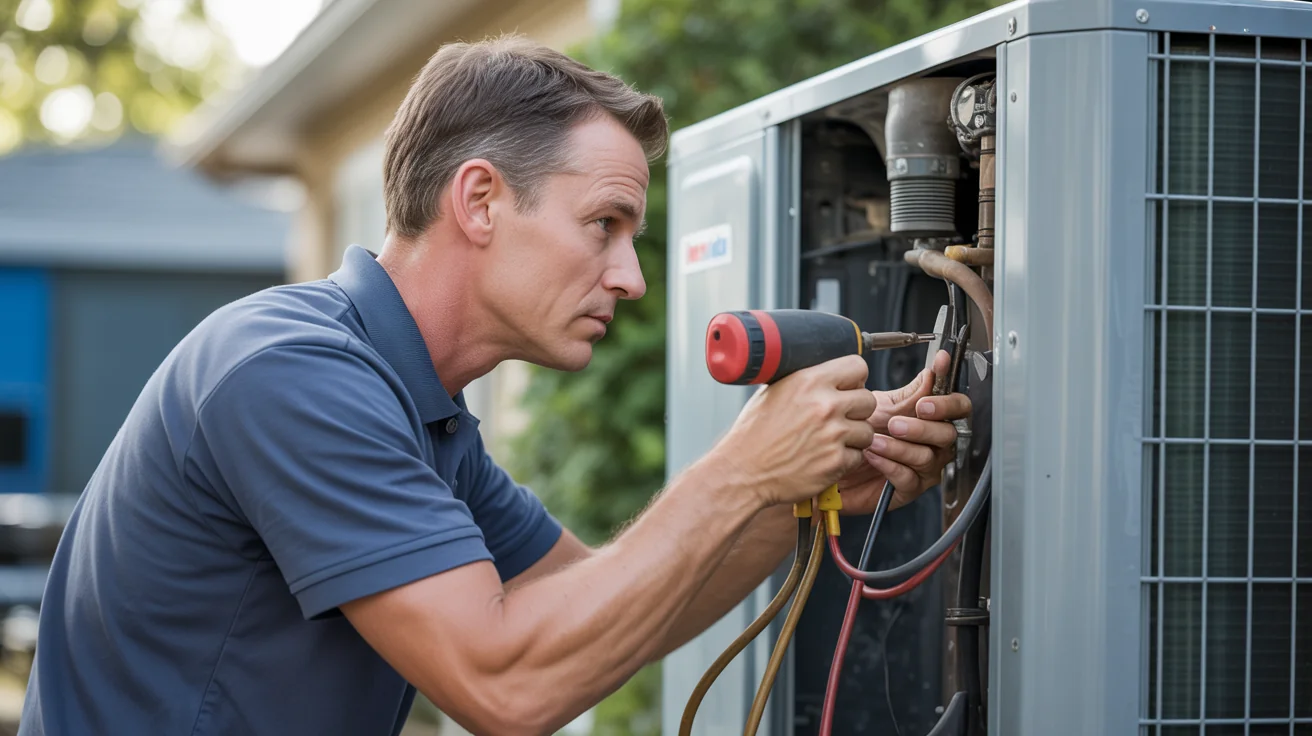
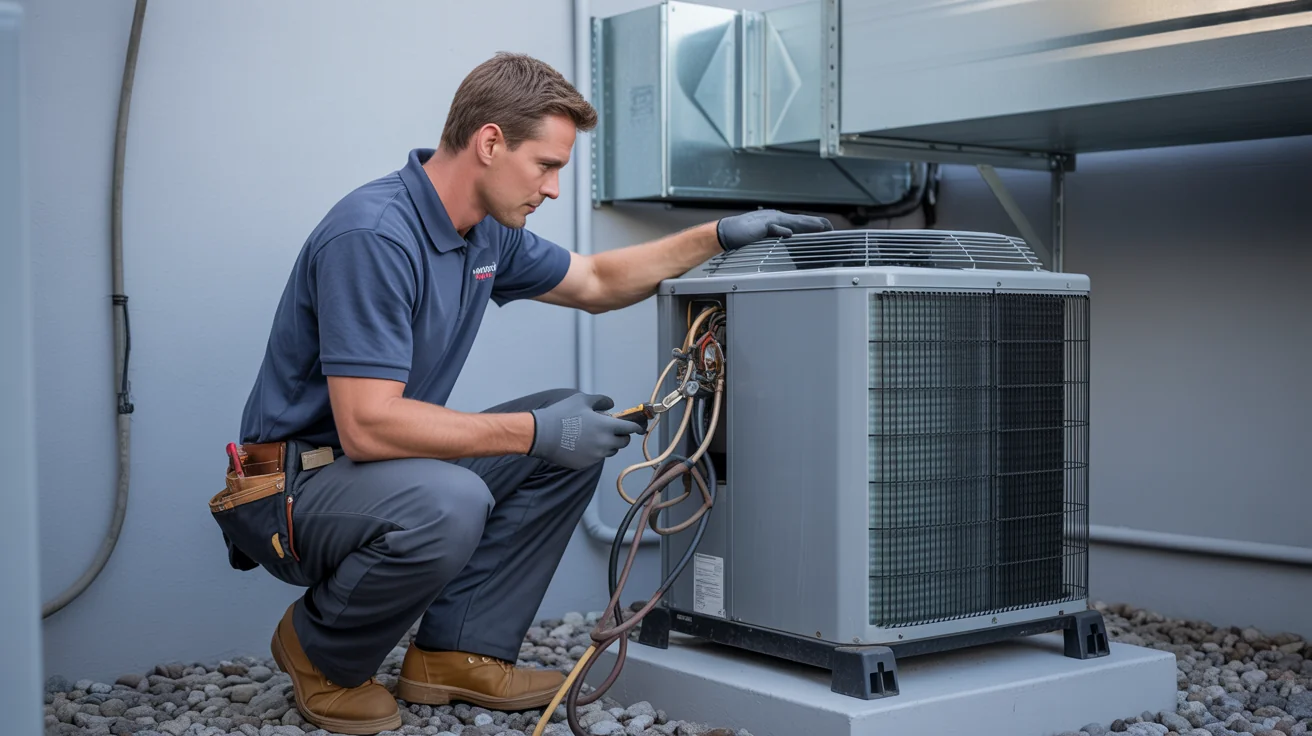
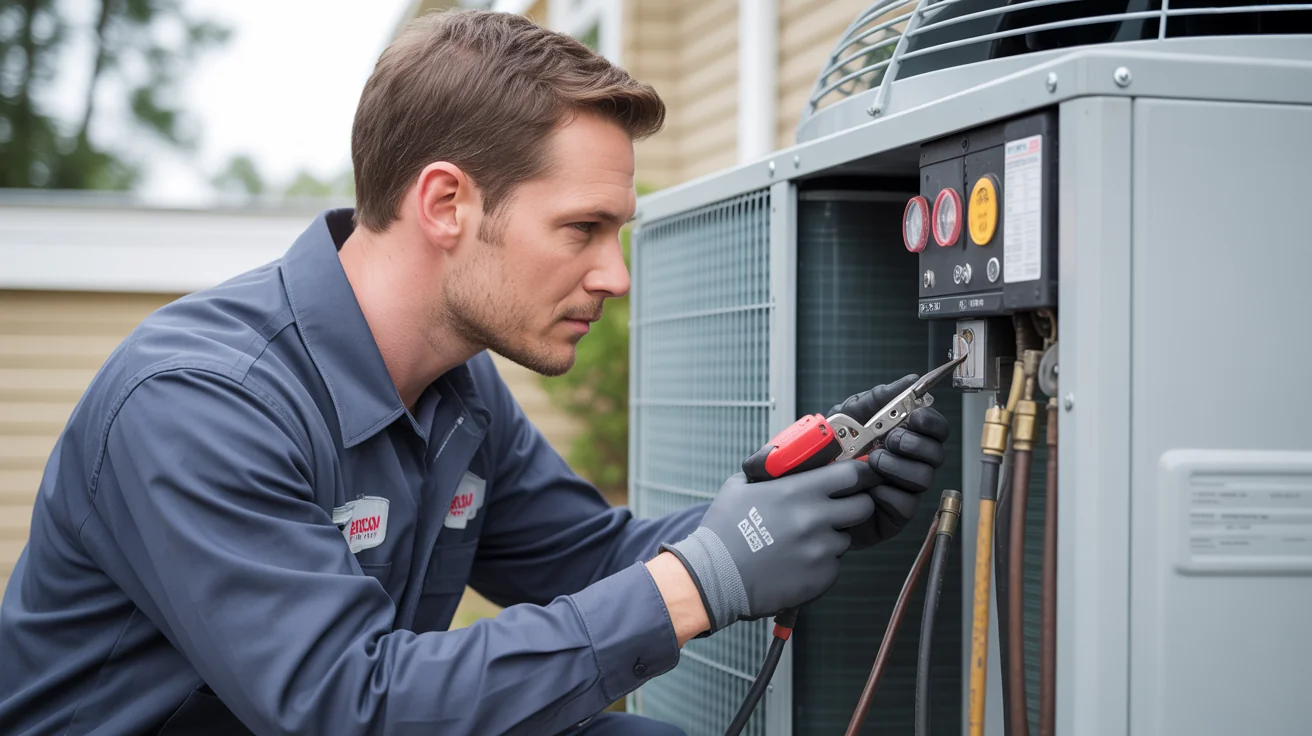
What we bring to your door: Our trucks carry full diagnostic equipment. Manifold gauges, multimeters, thermal cameras, refrigerant leak detectors - everything we need to figure out what’s wrong without a second trip. We stock the parts that fail most often in North Texas: capacitors (they hate our heat), contactors, fan motors, control boards, thermostats, and hard-start kits.
How we position our fleet: We don’t just park trucks randomly. We study traffic patterns, construction zones, and call volume history to figure out where our vehicles should be at any given time. During summer, we shift more trucks north where the newer subdivisions have the highest call density. During ice storms, we position near major intersections so road conditions don’t strand us. Shifts overlap so there’s never a gap in coverage.
Emergency Parts and Equipment
What we keep in stock: For complete system failures, we maintain replacement units ready to go. We carry universal parts that work across the most common brands in our area - Trane, Lennox, Carrier, Goodman, Rheem. We’ve got diagnostic components for tricky problems, and safety equipment for gas leaks, electrical hazards, and carbon monoxide situations.
When we don’t have the part: It happens. Some proprietary control board for a 15-year-old unit that nobody stocks locally. We’ve built relationships with suppliers who do after-hours emergency pulls. We can coordinate with manufacturers for overnight shipping on critical components. And across our own trucks and storage, we can usually find what we need by consolidating inventory from multiple vehicles. Getting creative with parts sourcing is half the job sometimes.
Specialized Emergency Services
The tough calls: Not every emergency is a blown capacitor. Electrical problems that involve both the HVAC system and the home’s wiring require careful, qualified work. Refrigeration emergencies at restaurants or medical facilities need someone who understands both the equipment and the regulatory requirements. Indoor air quality crises - like when a system pulls sewer gas or spreads mold spores through a building - take specialized knowledge. And flood damage recovery is its own discipline.
The tools that make a difference: Thermal imaging has saved me more times than I can count. You can see a failing connection, a blocked duct, or a refrigerant issue that’s invisible to the naked eye. Refrigerant leak detectors keep us from guessing. Electrical safety testing protects both my team and your home. And post-repair air quality testing confirms we actually fixed the problem, not just the symptom.
Multi-Location Emergency Coordination
Property Portfolio Management
When multiple properties need help at once: This is where the property management company story from the beginning comes back. Managing emergencies across a portfolio requires centralized coordination. Someone has to decide: which building gets the first tech? The one with the elderly tenant? The one with frozen pipes about to burst? The commercial space losing $500 an hour?
We handle that triage. One point of contact for the property manager, regular updates across all locations, and resource allocation based on actual severity rather than who’s yelling the loudest. We protect tenant safety first, then property value, then income.
For landlords and investors: Your tenants’ safety is the top priority. But right behind that is protecting your investment. We work fast to prevent secondary damage - a failed AC that causes condensation can ruin ceilings and drywall in hours. We minimize vacancy time by getting units habitable quickly. And our documentation makes insurance claims straightforward instead of a fight.
Commercial Chain Emergency Support
Multi-Location Business Response:
If you run three restaurants or five retail stores across DFW, you need consistent service at every location. Your customers expect the same experience whether they’re at your Frisco spot or your Plano location. We treat each one with equal urgency and the same quality standards.
When multiple locations hit trouble at once - and during heat waves, they will - we coordinate repairs to minimize your total business impact. That might mean sending a tech to the highest-revenue location first, or hitting the one that’s closest to a health code violation. We’ll work with your managers at each site and keep the decision-maker in the loop without flooding them with calls.
Keeping costs in check: Emergency work is expensive. We won’t pretend otherwise. But we’re transparent about pricing, we don’t charge different rates at different locations, and when we’re serving multiple sites for the same company, we can often consolidate trips and parts orders in ways that save money.
Regional Crisis Management
When it’s bigger than one building: Major storms, extended power outages, regional heat waves - sometimes the emergency isn’t one property, it’s a whole community. We work with emergency management agencies to support cooling centers, shelters, hospitals, and other critical facilities during large-scale events.
Community priorities during a crisis: Emergency shelters need working HVAC for displaced families. Hospitals and medical facilities can’t lose climate control under any circumstances. Senior living communities have residents who are especially vulnerable to temperature swings. Schools that serve as emergency centers need reliable systems. We know the priority order and we stick to it.
Technology-Enhanced Emergency Response
Advanced Dispatch and Routing
How we get there faster: Honestly, in DFW traffic, the routing matters almost as much as the repair skill. We use GPS-based routing that accounts for real-time traffic, not just distance. A tech who’s 20 miles away on an open highway might reach you faster than one who’s 8 miles away on 75 during rush hour.
We also match techs to emergencies by skill set. A commercial refrigeration problem needs a different background than a residential furnace issue. No point sending the wrong person and wasting time.
Customers get real updates throughout. Your tech is 12 minutes out? You’ll know. They got stuck behind an accident and the ETA shifted? You’ll know that too.
Remote Emergency Diagnostics
Before we even get to your house: When you call in, our dispatch team walks through some basic questions. Not to waste your time, but because knowing what’s happening helps us prepare. If you can tell us the model number off your unit, we might already know the common failure points. If you describe a burning smell, we know to bring specific safety equipment.
We can also talk you through safe temporary measures while you’re waiting. Shutting the system down properly. Opening windows strategically. Moving to the safest part of the house. These aren’t replacements for professional service, but they can make the wait more bearable and prevent the problem from getting worse.
Connected systems: More and more homes have smart thermostats and connected HVAC systems. When a system is online, we can sometimes see diagnostic codes before we arrive and even make temporary adjustments remotely. This is getting better every year. The ideal scenario is spotting a problem before you even notice something’s wrong, but we’re not fully there yet.
Emergency Communication Systems
Staying in touch when it matters: Our emergency line at (940) 390-5676 puts you straight through to a person. That’s non-negotiable. During an emergency, the last thing you need is a voicemail box. We follow up with text updates for people who prefer that. And for property managers juggling multiple locations, we can coordinate through email with detailed written updates.
Keeping everyone informed: Property managers get alerts when we’re dispatched to their buildings. We generate documentation that’s ready for insurance claims. When emergencies involve safety hazards, we coordinate with local fire and police. And if a situation requires specialized contractors - a plumber for a burst pipe, an electrician for panel work - we can bring those partners in quickly.
Seasonal Emergency Preparedness
Summer Heat Emergency Management
Extreme Heat Response (May-September):
Summer in DFW is war. I’m not exaggerating. When we hit those stretches of 105-degree days, my phone doesn’t stop ringing. Capacitors pop. Compressors overheat. Systems that were barely hanging on finally give up.
We prepare for this. We increase staffing and extend hours starting in May. We stock up on the parts that fail most during heat waves. And we prioritize vulnerable populations - elderly residents, families with medical conditions, anyone where AC failure becomes a health emergency.
During grid stress events, when ERCOT is sweating and voltages are fluctuating, we see equipment damage spike. We coordinate with utility companies and focus on getting the most critical systems back online first.
Peak summer protocols: We scale our parts inventory way up. Capacitors, contactors, fan motors - we buy them by the case. We position extra techs in high-call-volume areas. And we push hard on customer education before summer hits, because a $200 maintenance visit in April prevents a $2,000 emergency call in July. We also partner with local social services to identify seniors and others who might need priority help during heat events.
Winter Weather Emergency Response
Cold Weather Emergencies (November-March):
People forget that North Texas gets cold. Really cold sometimes. When a furnace dies during a freeze, you’ve got maybe 4-6 hours before pipes start freezing. Now your $800 heating repair becomes a $15,000 plumbing disaster.
Freeze protection is time-critical. We respond fast to heating failures during cold snaps specifically because the secondary damage from frozen pipes dwarfs the cost of the HVAC repair itself. Carbon monoxide is the other big winter concern. Cracked heat exchangers, blocked flues, backdrafting - these are invisible killers and we treat them accordingly.
Preparing for winter storms: We watch weather forecasts like hawks starting in November. When a storm is coming, we pre-position crews. We coordinate with fuel suppliers for propane and heating oil customers. We have generator resources for when the grid fails. And we monitor road conditions in real time because ice on North Texas roads is genuinely dangerous - our techs’ safety matters too.
Storm Season Crisis Management
Severe Weather Response (March-June, September-November):
Storm season is relentless here. We get the spring tornado season, then a brief break, then fall storms. After a major weather event, we deploy assessment teams across affected areas. The goal is triage: who’s in danger, whose system can be temporarily patched, and who can safely wait for a scheduled repair.
Insurance documentation is a big part of post-storm work. We take detailed photos, write up damage assessments, and provide the kind of professional reports that insurance companies actually respond to. I’ve seen homeowners struggle with claims for months because their first contractor didn’t document anything properly.
Tornado and hail response specifically: We send techs who are specifically trained in storm damage evaluation. There’s an art to looking at a condenser unit after a hailstorm and knowing whether it can be repaired or needs to go. We provide temporary heating and cooling equipment during extended repairs. We coordinate with debris crews so we can safely access your equipment. And we participate in community recovery efforts because when a tornado hits a neighborhood, it’s not about individual customers anymore. It’s about getting an entire community back on its feet.
Emergency Prevention and Preparedness
Predictive Emergency Prevention
Catching problems before they blow up:
The best emergency call is the one that never happens. We monitor system performance during maintenance visits and flag components that are showing wear. If your capacitor is reading weak in April, we replace it then instead of waiting for it to pop on the hottest day in July.
Weather integration plays a role here too. When we know a heat wave is coming, we’ll reach out to maintenance customers and suggest a quick system check. It takes 30 minutes and can prevent a crisis.
We also track failure patterns. Certain equipment models have known weak points. Certain neighborhoods have power quality issues that stress equipment. If we’ve replaced three control boards on the same street in two years, there’s probably an electrical issue upstream worth investigating.
Customer Emergency Education
What you should know before you need us:
I always tell my customers: know where your thermostat is, know where your breaker panel is, and know how to shut your system off. In an emergency, the ability to safely turn off a malfunctioning system prevents secondary damage and can even save lives if there’s an electrical or gas issue.
If your system starts acting weird, don’t ignore it. Strange sounds, odd smells, short cycling, ice on the lines in summer - these are warning signs. Call us before it becomes an emergency and you’ll save yourself money, discomfort, and stress.
For property managers: We can develop custom emergency protocols for your portfolio. Which buildings get priority, who gets called first, what temporary measures your maintenance staff can implement safely. This planning pays for itself the first time you actually need it.
If you manage multiple locations, establish communication procedures before a crisis hits. Trying to figure out who calls who during an actual emergency is a recipe for the kind of chaos that costs $156,000. Ask me how I know.
Frequently Asked Questions
How quickly can you respond to DFW HVAC emergencies?
We operate on a tiered system because not all emergencies are equal. If someone’s health is at immediate risk - an elderly person in a 100-degree house, a baby without heat in freezing weather - we target 30-minute response. Business-critical situations like restaurants about to lose food inventory get 1-2 hour response. General residential emergencies get 2-hour response.
These aren’t aspirational numbers. We staff and position our fleet specifically to hit these targets. And yes, that includes holidays, weekends, and during severe weather. Especially during severe weather, actually, since that’s when most emergencies happen.
What areas does your DFW emergency network cover?
Our core service area covers all of Dallas County and a big chunk of Collin and Denton counties. That means Frisco, Plano, McKinney, Allen, Prosper, The Colony, and Little Elm all get full emergency coverage.
We also serve communities across Denton County like Lewisville and Flower Mound, and we have coordination capabilities into Tarrant County for situations that require broader coverage. If you’re in the DFW metroplex and you’re not sure if we cover your area, just call. We probably do.
How do you coordinate multi-location emergencies?
One dispatcher handles the whole picture. They can see every property, every tech, and every active emergency at once. They decide priority based on health risk, safety hazards, and business impact - not based on who called first.
You get a single point of contact. One person to call, one person giving you updates across all your properties. We’ve learned that fragmented communication during multi-site emergencies is what turns a manageable situation into a catastrophe.
What types of situations qualify as HVAC emergencies?
Total system failure when it’s dangerously hot or cold outside. Any situation where a vulnerable person - elderly, infant, someone with a medical condition - is at risk because of temperature. Commercial failures that threaten food safety, medical operations, or significant revenue. And any safety hazard: gas smell, electrical burning, carbon monoxide detector going off.
If you’re not sure whether your situation qualifies, call anyway. We’d rather field a question than have you wait when you shouldn’t.
How do you handle emergency pricing?
During regular business hours, we don’t charge emergency premiums. Emergency or not, the diagnostic fee and repair costs are the same as any other call. After hours, there is a premium - we’re upfront about that cost before we start any work. No surprises.
For life-threatening situations, we respond regardless. Safety first, billing second. And we’ll help with insurance claims through detailed documentation that supports your filing.
What should I do while waiting for emergency service?
Safety first, always. If you smell gas or your CO detector is going off, get everyone out of the house and call 911 before you call us.
If it’s not a safety emergency, turn the system off to prevent further damage. Find the most comfortable room in the house and camp out there. Close blinds to block heat in summer. Bundle up in winter. Take photos of anything unusual - ice buildup, water damage, error codes on the thermostat. These help us prepare and help your insurance claim.
And please, don’t try to fix it yourself in the middle of an emergency. I’ve seen homeowners cause thousands in additional damage trying to DIY a repair while panicking. Just wait. We’re coming.
Your DFW Emergency HVAC Partner
When your HVAC goes down and the temperature won’t wait, you need a team that’s already prepared. Not scrambling to find a tech. Not figuring out logistics. Already positioned, already stocked, already moving toward you.
That’s what 15 years in North Texas has taught me to build. A response network that treats every emergency like it matters, because it does. Whether it’s your grandmother’s house in Allen or your restaurant in Frisco, we bring the same urgency and the same expertise.
Why Jupitair for DFW HVAC emergencies: We guarantee our response times. 30 minutes for life-threatening situations, 2 hours for general emergencies. We’re available 24/7/365 - Christmas, Thanksgiving, 3 AM on a Tuesday, during a tornado. We handle multi-location coordination for property managers who can’t afford the chaos of uncoordinated response. And we’ve been doing this long enough to know that emergency HVAC work isn’t just about fixing equipment. It’s about protecting people.
DFW HVAC Emergency? Call (940) 390-5676 now. We’ll be there.
When your AC dies on the hottest day of the year or your heat quits during a freeze, you don’t want a company that’s “pretty good at emergencies.” You want the team that built their entire operation around being ready for exactly this moment.
Sources & References
The emergency response protocols and safety guidelines in this article are based on the following authoritative sources:
- CDC - Extreme Heat and Your Health - Health risks during heat emergencies
- OSHA Heat Illness Prevention - Workplace heat safety standards
- FEMA Emergency Management - Crisis response protocols
- National Weather Service - Heat Safety - Heat wave warnings and response
- U.S. Department of Energy - HVAC Systems - Emergency maintenance guidance
- Texas Department of Licensing - HVAC - State licensing requirements
Last Updated: January 2026
Need Professional HVAC Service?
Our certified technicians are ready to help with any HVAC needs in North Texas