AC Leaking Water: Causes, Fixes, and When to Call a Pro
Water dripping from your AC? Learn the 7 most common causes of AC water leaks, which ones you can fix yourself, and when to call a professional. Real costs and North Texas-specific advice.
Quick Answer: A clogged condensate drain line causes about 80% of AC leaking water problems. Turn off your system, find the drain line (usually a PVC pipe near your indoor unit), and try flushing it with distilled vinegar. If water is actively pooling on your ceiling or floor, shut the system off at the breaker and call a pro: (940) 390-5676.
Why Your AC Produces Water in the First Place
Your AC doesn’t just cool the air. It pulls moisture out of it too.
When warm, humid air passes over the evaporator coil (the cold part inside your air handler), moisture condenses on the coil surface, the same way a cold glass sweats on a hot day. That condensation drips into a drain pan, flows through a drain line, and exits your house. In a normal North Texas summer, your AC can produce 5 to 20 gallons of condensate per day.
When any part of that drainage path gets blocked, cracked, or overwhelmed, you get water dripping from your AC onto your ceiling, walls, or floor. In our climate, where systems run 2,400+ hours per year and humidity sits above 60%, the conditions for a leak are almost constant from May through October.
7 Reasons Your AC Is Leaking Water (Most Common First)
1. Clogged Condensate Drain Line
This is the number one cause. I see it on about 4 out of every 5 water leak calls. The AC condensate drain line is a PVC pipe (usually 3/4 inch) that carries water from the drain pan to the outside of your house. Over time, algae, mold, and debris build up inside and create a blockage.
In North Texas, this happens faster than in drier climates. Gulf humidity feeds algae growth all summer long. I have customers in Frisco and Plano where I clear the same drain line every year because conditions are that favorable for buildup.
Signs it’s the drain line:
- Water pooling around the indoor unit or dripping from the attic
- A musty, mildew smell near vents
- Your secondary (emergency) drain is dripping outside near the roofline
- The system may still cool fine, just leaks water
DIY fix: Locate the drain line cleanout (a T-shaped PVC fitting near your air handler). Pour one cup of distilled white vinegar into it and let it sit for 30 minutes. Follow with warm water. If the clog is stubborn, use a wet/dry shop vacuum on the outdoor end of the drain line to suction it out.
Cost if you call a pro: $75 to $200 for a standard drain line clearing.
2. Dirty Air Filter Causing a Frozen Coil
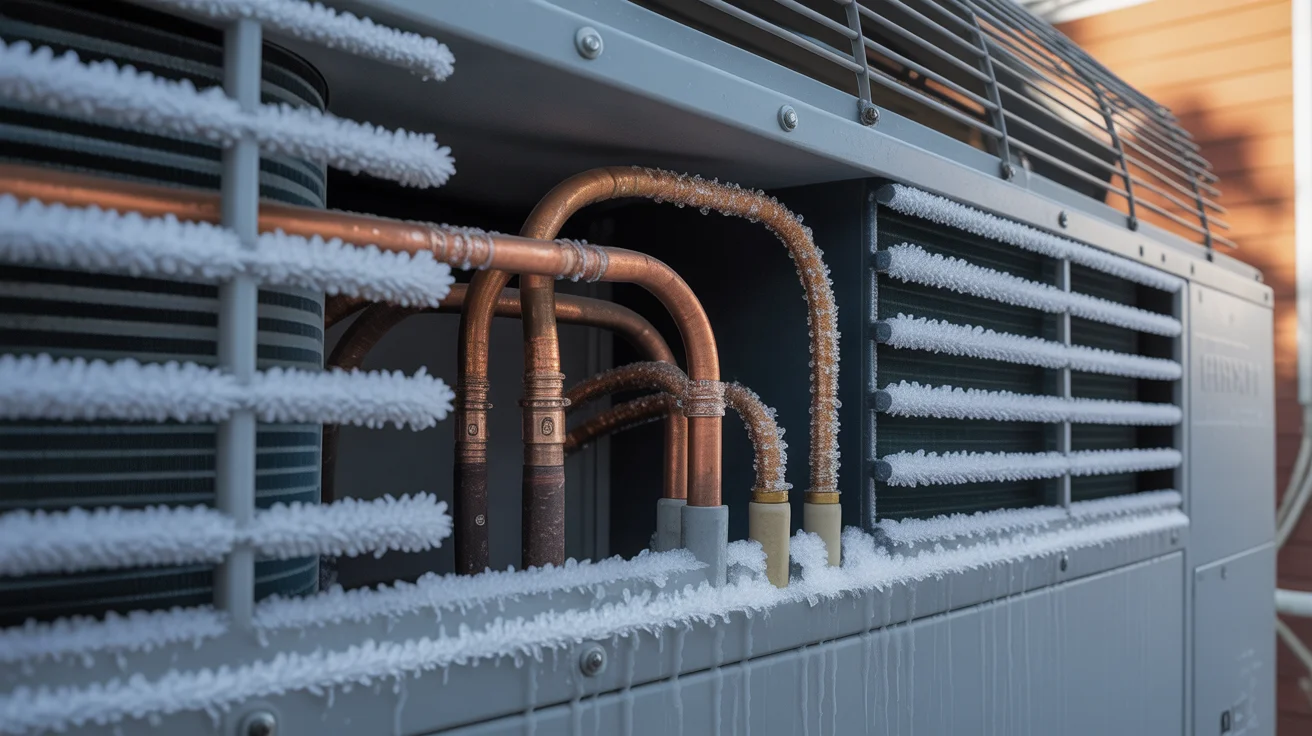
A dirty filter restricts airflow across the evaporator coil. When airflow drops, the coil gets too cold and freezes. Once you turn the system off (or the ice gets thick enough to block airflow completely), the ice melts and dumps way more water than the drain pan can handle.
I replaced a filter for a McKinney homeowner last July who hadn’t changed it in over six months. The filter was solid gray, the coil was a block of ice, and there was a half-inch of water on her utility room floor. The fix took five minutes and cost $12 for a new filter.
Signs it’s the filter:
- Ice visible on the copper refrigerant lines or the coil itself
- Reduced airflow from vents before the leak started
- System cycles on and off frequently
- Water appears suddenly in a large amount (the ice melting all at once)
DIY fix: Turn off the system. Replace the filter. Let the ice melt naturally (do not try to chip it off, you will damage the coil fins). Place towels around the unit. Wait 2 to 4 hours before restarting. Check out our AC maintenance guide for a filter replacement schedule that prevents this entirely.
Cost if you call a pro: $100 to $250 if a technician needs to inspect for coil damage after a freeze.
3. Cracked or Rusted Drain Pan
Your air handler has a drain pan underneath the evaporator coil to catch condensation. In older systems (10+ years), these pans can crack, rust through, or develop small holes. Water bypasses the drain line entirely and drips straight through.
Most North Texas homes built after 2000 have the air handler in the attic. A leaking drain pan up there means water on your ceiling, and that can cause serious drywall and insulation damage before you even notice it.
Signs it’s the drain pan:
- Water stains on the ceiling below your attic unit
- Water appears even though the drain line is clear
- Visible rust, cracks, or corrosion on the pan
DIY fix: For a temporary patch, you can use waterproof epoxy sealant on small cracks. This buys you time, but the pan will need replacement. You can also use a wet/dry vacuum to keep the pan empty while you wait for service.
Cost if you call a pro: $150 to $600 depending on pan type and accessibility. Attic installations cost more due to the labor involved.
4. Disconnected or Misaligned Drain Line
Drain lines can come loose from vibration, settle over time, or get bumped during attic work. If the line disconnects from the pan or loses its downward slope, water backs up or spills at the connection point.
I see this a lot after homeowners have other work done in the attic. Someone steps on the drain line or nudges the air handler. The connection loosens, and two weeks later there’s water on the ceiling.
Signs it’s the drain line connection:
- Water appears suddenly after attic work or a storm with high winds
- Leak is at the air handler, not at the drain line exit
- Drain line appears intact but water still pools
DIY fix: Check that all PVC connections are secure and properly cemented. Verify the line slopes downward toward the exit point (at least 1/4 inch per foot of run). Reattach with PVC cement if the joint separated.
Cost if you call a pro: $75 to $200 for reconnection and slope correction.
5. Low Refrigerant (Frozen Evaporator Coil)
Low refrigerant causes the evaporator coil to drop below freezing temperature. Ice forms on the coil, and when the system cycles off, the ice melts and overwhelms the drain pan. Unlike a dirty filter freeze (which you can fix yourself), a refrigerant issue means there’s a leak somewhere in the sealed system.
Finding and repairing refrigerant leaks requires specialized equipment and EPA certification. You cannot buy or handle refrigerant yourself.
Signs it’s low refrigerant:
- Ice on the coil AND the system isn’t cooling well
- Hissing or bubbling sound near the indoor unit
- The system runs constantly but the house stays warm
DIY fix: None. Turn off the system to let the ice melt. Call a professional.
Cost if you call a pro: $200 to $1,500 depending on refrigerant type and leak location. R-410A recharges run $200 to $600. R-22 systems cost $600 to $1,500 because the refrigerant is no longer manufactured. Our AC repair service includes full leak detection and repair.
6. Condensate Pump Failure
Not every system drains by gravity. If your air handler is in a location where the drain line can’t slope downward to the outside, a condensate pump pushes the water up and out. When the pump fails, water has nowhere to go.
This is less common in North Texas (most systems are in attics and drain by gravity), but I see it in some commercial setups and homes with unique layouts, particularly in Addison.
Signs it’s the condensate pump:
- You can hear the pump running but water still accumulates
- The pump makes no sound at all (motor failure)
- Water pools at the base of the unit near a small plastic reservoir
DIY fix: Check that the pump is plugged in and the float switch moves freely. Clean the reservoir of any sludge or debris. If the motor is dead, the pump needs replacement.
Cost if you call a pro: $150 to $450 for a new condensate pump installed.
7. Oversized AC System
This one surprises people. An AC that’s too large for your home cools quickly but doesn’t run long enough to dehumidify. Short cycling creates excess moisture that overwhelms the drain system.
I’ve seen this in newer Allen and Prosper subdivisions where builders installed the largest available unit regardless of cooling load. The system blasts cold air for 8 minutes, shuts off for 15, and the constant start-stop dumps irregular amounts of condensation.
Signs it’s an oversized system:
- Your system runs in short bursts (under 10 minutes)
- The house feels cold but clammy or humid
- Water leaks are intermittent, not constant
- High humidity readings indoors (above 55%) despite the AC running
DIY fix: None for the sizing issue itself. A whole-home dehumidifier ($1,500 to $2,500 installed) can help manage the moisture. The permanent fix is properly sizing the replacement system when the current one reaches end of life.
Cost if you call a pro: $150 for a load calculation to confirm oversizing. Dehumidifier installation runs $1,500 to $2,500.
AC Leak Repair Costs at a Glance
| Problem | DIY Possible? | Pro Cost | Urgency |
|---|---|---|---|
| Clogged drain line | Yes | $75 - $200 | Moderate |
| Dirty filter / frozen coil | Yes | $100 - $250 | Moderate |
| Cracked drain pan | Temporary | $150 - $600 | High |
| Disconnected drain line | Yes | $75 - $200 | Moderate |
| Low refrigerant | No | $200 - $1,500 | High |
| Condensate pump failure | Maybe | $150 - $450 | High |
| Oversized system | No | $150+ (diagnosis) | Low |
What to Do Right Now If Your AC Is Leaking Water
If you just noticed water and you’re wondering what to do first, follow these steps in order:
Step 1: Turn off the AC. Switch it off at the thermostat. If water is near electrical components, shut off the breaker for the air handler.
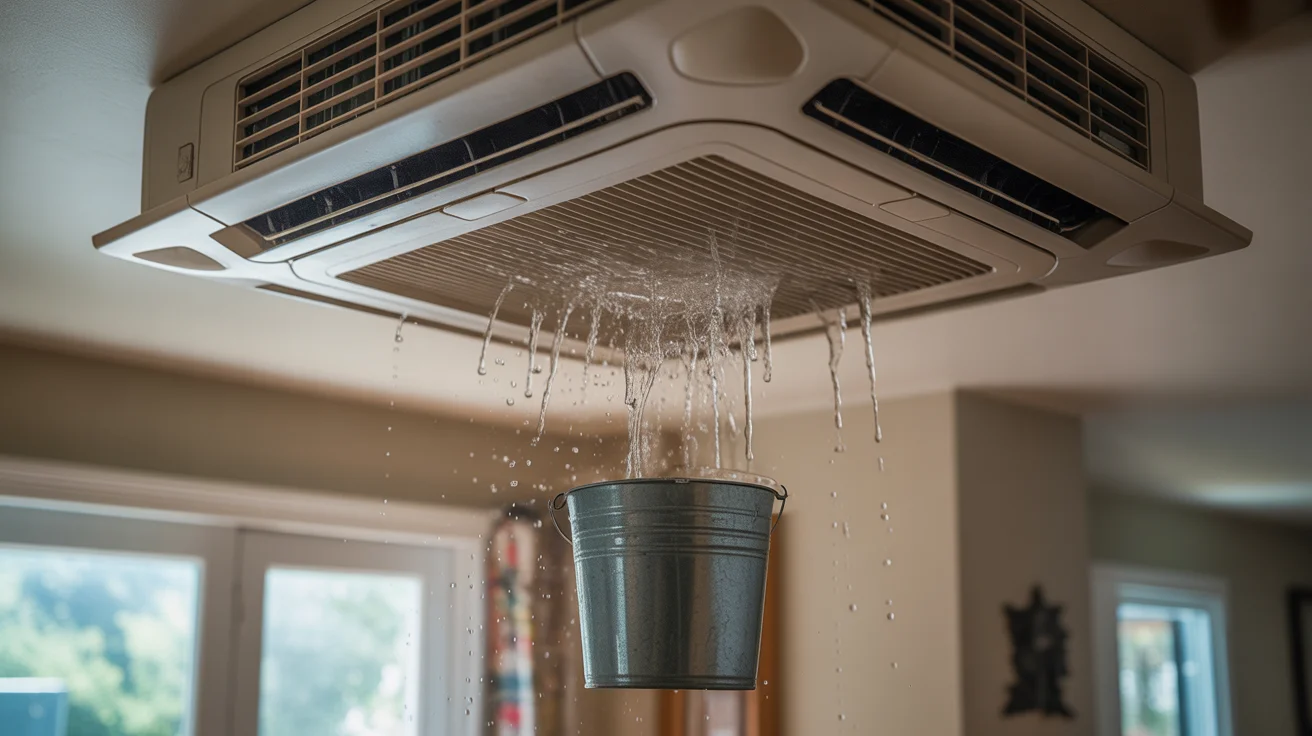
Step 2: Contain the water. Use towels, a wet/dry vacuum, or a bucket. If the leak is from the attic, poke a small hole in any bulging ceiling drywall to drain water into a bucket (prevents the drywall from collapsing).
Step 3: Check the easy stuff. Look at your air filter (if it’s filthy, that’s probably your answer). Check for ice on the coil or refrigerant lines. Try flushing the drain line with vinegar.
Step 4: Document everything. Take photos of the water, any ice, and the filter condition. This helps your technician diagnose faster and supports insurance claims if there’s water damage.
Step 5: Decide if you need a pro. If the drain line flush worked and no ice is present, you may be fine. If you see ice, hear hissing, or can’t identify the source, call for help.
How to Prevent AC Water Leaks (The $20 Prevention Plan)
Most AC leaking water problems are preventable with basic maintenance. Here’s what I tell every customer:
Monthly: Check your air filter. In North Texas, filters clog faster from May through September because the system runs almost continuously. During peak summer, check every 3 weeks. A $12 filter change prevents a $600 frozen coil repair.
Every 3 months: Flush the drain line. Pour a cup of distilled white vinegar into the cleanout fitting. This kills algae before it builds into a clog. This single habit prevents the most common AC water leak.
Twice a year: Clear the drain line exit. Find where the drain line exits your house (usually a PVC pipe near the outdoor unit or foundation). Make sure it’s not blocked by dirt, mulch, or landscaping.
Annually: Get a professional AC maintenance service. A technician will clean the coil, verify refrigerant levels, test the drain system, and catch problems before they turn into ceiling stains. Annual maintenance runs $89 to $150.
Bonus: Install a drain line safety switch. For about $20 in parts, a float switch shuts off your AC automatically if water backs up. Many North Texas homes built before 2010 don’t have one. It’s cheap insurance against water damage.
When DIY Won’t Cut It: Signs You Need a Professional
Some AC water leaks are straightforward. Some are not. Call a professional when:
- Ice is present anywhere on the system. This points to refrigerant issues or airflow problems that require diagnostic equipment.
- Water is coming from the ceiling. Attic leaks cause thousands in drywall and insulation damage. The faster a tech gets there, the less damage you’ll have.
- The drain line flush didn’t work. Deep clogs require nitrogen blowout or specialized tools.
- You smell mold or mildew. Standing water in ductwork creates air quality problems. Our duct cleaning service addresses contamination from long-term moisture.
- The leak keeps coming back. Recurring leaks point to a deeper issue (cracked pan, oversized system, or refrigerant leak) that a one-time fix won’t solve.
FAQ
Why is my AC leaking water inside the house?
The most common cause of an AC unit leaking water inside is a clogged condensate drain line. Algae, mold, and debris block the line, water backs up into the drain pan, and overflows onto your floor or ceiling. A dirty air filter causing a frozen coil is the second most common cause.
Can I still run my AC if it’s leaking water?
No. Turn it off at the thermostat (or the breaker if water is near electrical components). Running the system creates more condensation and makes the leak worse. If the evaporator coil is frozen, continued operation can damage the compressor ($1,500 to $3,000 repair).
How much does it cost to fix an AC water leak?
Most repairs cost $75 to $600. Drain line clearing runs $75 to $200. Drain pan replacement costs $150 to $600. Refrigerant leak repairs range from $200 to $1,500. The most common causes (clogged drain, dirty filter) cost under $200 to fix.
How do I unclog my AC condensate drain line?
Find the cleanout fitting (a T-shaped PVC cap near your air handler). Remove the cap, pour one cup of distilled white vinegar, wait 30 minutes, and flush with warm water. For stubborn clogs, use a wet/dry shop vacuum on the outdoor end of the drain line.
Why does my AC drip pan keep overflowing?
An AC drip pan overflowing usually means the drain line below it is clogged. Other causes include a cracked pan, a frozen coil melting faster than the pan can drain, or a failed condensate pump. If the pan overflows repeatedly after clearing the drain, the pan itself may need replacement.
Is water leaking from my AC an emergency?
It depends on location. Water dripping from an attic unit onto ceilings is urgent because damage compounds quickly. A small puddle around a ground-level unit is less urgent but should be addressed within a day or two. In either case, turn off the system until the leak is resolved.
Water leaking from your AC? Don’t wait for ceiling stains or mold. Call Jupitair HVAC at (940) 390-5676 for fast, honest diagnosis. I’ll tell you exactly what’s wrong, what it costs, and whether you actually need the repair. Serving Frisco, Plano, McKinney, Allen, Prosper, The Colony, Little Elm, and Addison.