
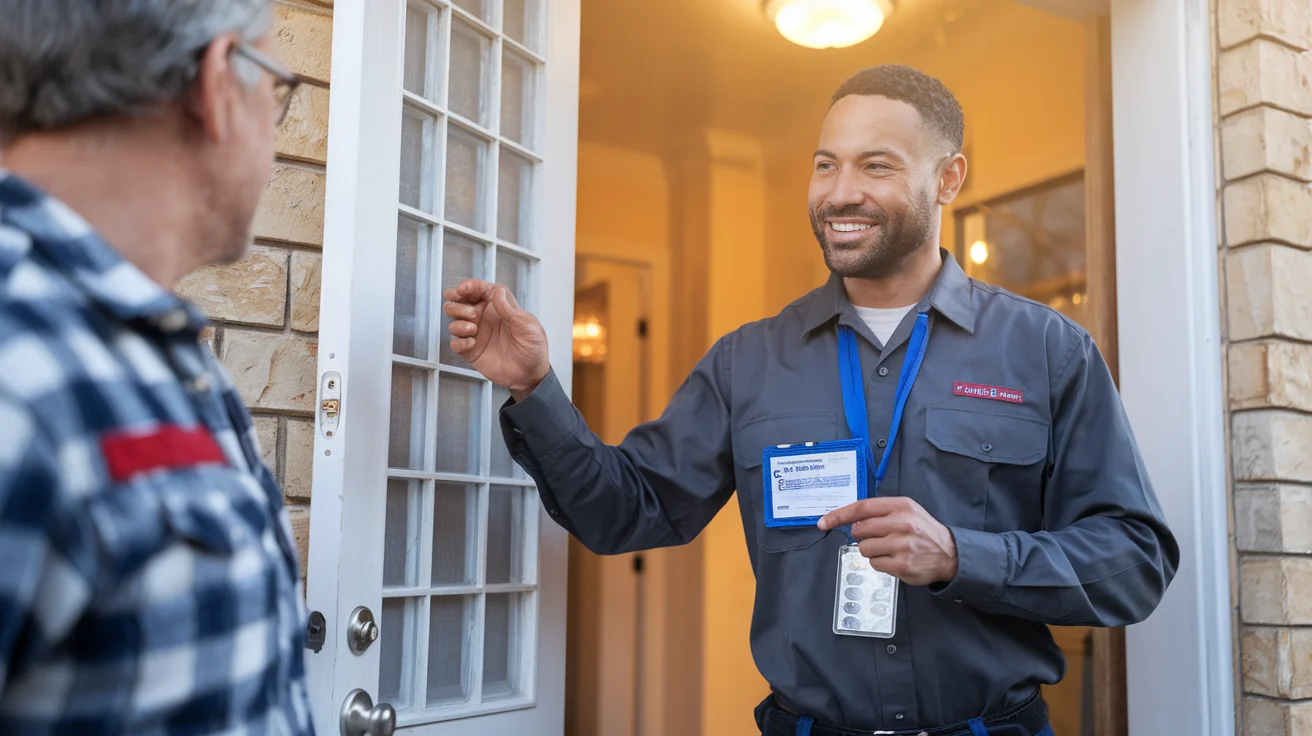
The HVAC industry has a trust problem. Information asymmetry puts homeowners at a disadvantage: you can't see refrigerant levels, can't evaluate electrical components, and can't verify whether that "cracked heat exchanger" is real or fabricated. Some contractors exploit this.
Why Texas Is a Target
Urgency
When your AC fails in 100°F heat, you'll agree to almost anything. Scammers exploit this desperation.
High Stakes
HVAC systems are $5,000-$20,000 purchases. Each successful scam is highly profitable.
Invisible Equipment
You can't see refrigerant, can't measure electrical loads. You depend on technician honesty.
Seasonal Surge
Summer overwhelms legitimate contractors. Scam operations fill the void with aggressive marketing.
The Most Common Scams
Free Tune-Up Trap
Company offers $29-49 tune-up, then "discovers" serious problems requiring $800-$2,000+ repairs or full replacement.
Red Flags:
- Unsolicited door-to-door offers
- Below-market pricing
- Same-day decision pressure
- Every inspection finds major problems
Refrigerant Top-Off Scam
Technician offers to "top off" refrigerant without finding or fixing the leak. Problem returns, cycle repeats.
Red Flags:
- No mention of leak detection
- Previous top-offs from same company
- Vague explanation of why refrigerant is low
Fake Code Violation
Technician claims your system violates building codes and requires expensive upgrades. Existing systems are grandfathered.
Red Flags:
- Claims repair work requires code upgrades
- Vague references to violations
- Threatens to report violations
Cracked Heat Exchanger
Most commonly fabricated diagnosis. Uses fear of carbon monoxide to create urgency for expensive repair or replacement.
Red Flags:
- Cannot show you the crack
- No photos or video provided
- Wants to condemn equipment immediately
Oversizing Upsell
Recommends larger system than needed, charges more, but oversized systems short-cycle and cause humidity problems.
Red Flags:
- Sizing based on "Texas heat" without calculations
- No Manual J load calculation
- Rule-of-thumb sizing
Bait-and-Switch Quote
Low initial quote, then "complications" discovered requiring significant additional cost after work begins.
Red Flags:
- Below-market original quote
- Phone or sight-unseen quoting
- Vague scope in proposal
Red Flag Quick Reference
| Red Flag | What It Suggests |
|---|---|
| Door-to-door solicitation | Targeting vulnerable homeowners |
| Free or ultra-cheap inspection | Loss leader for upselling |
| Same-day decision pressure | Fear of you getting second opinion |
| Cash payment requested | Avoiding accountability |
| Can't show problem | Problem may not exist |
| License evasion | Unlicensed work, no recourse |
| Below-market pricing | Bait and switch, quality shortcuts |
| Condemns equipment immediately | Creating false urgency |
| "Code violation" pressure | Fake compliance concerns |
| Refrigerant "top-off" without repair | Repeat business scam |
Door-to-door solicitation
Targeting vulnerable homeowners
Free or ultra-cheap inspection
Loss leader for upselling
Same-day decision pressure
Fear of you getting second opinion
Cash payment requested
Avoiding accountability
Can't show problem
Problem may not exist
License evasion
Unlicensed work, no recourse
Below-market pricing
Bait and switch, quality shortcuts
Condemns equipment immediately
Creating false urgency
"Code violation" pressure
Fake compliance concerns
Refrigerant "top-off" without repair
Repeat business scam
How to Protect Yourself
Before You Need Service
- Establish relationship with reputable contractor before emergency strikes
- Understand your system — know equipment age, model, and normal operation
- Keep maintenance records — documentation proves what work was done
When Service Is Needed
- Don't decide under pressure — most situations can wait 24-48 hours for a second opinion
- Get multiple quotes for major work — three quotes helps establish pricing
- Ask for documentation — photos, videos, manufacturer specs
Verify Any Contractor Before Hiring
All HVAC contractors in Texas must hold a TDLR license. Verify at:
TDLR License SearchSee our step-by-step contractor verification guide and learn why proper sizing matters to catch oversizing scams.
What to Do If You've Been Scammed
1. Document Everything
Contracts, invoices, photos, communication records, payment receipts, witness information.
2. File Complaints
- • TDLR: Online complaint form
- • Texas Attorney General: Consumer complaint form
- • Better Business Bureau: Creates public record
- • Local District Attorney: For fraud involving significant amounts
3. Legal Options
Small Claims Court: For damages up to $20,000. Relatively fast, low-cost, no attorney needed.
Why We're Publishing This
Publishing a scam guide might seem like unusual content for an HVAC company. Here's why we do it:
- • The industry's reputation problem hurts everyone. Scams create distrust that makes it harder for legitimate contractors.
- • Informed consumers make better decisions. We'd rather compete on quality and service than benefit from customer confusion.
- • We see the aftermath. When customers come to us after being scammed, they've wasted money and delayed needed repairs.
- • It's the right thing to do. Most HVAC contractors are honest professionals. Bad actors damage the industry.