
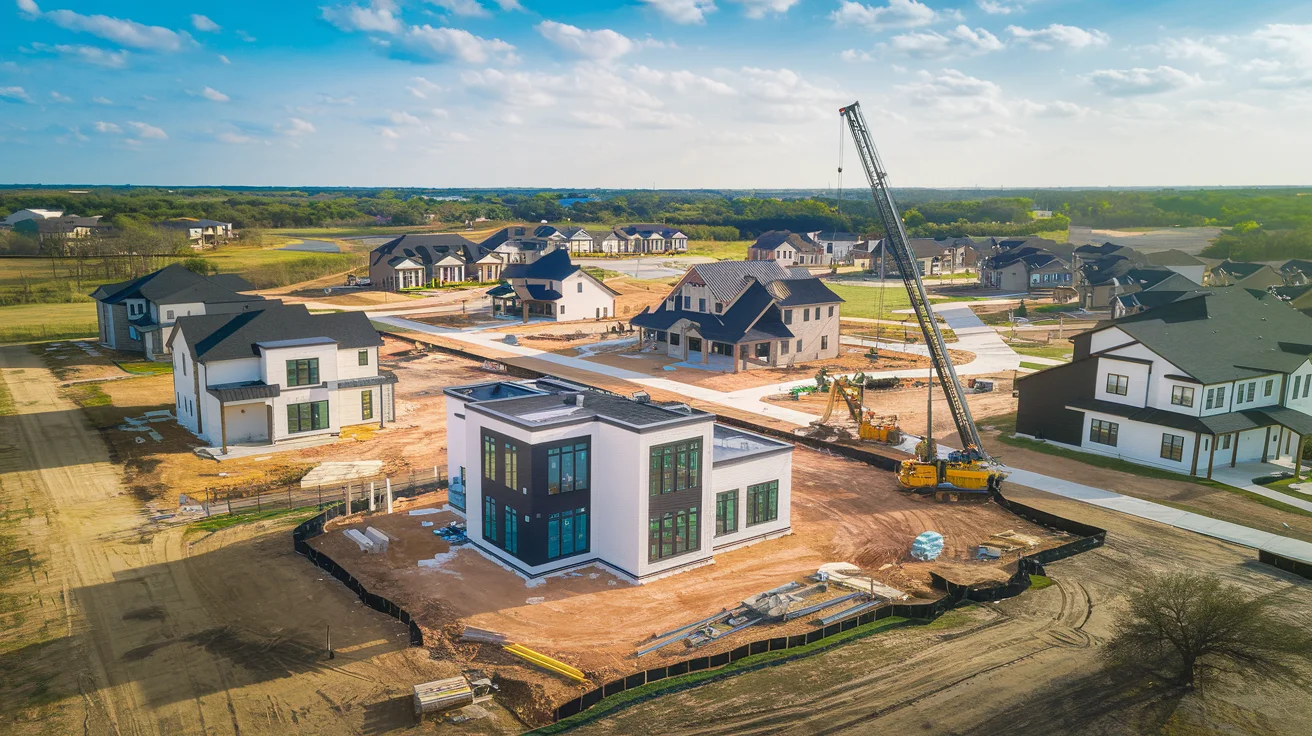
Between July 2023 and July 2024, Collin County grew by 46,694 people, ranking fourth nationally for numeric population gain. Only Harris County (Houston), Maricopa County (Phoenix), and Florida's Orange County added more residents.
Since 2010, Collin County has absorbed a population equivalent to the entire city of Sacramento in fourteen years. Every new home needs an HVAC system. Every HVAC system needs installation, maintenance, and eventual replacement.
Collin County Population: 2010-2024
| Year | Population | Change | % Growth |
|---|---|---|---|
| 2010 | 787,102 | — | — |
| 2015 | 914,127 | +127,025 | +16.1% |
| 2020 | 1,064,465 | +150,338 | +16.4% |
| 2024 | 1,254,658 | +190,193 | +17.9% |
14-Year Total: +467,556 residents (+59.4%)
Growth Rate Comparison
| Geography | 2023-2024 Growth Rate |
|---|---|
| Collin County | +3.9% |
| Texas statewide | +1.6% |
| United States | +1.0% |
| Tarrant County | +0.9% |
| Dallas County | +0.4% |
Collin County grows nearly 4x faster than the national average and 10x faster than neighboring Dallas County.
City-by-City Growth: Where the People Are Moving
| City | 2010 | 2024 | Change | % Growth |
|---|---|---|---|---|
| Plano | 269,776 | 293,286 | +23,510 | +8.7% |
| Frisco | 116,989 | 219,500 | +102,511 | +88% |
| McKinney | 131,117 | 214,810 | +83,693 | +64% |
| Allen | 84,246 | 113,746 | +29,500 | +35% |
| Prosper | 9,744 | 44,503 | +34,759 | +357% |
| Celina | ~6,000 | 65,000 | +59,000 | +983% |
Celina: +983%
From ~6,000 to 65,000 in fourteen years. Added more than 10x its 2010 population — the fastest percentage growth in Collin County.
Prosper: +357%
From 9,744 to 44,503. Looking back further: Prosper had just 2,643 residents in 2000 — a 1,584% growth in 24 years.
Frisco: +549% (since 2000)
From 33,828 residents in 2000 to 219,500 today. A 6.5x increase — now larger than Salt Lake City.
Housing Construction: 88,000+ New Units (2020-2024)
| Year | Single-Family | Multi-Family | Total Units |
|---|---|---|---|
| 2020 | 10,847 | 3,947 | 14,794 |
| 2021 | 12,156 | 4,892 | 17,048 |
| 2022 | 11,234 | 7,254 | 18,488 |
| 2023 | 10,856 | 8,724 | 19,580 |
| 2024 | 10,412 | 8,401 | 18,813 |
5-Year Total: ~88,723 housing units authorized
Source: U.S. Census Bureau Building Permits Survey, Federal Reserve Bank of St. Louis (FRED)
HVAC Market Impact: The Numbers
Every new Collin County home requires HVAC installation. Using 2023 permit data (19,580 units) and average installation costs:
| Segment | Units | Avg Cost | Market Size |
|---|---|---|---|
| Single-family homes | 10,856 | $10,000 | $108.6M |
| Multi-family units | 8,724 | $5,000 | $43.6M |
| Total new construction | 19,580 | — | $152.2M |
Conservative estimate: $130-150 million annually
In new construction HVAC installations alone — not including replacements, repairs, or maintenance. This calculation is based on Census Bureau permit data and industry installation cost averages.
Population Projections: 2030-2060
The Texas Demographic Center produces official state population projections. Models show Collin County continuing to grow — but at moderating rates.
| Year | Projected Population | Change from 2024 | Cumulative Growth |
|---|---|---|---|
| 2024 | 1,254,658 | — | — |
| 2030 | ~1,500,000 | +245,000 | +20% |
| 2040 | ~1,850,000 | +595,000 | +47% |
| 2050 | ~2,150,000 | +895,000 | +71% |
| 2060 | 2,438,008 | +1,183,000 | +94% |
Key projection: Collin County is expected to nearly double from 1.25 million to 2.44 million by 2060.
What Collin County Growth Means for HVAC
New Construction Dominance
With 18,000+ housing units permitted annually, new installations represent the largest single market segment. However, as 2006-2020 housing stock ages into replacement, the balance will shift.
Workforce Gap
Collin County has approximately 25% fewer HVAC technicians per capita than the national average, despite 2.3x the cooling demand. Peak summer service delays are structural.
Northern Migration
As southern cities reach buildout, growth shifts northward. Celina, Prosper, Anna, Princeton, and Melissa are growing 200-1,000% this decade.
Infrastructure Constraints
ERCOT projects potential capacity shortfalls by 2027-2029. Infrastructure constraints may affect AC sizing recommendations and grid-interactive equipment incentives.
How We Sourced This Data
Federal Government:
- • U.S. Census Bureau Population Estimates Program (census.gov)
- • U.S. Census Bureau Building Permits Survey
- • Bureau of Labor Statistics (bls.gov)
- • Federal Reserve Bank of St. Louis (FRED)
State Government:
- • Texas Demographic Center (demographics.texas.gov)
- • Texas Workforce Commission (twc.texas.gov)
- • Electric Reliability Council of Texas (ercot.com)