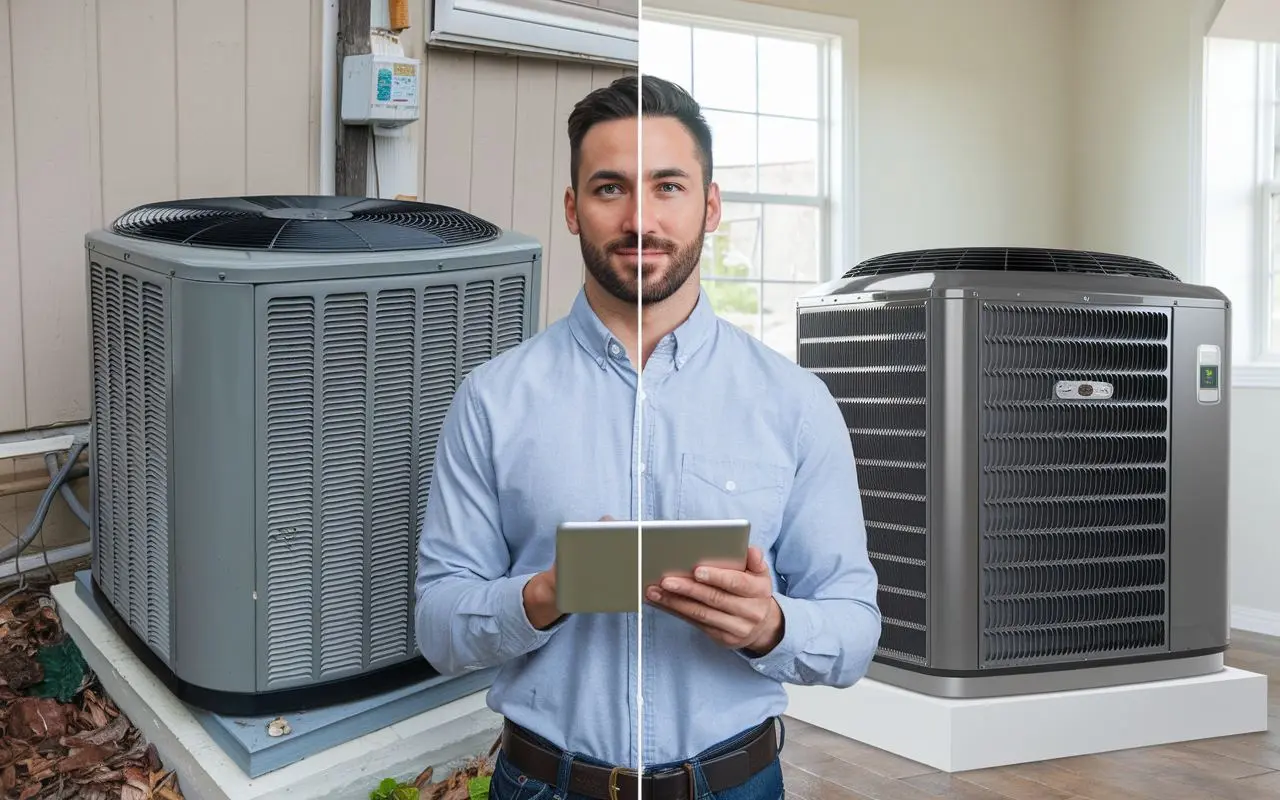
HVAC Inspection Checklist for Home Buyers (15 Points)
Buying a home in North Texas? Use this 15-point HVAC checklist to catch expensive problems before closing. From a local HVAC tech who's seen what inspectors miss.
- Why the Standard Home Inspection Misses HVAC Problems
- The 15-Point HVAC Checklist for Home Buyers
- What a Professional HVAC Inspection Covers
- Red Flags That Should Kill the Deal (or Negotiate Price)
- How to Use HVAC Issues to Negotiate
- North Texas Specific Issues
- Questions to Ask the Seller About HVAC
- Frequently Asked Questions
- Why the Standard Home Inspection Misses HVAC Problems
- The 15-Point HVAC Checklist for Home Buyers
- What a Professional HVAC Inspection Covers
- Red Flags That Should Kill the Deal (or Negotiate Price)
- How to Use HVAC Issues to Negotiate
- North Texas Specific Issues
- Questions to Ask the Seller About HVAC
- Frequently Asked Questions
Quick Answer: Before closing on a home in North Texas, check the HVAC data plate for the real age (not the seller’s guess), confirm it uses R-410A refrigerant (not R-22), verify the system is properly sized for the square footage, and run a temperature split test at the vents. If the system is over 12 years old or uses R-22, negotiate $5,000 to $15,000 off the price for replacement. A dedicated HVAC inspection costs $150 to $250 and can save you tens of thousands.
Why the Standard Home Inspection Misses HVAC Problems
Your home inspector is checking 400 things in about 3 hours. The HVAC system gets maybe 15 minutes. They turn it on, confirm it blows air, check the filter, and move on.
I am not knocking home inspectors. They have a big job. But here is what they typically do not do: measure airflow, check refrigerant charge, inspect ductwork in the attic, or calculate whether the system is the right size for the house. Those are the things that cost you $5,000 to $15,000 after you move in.
I get calls every month from homeowners in Frisco, Plano, and McKinney who bought their house 6 months ago and now need a full system replacement. The home inspection said “HVAC functional.” That is technically true. It was functional. It was also 14 years old, undersized, and leaking refrigerant.
The standard inspection tells you the system turns on. It does not tell you how long it will keep turning on.
The 15-Point HVAC Checklist for Home Buyers
Print this list. Bring it to the showing or the inspection. Every one of these points can save you real money.
1. System Age (Check the Data Plate, Not the Seller’s Word)
The data plate is the metal sticker on the outdoor unit and the indoor unit. It has the manufacturer date, model number, and serial number. The serial number usually encodes the manufacture year. You can look this up on the manufacturer’s website.
Do not trust the seller when they say “it is only a few years old.” I have heard that line on systems from 2009. In North Texas, HVAC systems last 12 to 15 years on average, compared to 15 to 20 years nationally. Our summers are brutal. A system over 10 years old is in the back half of its life.
2. Brand and Model (Research Reliability)
Write down the full model number from the data plate. Look it up. Some brands hold up better in Texas heat than others. Carrier, Trane, and Lennox are the big three you will see in North Texas. Goodman and Rheem are also common and can be solid, but certain model years had issues.
If the system is an off-brand you have never heard of, that is a yellow flag. Parts availability could be a problem down the road.
3. Size Match (Tons vs Square Footage)
This one is huge. An oversized system short-cycles, which means it turns on and off too frequently. That kills the compressor faster and leaves your house humid. An undersized system runs nonstop and never gets the house comfortable in July.
The rough rule: 1 ton of cooling per 500 to 600 square feet in North Texas. A 2,500 square foot home in Plano should have a 4 to 5 ton system. Check the data plate for the tonnage or look for a number like 048 in the model number, which means 48,000 BTU or 4 tons.
4. Ductwork Condition (Visible Damage, Disconnections)
If you can get into the attic, look at the ductwork. In North Texas, most ductwork runs through the attic where temperatures hit 150 degrees in summer. Flex duct deteriorates, sags, and pulls apart at connections.
Look for: duct tape (which fails in heat), disconnected sections, crushed or kinked flex runs, and any visible tears. Ductwork replacement runs $2,000 to $5,000 depending on the size of the house.
5. Air Filter State (Tells You About Maintenance History)
Pull out the air filter. If it is black, caked with dust, or looks like it has not been changed in a year, that tells you something about how the previous owner maintained the system. A neglected filter means a neglected system. Expect other problems.
A clean, recently changed filter is a good sign. It means someone was paying attention.
6. Thermostat Type and Condition
Is it a modern programmable or smart thermostat, or an old mercury dial from the 1990s? The thermostat itself is cheap to replace, but an outdated one hints at a system that has not been updated.
Check if it is working correctly. Set it 5 degrees below current room temperature and see if the system kicks on within a minute or two.
7. Refrigerant Type (R-22 = Expensive to Fix)
This is one of the biggest money items on the list. R-22 (also called Freon) was phased out in 2020. If the system uses R-22, you cannot get new refrigerant. Only reclaimed R-22 is available, and it costs $100 to $200 per pound. A typical recharge is 5 to 10 pounds.
If the system has a leak and uses R-22, you are looking at a $2,000 to $5,000 repair bill. And it will leak again. R-410A is the current standard. Check the data plate for refrigerant type.
Any system using R-22 should be treated as needing replacement within 1 to 2 years. Factor that into your offer.
8. Electrical Connections (Breaker Size, Disconnect)
Check the electrical panel for the HVAC breakers. They should be clearly labeled and the correct amperage for the system. Look at the disconnect box near the outdoor unit. Open it and check for scorching, melted wires, or corrosion.
Bad electrical connections are a safety issue and a sign of poor installation or deferred maintenance.
9. Drainage (Condensate Line, Pan Condition)
In North Texas humidity, your AC produces gallons of condensate water every day in summer. That water drains through a PVC line, usually to the outside of the house. Check where it exits. Is it dripping? Good. Is the line cracked, disconnected, or clogged? Problem.
Also check the drain pan under the indoor unit (usually in the attic or a closet). Rust, standing water, or water stains on the ceiling below are red flags. Water damage from a failed drain pan is one of the most common and expensive HVAC-related home insurance claims.
10. Noise Levels (Grinding, Clicking, Buzzing)
Turn the system on and listen. Normal sounds: a steady hum from the compressor, quiet airflow from the vents, the fan spinning smoothly. Abnormal sounds: grinding (bad bearings), clicking (electrical issues), buzzing (failing contactor or capacitor), and banging (loose or broken parts inside the unit).
Any unusual noise means something is wearing out. It might last 6 months or 6 weeks, but it is heading toward a repair bill.
11. Temperature Split Test (Supply vs Return)
This is the single best quick test you can do. Put a thermometer at a supply vent (where cold air comes out) and at the return vent (where air goes in). The difference should be 15 to 20 degrees Fahrenheit.
Less than 15 degrees means the system is underperforming. Could be low refrigerant, a dirty coil, a failing compressor, or ductwork leaks. More than 20 degrees could mean low airflow from a clogged filter or collapsed duct. Either way, something is wrong.
12. Airflow at All Vents
Walk through every room and check every supply vent. Put your hand over each one. Is air coming out? Is it roughly the same temperature and pressure in each room?
Weak or no airflow in certain rooms usually means ductwork problems. Disconnected ducts in the attic are incredibly common in North Texas homes over 10 years old. You are paying to cool your attic instead of your bedrooms.
13. Outdoor Unit Condition (Rust, Bent Fins, Debris)
Walk around the outdoor condenser unit. Look for rust on the cabinet, bent or crushed fins (the thin metal strips around the unit), and debris buildup. Check the concrete pad. Is it level or has it sunk or tilted? In North Texas, our clay soil expands and contracts with moisture, and pads shift over time.
Heavy rust on the coil means the unit is nearing end of life. Bent fins restrict airflow and reduce efficiency. Both are signs of age and wear.
14. Maintenance Records (or Lack Thereof)
Ask the seller for maintenance records. Annual tune-ups, repair receipts, filter change logs, anything. A homeowner who kept records likely kept up with maintenance.
No records does not automatically mean neglect, but it is a risk factor. Combined with other items on this list, it paints a picture of how the system was treated.
15. Permit History (Check with City)
Major HVAC work requires a permit. If the system was replaced, there should be a permit on file with the city. You can check permit records with the building department in Frisco, Plano, McKinney, Allen, or whatever city the home is in.
No permit for a replacement means the work may not have been inspected. That could mean improper installation, wrong sizing, or code violations. It also complicates things if you ever need to make a warranty claim.
What a Professional HVAC Inspection Covers
A dedicated HVAC inspection from a licensed technician costs $150 to $250. This is separate from your general home inspection. Here is what I check when a buyer calls me out:
- Full system diagnostics including refrigerant charge, electrical readings, and amp draws on all motors
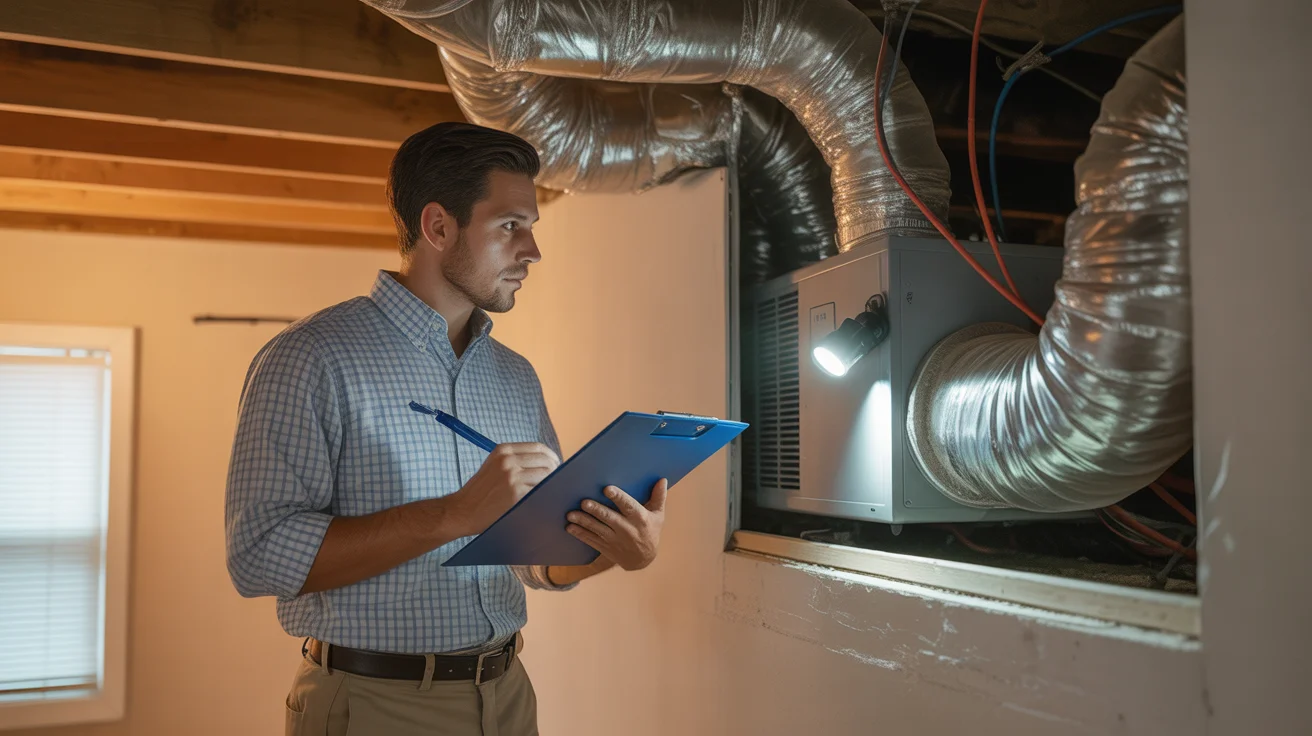
- Ductwork inspection with access to the attic, checking every connection and measuring airflow at each register
- Efficiency testing to see how the system performs under load, not just at startup
- Remaining life estimate based on condition, age, maintenance history, and wear patterns
- Written report with photos, findings, and estimated repair or replacement costs
I give buyers a straight answer. If the system has 5 good years left, I tell them that. If it needs replacement next summer, I tell them that too. My job is to give you the information you need to make a smart decision.
For a home purchase in the $350,000 to $600,000 range that is typical in Frisco and Plano, spending $200 on an HVAC inspection is the best insurance you can buy.
Red Flags That Should Kill the Deal (or Negotiate Price)
Some HVAC findings are minor. These are not:
- R-22 refrigerant system. Replacement is not optional. It is a matter of when, not if. Budget $6,000 to $12,000.
- System over 15 years old. You are buying a system at end of life. It could fail during your first summer.
- Visible refrigerant leak (oil stains at connections). Leak repairs are temporary. The system needs replacement.
- Cracked heat exchanger. This is a safety issue. Carbon monoxide can enter your home. Non-negotiable replacement.
- Undersized system for the house. It will never keep up in Texas summers. You need a new, properly sized system.
- No permits for previous HVAC work. Unknown installation quality. Could void manufacturer warranty.
- Active water damage from drain pan failure. The HVAC problem is just the start. You may have mold and structural damage too.
Any of these should either stop the deal or result in a significant price reduction.
How to Use HVAC Issues to Negotiate
HVAC problems are some of the best negotiating use you have as a buyer. Unlike cosmetic issues, the seller cannot argue these away. The system either works properly or it does not.
Here are real numbers you can bring to the negotiation table:
- Full system replacement (standard efficiency): $5,500 to $8,000
- Full system replacement (high efficiency): $8,000 to $12,000
- Ductwork replacement: $2,000 to $5,000
- Major repair (compressor, coil): $1,500 to $3,500
- R-22 to R-410A conversion: Requires full system replacement
When I write a pre-purchase inspection report, I include specific replacement costs. Buyers take that report to their agent and use it in negotiations. I have seen buyers get $8,000 to $15,000 knocked off the purchase price based on HVAC findings alone.
The key is having it documented by a licensed HVAC professional, not just your home inspector’s one-line note.
Pro tip: Ask for a price reduction rather than asking the seller to fix it. If the seller hires the cheapest contractor to do a quick fix before closing, you are stuck with their choice. A price reduction lets you hire your own contractor and do it right.
North Texas Specific Issues
Buying a home in North Texas means dealing with HVAC conditions you will not find in most of the country. Here is what makes our area different.
Attic Units in Extreme Heat
About 70% of homes in Frisco, Plano, McKinney, and Allen have the air handler (indoor unit) in the attic. Attic temperatures reach 140 to 160 degrees in summer. That extreme heat degrades ductwork connections, warps drain pans, and shortens the life of every component up there. This is the number one reason North Texas HVAC systems die younger than the national average.
Hard Water Scale
North Texas water is hard. If the home has a humidifier connected to the HVAC system or any water-fed components, check for mineral scale buildup. Scale restricts flow and damages parts over time.
Clay Soil and Settling
Our expansive clay soil shifts with rain and drought cycles. Outdoor condenser pads settle and tilt. Refrigerant lines stress at connections. Ductwork in pier-and-beam homes can shift and disconnect. Look for a level condenser pad and check that linesets are not kinked or stressed.
Builder-Grade Equipment
Many newer homes in the Frisco and Prosper area were built with the cheapest HVAC systems the builder could install. Builder-grade equipment is not bad, but it is typically the lowest tier from brands like Goodman or the builder line from Carrier or Lennox. These systems work fine but may not be as efficient or long-lasting as mid-tier or premium equipment.
Summer Buying Season
About 40% of homes sold in the Frisco and Plano area have HVAC systems over 10 years old. If you are buying in spring or summer, you have the advantage of testing the AC under real conditions. If you are buying in winter, insist on running the AC during your inspection anyway. You do not want to discover problems in June.
Questions to Ask the Seller About HVAC
Bring these questions to your agent or ask them directly:
- How old is the HVAC system? Then verify with the data plate.
- Has the system ever been replaced? When? By who? Ask for the permit number.
- Do you have maintenance records? Annual tune-ups, repairs, filter changes.
- Has the system had any major repairs? Compressor, coil, or blower motor replacement.
- What refrigerant does it use? If they do not know, check the data plate yourself.
- Are there any rooms that are hard to heat or cool? This reveals ductwork or sizing issues.
- What is your typical summer electric bill? A high bill for the square footage suggests an inefficient system.
- Is the system still under warranty? Most manufacturer warranties are 5 to 10 years on parts. Some are transferable, some are not.
Write down the answers. Compare them to what you find during your own inspection. Discrepancies are a red flag.
Frequently Asked Questions
Should I get a separate HVAC inspection when buying a house?
Yes. A general home inspector checks that the system turns on. A licensed HVAC tech checks whether it will keep working. For $150 to $250, you get a detailed assessment of remaining life, efficiency, and any hidden problems. I recommend it for any home over 8 years old.
How old is too old for an HVAC system in a home I am buying?
In North Texas, I start getting concerned at 10 years and recommend budgeting for replacement at 12 to 15 years. The national average is longer, but our summers cut system life short. A well-maintained 12-year-old system might have 3 good years left. A neglected 10-year-old system might not make it through next summer.
Can I negotiate the home price based on HVAC condition?
Absolutely. HVAC replacement is a legitimate, documentable cost. Get a written inspection report from a licensed HVAC contractor with specific replacement estimates. Buyers regularly negotiate $5,000 to $15,000 off the purchase price for aging or failing HVAC systems. Your real estate agent can help you present the findings.
What if the HVAC system uses R-22 refrigerant?
Treat it as a system that needs replacement within 1 to 2 years. R-22 was phased out in 2020, and the cost of reclaimed refrigerant keeps climbing. A single repair requiring R-22 can cost $2,000 to $5,000. Factor the full replacement cost ($6,000 to $12,000) into your offer on the home.
Is it better to ask the seller to replace the HVAC or take a credit?
Take the credit every time. When sellers replace HVAC systems, they shop for the cheapest option to close the deal. You end up with bottom-tier equipment installed by whoever gave the lowest bid. With a credit, you choose the equipment, you choose the contractor, and you get the full manufacturer warranty in your name. Call us at (940) 390-5676 and I will give you an honest assessment before you close.
Need Professional HVAC Service?
Our certified technicians are ready to help with any HVAC needs in North Texas