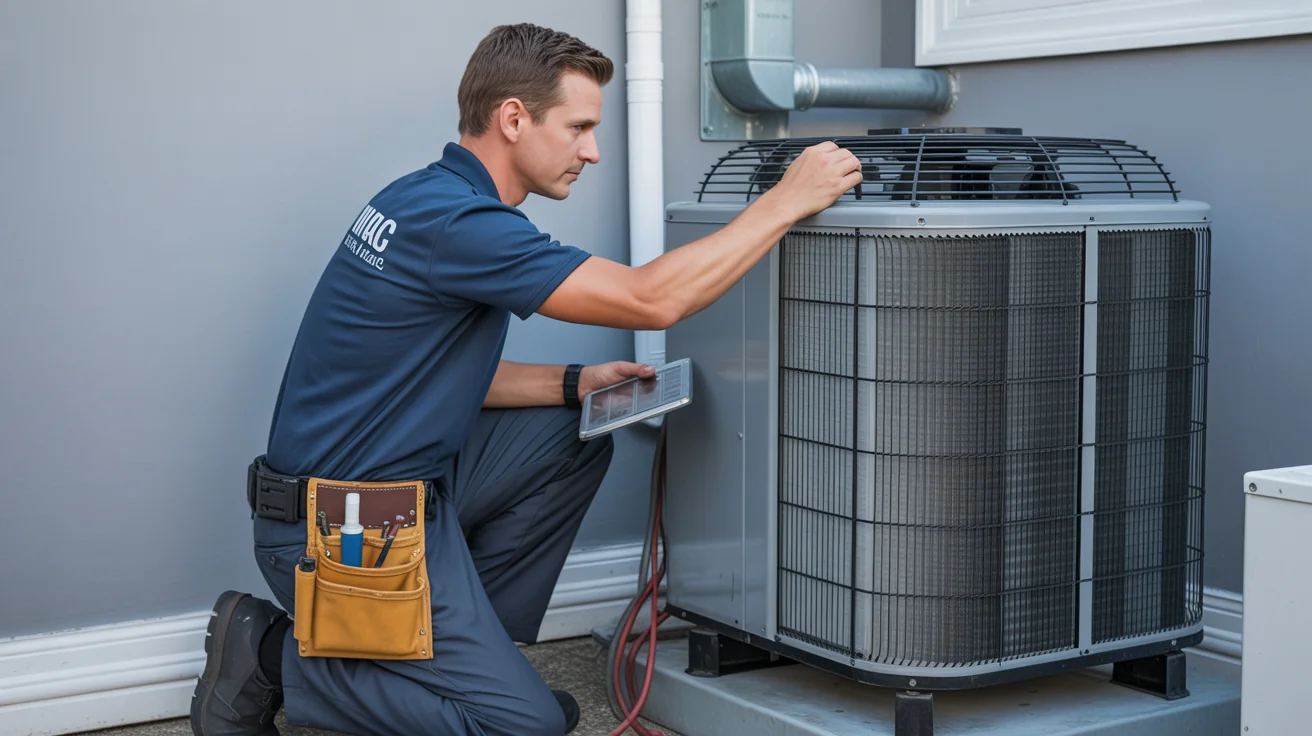
Commercial RTU Maintenance: The Complete Guide for Building Owners
Complete commercial RTU maintenance guide with monthly checks, quarterly service checklists, costs, and lifespan tips for North Texas buildings.

- What is an RTU and Why It Matters
- Monthly RTU Checks: What Building Staff Can Do
- Quarterly Professional Maintenance Checklist
- Annual complete Service
- RTU Maintenance Costs by Tonnage
- Signs Your RTU Needs More Than Maintenance
- RTU Lifespan Extension Tips for North Texas Heat
- Getting Your RTU on a Maintenance Plan
+ 1 more sections below...
- What is an RTU and Why It Matters
- Monthly RTU Checks: What Building Staff Can Do
- Quarterly Professional Maintenance Checklist
- Annual complete Service
- RTU Maintenance Costs by Tonnage
- Signs Your RTU Needs More Than Maintenance
- RTU Lifespan Extension Tips for North Texas Heat
- Getting Your RTU on a Maintenance Plan
+ 1 more sections below...
Commercial RTU maintenance costs $500-$3,000 per year by tonnage and prevents 90% of rooftop unit failures. A 5-ton unit runs $500-$900 annually. A 20-ton unit costs $1,500-$2,500. In North Texas, RTUs endure rooftop temperatures of 140-160 degrees and run 12-16 hours daily from April through October. Monthly filter checks, quarterly professional service, and annual deep cleaning extend RTU life from 8-12 years (neglected) to 15-20 years (maintained), saving $15,000-$40,000 in premature replacement costs.
That metal box on your roof is the most expensive piece of equipment most business owners never think about. Until it stops working on the hottest day of the year and your building hits 90 degrees inside.
I service RTUs across North Texas every single day. Frisco, Plano, McKinney, Allen, Addison. And I can tell you that 80% of the emergency calls I get for commercial RTUs could have been prevented with basic maintenance that costs less than one emergency repair.
Here is everything a building owner needs to know about keeping your rooftop units running.
What is an RTU and Why It Matters
A rooftop unit (RTU) is a self-contained HVAC system that sits on your roof. It handles heating, cooling, and ventilation in one box. Most commercial buildings in North Texas under 20,000 sq ft use RTUs because they are efficient, keep equipment out of your usable space, and are relatively simple to maintain.
But “on the roof” also means “out of sight, out of mind.” And that is exactly the problem.
Your RTU sits in direct Texas sun where surface temperatures hit 140-160 degrees in summer. It pulls in dust, pollen, and debris from every direction. It runs 12-16 hours a day from April through October. And because you cannot see it from the ground, you forget it exists until something goes wrong.
The average RTU replacement costs $8,000-$45,000 depending on size. Maintenance costs $500-$3,000/year. The math is not complicated.
Monthly RTU Checks: What Building Staff Can Do
You do not need a technician for everything. Your building manager or maintenance staff can handle these monthly tasks.
1. Check and Replace Filters
This is the single most important thing you can do. Walk up to the roof, open the filter access panel, and look at the filters.
- If they are gray and clogged, replace them
- If you can see light through them, they have another month
- In spring pollen season (March-May), check every 2-3 weeks
- If you are near construction, check weekly
Commercial RTU filters cost $15-$85 each depending on size and type. Skipping a $40 filter change leads to $800-$2,000 in repairs when the coil freezes or the compressor overheats.
2. Clear the Area Around the Unit
Walk around the unit and remove any debris, trash, leaves, or bird nests. Check that nothing is blocking the intake or exhaust.
- Keep a 3-foot clearance on all sides
- Remove anything leaning against the unit
- Check for standing water around the base (indicates drainage problems)
3. Listen and Look
Stand next to the running unit for 60 seconds.
- Unusual noises: Grinding, squealing, banging, or clicking are all warning signs
- Vibration: Excessive vibration means something is loose or unbalanced
- Ice: Any ice on refrigerant lines or the unit itself means a problem
- Leaks: Water stains, oil spots, or rust streaks need professional attention
- Smells: Burning or musty odors mean call a technician now
4. Check the Thermostat
Verify the thermostat is programmed correctly and the actual temperature matches the setpoint within 2 degrees. If the building is not reaching temperature, that is an early warning sign.
Quarterly Professional Maintenance Checklist
This is what should happen when a licensed technician services your RTU four times a year. I am listing all 15 items so you know what to expect and can verify the work is being done.
Electrical
- Test all electrical connections: Loose wires cause arcing, which causes fires. Every connection gets checked and tightened.
- Measure motor amp draws: Compare actual amps to nameplate ratings. High amp draw means a motor is struggling and heading toward failure.
- Test capacitors: Capacitors fail constantly in North Texas heat. Testing takes 2 minutes and catching a weak capacitor saves a $300-$800 emergency call.
- Inspect contactors: Pitted or burned contactors cause intermittent failures that are miserable to diagnose in an emergency.
Refrigerant System
- Check refrigerant pressures: Low pressure means a leak. High pressure means a dirty condenser or overcharge. Either one damages the compressor.
- Inspect refrigerant lines: Check for oil stains (leak indicators), insulation damage, and proper support.
- Clean condenser coil: Dirty condenser coils make your system work 20-30% harder. In North Texas, cottonwood seed season alone can clog a condenser in two weeks.
Airflow
- Clean or replace filters: Even if building staff changed them last month, the technician verifies proper fit and condition.
- Inspect evaporator coil: Dirty evaporator coils reduce cooling capacity and cause ice-ups.
- Check belt condition and tension (belt-drive units): A worn belt slips, reducing airflow. A broken belt means zero cooling.
- Test economizer operation: The economizer brings in outside air for free cooling when outdoor conditions are right. Most I inspect are stuck open (wasting energy in summer) or stuck closed (wasting energy in spring/fall).
Drainage
- Clear condensate drain: Algae and debris clog drain lines. Backed-up condensate overflows into ceilings. I have seen $10,000-$20,000 in water damage from a blocked drain on a restaurant RTU in Frisco.
- Inspect drain pan: Check for rust, cracks, and standing water. Drain pans corrode over time and start leaking.
Controls and Safety
- Calibrate thermostat: Verify accuracy and programming. Adjust setpoints for the upcoming season.
- Test safety controls: High-pressure cutout, low-pressure cutout, high-temperature limit. These protect the compressor and prevent dangerous conditions.
After every visit, you should receive a written report documenting findings, measurements, and any recommended repairs.
Annual complete Service
Once a year, typically in early spring before cooling season hits, your RTU needs a deep service that goes beyond quarterly maintenance.
- Chemical coil cleaning: Both condenser and evaporator coils get a chemical wash to remove built-up grime that regular cleaning cannot get
- Full combustion analysis (gas heating units): Gas pressure, flame characteristics, heat exchanger inspection for cracks
- Ductwork connection inspection: Check where the RTU connects to building ductwork for leaks and separation
- Structural inspection: Check the roof curb, unit mounting, and weatherproofing. North Texas storms damage RTU installations regularly.
- Full performance test: Run the system through heating and cooling cycles, measure supply and return temperatures, verify proper operation
- Equipment life assessment: Honest evaluation of how much life the unit has left so you can budget for replacement instead of getting surprised
RTU Maintenance Costs by Tonnage
Here is what you should budget annually for RTU maintenance in North Texas.
| Unit Size | Annual Cost | Includes |
|---|---|---|
| 3-5 ton | $500-$900 | 4 quarterly visits, filters, annual deep clean |
| 7.5-10 ton | $800-$1,500 | 4 quarterly visits, filters, annual deep clean |
| 12.5-15 ton | $1,200-$2,000 | 4 quarterly visits, filters, annual deep clean |
| 20 ton | $1,500-$2,500 | 4 quarterly visits, filters, annual deep clean |
| 25+ ton | $2,000-$3,000+ | 4 quarterly visits, filters, annual deep clean |
Multiple units get a discount. If you have three 5-ton units on the same building, you will pay less than 3x the single-unit price because travel and setup time is shared. Expect 15-25% savings per unit on multi-unit contracts.
Filters are extra on some contracts. Always clarify whether filter cost is included or billed separately. Commercial RTU filters run $15-$85 each and need changing every 1-3 months.
Signs Your RTU Needs More Than Maintenance
Maintenance keeps healthy equipment healthy. But sometimes an RTU is telling you it needs repair or replacement. Watch for these signs.
Compressor hard-starting: If the unit struggles to start, trips breakers, or makes a loud clunk on startup, the compressor is failing. A hard-start kit might buy time, but replacement is coming.
Refrigerant loss between visits: If the technician adds refrigerant at every quarterly visit, you have a leak that needs to be found and fixed. Chronic refrigerant loss damages compressors and costs $200-$600 per recharge.
Rising energy bills with no other explanation: If your electricity costs climb 15-20% year over year and nothing else changed, your RTU efficiency is degrading beyond what maintenance can fix.
Uneven temperatures: Hot spots and cold spots that did not exist before indicate failing components, ductwork problems, or a unit that can no longer keep up with the load.
Age over 15 years: A 15-year-old RTU in North Texas is on borrowed time. Start planning for replacement and budget accordingly. A planned replacement saves 20-40% compared to an emergency swap.
Repair costs exceeding 50% of replacement cost: If a single repair bill is more than half the cost of a new unit, replace it.
RTU Lifespan Extension Tips for North Texas Heat
North Texas is brutal on rooftop equipment. Here is how to maximize your RTU lifespan in this climate.
Keep condenser coils clean: In North Texas, cottonwood season, pollen, and dust clog condensers fast. A dirty condenser makes the compressor run hotter and die sooner. Quarterly cleaning is minimum. Some locations need monthly cleaning in spring.
Install hail guards: North Texas gets damaging hail storms every year. Hail guard screens protect condenser coils from damage. They cost $200-$600 per unit installed and prevent $2,000-$8,000 in coil replacement.
Shade the unit if possible: RTUs in direct sun run 5-10% less efficiently than shaded units. Sun shades or reflective coatings on the unit reduce operating temperatures. This is not always practical but worth considering for new installations.
Maintain proper refrigerant charge: Low charge makes compressors overheat. Overcharge reduces efficiency and stresses components. Exact charge matters more in extreme heat.
Do not skip the spring service: March is the most important maintenance month in North Texas. Getting your RTU checked and tuned before the 100-degree days hit in June prevents 80% of summer breakdowns.
Replace capacitors proactively: Capacitors are $15-$50 parts that fail constantly in Texas heat. If a capacitor tests weak during maintenance, replace it immediately. A failed capacitor at 2 PM on a 105-degree Friday costs $300-$800 for the emergency call.
Keep rooftop drains clear: Standing water around an RTU accelerates rust and corrosion. Make sure roof drains near your unit are flowing properly.
Getting Your RTU on a Maintenance Plan
If your commercial RTU has not been serviced in the last 6 months, you are overdue. North Texas heat does not wait for you to get organized.
I offer commercial preventive maintenance plans for buildings across Frisco, Plano, McKinney, Allen, Addison, Prosper, Little Elm, and The Colony. Every plan includes a full inspection on the first visit so we know exactly what we are working with.
Contact us or call (940) 390-5676 to get your RTU maintenance scheduled.
Frequently Asked Questions
How much does commercial RTU maintenance cost per year?
RTU maintenance costs $500-$3,000 per year depending on unit size. A 5-ton unit runs $500-$900/year. A 10-ton unit costs $800-$1,500/year. A 20-ton unit runs $1,500-$2,500/year. Units over 25 tons cost $2,000-$3,000+/year. This includes quarterly service visits, filters, and annual deep cleaning. Multi-unit buildings get 15-25% per-unit discounts.
How often should a commercial RTU be serviced?
Quarterly professional service is the minimum for North Texas RTUs. Building staff should check filters monthly and keep the unit area clear. High-use environments like restaurants need monthly professional visits. The spring pre-season service (March) is the single most important visit of the year because it catches problems before the extreme summer heat arrives.
What is the lifespan of a commercial RTU in Texas?
A well-maintained commercial RTU lasts 15-20 years. In North Texas, most realistically last 12-18 years because of the extreme heat and long cooling seasons. Without maintenance, expect 8-12 years. Rooftop temperatures of 140-160 degrees, constant cycling, and hail storms all shorten equipment life. Proper maintenance adds 3-5 years to the average RTU.
Can building staff perform RTU maintenance?
Building staff can handle monthly filter checks and replacement, keeping the unit area clear of debris, visual inspections for obvious damage, and thermostat programming. Leave refrigerant work, electrical testing, belt replacement, economizer calibration, and any gas-related work to licensed HVAC technicians. In Texas, refrigerant handling requires EPA Section 608 certification.
What are the most common RTU failures in North Texas?
The top five are: clogged filters causing frozen evaporator coils, capacitor failures from extreme heat stress, contactor failures from constant summer cycling, condensate drain clogs causing interior water damage, and economizer damper failures wasting energy by pulling in 100-degree outside air. All five are preventable with regular quarterly maintenance.
Need Professional HVAC Service?
Our certified technicians are ready to help with any HVAC needs in North Texas