Furnace Repair Cost in 2026: What North Texas Homeowners Actually Pay
Furnace repair costs $150-$3,500 in 2026. Component-by-component pricing for igniters, blower motors, heat exchangers, and more from a North Texas HVAC pro.

- The Quick Answer: Average Furnace Repair Cost in 2026
- Furnace Repair Cost by Component: The Full Breakdown
- What the Diagnostic Fee Actually Covers
- Red Flags and Scams: How to Spot a Dishonest Furnace Quote
- Emergency and After-Hours Furnace Repair Cost
- Seasonal Pricing: When You’ll Pay More (and When You Won’t)
- Repair or Replace? How to Decide
- North Texas Factors That Affect Your Furnace Repair Bill
+ 5 more sections below...
- The Quick Answer: Average Furnace Repair Cost in 2026
- Furnace Repair Cost by Component: The Full Breakdown
- What the Diagnostic Fee Actually Covers
- Red Flags and Scams: How to Spot a Dishonest Furnace Quote
- Emergency and After-Hours Furnace Repair Cost
- Seasonal Pricing: When You’ll Pay More (and When You Won’t)
- Repair or Replace? How to Decide
- North Texas Factors That Affect Your Furnace Repair Bill
+ 5 more sections below...
Last February, a homeowner in Plano called me at 11 PM. Her furnace wouldn’t ignite, the house was 52 degrees, and she’d already Googled “furnace replacement cost,” bracing for $5,000.
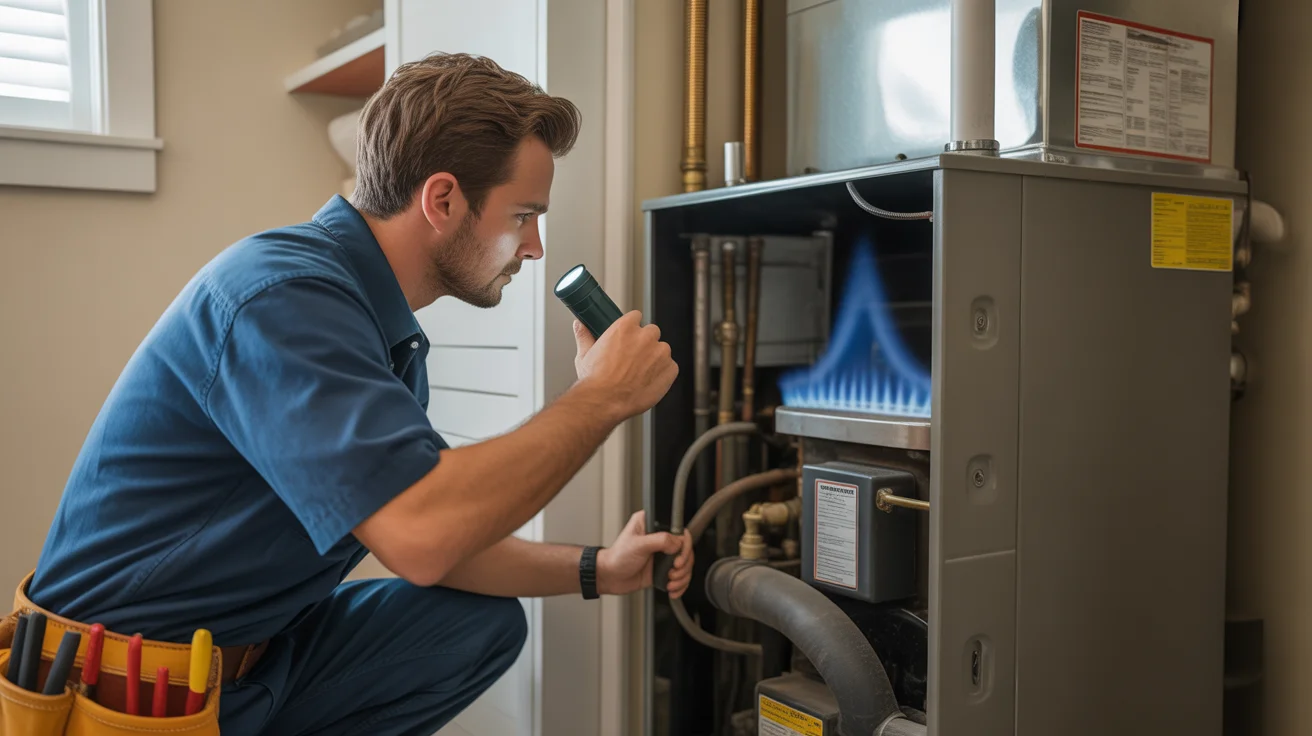
I drove out, pulled the front panel, and found a cracked hot surface igniter. Twenty minutes of work, a $35 part, and a $277 total bill. She almost cried. Not from the cost. From relief.
That gap between what people fear and what they actually pay is why I wrote this. Furnace repair costs $150 to $600 on average in 2026, with most North Texas homeowners paying around $350. The most common repair (igniter replacement) runs $100-$300. The most expensive (heat exchanger replacement) costs $1,000-$3,500, but it’s also the least common.
This is the complete breakdown: component-by-component pricing, what a fair diagnostic looks like, and how to spot a company trying to sell you a furnace you don’t need. I handle these repairs every week across Frisco, Plano, McKinney, and Allen. These are real numbers from real jobs.
The Quick Answer: Average Furnace Repair Cost in 2026
Nationally, furnace repair costs run $150-$600, with a typical bill around $350. In the DFW market, labor rates push most jobs into the $280-$480 range.
Here’s how the invoice breaks down: Diagnostic fee + Labor (hours x rate) + Parts = Total. A real example from my truck: $89 diagnostic + 1.5 hours at $95/hour + $45 igniter = $277.
| Category | Cost Range | Typical |
|---|---|---|
| Minor repair (igniter, flame sensor, thermostat) | $75-$300 | $200 |
| Moderate repair (gas valve, control board, capacitor) | $300-$900 | $500 |
| Major repair (blower motor, heat exchanger) | $900-$3,500 | $1,500 |
| Diagnostic / service call fee | $75-$150 | $89 (Jupitair) |
| Emergency / after-hours surcharge | $150-$500 | $199–$250 (Jupitair) |
Jupitair charges an $89 diagnostic fee, and we credit it toward any repair you authorize. If you decline the repair, you only pay the $89. That’s standard for reputable contractors. If someone doesn’t offer it, ask why.
If your quote is under $500, you’re in normal territory. Over $1,200? Get a second opinion before signing anything.
Need a diagnosis now? Call (940) 390-5676.
Furnace Repair Cost by Component: The Full Breakdown
The part that failed determines 80% of your bill. Here’s every common furnace repair ranked by how often I see them.
| Component | Part Cost | Total Installed | Labor Time | How Common |
|---|---|---|---|---|
| Igniter (hot surface) | $20-$50 | $100-$300 | 30-60 min | #1 most common |
| Flame sensor (clean or replace) | $5-$50 | $75-$250 | 15-30 min | #2 |
| Thermocouple (older furnaces) | $5-$20 | $75-$200 | 30-45 min | #3 |
| Capacitor | $35-$70 | $100-$400 | 30-45 min | #4 |
| Thermostat | $25-$200 | $100-$300 | 30-60 min | #5 |
| Pressure switch | $15-$80 | $150-$400 | 45-60 min | #6 |
| Limit switch | $4-$25 | $75-$250 | 30-60 min | #7 |
| Gas valve | $100-$300 | $200-$800 | 1-2 hrs | #8 |
| Control board | $100-$600 | $300-$1,200 | 1-2 hrs | #9 |
| Inducer motor | $70-$600 | $400-$1,100 | 1.5-2.5 hrs | #10 |
| Blower motor (PSC / single-speed) | $200-$400 | $400-$900 | 2-3 hrs | #11 |
| Blower motor (ECM / variable-speed) | $400-$800 | $600-$2,300 | 2-4 hrs | #11 |
| Heat exchanger | $350-$850 | $1,000-$3,500 | 4-8 hrs | Least common |
| Flue pipe / venting | $50-$200 | $150-$500 | 1-2 hrs | Occasional |
That’s 14 components, not the 8-10 you’ll find on most other sites. Let me break down the five you’re most likely to encounter.
Igniter Replacement ($100-$300)
The hot surface igniter glows red to light the gas. It cracks from thermal cycling, sometimes after just 3-4 seasons. The part itself costs $20-$50. Most of your bill covers the diagnostic and the drive to your house. I usually finish this repair in under an hour. If your furnace clicks but never fires, this is the first thing I check.
Flame Sensor Cleaning or Replacement ($75-$250)
This is the one where I feel guilty charging. It takes me 10 minutes. I clean the sensor with a $5 piece of emery cloth, and it works 80% of the time ($75-$150 for the visit). Full replacement runs $150-$250 if the sensor keeps fouling.
What I actually earned: the correct diagnosis. A flame sensor tells the furnace “yes, gas is burning.” If it’s dirty, the furnace lights for a few seconds, then shuts down as a safety measure. Don’t confuse this with a thermocouple. Flame sensors work on modern electronic-ignition furnaces. Thermocouples work on older pilot-light models. Different part, different fix.
Blower Motor Replacement ($400-$2,300)
This is where quotes get wild, and the reason is the PSC vs. ECM split. A PSC motor (single-speed, found in older furnaces) runs $400-$900 installed. An ECM motor (variable-speed, found in higher-efficiency units) runs $600-$2,300. That’s a 2-3x difference.
If someone quotes you $1,500 for a blower motor, ask which type your furnace has. If it’s a PSC motor and they’re quoting ECM prices, you have a problem.
Gas Valve Replacement ($200-$800)
Safety-critical. Requires a licensed tech and calibration after install. Never a DIY job. If your gas valve fails, you’ll either smell gas or the furnace won’t light at all. The part runs $100-$300, but calibration and testing add labor. Expect 1-2 hours total.
Heat Exchanger Replacement ($1,000-$3,500)
The most expensive furnace repair you can face. A cracked heat exchanger creates a carbon monoxide risk, and the labor alone runs $650-$2,150. On a furnace over 10-12 years old, that labor cost often makes replacing the whole furnace ($3,500-$7,500 in DFW) the smarter financial move.
Check your manufacturer warranty first. Many cover the heat exchanger for 10-20 years, though labor is almost never included.
This is also the repair most commonly faked. More on that below.
Looking for a full diagnosis? Check out our furnace repair services or read the complete furnace repair guide.
What the Diagnostic Fee Actually Covers
“You’re charging me $89 just to look at it?”
I hear this once a week. And I get it. But the diagnostic IS the most skilled part of the job. Replacing an igniter is straightforward. Figuring out that it’s the igniter and not the control board, the gas valve, or a wiring issue? That’s where 15 years of experience earns its keep.
A proper diagnosis includes: checking the thermostat settings, inspecting the filter, reading error codes off the control board, testing electrical components with a multimeter, checking gas pressure at the manifold, inspecting the heat exchanger, and running a combustion analysis.
If a company offers a “free diagnostic,” ask yourself where that cost goes. It gets buried in inflated repair prices or a pressure-sell for a full replacement. The diagnostic fee is how honest contractors stay honest. We get paid for the truth, even if the truth is “your thermostat batteries are dead.”
Jupitair’s model: $89 diagnostic, credited toward any repair you authorize. If you decline, you pay the $89 and nothing else.
A company that quotes a repair without doing this work first is guessing. Or worse.
Red Flags and Scams: How to Spot a Dishonest Furnace Quote
I lose customers to this. Not because my price is too high, but because some other company scared them into buying a $6,000 furnace they didn’t need.
The #1 furnace repair scam is the fake cracked heat exchanger. The tech pulls your front panel, shines a flashlight around, and points to “cracks.” He tells you carbon monoxide is leaking. Your family is in danger. He can install a new furnace today for $5,500, and there’s a discount if you sign right now.
Those “cracks” are usually discoloration from normal combustion or expansion marks that every heat exchanger develops. Real cracked heat exchangers exist, and they’re serious. But they’re verifiable with a calibrated CO analyzer. If the tech didn’t run a combustion analysis, he didn’t confirm anything.
Real people lose money to this. One homeowner on Reddit received a quote under $600 for a repair. After the tech finished, the bill hit $1,200. A capacitor replacement and coil cleaning had appeared on the invoice without authorization. His exact words: “I wasn’t informed about the costs before the tech added them to the invoice.”
Another Reddit post that went viral: a homeowner with a WORKING furnace received a $29,000 replacement quote. The company called it the “mid-tier option.” For context, a full furnace replacement in DFW costs $3,500-$7,500. Twenty-nine thousand dollars is not mid-tier anything.
Here are the red flags, numbered so you can screenshot this list:
- No diagnostic performed before quoting a price. They’re guessing or flat-rating you.
- “Your family is in danger” pressure without showing you combustion analyzer readings. Real danger comes with real data.
- Quote significantly above the ranges in this article. You now have the numbers. Use them.
- No written estimate before starting work. Verbal quotes are worthless when the bill arrives.
- Refusing to show you the failed part after replacement. If they replaced it, it should be in their hand.
- “$29 Safety Inspection” that turns into an alarming repair list. A legitimate tune-up costs $80-$200. Sub-$50 offers are bait.
- Full payment demanded before any work begins. No reputable HVAC company operates this way.
Your protection is simple. Ask to see the part. Ask for a written estimate. And if anyone tells you your heat exchanger is cracked, call someone else for a second opinion before you sign anything. Including us.
Verify any Texas HVAC contractor’s license at tdlr.texas.gov. Unlicensed work on gas lines is illegal and dangerous.
Need a second opinion? Call (940) 390-5676. I’ll tell you what I find, show you the part, and give you a written estimate before I touch a wrench.
Emergency and After-Hours Furnace Repair Cost
Your furnace dies at 2 AM in January. What does that cost?
Emergency service adds 30-75% above standard daytime rates, or $150-$500 as a flat surcharge depending on the company. After-hours labor rates jump to $100-$215/hour versus the standard $50-$150/hour.
Jupitair charges an after-hours fee of $199 from 5 PM to midnight, or $250 after midnight and anytime on weekends and holidays, disclosed before we dispatch. No surprises. No surge pricing during freeze events. I worked 37 hours straight during a February freeze, charging standard rates at 3 AM. I don’t gouge families when their pipes might burst.
Not every furnace failure is a true emergency. Here’s how to decide:
- Can’t wait: Below 35F outside with no heat, CO alarm triggered, gas smell. Call now.
- Can wait until morning: Furnace blowing cool but house above 55F, daytime failure with space heaters available.
Peak emergency months run December through February, with a secondary spike during the first cold snap in November. DFW freeze events (2021, 2024) saw some companies surge pricing 50-100% above normal. Ask about emergency fees before you need one.
During the 2021 freeze, some North Texas homeowners paid $800+ for after-hours visits that would normally cost $350. Knowing your contractor’s fee structure before an emergency saves you from making a panicked decision at 2 AM.
Emergency? Call (940) 390-5676. 24/7, 2-hour response.
Seasonal Pricing: When You’ll Pay More (and When You Won’t)
Same repair, same part, same labor. But the month you call changes the price by 20-40%.
North Texas has a shorter heating season than northern states (November through February versus October through April). That means all the demand crams into 8-10 weeks. The price spike is sharp and concentrated.
- Peak season (December-February): Highest prices, longest waits. Emergency surcharges are common. Expect 20-40% above off-season rates. During severe freeze events, some companies spike 50-100%.
- Shoulder season (October-November, March): Normal pricing, faster scheduling. This is the best time for planned repairs.
- Off-season (April-September): Best pricing, same-day or next-day availability. If you know something’s wrong, this is when to fix it.
A $350 igniter replacement in September might cost $450-$490 in January, before you add the emergency surcharge. That’s a $100-$140 premium for waiting.
Here’s the DFW-specific wrinkle: because our heating season is so compressed, HVAC companies go from idle to fully booked within two weeks of the first freeze. Wait times jump from same-day to 48+ hours overnight.
Schedule your fall tune-up in September or October. If the tech finds something, fix it then. Not in January when every HVAC company in Collin County has a two-day backlog. I schedule faster in shoulder months and can often come the same day.
Repair or Replace? How to Decide
Two rules give you a clear answer 90% of the time.
The 50% Rule: If the repair cost exceeds 50% of a new furnace, replace it. In DFW, a new furnace installed runs $3,500-$7,500. So if your repair exceeds $1,750-$3,750, lean toward replacement.
The 5,000 Rule: Multiply your furnace’s age by the repair cost. If the result exceeds $5,000, replace. Example: 18-year-old furnace x $350 repair = $6,300. That math says replace.
| Factor | Lean Repair | Toss-Up | Lean Replace |
|---|---|---|---|
| Furnace age | Under 12 years | 12-18 years | Over 18 years |
| Repair cost | Under $500 | $500-$1,500 | Over $1,500 |
| Repair history | First issue this year | 2nd repair this year | 3+ repairs in 2 years |
| Heat exchanger | Under warranty | Out of warranty, under 12 yrs | Out of warranty, over 12 yrs |
| AFUE rating | 90%+ | 80-89% | Below 80% |
| Parts availability | Common / in stock | Backordered 1-2 weeks | Discontinued model |
Heat exchanger special case: Cracked heat exchanger on a furnace over 10 years old is almost always a replace. The labor alone ($650-$2,150) pushes past the threshold on an aging unit.
Repair frequency threshold: Three or more repairs in two years on a 15+ year furnace means replacement, regardless of individual repair cost.
An old 80% AFUE furnace versus a new 95-96% AFUE unit saves 15-20% on fuel annually. At $1,000/year gas bills, that’s $150-$200 back every year over a 15-year lifespan.
I’ll tell you straight if your furnace is worth fixing. I make money either way. But I’d rather you spend it on the right call.
Explore our heating services for repair and replacement options.
North Texas Factors That Affect Your Furnace Repair Bill
I pull furnaces out of attics in July when it’s 140 degrees up there. The heat does things to wiring and control boards that you’d never see in a basement install.
Attic furnaces: Most DFW homes have furnaces in the attic, not the basement. That means harder access (30-60 minutes of extra labor), heat exposure that accelerates component wear, and deteriorating flue pipes. Basement installs are easier, cheaper, and gentler on parts. We don’t have many basements in North Texas.
Short heating season: Our furnaces run fewer hours per year than a furnace in Chicago. Good news: they can last longer. Bad news: sitting idle 8 months means dust buildup, spider webs in burner assemblies, and parts that seize from disuse. That first cold snap in November is when everything breaks.
DFW dust and construction: The North Texas construction boom fills the air with fine particulate. Dirty filters are the #1 cause of preventable breakdowns here. I can’t say this enough: change your filter every 1-3 months.
Dual systems: Many DFW homes run a heat pump with gas furnace backup. The furnace only kicks on below 35-40F. Fewer run hours, but the parts still age. And when it does fail, it’s always the coldest night of the year.
Warranty Fine Print That Could Save You Thousands
A heat exchanger under manufacturer warranty still costs $650-$2,150 in labor. The warranty covers the part, not the work. Know this before you celebrate.
Registration deadlines matter. Carrier requires registration within 90 days of install. Trane gives you 60 days. Miss the deadline and your 10-year warranty drops to 5 years. If you just bought a new furnace, register it today.
Typical coverage:
- Carrier: 10-year parts warranty (if registered within 90 days)
- Trane: 10-year parts + 20-year heat exchanger (if registered within 60 days)
- Lennox: Varies by series. Check your specific model.
OEM vs. aftermarket parts: OEM parts cost 30-100% more but preserve your warranty. Aftermarket parts work fine but may void remaining coverage. Always ask your tech which type they’re installing. Control board prices jumped 20% in 2025-2026 due to supply chain issues, and OEM boards carry the steepest premium.
Home warranty vs. manufacturer warranty: A home warranty covers labor but caps payouts and chooses the contractor. A manufacturer warranty covers parts but you pick the tech. Different products. Know which one you have.
Before I show up, find your furnace model and serial number. It’s on a sticker inside the front panel. Text me a photo. I’ll check warranty status before I even load the truck.
How to Save Money on Furnace Repairs
Eight things you can do right now, each with a dollar figure attached.
- Annual tune-up ($80-$200) prevents 95% of emergency breakdowns. This is the single best investment in your HVAC system.
- Change your air filter every 1-3 months. A $5 filter prevents $300+ repair calls. Thirty percent of “no heat” calls I respond to come down to a dirty filter.
- Schedule known issues in September-October. Beat the winter demand spike and save 20-40% on the same repair.
- Check manufacturer warranty before authorizing parts. If your furnace is under 10 years old, the part might be free.
- Ask if the diagnostic fee credits toward the repair. Reputable companies do this. If they don’t, ask why.
- Get a second opinion on any quote over $1,200. Especially heat exchanger diagnoses. See the red flags section above.
- DIY flame sensor cleaning with emery cloth ($5). Works 80% of the time. Takes 15 minutes. YouTube has a dozen good tutorials on this.
- Consider a maintenance plan ($150-$500/year). Priority scheduling, repair discounts, and an annual tune-up included.
The cheapest furnace repair is the one you prevent. A fall tune-up catches 95% of what would break in January.
DIY Checks Before Calling a Pro
About 20% of my service calls need zero parts. Try these six checks first.
- Check thermostat settings and batteries. Make sure it’s set to HEAT, not COOL or OFF. Replace the batteries.
- Check or replace the air filter. A clogged filter triggers the limit switch, shutting the furnace down.
- Check the circuit breaker. Flip it off, wait 30 seconds, flip it back on.
- Make sure the gas supply valve is open. Handle parallel to the pipe means open. Perpendicular means closed.
- Check supply vents. Make sure furniture or boxes aren’t blocking them.
- Look for error codes. Most modern furnaces blink LED codes on the control board. Write down the pattern before calling.
Safety boundary: If you smell gas, hear hissing, or your CO detector goes off, skip all of this. Get out and call 911 first, then call us. Read our gas furnace safety guide for the full safety protocol.
Frequently Asked Questions
How much does furnace repair cost on average in 2026?
Furnace repair costs $150-$600 nationally in 2026, with North Texas homeowners typically paying $280-$480. The most common repairs (igniter, flame sensor) run $100-$300. Major repairs like heat exchanger replacement can reach $1,000-$3,500 but are uncommon.
What is the most expensive furnace repair?
Heat exchanger replacement at $1,000-$3,500. On furnaces over 10-12 years old, full furnace replacement ($3,500-$7,500 in DFW) often makes more financial sense. See the Repair or Replace section above for the decision framework.
Is it worth repairing a 20-year-old furnace?
Usually not for major repairs. Use the 5,000 Rule: multiply the furnace age by the repair cost. If the result exceeds $5,000, replacement is the better investment. A 20-year furnace x $300 repair = $6,000. That points to replacement. Minor repairs under $300 can still make sense if the furnace runs well otherwise.
How long does a typical furnace repair take?
Minor repairs (igniter, flame sensor): 30-60 minutes. Moderate repairs (gas valve, control board): 1-2 hours. Major repairs (blower motor): 2-4 hours. Heat exchanger replacement: 4-8 hours, often a full-day job. Add 30-60 minutes for attic access in most DFW homes.
Does homeowner’s insurance cover furnace repair?
Standard homeowner’s insurance does not cover furnace repairs from normal wear and tear. It may cover damage from a covered event like a fire or lightning strike. Home warranty plans are separate products that cover mechanical breakdowns, usually with a $75-$125 service fee and a per-item payout cap.
How can I tell if my HVAC company is overcharging me?
Compare the quote against the component cost table in this article. Any quote over $1,200 deserves a second opinion. Red flags: no diagnostic before quoting, pressure to replace immediately, no written estimate, refusing to show the failed part. Verify any Texas HVAC contractor’s license at tdlr.texas.gov.
Why does my furnace keep shutting off after a few minutes?
Most common cause: a dirty flame sensor ($75-$250 to clean or replace). The sensor can’t detect the flame, so the furnace shuts down as a safety precaution. Other causes include a dirty filter restricting airflow (triggering the limit switch) or a failing inducer motor (triggering the pressure switch). Try replacing the filter first. If the problem persists, you need a tech.
The Bottom Line
Most furnace repairs in North Texas cost $150-$500. The expensive ones (heat exchanger, ECM blower motor) are rare. The right diagnosis is worth more than the cheapest quote, and a second opinion on anything over $1,200 is always worth the call.
If you take one thing from this article: schedule your fall tune-up before winter hits. That single step prevents 95% of emergency breakdowns and saves you the 20-40% peak-season premium.
I’ve spent 15 years doing this across Frisco, Plano, McKinney, Allen, The Colony, Prosper, Little Elm, and Addison. Every number in this article comes from jobs I’ve run, parts I’ve replaced, and invoices I’ve written. I’ll tell you what’s wrong, what it costs, and whether it’s worth fixing. Before I touch a wrench.
Call (940) 390-5676 or schedule online. $89 diagnostic, credited toward your repair. 24/7 emergency service with a 2-hour response time.
Need Professional HVAC Service?
Our certified technicians are ready to help with any HVAC needs in North Texas